Order Management System
An overview of Order Management Systems (OMS), their importance, historical evolution, and best practices in logistics.
Updated
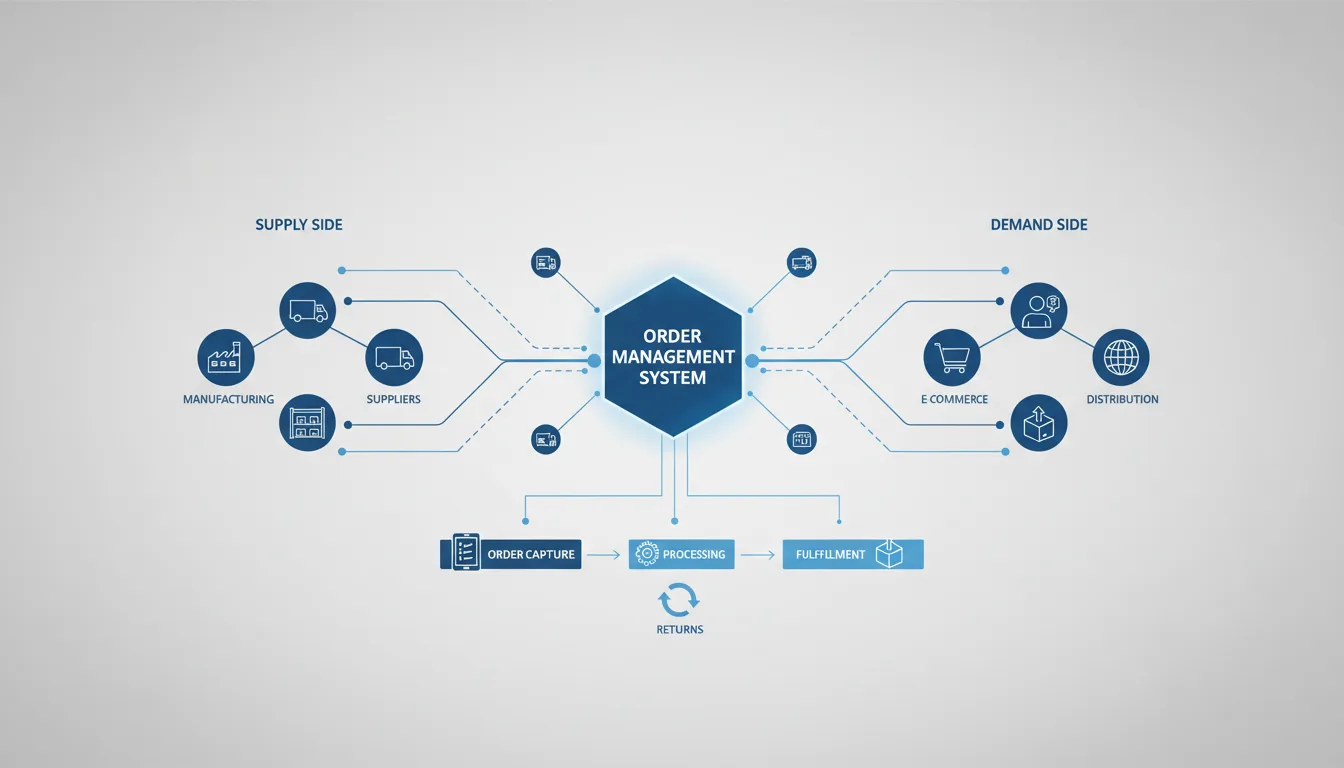
Overview
An Order Management System (OMS) is a critical component of supply chain management that handles the processing of orders from inception to fulfillment. It encompasses order creation, processing, inventory tracking, and analytical reporting. The primary purpose of an OMS is to improve the efficiency of order handling and enhance customer satisfaction through streamlined operations. Businesses utilize OMS to manage sales across multiple channels, ensuring better visibility and control of order workflows and inventory. For modern operations, an effective Order Management System can significantly impact revenue and operational efficiency.
Etymology and Origins
The term "Order Management System" is believed to have first been documented in the early 1990s. It emerged from businesses' increasing demand for efficient transaction management, particularly driven by the growth of e-commerce. The linguistic roots trace back to the operational need for managing customer orders succinctly. Initially, the term referred to basic manual order handling processes; however, with technological advancements, it evolved to encompass sophisticated computerized solutions capable of real-time processing and analysis.
Historical Development
The Emergence of OMS
The practice of managing orders digitally began in the late 20th century, with significant advancements in the 1990s as internet technology improved. In the early 2000s, companies like Amazon and eBay showcased the importance of efficient order management to accommodate high volumes of transactions, transforming retail dynamics. The industry's shift toward digital began with basic electronic data interchange (EDI) solutions and progressed into comprehensive systems that integrated multiple functions across supply chains.
Key Figures and Milestones
- 1999: Amazon's implementation of a sophisticated order management system set a benchmark, evolving into a pivotal model in e-commerce (Amazon's Success).
- 2001: Companies began integrating OMS with Enterprise Resource Planning (ERP) systems to achieve data coherence and comprehensive analytics, as detailed in seminal publications like "The Everything Store" by Brad Stone.
- 2005: The introduction of Software as a Service (SaaS) models democratized access to order management technology, allowing smaller businesses to implement sophisticated systems that improved operational efficiency and reduced costs.
- 2010s: The shift toward mobile and AI-driven solutions began, enhancing the capabilities of OMS to provide better analytics and insights into customer behavior (Industry Report).
Technological Evolution
The evolution from manual to computerized systems drastically improved order accuracy and processing speed. Key milestones include the adoption of barcode systems in the 1980s, which revolutionized inventory tracking and order fulfillment processes. The transition from manual processes to automated systems marked a pivotal change, integrating technologies such as mobile scanning, RFID, and now AI-driven order prediction.
Core Concepts
An OMS typically includes several core functionalities:
- Order Tracking: Allows future visibility on order status, helping businesses manage customer expectations and avoid bottlenecks.
- Inventory Management: Integrates with inventory systems to reflect real-time stock levels, ensuring that orders are filled accurately, as seen in effective Visual Inventory Management Systems.
- Multi-Channel Integration: Connects various sales channels, such as online platforms and physical stores, streamlining order entry and fulfillment.
- Reporting and Analytics: Analyzes sales patterns and inventory turnover to drive strategic decisions and improve overall efficiency, critical in environments where responsive tactics are necessary.
Industry Applications
Order management systems are employed across various industries:
- Retail: To manage online and physical store sales efficiently, leveraging data insights to optimize stock levels.
- Manufacturing: To ensure accurate order processing from suppliers and manage production schedules, incorporating tools for bulk orders.
- E-commerce: Platforms leverage OMS to handle vast numbers of transactions, enhancing customer experience.
Example: E Commerce Operations
In E-commerce, companies like Zappos and Amazon use OMS to ensure timely deliveries and adequate stock levels, reinforcing customer loyalty. The integration allows them to capture order details directly from web platforms into backend processes, thus minimizing errors associated with manual data entry. For operational details, refer to the Order Fulfillment Guide.
Benefits and Advantages
Implementing an OMS can lead to numerous advantages:
- Improved Efficiency: Automating order processing reduces manual intervention, thereby minimizing errors.
- Enhanced Customer Satisfaction: Accurate and timely order fulfillment boosts customer trust.
- Better Visibility: Real-time data access allows businesses to respond quickly to customer inquiries and inventory changes.
Best Practices
Adopting best practices in OMS implementation is crucial:
- Integration with Existing Systems: Ensure the OMS integrates seamlessly with accounting, inventory, and CRM systems, improving overall workflow efficiency.
- Regular Training: Providing ongoing training for staff ensures they are equipped to utilize the system effectively, enhancing adoption rates.
- Continuous Monitoring: Utilize the reporting functionality to continuously assess performance metrics and make necessary adjustments for optimization.
For more detailed guidance on order fulfillment and management practices, refer to the Order Fulfillment Guide.
Future Trends
As technology evolves, so too will OMS strategies. Emerging trends include:
- Artificial Intelligence (AI): Implementing AI to predict trends and automate customer service.
- Blockchain Technology: Enhancing transparency and security in order processing.
- Omni-Channel Order Management: Creating a unified customer experience across all sales platforms.
The future of Order Management Systems holds promise for greater automation and efficiency, shaping the landscape of supply chain management for years to come.
Related Concepts
Understanding OMS also involves knowledge of related concepts such as inventory management, fulfillment strategies, and the integration of shipping protocols. These elements collectively enable businesses to thrive in a competitive environment.