Operational Planning
Operational planning is critical for ensuring efficient logistics and supply chain management, helping organizations achieve their strategic objectives.
Updated
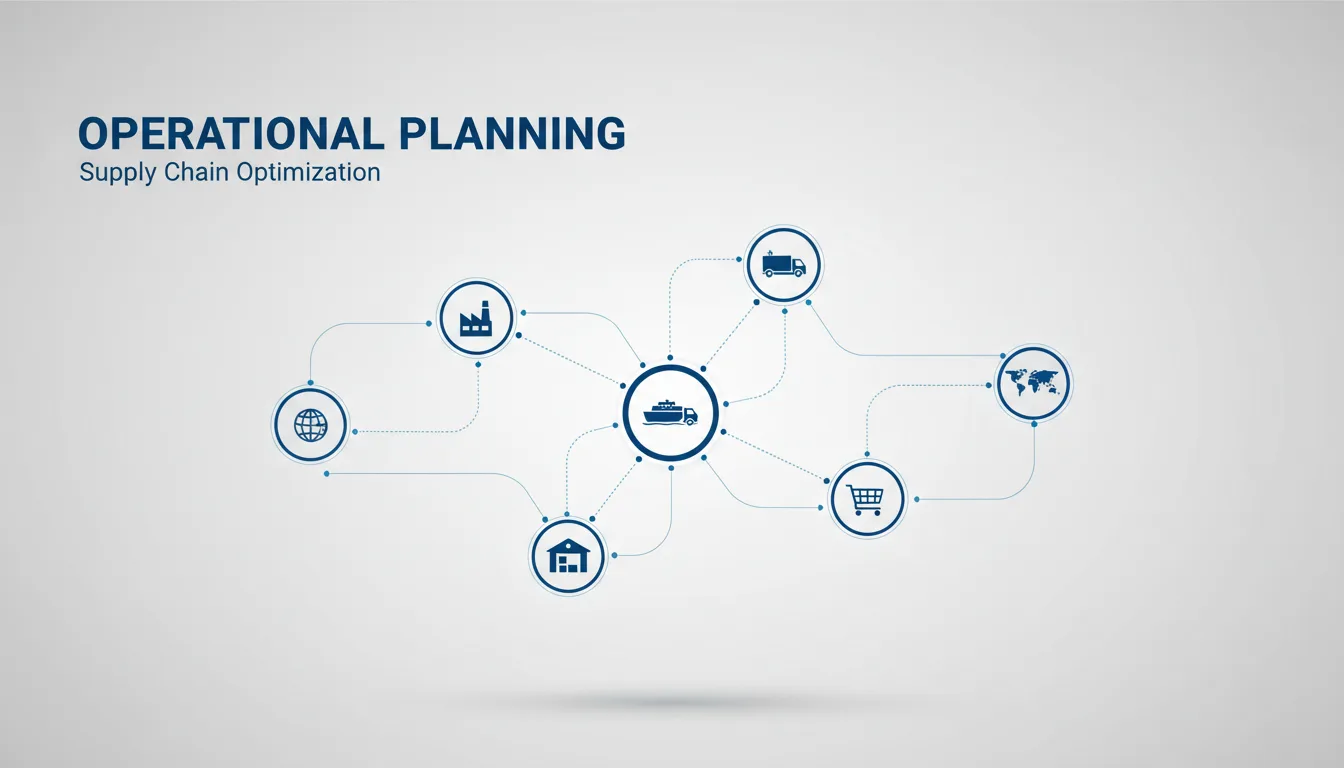
Overview
Operational planning is the systematic process of setting specific, measurable objectives and determining the most effective course of action to achieve those objectives within a defined time frame. This crucial planning process encompasses various logistics functions, such as inventory management, procurement, warehouse operations, and transportation, to ensure that resources are utilized efficiently and effectively. Proper operational planning not only facilitates smooth daily operations but also positions organizations to adapt to changing market demands and customer expectations, enhancing overall organizational resilience and competitive advantage.
Etymology and Origins
The term 'operational planning' derives from the combination of 'operation,' which has its roots in the Latin word 'operatio' meaning 'working, labor, performance,' and 'planning,' which traces back to the Old French word 'plan' meaning 'a drawing, a scheme.' The conceptual underpinnings of operational planning can be found in early forms of management and military logistics. The practice of organizing resources and activities for specific outcomes dates back to ancient civilizations for monumental construction projects or military campaigns.
However, the term 'operational planning' as a distinct management concept began to be formally documented and studied in management literature in the mid-20th century. It emerged as businesses grew in complexity and scale, necessitating more structured approaches than the informal methods of prior eras. Early applications often focused on optimizing production schedules and resource allocation within factories. Over time, as supply chains became global and interconnected, operational planning evolved to incorporate strategies from fields like systems theory and project management, reflecting the increasing complexities of modern supply chains and logistics operations. Frameworks such as the Supply Chain Operations Reference (SCOR) model, introduced in the late 1990s, further formalized and standardized the approach to operational processes, including planning.
Historical Development
Operational planning as a defined and academic practice began to gain significant momentum in the 1950s and 1960s, coinciding with the rise of modern logistics and the increasing complexity of industrial operations. Before this, rudimentary forms of planning existed within Scientific Management principles pioneered by Frederick Winslow Taylor in the early 20th century, which focused on efficiency and standardization of tasks. The development of tools like the Gantt chart in the 1910s also laid groundwork for visualizing and scheduling tasks.
Key chronological milestones and influential figures include:
- 1950s: The advent of Operations Research (OR), born out of World War II military logistics, began applying mathematical and analytical methods to solve complex organizational problems, including planning. Early computer applications for inventory control and production scheduling started to appear.
- 1960s: The formalization of Material Requirements Planning (MRP). Joseph Orlicky at IBM is widely credited for developing the concept and software for MRP in 1964, which revolutionized manufacturing by linking production to specific customer orders and bills of materials. This was a pivotal shift from reorder point systems to time-phased planning. Peter Drucker, a pioneer in management theories, emphasized the necessity of disciplined planning and objective setting in his seminal works, advocating for management by objectives (MBO).
- 1970s: MRP evolved into Manufacturing Resource Planning (MRP II). This expanded the scope beyond just materials to include financial planning, marketing, and human resources, integrating the entire manufacturing process. Early Enterprise Resource Planning (ERP) concepts began to emerge, aiming for holistic business process management.
- 1980s: The emergence of Just-In-Time (JIT) manufacturing, pioneered by Taiichi Ohno at Toyota, necessitated extremely careful and precise operational planning to minimize inventory costs and reduce waste. This decade also saw the rise of Total Quality Management (TQM), which emphasized continuous improvement and customer satisfaction, embedding quality considerations deeply into operational plans.
- 1990s: Widespread adoption of technology in operational planning, particularly through the integration of Enterprise Resource Planning (ERP) systems from companies like SAP and Oracle. These systems facilitated real-time data analysis across departments, enabling more integrated and responsive operational plans. The internet's commercialization also began to lay the foundation for global supply chain visibility.
- 2000s: Focus on Supply Chain Management (SCM) as a strategic differentiator. Operational planning became intertwined with SCM strategies, emphasizing collaboration across the entire network. The concept of Sales and Operations Planning (S&OP) gained prominence as a crucial cross-functional planning process.
- 2010s-Present: Rapid advancements in digitalization, automation, and data analytics. The rise of e-commerce and omnichannel logistics placed new demands on operational planning, requiring greater flexibility and speed. Technologies like Artificial Intelligence (AI) and Machine Learning (ML) are now being integrated for predictive analytics, demand forecasting, and optimized resource allocation.
Major publications during these decades, such as Oliver Wight's works on MRP II and Dreyer and Karp's seminal work on operational efficiency, underlined the importance of integrated planning and have since guided industry practices.
Core Concepts
Operational planning involves several key concepts, all working in concert to translate strategic goals into actionable steps:
- Goal Setting: Defining clear, measurable, achievable, relevant, and time-bound (SMART) objectives that align with the organization's overall strategic vision. For example, a goal might be to reduce warehouse picking errors by 15% within the next quarter.
- Resource Allocation: Determining the optimum distribution and utilization of available resources—including personnel (labor), technology (systems like mobile WMS), finances (budget), and physical assets (equipment, warehouse space)—to meet operational targets efficiently. This often involves trade-offs and optimization techniques.
- Workflow Design: Establishing efficient processes and systems to ensure that activities are carried out systematically and effectively. This includes defining steps for order fulfillment, inventory receiving, and other daily tasks, often explored through the Workflows Overview in a WMS. Proper workflow design minimizes bottlenecks and maximizes throughput.
- Performance Monitoring: Implementing Key Performance Indicators (KPIs) and other metrics to continuously assess progress against planned objectives, identify deviations, and adjust plans as necessary. Examples include order accuracy rates, inventory turnover, and on-time delivery percentages. This feedback loop is critical for continuous improvement.
- Capacity Planning: Ensuring that the operational capacity (e.g., warehouse space, labor hours, machine availability) is sufficient to meet anticipated demand, especially during peak seasons. This is often an iterative process that must be flexible enough to respond to unexpected fluctuations.
Types and Classifications
Operational planning can be classified based on various factors, reflecting different scopes, time horizons, and objectives:
- Strategic vs. Tactical vs. Operational: While strategic planning encompasses long-term organizational objectives (3-5+ years), and tactical planning bridges the gap with medium-term objectives (1-3 years), operational planning focuses on the short-term execution (daily, weekly, monthly) required to achieve tactical goals. It is the most granular level of planning.
- Contingency Planning: Preparing for unexpected events that may disrupt operations, such as natural disasters, supply chain disruptions, or sudden demand spikes. This involves developing alternative plans and ensuring business continuity and resilience. It's about 'what-if' scenarios to maintain service levels.
- Budgetary Planning: Integrating financial assessments and constraints into operational plans to determine the cost implications of different strategies and ensure financial viability. This includes forecasting expenses for labor, inventory, and equipment, and aligning them with revenue projections.
- Production Planning: Specifically in manufacturing, this type of planning determines how products will be produced to meet forecasted demand, considering resource availability, production capacity, and lead times. It encompasses master production scheduling and material requirements planning.
- Demand Planning: Forecasting customer demand for products or services over specific time horizons. Accurate demand planning is foundational for effective operational planning, influencing inventory levels, staffing, and production schedules.
- Inventory Planning: Determining optimal inventory levels for raw materials, work-in-progress, and finished goods to balance carrying costs with the risk of stockouts. Tools like visual inventory management systems assist in this.
Industry Applications
Various sectors implement operational planning to optimize their logistics processes, drive efficiency, and enhance customer satisfaction:
- Retail and E-commerce: Organizations like Amazon employ sophisticated operational planning to manage vast, complex supply chains, optimize order fulfillment, and ensure rapid delivery. This includes planning for peak seasons (e.g., Black Friday), optimizing warehouse layouts for picking efficiency, and managing last-mile delivery routes. Shopify inventory management is a prime example where granular operational planning impacts customer experience.
- Manufacturing: Companies leverage operational planning in Production Planning and Inventory Control (PPIC) to streamline production workflows, manage raw material procurement using purchase order management, schedule machine maintenance, and ensure timely product assembly. The goal is to minimize idle time and maximize output while meeting quality standards.
- Healthcare: Operational planning ensures effective resource allocation and inventory management in hospital supply chains, particularly for medical devices, pharmaceuticals, and critical supplies. It involves managing expiration dates, ensuring sterile environments, and planning for emergency responses, impacting patient care directly.
- Logistics and Transportation: Shipping companies utilize operational planning to optimize delivery routes, schedule vehicle maintenance, manage freight capacity, and coordinate cross-docking operations to reduce transit times and costs. This is critical for maximizing asset utilization and meeting tight delivery windows.
Benefits and Advantages
The advantages of effective operational planning are numerous and directly contribute to an organization's bottom line and strategic success:
- Increased Efficiency: By streamlining processes and optimizing resource use, operational planning minimizes waste, reduces operational costs, and improves overall productivity. Clear plans lead to less rework and fewer errors.
- Enhanced Flexibility and Responsiveness: Adaptable plans allow organizations to respond swiftly to market changes, unforeseen disruptions, or shifts in customer demand. This agility helps maintain service levels and seize new opportunities.
- Improved Accountability and Coordination: Clear objectives, defined roles, and performance metrics enhance team accountability across the organization. Operational plans provide a common roadmap, fostering better cross-functional communication and coordination.
- Better Resource Utilization: Optimal allocation of personnel, equipment, and inventory prevents underutilization or overextension of resources, leading to cost savings and improved operational flow. This includes optimizing bin put-away criteria for warehouse space.
- Higher Customer Satisfaction: Consistent and reliable operations, resulting from good planning, lead to accurate orders, on-time deliveries, and a better overall customer experience, which in turn builds brand loyalty.
Challenges and Limitations
Despite its benefits, operational planning faces several inherent challenges that organizations must actively manage:
- Data Overload and Integration Complexity: The sheer volume and variety of data from various sources (sales, inventory, production, logistics) can be overwhelming. Integrating disparate systems and ensuring data accuracy and consistency is a significant hurdle, impeding effective decision-making.
- Resource Constraints: Limited financial, human, or technological resources may hinder the implementation of comprehensive and optimal operational plans. Organizations must make difficult trade-offs and prioritize effectively.
- Resistance to Change: Organizational culture, employee habits, and a lack of understanding or buy-in can lead to resistance to proposed operational changes, limiting the effectiveness of even well-designed plans. Effective change management is crucial.
- Uncertainty and Variability: External factors such as economic fluctuations, geopolitical events, natural disasters, and unpredictable consumer behavior introduce significant uncertainty, making accurate forecasting and rigid planning difficult. Plans must be agile and adaptable.
- Lack of Real-time Visibility: Without real-time tracking and data, decision-makers might operate on outdated information, leading to suboptimal planning adjustments. This highlights the need for advanced systems.
Best Practices
To maximize the efficacy of operational planning, organizations should adopt a strategic and continuous approach:
- Cross-Department Collaboration: Encourage open communication and collaboration across all relevant departments (sales, marketing, production, logistics, finance). Implementing processes like Sales and Operations Planning (S&OP) ensures alignment of operational objectives with strategic goals.
- Continuous Improvement (Kaizen): Adopt a mindset of continuous improvement through regular planning reviews, post-mortem analysis of operational incidents, and agile adjustments. This iterative approach allows for learning and refinement over time.
- Technology Utilization: Leverage modern tools such as Warehouse Management Systems (WMS) and Order Management Systems (OMS) for real-time tracking, data analytics, and automation. Advanced analytics and AI can significantly enhance forecasting accuracy and optimization capabilities. For instance, automated purchase order quantity calculation can optimize procurement.
- Scenario Planning: Develop multiple operational plans based on different demand forecasts, resource availability, and potential disruption scenarios. This prepares the organization for various eventualities and enhances resilience.
- KPI-Driven Decision Making: Establish clear, actionable Key Performance Indicators (KPIs) and regularly monitor them to assess performance. Use these insights to make data-driven adjustments to operational plans rather than relying on intuition alone.
- Employee Training and Empowerment: Invest in training employees on new processes and technologies. Empower frontline staff to identify issues and suggest improvements, fostering a culture of ownership and continuous optimization.
Future Trends
The landscape of operational planning is rapidly evolving, driven by technological advancements and shifting market dynamics:
- Artificial Intelligence (AI) and Machine Learning (ML): AI-driven analytics can forecast demand patterns with unprecedented accuracy, optimize inventory levels dynamically, and route transportation more efficiently, thereby significantly enhancing planning capabilities. Predictive maintenance scheduling is another emerging application.
- Advanced Automation and Robotics: Emerging automated systems for inventory management, material handling, and resource allocation are streamlining planning processes and improving responsiveness. Robotic process automation (RPA) can automate routine planning tasks, freeing human planners for strategic decision-making.
- Sustainability and Green Logistics: Increasing emphasis on sustainable practices in operational planning reflects a growing awareness of environmental impact. This includes optimizing routes to reduce emissions, planning for reverse logistics, and sourcing environmentally friendly materials, influencing everything from procurement to last-mile delivery.
- Digital Twins and Simulation: The creation of digital replicas of physical supply chains and operations allows for comprehensive simulation and testing of various planning scenarios without impacting real-world operations. This enables proactive identification of bottlenecks and optimization opportunities.
- Hyper-personalization and Micro-fulfillment: The rise of customer expectations for highly personalized products and rapid delivery drives operational planning towards more granular, localized, and agile fulfillment models, often involving micro-fulfillment centers and advanced last-mile strategies.
Related Concepts
Operational planning is intrinsically linked with various logistics and business concepts. Understanding these connections can enhance operational capabilities and drive organizational success:
- Supply Chain Management (SCM): Operational planning is a critical component of SCM, focusing on the tactical and operational execution within the broader supply chain network.
- Inventory Management: Directly informs and is informed by operational planning, ensuring the right stock levels at the right time. Cycle counting and stock replenishment are operational tasks stemming from planning.
- Demand Forecasting: Provides the essential input for operational planning, predicting future customer needs to guide production, inventory, and resource allocation.
- Logistics Management: Encompasses the detailed planning, implementation, and control of the efficient, effective forward and reverse flow and storage of goods, services, and related information.
- Capacity Planning: Ensures that resources are available to meet demand, a crucial input to operational plans.
- Lean Manufacturing/Logistics: Methodologies that focus on waste reduction and efficiency, directly shaping how operational plans are formulated and executed.
Sources
- Mobile Warehouse Management System Overview
- Order Fulfillment Guide
- Workflows Overview
- Logistics Management and Strategy: Competing through the Supply Chain
- A History of Management Thought
- Management Thought, History of
- The SCOR Model and Supply Chain Management
- Scientific management
- Operations Research: An Introduction
- MRP: Material Requirements Planning
- Total Quality Management
- Supply Chain Digital Twin: A Key to Resilient and Agile Operations
- Healthcare Supply Chain Management: An Overview
- Automated Purchase Quantity
- How AI and Machine Learning Can Boost Supply Chain Performance
- Green Logistics: The Future of Sustainable Supply Chains
- Visual Inventory Management System
- Adding Inventory Guide
- Purchase Order Management
- Shopify Inventory Management
- Bin Put-Away Criteria
- Order Management System
- Cycle Counting Guide
- Stock Replenishment Guide