Of Work in Logistics and Supply Chain Management
Exploring the myriad dimensions of work in logistics, focusing on its significance, historical context, and modern applications.
Updated
Overview
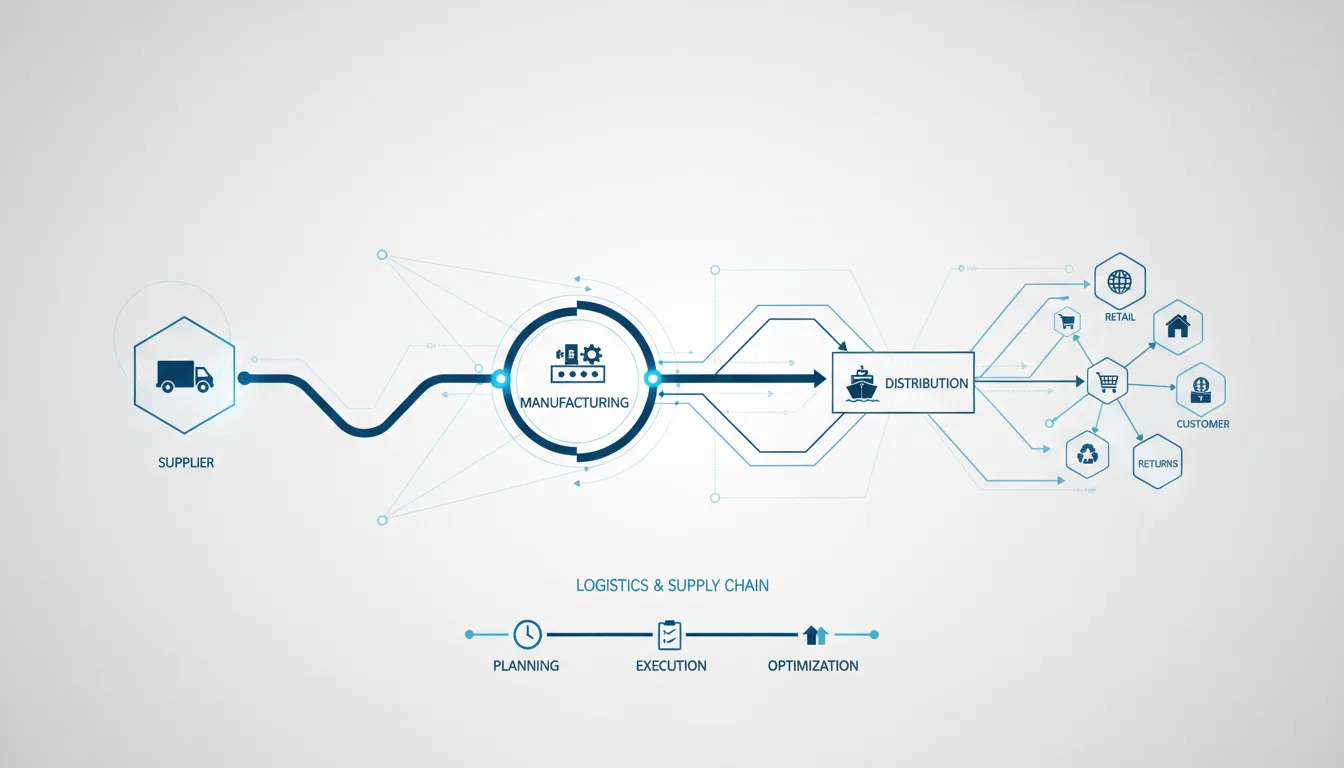
The term "work" in logistics, encompassing the phrase "of work," refers to the structured tasks, activities, and processes essential for the efficient flow and storage of goods, services, and related information from point of origin to point of consumption. It is a fundamental concept in supply chain management, involving the organization, execution, and evaluation of diverse logistics operations. The scope of work in this context spans critical functions such as warehousing, transportation, inventory management, and order fulfillment. A comprehensive understanding of the dynamics of work in logistics is paramount for enhancing operational efficiency, minimizing costs, ensuring regulatory compliance, and consistently meeting evolving customer expectations within today's highly competitive and globalized marketplace. This includes understanding workflows and how they drive productivity.
Etymology and Origins
The concept of "work" as a formalized, measurable activity, distinct from mere labor, has deep roots. While Adam Smith's The Wealth of Nations (1776) famously articulated the benefits of the division of labor, the specific focus on "work" as a unit of analysis in an organizational context gained prominence with the rise of industrialization.
The phrase "of work" and the scientific study of work processes emerged more distinctly in the late 19th and early 20th centuries. Pioneering figures like Frederick Winslow Taylor introduced the principles of scientific management, advocating for systematic analysis and optimization of tasks to improve industrial efficiency. His work, detailed in The Principles of Scientific Management (1911), aimed to define the "one best way" to perform tasks, thus formalizing the concept of "work" into discrete, optimizable units [7]. Similarly, Frank and Lillian Gilbreth developed motion studies, breaking down work into fundamental elements (therbligs) to eliminate wasteful movements and improve productivity.
Within logistics, the term "work" evolved from military origins, where the logistical function was crucial for troop and supply movement. The methodical planning and execution of these tasks became precursors to modern logistics operations. As business practices became more complex, particularly after World War II, the administrative and operational "work" involved in managing the flow of goods was increasingly recognized as a distinct, strategic function, leading to the development of formalized logistics and supply chain disciplines.
Historical Development
Work in logistics has undergone profound transformations throughout history, mirroring industrial and technological advancements:
-
Early 1900s (Scientific Management Era): The principles of scientific management, championed by Taylor, became widely adopted in manufacturing. Companies like Henry Ford's automotive plants implemented assembly lines, meticulously breaking down complex tasks into simpler, repetitive "work" units to achieve unprecedented levels of mass production and operational efficiency. This era focused on time-and-motion studies to optimize every aspect of manual labor.
-
1950s-1960s (Integrated Logistics Concept): Following World War II, the complex logistics of military operations inspired businesses to adopt more integrated approaches. The concept of "physical distribution management" emerged, recognizing the interconnectedness of transportation, warehousing, and inventory. Influential figures such as Peter Drucker emphasized management efficiency and viewed logistics as a "last frontier" for cost savings. Academic research and professional organizations, like the National Council of Physical Distribution Management (NCPDM, later CLM), began to formalize the field.
-
1970s-1980s (Supply Chain Management & Technology Adoption): This period saw the formal emergence of supply chain management (SCM), acknowledging the strategic importance of integrating work across all entities from raw material suppliers to end customers. Pioneering initiatives like Toyota's Just-In-Time (JIT) system, developed by Taiichi Ohno, revolutionized inventory management and production, fundamentally altering how "work" was scheduled and executed to minimize waste. Concurrently, the development of Material Requirements Planning (MRP) systems by companies like IBM began to computerize production planning and inventory control, marking an early milestone in technology-driven logistics work. Seminal publications like The Logistics of Supply Chain Management by Ronald H. Ballou further shaped corporate logistics strategies.
-
1990s-Present (Digital Transformation & Globalization): The advent of the internet, e-commerce, and globalized trade exponentially increased the complexity and scope of logistics work. Technology became integral, with widespread adoption of systems such as Warehouse Management Systems (WMS), Enterprise Resource Planning (ERP) software, and Transportation Management Systems (TMS). These systems automate and optimize tasks, from bin put-away criteria to complex route planning. The emphasis shifted to real-time visibility, collaboration, and data-driven decision-making. More recently, automation, artificial intelligence (AI), machine learning (ML), and the Internet of Things (IoT) have become crucial for streamlining logistics operations, predicting demand, and optimizing labor allocation through productivity tracking.
Core Concepts
The core concepts of work in logistics are designed to ensure seamless operations and strategic alignment:
- Task Allocation and Specialization: Defining specific roles, responsibilities, and workflows for workers to maximize efficiency and expertise. This involves breaking down complex logistics functions into manageable tasks and assigning them to individuals or teams with appropriate skills, often guided by Standard Operating Procedures (SOPs) to ensure consistency and quality.
- Process Integration and Synchronization: Coordinating tasks and information flows across various supply chain functions and stakeholders, both internal and external, to ensure alignment with overall business objectives. This includes integrating systems and processes from procurement to delivery, often facilitated by robust Order Management Systems (OMS) and collaborative platforms.
- Performance Measurement and Optimization: Establishing clear metrics and Key Performance Indicators (KPIs) to evaluate productivity, efficiency, and effectiveness in logistics operations. Examples include order accuracy rates, on-time delivery percentages, inventory turnover, and cost per shipment. Continuous monitoring and analysis allow for identifying bottlenecks and implementing improvements, such as leveraging cycle counting to maintain inventory accuracy.
- Workflow Management: The systematic organization and optimization of a series of tasks that need to be executed to achieve a specific outcome. Workflows in logistics ensure tasks are performed in the correct sequence, by the right person or system, at the right time, minimizing delays and errors. This can involve anything from receiving goods to processing returns.
Types and Classifications
Several distinct types of work are integral to logistics operations:
- Warehouse Operations: This encompasses all activities within a storage facility, including receiving, putaway, storage, picking, packing, and shipping. Efficient warehouse operations are critical for cost control and service levels. Techniques such as cross-docking optimize this work by minimizing storage time, while advanced WMS features like bin put-away criteria streamline inventory placement.
- Inventory Management: This involves tasks focused on maintaining optimal inventory levels, ensuring product availability, and minimizing carrying costs. This work includes demand forecasting, stock replenishment, and inventory accuracy checks. The introduction of tools such as visual inventory management systems helps simplify these tasks by providing real-time visibility and control. Stock replenishment strategies are key to balancing supply and demand.
- Order Fulfillment: Encompasses the entire process from order placement to customer delivery, including picking, packing, and shipping. This is essential for meeting customer demand efficiently. Modern software, like pick, pack, ship software, streamlines these processes, and detailed guidance can be found in the Order Fulfillment Guide. Mobile order fulfillment software further enhances efficiency by empowering warehouse staff with real-time data on the go.
- Transportation Management: Involves planning, executing, and optimizing the physical movement of goods. This includes carrier selection, route optimization, freight negotiation, and shipment tracking. The "work" here focuses on ensuring timely and cost-effective delivery.
- Purchasing and Procurement: The work of sourcing and acquiring goods and services needed for operations. This involves vendor management, negotiation, and managing purchase orders. Effective purchase order management is crucial for controlling input costs and ensuring supply continuity.
Benefits and Advantages
Understanding and optimizing the principles of work in logistics offers numerous strategic advantages:
- Cost Efficiency and Profitability: Streamlined processes, optimized resource allocation, and reduced waste directly lead to lower operational costs and enhanced profitability. For instance, efficient batch picking can significantly cut labor time in a warehouse.
- Improved Service Levels and Customer Satisfaction: Faster response times, accurate order fulfillment, and reliable delivery directly contribute to higher customer satisfaction and loyalty. Meeting customer expectations, often influenced by the convenience of e-commerce, is paramount for brand reputation.
- Increased Adaptability and Resilience: Effective logistics planning and agile work processes allow businesses to quickly adjust to market changes, demand fluctuations, and unexpected disruptions (e.g., supply chain shocks, natural disasters), thereby building greater supply chain resilience.
- Enhanced Productivity and Employee Morale: Clear workflows, proper training, and the right tools (e.g., mobile warehouse management systems) can boost employee productivity and job satisfaction by reducing frustration and improving task clarity. Productivity tracking can also identify areas for improvement and reward efficient work.
Challenges and Limitations
Despite its benefits, managing work in logistics is fraught with complex challenges:
- Complexity in Coordination: The highly interconnected nature of global logistics often leads to difficulties in synchronizing various tasks, departments, and external partners. Managing information flow and physical movement across diverse geographies and time zones requires robust systems and meticulous planning.
- Technology Dependency and Cybersecurity Risks: Increased reliance on advanced technology, while beneficial, introduces vulnerabilities. System failures, data breaches, and cyber-attacks can severely disrupt operations, necessitating robust cybersecurity measures.
- Labor Management and Skill Gaps: The logistics industry faces persistent challenges in attracting, training, and retaining skilled labor. An aging workforce, coupled with the demand for new skills in automation and data analytics, creates significant labor shortages and necessitates continuous training and development programs. Managing employee productivity and tracking their performance effectively becomes critical for operational success.
- Regulatory Compliance and Global Trade Barriers: Navigating complex international trade regulations, customs procedures, and varying environmental standards adds significant layers of work and potential hurdles, especially for global supply chains.
Best Practices
To optimize logistics work and overcome inherent challenges, companies should adopt several best practices:
- Strategic Technology Adoption: Implement advanced systems like mobile warehouse management to automate repetitive tasks, improve data accuracy, and enhance real-time visibility. Leverage tools for visual warehouse layout to optimize physical space and workflow. Order management systems streamline order processing from receipt to fulfillment.
- Continuous Training and Development: Invest in regular personnel training to ensure employees are proficient in new technologies, lean methodologies, and evolving industry standards. This also helps in addressing skill gaps and improving overall employee productivity.
- Data Analytics and Performance Monitoring: Utilize data analytics tools to monitor performance metrics, identify inefficiencies, predict demand fluctuations, and make informed decisions. Establishing clear KPIs and regularly reviewing them is crucial for continuous improvement.
- Process Standardization and Optimization: Develop clear Standard Operating Procedures (SOPs) for all key logistics tasks. Regularly review and optimize these processes, perhaps using lean principles, to eliminate waste and improve efficiency. Utilize workflows to ensure consistency and repeatability.
- Collaboration and Visibility: Foster strong relationships with supply chain partners and leverage technology to enhance end-to-end supply chain visibility. This enables proactive problem-solving and better coordination of "work" across the entire network.
Future Trends
The future of work in logistics is being profoundly shaped by several transformative trends:
- Advanced Automation and Robotics: Increasing deployment of robotics for tasks like picking, packing, and sorting, as well as autonomous vehicles for transportation. This shift will redefine human roles, focusing on oversight, maintenance, and complex problem-solving. This includes advanced warehouse automation and bin packing optimization algorithms.
- Artificial Intelligence (AI) and Machine Learning (ML): AI and ML will drive predictive analytics for demand forecasting, inventory optimization (e.g., automated purchase quantity), route optimization, and even proactive maintenance of equipment. These technologies will augment human decision-making and automate routine cognitive tasks.
- Sustainable Logistics and Circular Economy: Growing emphasis on eco-friendly logistics practices to reduce carbon footprints, minimize waste, and incorporate circular economy principles (e.g., reverse logistics for recycling and reuse). The "work" will involve designing sustainable supply chains and measuring environmental impact.
- Blockchain Technology: Enhancing transparency, security, and traceability across supply chain transactions. Blockchain can create immutable records of goods movement, reduce fraud, and streamline customs processes, fundamentally altering the administrative "work" involved in verification and trust.
- Hyper-personalization and Last-Mile Innovation: The demand for faster, more flexible, and highly personalized delivery options will drive innovation in last-mile logistics, including drone delivery, crowd-sourced delivery, and micro-fulfillment centers. This requires dynamic allocation of work and rapid adaptation.
Related Concepts
Work in logistics intersects with many critical disciplines, offering a broader understanding of operational excellence. These include:
- Supply Chain Management (SCM): The overarching discipline that integrates logistics work across all partners.
- Operations Management: Focuses on designing and controlling the process of production and redesigning business operations in the production of goods or services.
- Inventory Control: The systematic management of stock to balance availability and cost, supported by tools like visual inventory management systems and stock replenishment guides.
- Industrial Engineering: Concerned with the optimization of complex processes, systems, or organizations, highly relevant to work measurement and process improvement in logistics.
- Operations Research: Applies advanced analytical methods to help make better decisions, often used for optimization problems in logistics like routing and scheduling.
Understanding the evolving nature and scientific management of work within logistics is vital for supply chain professionals looking to optimize their operations, adapt to future trends, and ensure long-term organizational success. Modern platforms like SkuSavvy provide the tools to manage these complex workflows, from warehouse layout to detailed employee productivity tracking.
Sources
- Mobile Warehouse Management System Overview
- Order Fulfillment Guide
- Visual Inventory Management System
- Cycle Counting Guide
- Cross-Docking Guide
- Frederick Winslow Taylor
- The Principles of Scientific Management
- Motion study
- How Henry Ford Made His Money
- Drucker on Logistics
- Just-in-Time (JIT) System: What It Is, How It Works, and Examples
- The evolution of MRP, MRP II, and ERP
- What is cybersecurity? Definition, best practices, and more
- The trucking industry labor shortage: What you need to know
- Green Logistics and Supply Chain Management
- How blockchain is transforming the supply chain
- What Is Supply Chain Management (SCM)?
- Workflows Overview
- Division of Labor
- Logistics: The evolution of a concept and its implications for marketing thought
- Standard Operating Procedure (SOP)
- Order Management System
- The Importance of Key Performance Indicators (KPIs) in Logistics
- Warehouse Operations Management: Your Guide to Efficiency
- Bin Put-Away Criteria
- Stock Replenishment Guide
- Pick, Pack, Ship Software
- Mobile Order Fulfillment Software
- Purchase Orders Guide
- Purchase Order Management
- Batch Picking Guide
- Supply Chain Resilience
- Productivity Tracking
- Visual Warehouse Layout
- Automated Purchase Quantity
- Bin Packing Visualizer