Of Sustainability in Logistics and Supply Chain Management
This article explores the concept of sustainability within logistics, emphasizing its importance, practices, and future implications.
Updated
Of Sustainability in Logistics and Supply Chain Management
Overview
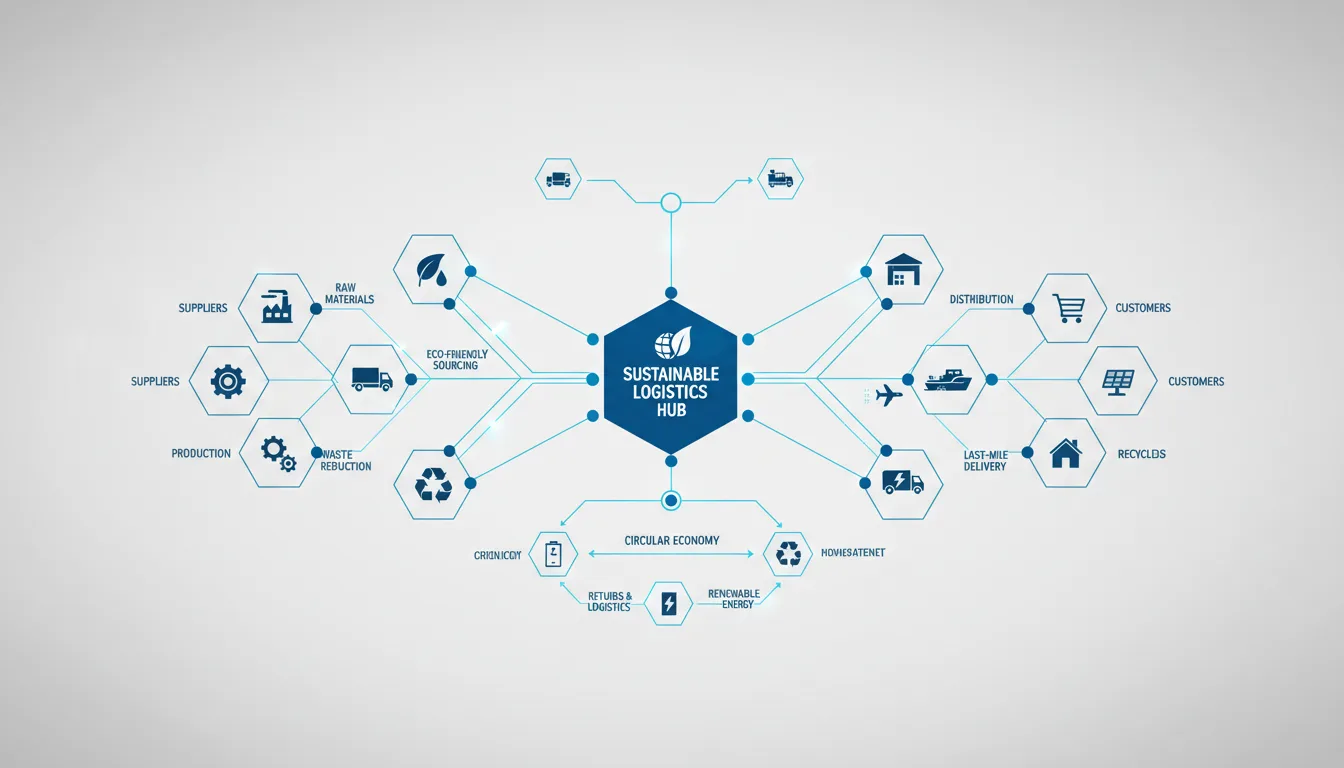
Sustainability in logistics refers to the practices that aim to minimize the environmental impact of supply chain operations. This encompasses processes from sourcing raw materials to delivering products to consumers. The importance of sustainability has increased rapidly, driven by consumer demand, regulatory pressures, and corporate responsibility initiatives. Supply chain professionals are increasingly recognizing the need for sustainable policies to enhance efficiency, reduce costs, and improve brand image. Studies show that companies focusing on sustainability can experience up to 20% cost savings due to optimized operations.
Etymology and Origins
The term 'sustainability' originates from the Latin word sustinere, which means "to hold up" or "to maintain." Documented usage in environmental contexts began in the 1980s with the Brundtland Report, which defined sustainable development as "development that meets the needs of the present without compromising the ability of future generations to meet their own needs." As global awareness of environmental issues increased throughout the 1990s and 2000s, the term expanded to encompass various industries, including logistics and supply chain management. The evolution of sustainability in logistics illustrates a shift from a mere compliance approach to a competitive advantage strategy for many organizations.
Historical Development
The concept of sustainability in logistics began to gain traction in the 1990s, identifying key figures like Paul Hawken and William McDonough who advocated for sustainable practices. Their ideas culminated in seminal publications such as Cradle to Cradle (2002), which emphasized product design for sustainability. The 1997 establishment of the ISO 14001 standard marked a significant milestone, providing a voluntary framework for organizations to manage their environmental responsibilities. Over the decades, technologies such as electric vehicles, eco-friendly packaging, and advanced analytics have emerged, enhancing sustainability efforts across supply chains. In 2006, the concept of Green Supply Chain Management was formalized, integrating environmental considerations into traditional supply chain operations. This progression reflects the industry's shift from reactive compliance to proactive sustainability initiatives.
Core Concepts
Sustainability in logistics revolves around several core concepts:
- Green Logistics: This involves reducing carbon footprints through optimized transportation and distribution strategies. Techniques include route planning to minimize distances traveled and using alternative fuels such as biodiesel and electricity.
- Circular Economy: A system focused on maintaining resources by reusing, recycling, and restoring materials within the supply chain. Organizations are encouraged to design products with their end-of-life in mind, promoting practices like modular design.
- Lean Principles: Integrating lean methodologies can enhance waste reduction in logistics operations, leading to increased efficiency and lower environmental impact.
Industry Applications
Sustainability practices in logistics are applied across various sectors. For instance, retail companies are increasingly relying on sustainable supply chains to meet consumer demand for environmentally responsible products. In the automotive industry, companies like Tesla are shifting towards electric delivery vehicles to reduce emissions. Furthermore, major corporations like Unilever have pledged to achieve net-zero emissions by investing in sustainable farming practices and green logistics solutions.
Benefits and Advantages
The advantages of implementing sustainable logistics practices are numerous. Organizations benefit from cost savings through efficient resource use and waste reduction. By committing to sustainable practices, businesses can improve their brand image, thus attracting environmentally conscious consumers. Furthermore, many governments offer tax incentives and grants for green logistics initiatives, further bolstering businesses' bottom lines.
Challenges and Limitations
Despite the benefits, several challenges hinder the widespread adoption of sustainability in logistics. The initial investment in technology and training can be significant. Organizations may struggle with supply chain collaborations needed for shared sustainability goals. Resistance from stakeholders accustomed to traditional methods can also impede progress, along with the lack of standardized metrics for measuring sustainability performance across the industry.
Best Practices
To successfully implement sustainability in logistics, companies should consider several best practices:
- Conduct Life Cycle Assessments to evaluate the environmental impact of products from sourcing to disposal. This allows organizations to identify high-impact areas for improvement.
- Embrace Collaborative Transportation, where multiple companies share carrier capacity to reduce empty miles, thus optimizing overall transportation costs.
- Invest in green technologies, such as electric delivery vehicles and energy-efficient warehouse designs, which have been shown to yield significant operational efficiencies.
Future Trends
Looking ahead, sustainability in logistics is likely to evolve with advancements in technology. Innovations such as artificial intelligence are being utilized for predictive analytics, optimizing delivery routes, and inventory management. Increased automation and data transparency will further support sustainability efforts. Additionally, as consumer awareness grows and regulations tighten, companies will increasingly prioritize sustainable practices, driving a significant shift in logistics operations. The rise of blockchain technology may also enhance traceability in supply chains, allowing for better accountability in sustainable logistics practices.
Related Concepts
Sustainability in logistics is intrinsically linked to various principles in supply chain management, such as circular economy practices, supply chain resilience, and corporate social responsibility (CSR). Understanding these interconnections is vital for logistics professionals aiming to integrate sustainable practices into their operations effectively.