Mile Optimization in Logistics
Mile optimization is a critical logistics strategy aimed at reducing transportation costs while maintaining efficiency and service quality. This article explores its concepts, methods, and real-world applications.
Updated
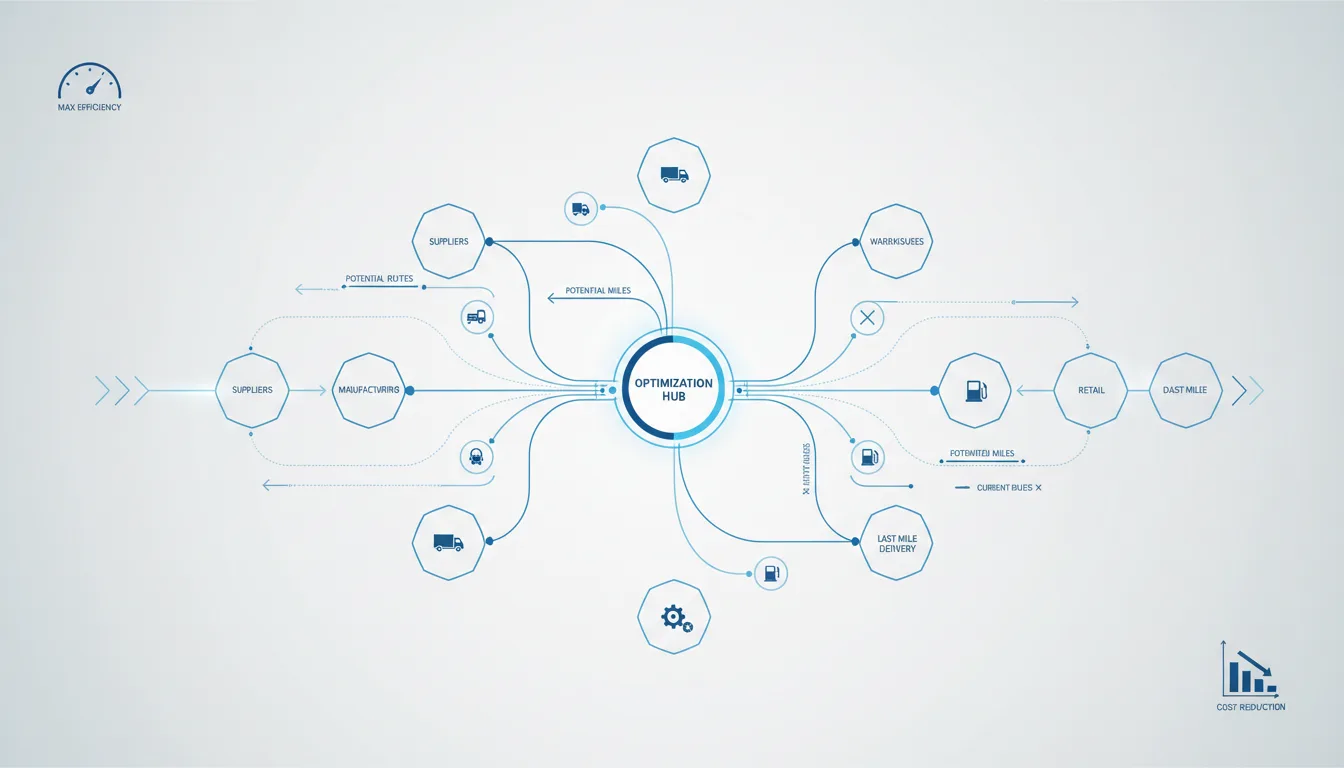
Mile Optimization in Logistics
Overview
Mile optimization in logistics refers to the systematic effort to minimize the distance traveled by vehicles in delivery and transportation processes. The primary goal is to reduce transportation costs, enhance service quality, and improve operational efficiency. Given that transportation costs can account for a significant portion of the total logistics expense, effective mile optimization strategies are crucial for both profitability and sustainability in the supply chain. By optimizing routes and load capacities, businesses can achieve substantial savings, lower their carbon footprint, and deliver goods more reliably across increasingly complex global supply networks.
Etymology and Origins
The concept of minimizing travel distance has its roots in mathematics and operations research. The fundamental mathematical challenge addressed by mile optimization is closely related to the Traveling Salesman Problem (TSP). This problem asks for the shortest possible route that visits a set of cities and returns to the origin city, and was formally studied in the 1930s by mathematicians such as Karl Menger in Vienna and Hassler Whitney at Princeton. Earlier iterations of route optimization can be traced back to the 18th century with Leonhard Euler's work on the Königsberg bridge problem, which laid the groundwork for graph theory.
The specific term "mile optimization" likely emerged in the latter half of the 20th century as logistics evolved into a distinct discipline, driven by the increasing complexity of global supply chains and advances in computational power. As businesses began to view logistics as a strategic function rather than just a cost center, the need for quantitative methods to analyze and reduce transportation mileage became paramount. This shift coincided with the rise of specialized logistics management software in the 1980s and 1990s, where the term explicitly described the goal of minimizing distance traveled for economic and operational efficiency.
Historical Development
The evolution of mile optimization parallels advancements in mathematics, computing, and logistics theory:
-
Pre-20th Century: Manual Planning & Heuristics
Before modern technology, route planning relied on local knowledge, experience, and simple heuristics. Merchants, military strategists, and explorers developed efficient routes through trial and error, leveraging geographical understanding, practical considerations like terrain and weather, and the availability of resources. The focus was on connecting points without systematic measurement of total distance, primarily using mental models and hand-drawn maps. Ancient Roman road networks, for instance, were a testament to large-scale infrastructure planning designed to connect territories efficiently, though without the mathematical optimization tools of today. -
Early 20th Century (1930s-1950s): Operations Research & TSP Formalization
The advent of Operations Research (OR) during World War II marked a turning point. OR specialists, such as those working for the British and US military, used mathematical models to optimize resource allocation, convoy routing, and supply chain logistics for military efforts. A pivotal development was George Dantzig's work on linear programming in 1947, which provided a foundational framework for solving complex optimization problems. This practice later transitioned to commercial applications, laying the groundwork for systematic transportation planning. During this period, the TSP was formally defined and explored, sparking interest in algorithmic solutions for shortest path problems. -
Mid-20th Century (1960s-1980s): Algorithmic Beginnings & JIT Influence
The rise of mainframe computers enabled the first algorithmic approaches to Vehicle Routing Problems (VRP). Early algorithms, though computationally intensive, demonstrated the potential for automated route planning. A significant early heuristic was the Clarke-Wright savings algorithm, developed in 1964, which was among the first practical methods for solving VRPs for multiple vehicles. Concurrently, the Just-In-Time (JIT) manufacturing philosophy pioneered by Toyota emphasized minimizing inventory and waste—a principle that includes minimizing transportation waste and indirectly promotes efficient mileage. The limited computing power meant these early solutions were often used for strategic planning rather than dynamic, daily routing. -
Late 20th Century (1990s): GIS, GPS, and Dedicated Software
The widespread adoption of Geographic Information Systems (GIS) and Global Positioning Systems (GPS) revolutionized mile optimization. GIS provided detailed digital maps and spatial data while GPS offered real-time vehicle location and navigation. This era witnessed the emergence of dedicated commercial route optimization software from companies like Roadnet Technologies (now part of Omnitracs) and ORTEC, allowing businesses to plan and track routes with unprecedented accuracy and efficiency. The growth of personal computing and networking made these solutions more accessible to a wider range of businesses. -
21st Century (2000s-Present): Real-time, AI, and Last-Mile Focus
Modern mile optimization leverages sophisticated Transportation Management Systems (TMS) integrated with real-time traffic data, weather conditions, and predictive analytics. The boom in e-commerce has emphasized the critical need for last-mile delivery optimization, where AI and machine learning algorithms enable dynamic re-routing, crowd-sourced delivery models, and advanced parcel consolidation. Internet of Things (IoT) sensors in vehicles provide continuous data streams for real-time adjustments and performance monitoring. SkuSavvy's shipping and fulfillment software exemplifies how modern platforms integrate these capabilities to streamline dispatch and delivery.
Key Principles and Strategies
Effective mile optimization relies on several interconnected strategies:
- Route Optimization: The core of mile optimization involves using algorithms to determine the most efficient path for a vehicle to visit multiple destinations. Factors considered include distance, time windows, vehicle capacity, traffic patterns, and driver availability. Modern systems utilize advanced algorithms to calculate optimal routes that minimize miles and travel time.
- Load Consolidation: Maximizing cargo capacity reduces the number of trips required. This involves consolidating multiple smaller shipments into full truckloads (FTL) or optimizing less-than-truckload (LTL) shipments. Efficient bin packing and warehouse layouts contribute significantly to this process by ensuring goods are loaded effectively and quickly.
- Network Design: Strategically locating warehouses, distribution centers, and cross-docking facilities can drastically reduce overall travel distances. A well-designed network, often utilizing a hub-and-spoke model, minimizes the average distance from origin to destination. Cross-docking operations facilitate rapid transfer of goods without long-term storage, thus reducing transit times and miles.
- Dynamic Routing and Re-routing: Unlike static route planning, dynamic routing involves continuously adjusting routes in real-time based on live data, such as traffic congestion, road closures, new orders, or delivery delays. This adaptability ensures that operations remain efficient even amidst unexpected events, minimizing unnecessary mileage and delays.
- Backhauling: Planning return trips to carry goods back to the origin or another profitable destination, rather than returning empty, significantly improves vehicle utilization and cost-efficiency. This requires sophisticated planning and often integrations with various logistics partners or freight exchanges.
- Last-Mile Delivery Optimization: This often most expensive and complex segment of logistics benefits from specialized strategies such as dynamic routing, crowd-sourced delivery, drone delivery, and localized micro-fulfillment centers. Mobile order fulfillment software plays a critical role in enabling efficient last-mile operations.
- Demand Forecasting: Accurate prediction of future demand helps optimize inventory placement and pre-plan delivery routes, reducing the need for expedited shipping or inefficient last-minute runs. Integrating demand data into route planning is a key best practice for proactive mile optimization.
Technologies Enabling Mile Optimization
Technological advancements have been central to the practical implementation of mile optimization:
- Transportation Management Systems (TMS): These platforms are crucial for planning, executing, and optimizing the physical movement of goods, providing features for route planning, carrier selection, freight tendering, and tracking. SkuSavvy's order management system integrates various functions to streamline the shipping process.
- Geographic Information Systems (GIS) & GPS: GIS provides the foundational mapping data while GPS enables real-time location data, facilitating accurate tracking, navigation, and dynamic re-routing based on live conditions. The integration of GIS data with traffic analytics provides a comprehensive view for route planners.
- Advanced Analytics & AI/Machine Learning: These technologies leverage vast datasets (traffic, weather, delivery history, driver behavior) to predict optimal routes, identify efficiencies, and automate routing decisions. AI-driven logistics solutions are increasingly becoming the norm, enabling sophisticated predictive modeling and autonomous decision-making.
- Fleet Management Systems: These systems monitor vehicle performance, fuel consumption, driver behavior, and maintenance schedules, all contributing to overall operational efficiency and safety. Maintaining well-optimized fleets directly supports mile optimization by ensuring vehicles are always available and performing optimally.
- Warehouse Management Systems (WMS): While not directly optimizing miles on the road, an efficient WMS, like SkuSavvy's mobile warehouse management system, ensures that goods are picked, packed, and loaded swiftly and accurately, minimizing vehicle dwell time at the warehouse and preventing delays that could impact route adherence.
- Internet of Things (IoT) Sensors: Devices embedded in vehicles, cargo, and infrastructure provide real-time data on location, temperature, humidity, vehicle diagnostics, and traffic conditions. This rich data stream feeds into TMS and AI systems for hyper-accurate tracking and dynamic adjustments.
Benefits of Mile Optimization
Implementing mile optimization strategies yields significant advantages:
- Cost Reduction: The most immediate benefit is a substantial decrease in transportation costs stemming from less fuel consumption, lower vehicle wear and tear, reduced maintenance, and optimized labor hours. Savings can range from 10-30% on transportation expenses for companies that effectively implement these strategies.
- Environmental Impact: Fewer miles driven translate directly to lower carbon emissions and a smaller environmental footprint, thus contributing to corporate sustainability goals and potentially meeting regulatory requirements.
- Enhanced Service Quality: Optimized routes lead to more accurate estimated times of arrival (ETAs), faster deliveries, and improved on-time performance, thereby boosting customer satisfaction. Automated rate selection and efficient pick, pack, ship processes further support this enhancement by ensuring accurate and timely order fulfillment.
- Improved Operational Efficiency: Better utilization of assets (vehicles and drivers), streamlined planning processes, and reduced administrative overhead contribute to overall operational excellence. Drivers experience more predictable routes, reducing stress and improving morale.
- Increased Capacity: By achieving more with less, businesses effectively increase their delivery capacity without requiring an expanded fleet, which is especially critical during peak seasons or high-demand periods.
Practical Applications and Case Studies
Mile optimization principles are applied across diverse industries, showcasing tangible benefits:
- E-commerce Last-Mile Delivery: Companies like Amazon and UPS utilize advanced algorithms to optimize millions of daily package deliveries. Their systems continuously adjust routes in real-time based on traffic, weather, and new orders, ensuring packages arrive within tight time windows. For instance, UPS's ORION (On-Road Integrated Optimization and Navigation) system has reduced miles driven by millions annually, saving fuel and cutting emissions.
- Food and Beverage Distribution: PepsiCo and Coca-Cola employ route optimization to deliver products to thousands of retail locations daily. By optimizing delivery sequences, considering vehicle capacity, and managing time windows for store deliveries, they significantly reduce fuel costs and ensure fresh product availability. A well-known example is how Frito-Lay (a PepsiCo subsidiary) optimized its distribution routes to improve delivery frequency and customer service while minimizing miles.
- Field Service Management: Utility companies (e.g., gas, electric, telecom) deploying technicians for maintenance and installations use mile optimization to schedule appointments efficiently. Optimizing technician routes not only reduces travel time and fuel but also allows more service calls per day, improving customer response times and operational throughput.
- Waste Management: Companies like Waste Management or local municipal services optimize collection routes for refuse and recycling trucks. Given the heavy vehicles and specific collection points, efficient routing directly translates to significant fuel savings and reduced operational hours, contributing to lower operational costs and environmental benefits.
Challenges in Mile Optimization
Despite its numerous benefits, mile optimization presents several challenges:
- Dynamic Variables: Factors such as traffic congestion, weather conditions, road closures, and last-minute order changes can disrupt optimized routes, requiring real-time adaptability and robust systems capable of instant recalculation.
- Data Accuracy and Integration: Effective optimization relies on accurate and up-to-date data regarding customer locations, delivery windows, vehicle capacities, and driver availability. Integrating this data from diverse systems (TMS, WMS, ERP, CRM) can be complex and time-consuming, often requiring significant IT investment.
- Computational Complexity: For large-scale operations with numerous stops, vehicles, and constraints (e.g., time windows, vehicle types), calculating truly optimal routes remains a computationally intensive issue. Finding the absolute optimal solution can be NP-hard, necessitating the use of sophisticated heuristics and metaheuristics that find near-optimal solutions within practical timeframes.
- Driver Acceptance and Training: Drivers may initially resist new routes generated by optimization software in favor of familiar paths. Training and demonstrating the benefits of optimization software are essential for fostering adoption and ensuring compliance. Resistance can stem from perceived loss of control or distrust in automated systems.
- Infrastructure Limitations: In certain areas, poor road infrastructure, inaccurate mapping data, or regulatory restrictions (e.g., truck routes, weight limits) can obstruct effective route optimization efforts. Developing countries or rural areas often face greater challenges in this regard.
- Implementation Costs: Investing in advanced TMS, GIS, and AI-driven optimization software, along with necessary hardware and training, can represent a significant upfront cost for businesses, especially SMEs. Demonstrating a clear Return on Investment (ROI) is critical for securing budget.
Future Trends
The future of mile optimization will be shaped by ongoing technological innovations and evolving market demands:
- Hyper-personalization and Micro-fulfillment: The growing demand for faster, more adaptable delivery options will drive further decentralization of distribution, utilizing micro-hubs and localized inventory to optimize the final mile. SkuSavvy's visual inventory management system can support this by providing granular visibility into stock levels across various locations, enabling efficient inventory positioning for micro-fulfillment.
- Autonomous Vehicles and Drones: While still in nascent stages, autonomous vehicles and drones have the potential to redefine mile optimization by possibly operating continuously, reducing labor costs, and accessing challenging areas. These technologies promise to bring unprecedented levels of precision and efficiency to routing decisions.
- Predictive Logistics: By leveraging AI and big data, logistics systems will increasingly predict future demand, potential disruptions (e.g., traffic incidents, weather), and optimal routing scenarios before they occur, transitioning from reactive to proactive optimization. This will include self-learning algorithms that continuously refine their predictions and recommendations.
- Sustainability and Green Logistics: Environmental concerns will drive innovations aimed at optimizing routes for electric vehicles (considering charging infrastructure), consolidating shipments to reduce emissions, and employing sustainable transport modes. Mile optimization will be central to achieving ambitious carbon neutrality goals.
- Digital Twins and Simulation: Developing virtual models of supply chain networks and vehicle fleets will enable logistics experts to simulate different optimization strategies and their effects prior to real-world implementation. This will enhance efficiency without disrupting operations, allowing for rigorous testing of new routing algorithms and network configurations.
Mile optimization remains foundational to efficient logistics, continuously evolving alongside technology and industry demands to enhance delivery speed, reduce costs, and promote sustainability. Its strategic importance will only grow as supply chains become more complex and customer expectations for rapid, reliable delivery continue to rise.
Sources
- Transportation costs as a percentage of total logistics costs in the U.S.
- Traveling Salesman Problem - Wikipedia
- On the History of the Traveling Salesman Problem
- Hassler Whitney, Pioneer of Topology and Singularity Theory, Dies at 96
- Konigsberg bridge problem - Britannica
- The Handbook of Logistics and Distribution Management
- Operations research - Wikipedia
- Just-in-Time (JIT) - Lean Enterprise Institute
- The History of GIS - Esri
- GPS History - Official U.S. government information about the Global Positioning System (GPS)
- Transportation Management System (TMS) - Gartner Glossary
- How to win with last-mile delivery - McKinsey & Company
- AI for Logistics - IBM Research Blog
- Shipping & Fulfillment Software - SkuSavvy
- Mobile Order Fulfillment Software - SkuSavvy
- What is Route Optimization? - Investopedia
- Bin Packing Visualizer - SkuSavvy
- Cross-Docking Guide - SkuSavvy
- Integrations Hub - SkuSavvy
- Order Management System - SkuSavvy
- Mobile Warehouse Management System - SkuSavvy
- Bin Put-Away Criteria - SkuSavvy
- Batch Picking Guide - SkuSavvy
- Why Route Optimization Matters For Your Business - Descartes
- Automated Rate Selection - SkuSavvy
- Pick, Pack, Ship Software - SkuSavvy
- Visual Inventory Management System - SkuSavvy
- Transportation costs as a percentage of total logistics costs in the U.S.
- Traveling Salesman Problem - Wikipedia
- On the History of the Traveling Salesman Problem
- Hassler Whitney, Pioneer of Topology and Singularity Theory, Dies at 96
- Konigsberg bridge problem - Britannica
- The Handbook of Logistics and Distribution Management
- Operations research - Wikipedia
- Just-in-Time (JIT) - Lean Enterprise Institute
- The History of GIS - Esri
- GPS History - Official U.S. government information about the Global Positioning System (GPS)
- Transportation Management System (TMS) - Gartner Glossary
- How to win with last-mile delivery - McKinsey & Company
- AI for Logistics - IBM Research Blog
- Why Route Optimization Matters For Your Business - Descartes
- Supply chain recovery accelerates globalization in a new way
- Management of Business Logistics and Supply Chain
- History of Cartography: An Evolving Map of Our World
- George Dantzig and Linear Programming
- The Clarke and Wright (1964) algorithms for the Vehicle Routing Problem
- What is a Hub-and-Spoke Model?
- What EPA is Doing to Reduce Transportation Emissions
- UPS's ORION Puts Drivers on a Smarter Path
- Lean Logistics at Frito-Lay
- Top Priorities for Supply Chain Leaders: Technology Investments
- Vehicle Routing Problem
- How to Calculate ROI on Shopify Inventory Management App
- AI in Supply Chain Use Cases