Mile Delivery Optimization
Explore mile delivery optimization, its importance in logistics, historical context, core methodologies, industry applications, and future trends.
Updated
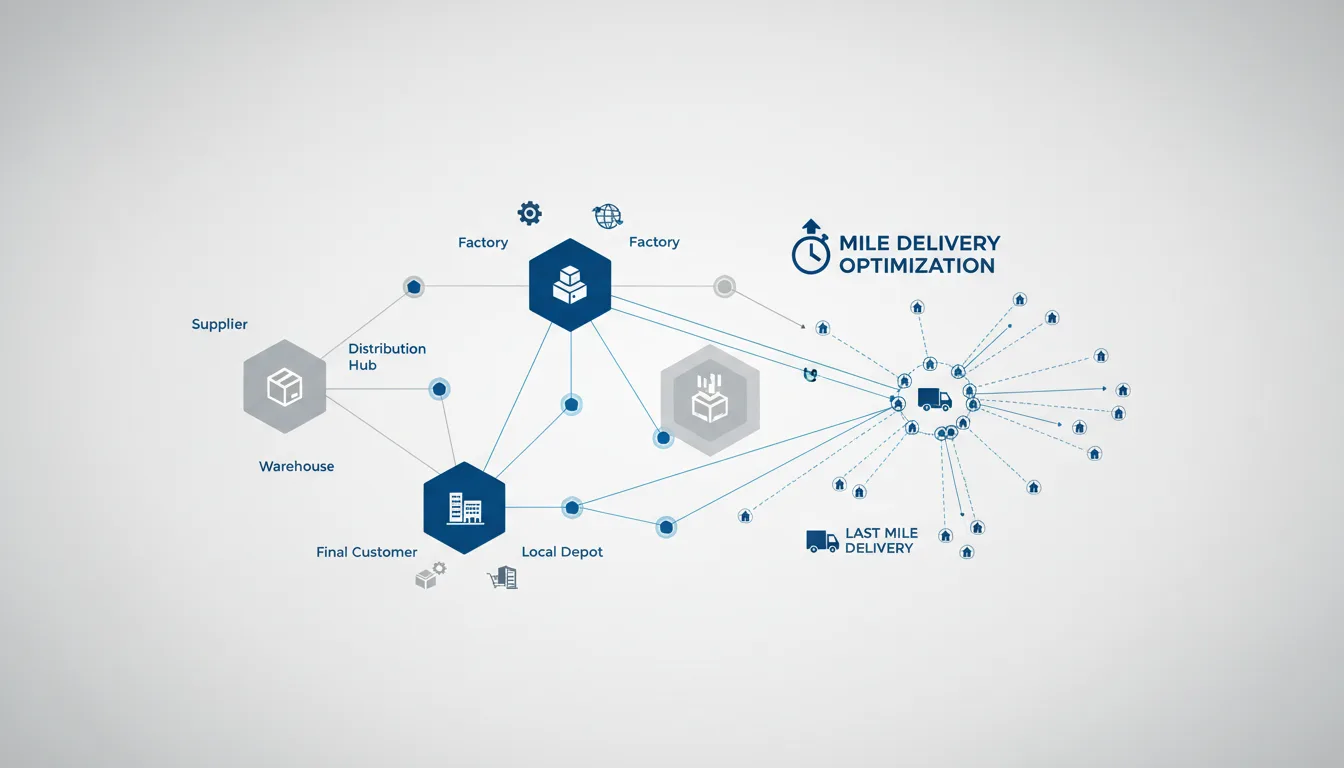
Mile Delivery Optimization
Overview
Mile delivery optimization refers to the strategic application of advanced algorithms and technologies to enhance the efficiency of delivery routes, emphasizing the shortest, most cost-effective, and environmentally sustainable paths. This practice is critical in modern logistics, directly impacting transportation costs, delivery times, and ultimately, customer satisfaction. By implementing effective delivery optimization techniques, companies can significantly lower their operational expenses, improve their service reliability, and meet escalating customer demands more efficiently in an increasingly competitive marketplace. It's a cornerstone of effective supply chain management.
Etymology and Origins
The concept behind 'mile delivery optimization' predates the specific terminology. The core idea of finding the most efficient path for deliveries traces its roots to the mathematical field of operations research (OR), which emerged during World War II to improve military logistics. The fundamental challenge—determining the optimal sequence of stops for a delivery vehicle—is often modeled as a variant of the Traveling Salesman Problem (TSP), a classic combinatorial optimization problem first formally studied in the 1930s by mathematicians like Karl Menger and later gaining prominence through the RAND Corporation in the 1950s.
While the specific phrase 'mile delivery optimization' gained traction with the digital age, reflecting a focus on quantifiable distance and technological solutions, its linguistic components are straightforward: 'mile' denotes the unit of distance central to ground transportation, 'delivery' refers to the act of transporting goods, and 'optimization' signifies the process of achieving the best possible outcome under given constraints. The term's usage became widespread in the late 20th century as advancements in computing power and geographic information systems (GIS) made complex route calculations feasible for commercial logistics.
Historical Development
The evolution of optimizing delivery routes mirrors the broader advancements in computing, operations research, and telecommunications:
-
Pre-1950s: Manual Route Planning & Early Mathematical Foundations. Before sophisticated technology, route planning was a manual process reliant on maps, local knowledge, and intuition. The theoretical underpinnings, however, were being laid with early work on the Traveling Salesman Problem by figures like George Dantzig, who developed the simplex algorithm for linear programming in the late 1940s. These early mathematical models provided the framework for future computational solutions to what would become known as Vehicle Routing Problems (VRP).
-
1960s-1970s: The Dawn of Computerized Routing. The first practical computer algorithms for vehicle routing emerged in the early 1960s, notably the Clarke-Wright savings algorithm developed in 1964. These early solutions, though computationally intensive, allowed large organizations to begin automating route planning on mainframe computers. Companies with extensive fleets, such as milk delivery services or postal carriers, were early adopters, albeit with limited real-time capabilities.
-
1980s: Personal Computers and Geographic Information Systems (GIS). The proliferation of personal computers made routing software more accessible. The development of Geographic Information Systems (GIS) in this decade provided the spatial data infrastructure necessary for mapping and route calculation, moving beyond simple distance tables to actual road networks.
-
Early 1990s: GPS and Real-time Visibility. The advent of commercial GPS technology transformed logistics. Suddenly, vehicles could be tracked, and routes could be adjusted. Pioneers like UPS began experimenting with advanced route optimization software (such as ORION - On-Road Integrated Optimization and Navigation) to minimize mileage, save fuel, and manage their vast delivery networks more effectively, leading to significant savings by optimizing even minute details like avoiding left turns. This marked a shift from static pre-planning to more adaptive strategies.
-
2000s: Advanced Logistics Software and Internet Connectivity. The rise of the internet and more powerful computing allowed for sophisticated logistics software. Companies began leveraging complex algorithms to predict the most efficient routes based on historical traffic data and, increasingly, near real-time information. Integration with Enterprise Resource Planning (ERP) systems and warehouse management systems became more common, creating a more holistic view of the supply chain.
-
2010s: Big Data, Cloud Computing, and Mobile Integration. The explosion of big data analytics, coupled with cloud computing, enabled even more sophisticated modeling of delivery patterns. Companies could process vast amounts of information—from traffic cameras and weather forecasts to customer delivery windows—to generate highly optimized routes. Mobile applications facilitated real-time communication with drivers and allowed for dynamic re-routing. A 2016 report by McKinsey highlighted that companies adopting data-driven logistics achieved a 10-15% increase in operational efficiencies.
-
2020s: AI, Machine Learning, and Sustainability Focus. The current decade sees mile delivery optimization deeply integrated with Artificial Intelligence (AI) and Machine Learning (ML). These technologies enable predictive analytics for traffic, demand forecasting, and autonomous route adjustments. A growing focus on sustainability also drives optimization efforts towards reducing carbon footprints, leading to greener routing algorithms.
Key innovators include major logistics companies like Amazon, which continuously refines its logistics strategies using advanced algorithms, and software providers who have brought these capabilities to businesses of all sizes.
Core Concepts
Mile delivery optimization relies on several core methodologies, often integrated within advanced software platforms:
- Route Planning Algorithms (VRP & TSP variants): This involves determining the most efficient sequence of stops and the path between them for a fleet of vehicles, accounting for a multitude of variables such as traffic patterns, road restrictions, delivery windows, driver availability, and vehicle capacity. These algorithms leverage mathematical models like the Vehicle Routing Problem (VRP) to create optimal routes.
- Load Optimization (Capacity and Volume Management): Ensuring vehicles are loaded to maximize the use of available space and weight capacity while minimizing the number of trips needed. This also considers product characteristics (e.g., fragile items, temperature-controlled goods) and delivery sequence. Systems like SkuSavvy's order management software can streamline the preparation and staging of orders for optimal loading.
- Real-Time Tracking & Telematics: Leveraging GPS technology and telematics systems for live tracking of deliveries allows companies to monitor progress, re-route drivers on-the-fly to accommodate unexpected delays, traffic issues, or new urgent orders. This dynamic capability is crucial for maintaining delivery schedules and ensuring responsiveness. Effective mobile warehouse management systems can provide real-time updates from the field back to the warehouse.
- Geocoding and Geospatial Analysis: Converting physical addresses into geographic coordinates and analyzing spatial relationships to accurately map delivery locations, identify clusters, and assess accessibility. This forms the foundation for accurate route calculations.
Types and Classifications
Different approaches to mile delivery optimization cater to various operational needs:
- Static Routing (Predetermined Routing): Utilizes predetermined routes based on historical data, fixed delivery schedules, and established customer locations. This is often used for regular, recurring deliveries (e.g., daily newspaper routes, scheduled bulk deliveries) where parameters are relatively stable. While less flexible, it offers predictability and simplified planning.
- Dynamic Routing (Adaptive Routing): Adaptively re-routes vehicles based on real-time data inputs such as live traffic conditions, weather changes, new orders, cancellations, or driver availability. This type is crucial for on-demand delivery services, parcel delivery, and scenarios with high variability. It aims to optimize routes continuously throughout the day.
- Multi-Stop Routing (Complex VRP): Optimizes a series of delivery or pickup stops for a single vehicle or an entire fleet, considering multiple constraints like time windows, vehicle capacity, driver breaks, and service times at each stop. This is a common requirement for last-mile delivery and often uses specialized algorithms to balance delivery windows, distance, and fleet utilization. SkuSavvy's shipping and fulfillment software helps manage the complexity of multi-stop shipments.
- Integrated Route Optimization: Combines elements of routing with other logistics functions, such as inventory management, order scheduling, and warehouse operations, to achieve holistic efficiency across the supply chain. This approach considers upstream and downstream impacts of routing decisions.
Industry Applications
Mile delivery optimization is a universal need across various sectors:
- E-Commerce & Retail: Companies like Amazon and countless other online retailers implement sophisticated mile optimization techniques to enhance their expedited delivery promises, manage high volumes, and reduce shipping costs. This often includes optimizing for parcel lockers and consolidated delivery points.
- Food and Beverage Distribution: From grocery deliveries to restaurant supply chains, services utilize real-time data to refresh route plans based on demand fluctuations, traffic conditions, and perishable goods requirements. This ensures fresh products reach their destinations efficiently.
- Healthcare Logistics: Vital for the timely delivery of medical supplies, pharmaceuticals, and even emergency services, where every minute counts. Optimization here often includes strict temperature controls and chain of custody requirements.
- Field Service Management: For technicians, repair crews, or installation teams, optimizing routes ensures efficient scheduling of appointments, minimizes travel time between jobs, and improves customer service response times.
- Waste Management & Utilities: Optimizing collection routes for garbage trucks or service routes for utility maintenance vehicles reduces fuel consumption, labor costs, and environmental impact.
Benefits and Advantages
The advantages of implementing mile delivery optimization techniques are far-reaching:
- Significant Cost Savings: Directly reduces fuel consumption, vehicle maintenance costs (less mileage means less wear-and-tear), and labor expenses (more deliveries per driver per shift). Optimized routes can also lead to fewer vehicles needed for the same volume of deliveries. Techniques like automated rate selection further contribute to cost efficiency.
- Increased Productivity and Efficiency: Drivers can complete more deliveries within the same timeframe due to optimized routes, reducing idle time and minimizing unnecessary travel. This enhances overall operational throughput.
- Enhanced Customer Satisfaction: Timely and reliable deliveries improve customer experiences, fostering loyalty and positive brand perception. Customers increasingly expect fast, accurate, and transparent delivery services.
- Reduced Environmental Impact: Minimizing mileage directly translates to lower carbon emissions and reduced fuel usage, contributing to corporate sustainability goals and potentially lowering carbon taxes or regulatory costs. This aligns with a growing global focus on green logistics.
- Improved Safety and Compliance: Optimized routes can avoid hazardous areas or congested zones, contributing to driver safety. Additionally, adherence to Hours of Service regulations for commercial drivers can be built into route planning.
According to research from the MIT Center for Transportation and Logistics, firms that enhance delivery optimization experience up to a 20% increase in customer retention and significant reductions in logistics costs.
Challenges and Limitations
Despite its advantages, mile delivery optimization faces several challenges:
- Data Accuracy and Quality: The effectiveness of optimization heavily relies on accurate and up-to-date data for traffic, road networks, delivery windows, and customer locations. Inaccurate or outdated data can lead to sub-optimal routes and operational disruptions.
- Infrastructure Limitations: In some urban or rural regions, inadequate road infrastructure, unexpected road closures, or lack of precise mapping can limit the capabilities of even the most advanced optimization algorithms.
- Technical Complexity and Integration: Implementing and integrating advanced optimization solutions can require significant investment in software, hardware, and specialized personnel. Integrating with existing ERP, WMS, and TMS systems can also be complex.
- Dynamic Variables and Unpredictability: Real-world conditions (e.g., sudden traffic jams, severe weather, vehicle breakdowns, last-minute order changes) can quickly render pre-planned optimal routes inefficient. The challenge lies in rapid, effective re-optimization.
- Driver Acceptance and Training: Drivers may resist new routes generated by optimization software if they believe their local knowledge is superior or if the system creates impractical routes. Proper training and involving drivers in the process are crucial.
- Cost of Implementation: The initial investment in advanced software, hardware (e.g., telematics), and training can be substantial, making it a barrier for smaller businesses. However, the long-term ROI often outweighs these initial costs.
Technology and Tools
Modern mile delivery optimization is heavily reliant on a sophisticated suite of technologies:
- Transportation Management Systems (TMS): These comprehensive software platforms integrate various logistics functions, including route planning, load optimization, carrier selection, freight tracking, and analytics. A robust shipping and fulfillment software solution often serves as the core of a TMS, enabling efficient order dispatch and tracking.
- Mobile Applications and Telematics Devices: These provide drivers with optimized routes, turn-by-turn navigation, proof-of-delivery capture, and real-time communication with dispatch. Telematics devices installed in vehicles collect data on location, speed, fuel consumption, and driver behavior, feeding into the optimization engine.
- Geographic Information Systems (GIS): Provide the foundational mapping and spatial analysis capabilities, enabling precise location data, road network modeling, and visualization of routes and delivery territories.
- Optimization Algorithms: At the heart of these systems are complex algorithms (e.g., heuristics, metaheuristics, machine learning models) designed to solve the Vehicle Routing Problem and its many variations under various constraints.
- Cloud Computing and Big Data Analytics: Enable the processing of vast datasets (historical traffic, real-time conditions, weather, delivery patterns) and provide the scalability required for dynamic re-optimization across large fleets.
Future Trends
Looking ahead, mile delivery optimization is expected to evolve further with several transformative trends:
- AI-Driven Predictive Optimization: Machine learning and artificial intelligence will increasingly enhance algorithms to predict optimal delivery routes by analyzing historical and real-time data, even forecasting future traffic patterns and demand fluctuations. This will move beyond reactive re-routing to proactive, predictive route generation.
- Sustainability as a Primary Optimization Objective: With growing environmental consciousness and stricter regulations, optimization algorithms will increasingly prioritize not just speed and cost, but also carbon footprint reduction. This includes optimizing for electric vehicle charging points, low-emission zones, and overall fuel efficiency.
- Autonomous Delivery Vehicles and Drones: The rise of autonomous ground vehicles and drones will revolutionize last-mile delivery, requiring entirely new optimization paradigms that consider factors like battery life, airspace regulations, and robotic loading/unloading.
- Hyper-Local and Crowd-Sourced Delivery: Optimization will adapt to more decentralized models, including micro-fulfillment centers, dark stores, and leveraging gig economy drivers, requiring dynamic matching of orders to available local resources.
- Blockchain for Transparency and Trust: While not directly an optimization tool, blockchain technology could enhance the transparency and traceability of delivery processes, contributing to more accurate data for optimization and improved trust in the supply chain.
Related Concepts
Mile delivery optimization is an integral component of broader logistics and supply chain frameworks. It closely relates to supply chain management, warehouse efficiency, and inventory management, as efficient delivery starts with well-managed inventory and streamlined warehouse operations. Effective mile delivery optimization directly contributes to achieving broader order fulfillment best practices and improving overall logistics performance.
Understanding mile delivery optimization is crucial for professionals aiming to enhance operational efficiency, reduce costs, and meet the rising expectations of consumers in today's fast-paced delivery landscape. It stands as a testament to the continuous innovation in the logistics industry.
Sources
- Mobile Warehouse Management System
- Order Management System
- Warehouse Order Fulfillment Guide
- MIT Center for Transportation and Logistics
- Wired on Amazon's Delivery Strategy
- McKinsey Report on Logistics
- The New Science of Logistics
- What is Operations Research?
- Traveling Salesman Problem - Britannica
- George Dantzig and the Simplex Algorithm
- The Clarke-Wright savings algorithm for vehicle routing
- A Brief History of GIS
- GPS: A Brief History
- UPS on Right Turns and Left Turns
- What is ERP? Gartner
- Winning the last mile of delivery
- Green vehicle routing problem: A review of models and algorithms
- The Vehicle Routing Problem: Latest Advances and New Challenges
- What is Telematics? Geotab
- Shipping & Fulfillment Software
- Fuel Economy Trends and Data for Heavy-Duty Vehicles
- Automated Rate Selection
- What is SmartWay Logistics?
- WMS vs ERP Analysis
- Why Participate in SmartWay?
- Visual Inventory Management System
- What is Supply Chain Management? Investopedia
- What are Transportation Costs? Investopedia
- 2020 MHI Annual Industry Report
- Overview of the Transportation Management System