Materials Management
An overview of materials management, its historical context, core concepts, and best practices within logistics and supply chain management.
Updated
Materials Management
Overview
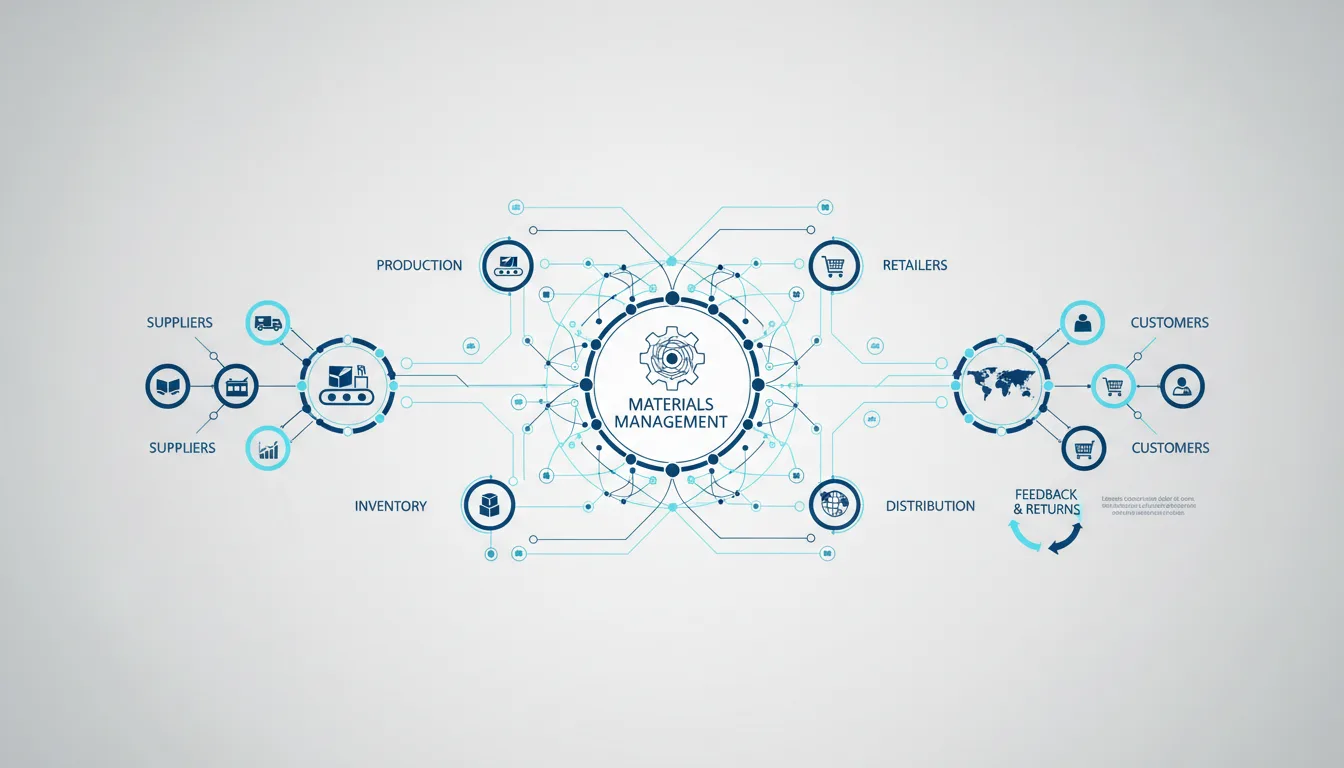
Materials management encompasses the planning and controlling of the flow of materials from acquisition to completion and utilization. It primarily focuses on ensuring that the right materials are available in the right quantities at the right time and at the right cost. Efficient materials management is crucial for optimizing supply chain operations, reducing waste, and enhancing productivity in various sectors such as manufacturing, construction, and logistics.
Etymology and Origins
The term "materials management" emerged in the mid-20th century as industries began to evolve in response to modernization and the integration of new technologies. It combines principles from both inventory management and procurement, illustrating how these components interrelate to manage material flow efficiently. Early references to organized methods of resource management can be traced to industrial practices from the 1950s, primarily influenced by lean principles introduced by Toyota and similar manufacturers.
The linguistic roots of the term can be traced to the French word "matériaux" (materials) and the Latin "materia." Over time, the term evolved to encompass not just the management of materials but a broader understanding of resource optimization within an organization’s supply chain.
Historical Development
Earlier Practices
The practice of materials management can trace its foundation back to the principles of operations management in the early 1900s, greatly influenced by Frederick Winslow Taylor's scientific management approach. His methods of productivity improvement laid the groundwork for later developments in materials management, emphasizing time and motion studies to enhance efficiency.
1950s-1970s
By the 1950s, organizations like Toyota began to apply lean manufacturing principles, which emphasized waste reduction and efficiency, thus shaping modern materials management strategies. The introduction of computer systems in the 1970s revolutionized materials handling by enabling organizations to manage inventories more efficiently, paving the way for the adoption of Material Requirements Planning (MRP) systems.
1980s-Present
From the 1980s onwards, technological advancements such as ERP systems further facilitated materials management processes. The integration of MRP into ERP systems allowed for comprehensive planning, monitoring, and control across various organizational functions. Today, emerging technologies like AI and IoT are influencing how materials management is implemented, providing real-time data and analytics, which enable predictive analytics and smarter procurement strategies.
In 2016, the implementation of ISO 9001:2015 standards began emphasizing continuous improvement and customer satisfaction, further driving best practices in materials management across industries.
Core Concepts
Materials management involves several core concepts:
- Inventory Management: Effective tracking and management of materials and products is crucial. The methods of cycle counting and ABC analysis help prioritize inventory based on usage.
- Procurement: The acquisition of materials encompasses supplier selection, negotiation, and purchase processes, central to maintaining an efficient materials flow.
- Logistics: The transportation and storage of materials are integral to materials management. Proper logistical planning can reduce costs and improve service levels.
- Production Planning: Aligning material availability with production schedules to ensure seamless flow operations is vital for minimizing disruptions.
Types and Classifications
Material management practices can be categorized into:
- Just-in-Time (JIT): A strategy that aims to reduce inventory costs by receiving goods only as they are needed in the production process, reducing holding costs and improving cash flow.
- Materials Resource Planning (MRP): A system designed to manage manufacturing processes effectively by forecasting demand and scheduling material availability, enhancing responsiveness to market needs.
Industry Applications
Materials management is widely utilized across various sectors:
- Manufacturing: Organizations leverage materials management to streamline production efficiency and minimize waste.
- Construction: Effective materials management ensures that materials are available for timely project execution, aiding in cost control and resource allocation, as seen in successful projects like the Burj Khalifa where careful materials planning was crucial.
Benefits and Advantages
Implementing robust materials management systems can yield significant benefits:
- Cost Reduction: By minimizing waste and optimizing inventory levels, companies can significantly lower costs. A study indicates that effective materials management can lead to up to a 30% reduction in operational costs.
- Improved Efficiency: Streamlined processes enhance overall efficiency and productivity, allowing for a faster response to market dynamics.
Challenges and Limitations
Despite its advantages, there are common challenges in materials management:
- Demand Variability: Fluctuations in customer demand can complicate inventory management, leading to possible stockouts or overstock situations.
- Supplier Reliability: Dependence on suppliers can introduce risks if they fail to deliver on time, impacting overall production schedules and customer satisfaction.
Best Practices
To optimize materials management, consider:
- Establishing standardized procedures for handling materials to ensure consistency across processes.
- Utilizing technological tools such as inventory management systems for real-time data tracking and reporting, which can facilitate better decision-making.
Future Trends
The continual evolution of technology is shaping the future of materials management. Expectations include:
- Increased automation through robotics and AI, which can facilitate faster and more accurate processes.
- Greater emphasis on sustainability, with materials management practices that prioritize eco-friendly sourcing and usage strategies in line with global sustainability goals.
Related Concepts
Materials management intersects with various fields including supply chain management, logistics, procurement, and sustainable practices in manufacturing. Understanding these interconnections can enhance operational effectiveness in logistics environments.
Sources
- Mobile Warehouse Management System
- Cycle Counting Guide
- WMS vs ERP Analysis
- Visual Inventory Management System
- Best QuickBooks Commerce TradeGecko Alternative
- How to Implement Lean Manufacturing in Your Factory
- Material Requirements Planning (MRP) Systems
- Lean Manufacturing: Beyond the Steel Industry
- How the Burj Khalifa has Redefined Tall Buildings
- Frederick Winslow Taylor's Scientific Management Approach