Material Handling Equipment
An overview of material handling equipment, its evolution, core concepts, industry applications, and best practices.
Updated
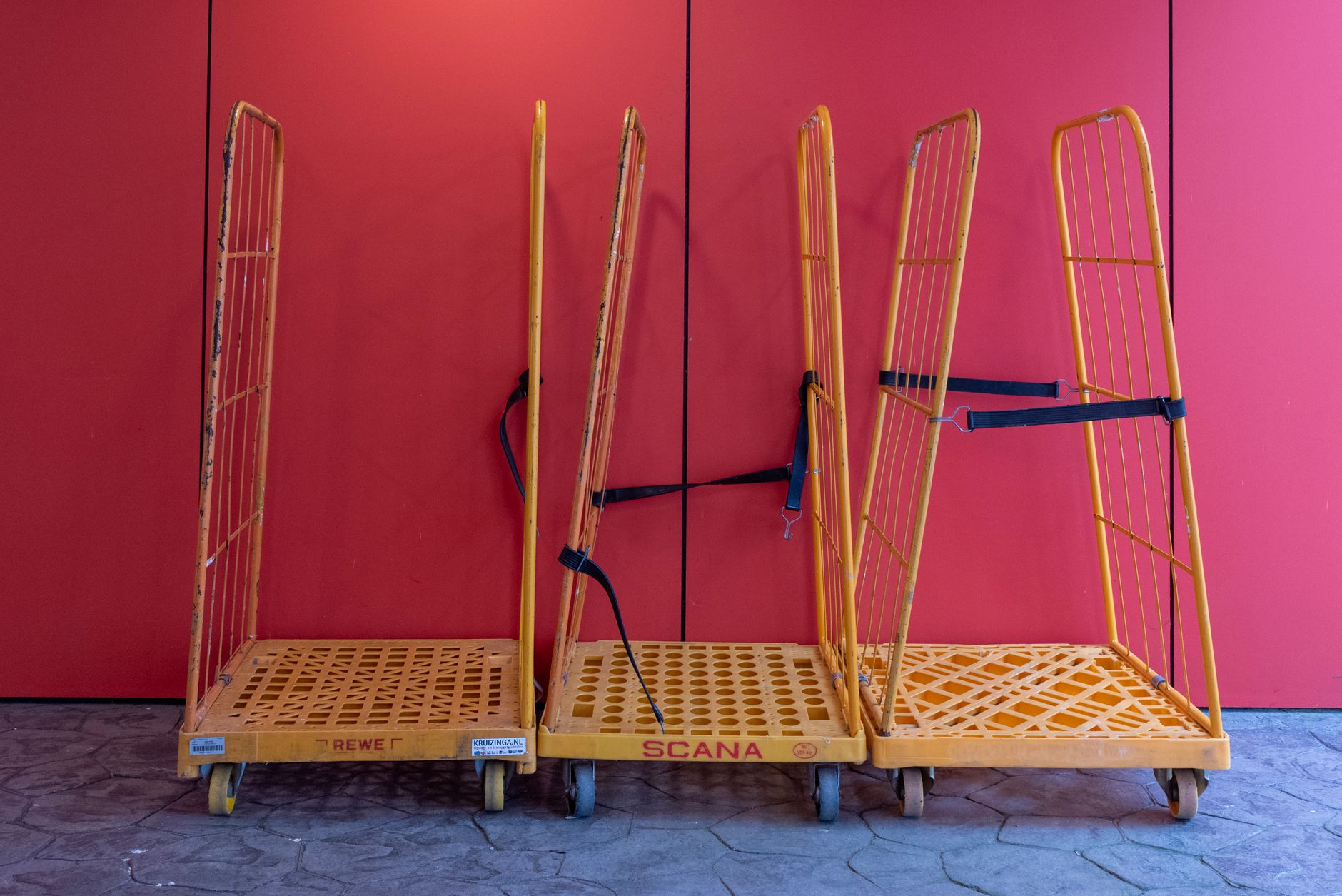
Overview
Material Handling Equipment (MHE) refers to the various tools and devices used to move, protect, store, and control materials and products throughout the manufacturing and warehousing process. These utilities are integral to supply chain operations, helping to optimize processes, reduce wasted time, and improve safety in the workplace. Efficient material handling can dramatically affect productivity, making it a key focus area for logistics and supply chain professionals. Modern MHE often integrates with advanced software like a mobile warehouse management system to enhance real-time data and operational visibility.
Etymology and Origins
The term "material handling" began to gain prominence in the early 20th century, particularly as industrial processes scaled dramatically and the principles of scientific management took hold. Its linguistic roots are straightforward, combining "material" (referring to goods or substances) and "handling" (the act of managing or moving). This phrase encapsulated the growing need for systematic and efficient management of physical goods within burgeoning factories and warehouses.
Early pioneers like Frederick Winslow Taylor and the Gilbreths (Frank and Lillian) laid the groundwork by analyzing and optimizing work processes, including the movement of materials, though they didn't exclusively coin the term itself. The concept evolved from simple manual movement to a recognized field of engineering study and practice, emphasizing mechanization and efficiency. By the mid-20th century, the formation of industry associations like the Material Handling Institute (MHI) in 1945 formalized the discipline, leading to standardized terminology and practices that cemented "material handling" as a core component of industrial logistics.
Historical Development
Pre-Industrial Revolution to Early 20th Century
Before the Industrial Revolution, material handling was primarily manual, relying on basic tools like levers, ramps, and hand carts. With the advent of industrialization in the late 18th century, early forms of mechanical assistance emerged, such as primitive steam-powered cranes and simple conveyor belts used in mining and bulk material transport. However, it was the late 19th and early 20th centuries that truly revolutionized material handling.
Frederick Winslow Taylor's work on scientific management at the turn of the century brought a systematic approach to optimizing workflows, including material movement. Henry Ford's development of the moving assembly line in 1913, heavily influenced by Taylor's principles, dramatically demonstrated the power of continuous material flow, reducing production time from 12 hours to 93 minutes for a Model T [4]. This era also saw the birth of modern powered industrial trucks: Clark Equipment Company invented the first gasoline-powered industrial lift truck in 1917, followed by Yale & Towne Manufacturing Co. introducing battery-powered platform trucks in the 1920s. These innovations marked a significant shift from manual labor to mechanized handling.
Mid-20th Century: Palletization and Early Mechanization (1940s-1960s)
The post-World War II economic boom spurred unprecedented demand for efficient warehousing and distribution. This period saw the widespread adoption of the unit load concept, where goods are consolidated onto pallets or skids, allowing for easier movement by forklifts. The standardization of pallet sizes became critical, enabling global trade and logistics. During this time, companies like Toyota were not yet pioneering WMS but were instead developing foundational principles like Just-In-Time (JIT) manufacturing and Lean production, which drastically reduced waste and optimized material flow within factories, influencing future MHE design and warehouse layouts. The Material Handling Institute (MHI) was established in 1945 to promote the industry and develop standards.
The Rise of Automation and Digitalization (1970s-1990s)
The 1970s and 80s ushered in the era of true automation. The introduction of the Universal Product Code (UPC) barcode in 1974 revolutionized inventory tracking, paving the way for computerized systems. Early Warehouse Management Systems (WMS) began to emerge in the late 1970s and 1980s, initially as mainframe applications focused on inventory location and basic task management. Automated Guided Vehicles (AGVs) also started to gain traction, moving materials autonomously along predefined paths. Automated Storage and Retrieval Systems (AS/RS) became more sophisticated, providing high-density storage and automated picking capabilities. Publications by organizations like the American National Standards Institute (ANSI) continued to provide essential guidelines for safety and performance in material handling, contributing to industry maturation.
21st Century: Advanced Robotics, AI, and Connectivity
The digital age has transformed MHE profoundly. The rise of e-commerce has driven demand for faster, more accurate, and flexible fulfillment solutions. This period has seen the widespread adoption of sophisticated technologies:
- Advanced Robotics: Beyond AGVs, Autonomous Mobile Robots (AMRs) navigate dynamic environments without fixed paths, and collaborative robots (cobots) work alongside human operators, enhancing productivity and safety. Robotic picking arms handle complex sorting and packing tasks.
- Internet of Things (IoT): Sensors embedded in MHE, racks, and inventory provide real-time data on location, status, and performance, feeding into advanced visual inventory management systems.
- Artificial Intelligence (AI) and Machine Learning (ML): AI powers predictive analytics for demand forecasting, dynamic slotting, and optimal route planning for MHE. ML algorithms refine automation processes, enabling robots to learn and adapt.
- Cloud-based WMS: Modern WMS platforms are increasingly cloud-based, offering scalability, accessibility, and seamless integration with other enterprise systems like ERP and OMS (order management systems).
Core Concepts
Material handling encompasses several core concepts essential for optimizing logistics and supply chain efficiency:
- Transporting: This involves the movement of materials from one point to another. Equipment ranges from simple hand trucks and pallet jacks for short distances to elaborate conveyor systems, forklifts, AGVs, and AMRs for longer hauls and automated movement. Efficient transport minimizes travel time and manual effort.
- Storing: Effective storage maximizes space utilization and ensures easy access to inventory. This includes various systems like static shelving, diverse pallet racking (e.g., selective, drive-in, push-back), mezzanines, and automated storage and retrieval systems (AS/RS). Modern storage solutions are often designed with optimized warehouse layouts in mind to reduce travel time and improve picking efficiency.
- Unitization: A fundamental concept where individual items are grouped into larger, standardized units (e.g., cartons, pallets, containers) to facilitate faster, safer, and more efficient handling and transport. This principle underpins much of mechanized material handling, enabling equipment like forklifts and pallet jacks to move significant volumes with ease.
- Sorting: The process of separating items into designated categories or destinations. Manual sorting is common, but automated sortation systems (e.g., cross-belt sorters, shoe sorters) are crucial in high-volume operations like distribution centers. These are often driven by sophisticated software algorithms tied to WMS, ensuring accurate allocation for order fulfillment.
- Control: This involves the management and optimization of material flow using data-driven methodologies. It integrates inventory management, scheduling, and tracking to ensure materials are available when and where needed. Modern MHE solutions often integrate with inventory management systems that allow for accurate record-keeping, real-time tracking, and resource allocation, often leveraging barcodes and RFID technology.
Types and Classifications
Material handling equipment can be broadly classified based on its level of automation, power source, and primary function. Understanding these types is crucial for selecting the right equipment for specific tasks and environments:
- Manual Handling Equipment: These tools rely entirely on human power, typically for lighter loads or short distances.
- Examples: Hand trucks, dollies, pallet jacks (manual), carts, utility trucks.
- Application: Small warehouses, retail backrooms, final-mile delivery, loading/unloading smaller vehicles.
- Mechanized Equipment: These are powered devices that assist human operators in moving heavier loads or increasing throughput.
- Industrial Trucks:
- Forklifts (Lift Trucks): Counterbalance forklifts, reach trucks (for high-density storage), order pickers (for individual item retrieval), pallet trucks (powered pallet jacks). Essential for palletized loads in warehouses.
- Tow Tractors: Used to pull multiple carts or trailers, common in manufacturing and large distribution centers.
- Conveyors: Systems designed for continuous movement of materials along a fixed path.
- Belt Conveyors: Versatile, used for various products, including bulk materials.
- Roller Conveyors: Gravity or powered, suitable for cartons, totes, and pallets.
- Chain Conveyors: Used for heavy or irregularly shaped items.
- Cranes and Hoists: Overhead systems for lifting and moving extremely heavy or bulky items vertically and horizontally within a limited area (e.g., bridge cranes, jib cranes, gantry cranes).
- Industrial Trucks:
- Automated Systems: These systems operate with minimal to no human intervention, relying on software and sensors for navigation and task execution.
- Automated Guided Vehicles (AGVs): Follow fixed paths (wires, magnets, optical strips) to transport materials. Early form of automation.
- Autonomous Mobile Robots (AMRs): More flexible than AGVs, using onboard sensors and maps to navigate dynamic environments, often used for goods-to-person picking or transporting small loads.
- Automated Storage and Retrieval Systems (AS/RS): Consist of racks, aisles, and automated machines (cranes, shuttles) to store and retrieve items efficiently and with high density, common in automated warehouses.
- Robotic Arms: Perform repetitive tasks like palletizing and depalletizing, sorting, picking, and packing with high precision and speed.
- Automated Sortation Systems: High-speed systems (e.g., cross-belt, tilt-tray, shoe sorters) that divert items to specific output lanes based on digital commands, crucial for efficient parcel and e-commerce fulfillment.
Industry Applications
Material handling equipment is ubiquitous across nearly all industries that deal with physical goods. Its specific application varies greatly depending on the industry's unique needs:
- Warehouse and Distribution Centers: These are prime environments for MHE, utilizing a full spectrum of equipment. Automated sortation systems, AS/RS, forklifts, AGVs, and mobile WMS are critical for efficient order fulfillment, stock replenishment, and bin putaway criteria. Specialized MHE includes narrow-aisle trucks and very narrow aisle (VNA) vehicles to maximize storage density.
- Manufacturing Facilities: MHE ensures a continuous flow of raw materials, work-in-progress (WIP), and finished goods through the production line. Overhead cranes and lift tables are common for heavy machinery parts, while conveyors and AGVs move components between workstations, supporting Lean manufacturing principles.
- Retail: Portable equipment like manual pallet jacks and hand trucks aid in stock management, shelf replenishment, and moving goods from receiving to sales floors. Automated solutions like AMRs are increasingly used in larger retail warehouses and micro-fulfillment centers to speed up online order preparation.
- Food and Beverage: Requires specialized MHE for handling perishable goods, often in temperature-controlled environments. Stainless steel equipment, wash-down safe conveyors, and forklifts designed for cold storage are common. Pallet wrappers and stretch film machines ensure product integrity.
- Construction: Heavy-duty MHE is essential, including rough-terrain forklifts, telescopic handlers, cranes, and excavators to move large building materials and equipment around job sites safely and efficiently.
Benefits and Advantages
The strategic implementation of MHE provides substantial benefits across the supply chain:
- Increased Efficiency and Productivity: MHE automates or assists in strenuous and time-consuming tasks, significantly streamlining workflows. This leads to faster throughput, reduced processing times, and higher overall operational productivity. Systems like batch picking and cross-docking further amplify these gains.
- Improved Safety: By mechanizing the lifting, moving, and positioning of heavy or awkward loads, MHE dramatically minimizes the risk of worker injuries (e.g., sprains, strains, crushing incidents). Ergonomically designed equipment and automated systems create a safer working environment, reducing workers' compensation claims and lost workdays.
- Cost Reduction: Efficient MHE leads to lower labor costs by reducing the number of personnel required for certain tasks and by improving labor utilization. It also minimizes product damage during handling, reducing rework and waste. Furthermore, optimized storage solutions can reduce warehousing space requirements, leading to real estate cost savings.
- Enhanced Space Utilization: Advanced MHE and storage solutions (like AS/RS and specialized racking) enable higher-density storage, maximizing the use of vertical and horizontal space within a facility. This can significantly reduce the need for expansion or new construction.
- Improved Accuracy and Inventory Control: When integrated with WMS, MHE facilitates accurate inventory tracking, reduces human error in picking and putaway, and provides real-time visibility. This leads to more reliable stock levels and better order fulfillment rates, which is crucial for managing lots and expiration dates.
Challenges and Limitations
Despite their numerous advantages, MHE systems come with their own set of challenges:
- High Initial Investment: Advanced MHE, especially automated systems like AS/RS, AGVs, or complex conveyor networks, requires a substantial upfront capital outlay. This can be a barrier for smaller businesses or those with limited capital, necessitating a thorough Return on Investment (ROI) analysis.
- Maintenance Needs and Downtime: MHE requires regular preventative maintenance to ensure optimal performance and extend its lifespan. Breakdowns can lead to costly downtime, disrupting operations and incurring repair expenses. Specialized technicians are often needed.
- Training Requirements: Operating complex mechanical and automated MHE requires trained and certified personnel. Insufficient training can lead to accidents, equipment damage, and inefficiencies, highlighting the importance of employee management.
- Integration Complexity: Integrating various MHE components with WMS, ERP, and other software systems can be complex and challenging. Ensuring seamless data flow and operational synchronization requires careful planning and skilled IT resources.
- Inflexibility to Change: Highly automated and fixed MHE systems (e.g., built-in conveyors, AS/RS) can be less flexible to changes in product lines, demand patterns, or facility layouts, making future adaptations costly and difficult.
Best Practices
To maximize the value and efficiency of material handling operations, companies should adopt a strategic approach and implement several best practices:
- Comprehensive Planning and Layout Design: Before investing in MHE, conduct a thorough analysis of material flow, storage requirements, and operational goals. Design an optimized warehouse layout that minimizes travel distances, reduces bottlenecks, and supports efficient MHE utilization.
- Regular Maintenance Programs: Implement a proactive preventative maintenance schedule for all MHE. This includes routine inspections, lubrication, part replacement, and calibration to ensure reliability, safety, and extend equipment life, minimizing unexpected downtime.
- Employee Training and Safety Protocols: Provide comprehensive training for all operators on proper MHE usage, safety procedures, and emergency protocols. Foster a safety-first culture and ensure compliance with industry standards (e.g., OSHA for forklift operation).
- Integration with WMS/WES: Leverage a mobile warehouse management system or a Warehouse Execution System (WES) to orchestrate MHE operations. This integration enables real-time inventory tracking, optimized task assignment (e.g., bin putaway criteria, batch picking), and data-driven decision-making.
- Continuous Improvement and Analytics: Regularly review MHE performance metrics, such as throughput, equipment utilization, and accident rates. Use data analytics to identify areas for improvement, adjust processes, and explore new technologies. Tools for productivity tracking can be invaluable.
- Standardization and Unitization: Where possible, standardize material units (e.g., pallet sizes, carton dimensions) to maximize compatibility with MHE and storage systems, improving efficiency in bin packing and handling.
Future Trends
The future of material handling equipment is shaped by rapid technological advancements and evolving industry demands:
- AI and Machine Learning Integration: AI will move beyond predictive analytics to enable more autonomous and intelligent MHE. This includes AI-powered dynamic slotting, real-time route optimization for AMRs, robotic vision systems for complex pick-and-place tasks, and predictive maintenance for MHE to minimize downtime. Machine learning will allow systems to adapt and improve over time.
- Increased Automation and Robotics: Expect a significant increase in the deployment of AMRs and cobots (collaborative robots) in warehouses and factories. These robots will become more agile, capable of handling a wider range of tasks, and seamlessly integrate into human-centric workflows. The proliferation of micro-fulfillment centers will also drive demand for compact, highly automated MHE solutions.
- Sustainability and Energy Efficiency: Growing environmental consciousness will lead to the development of more eco-friendly MHE. This includes electric and hydrogen fuel cell forklifts, energy-efficient conveyor systems, and intelligent power management for automated systems. Sustainable material choices for pallets and packaging will also gain prominence.
- IoT and Digital Twins: The Internet of Things (IoT) will provide even richer real-time data from MHE, enabling greater visibility and control. The concept of Digital Twins for entire warehouse operations will allow for virtual simulation, testing, and optimization of MHE deployments before physical implementation, predicting performance and identifying bottlenecks.
- Drones in Inventory Management: Drones equipped with cameras and RFID readers are already being used for faster and more accurate inventory counting and inspection in large warehouses, offering an efficient alternative to traditional manual methods or even some robotic solutions. Their role in exterior yard management and even last-mile delivery is also expanding.
- Hyperautomation and Orchestration: The trend towards hyperautomation will see the seamless orchestration of various MHE components, WMS, WES, and other digital tools. This integrated approach aims to automate as many processes as possible, creating highly efficient and adaptive supply chains.
Related Concepts
Material handling is intrinsically linked to several broader supply chain and logistics concepts, as it forms the physical backbone of these operations:
- Supply Chain Management (SCM): MHE is a critical enabler of SCM, ensuring the smooth flow of goods from raw materials to final consumption. Efficient material handling directly impacts supply chain responsiveness and cost-effectiveness.
- Logistics Optimization: MHE directly contributes to optimizing logistics processes by reducing handling times, improving transport efficiency, and enhancing storage density, all aimed at minimizing costs and maximizing service levels.
- Inventory Control: MHE systems, especially when integrated with WMS, are fundamental to accurate inventory control. They facilitate precise putaway, picking, and tracking, which are vital for maintaining optimal stock levels and avoiding stockouts or overstock. This includes managing unit of measure conversions.
- Warehouse Management Systems (WMS): Modern MHE is almost always managed and optimized by a WMS, which provides the intelligence to direct, track, and report on material movement and storage activities. A visual WMS can offer intuitive control over complex MHE operations.
By understanding these interconnections, organizations can better leverage MHE to build robust, efficient, and resilient supply chains.
Sources
- Mobile Warehouse Management System
- Visual Inventory Management System
- Cycle Counting Guide
- Henry Ford and the Assembly Line
- The History of Material Handling
- Warehouse Layout Preview
- Purchase Order Management
- Order Management System
- SKUSavvy Pricing
- How to Calculate ROI on Shopify Inventory Management App
- Unit of Measure Conversion
- Barcodes Guide
- Batch Picking Guide
- Cross-Docking Guide
- Bin Put-Away Criteria
- Stock Replenishment Guide
- Order Fulfillment Guide
- Employee Management
- Productivity Tracking
- Bin Packing Visualizer
- Lots & Expiration Dates
- WMS vs ERP Analysis