Master Data Management
Master Data Management (MDM) is a crucial discipline within logistics focused on ensuring data accuracy and consistency across supply chain operations.
Updated
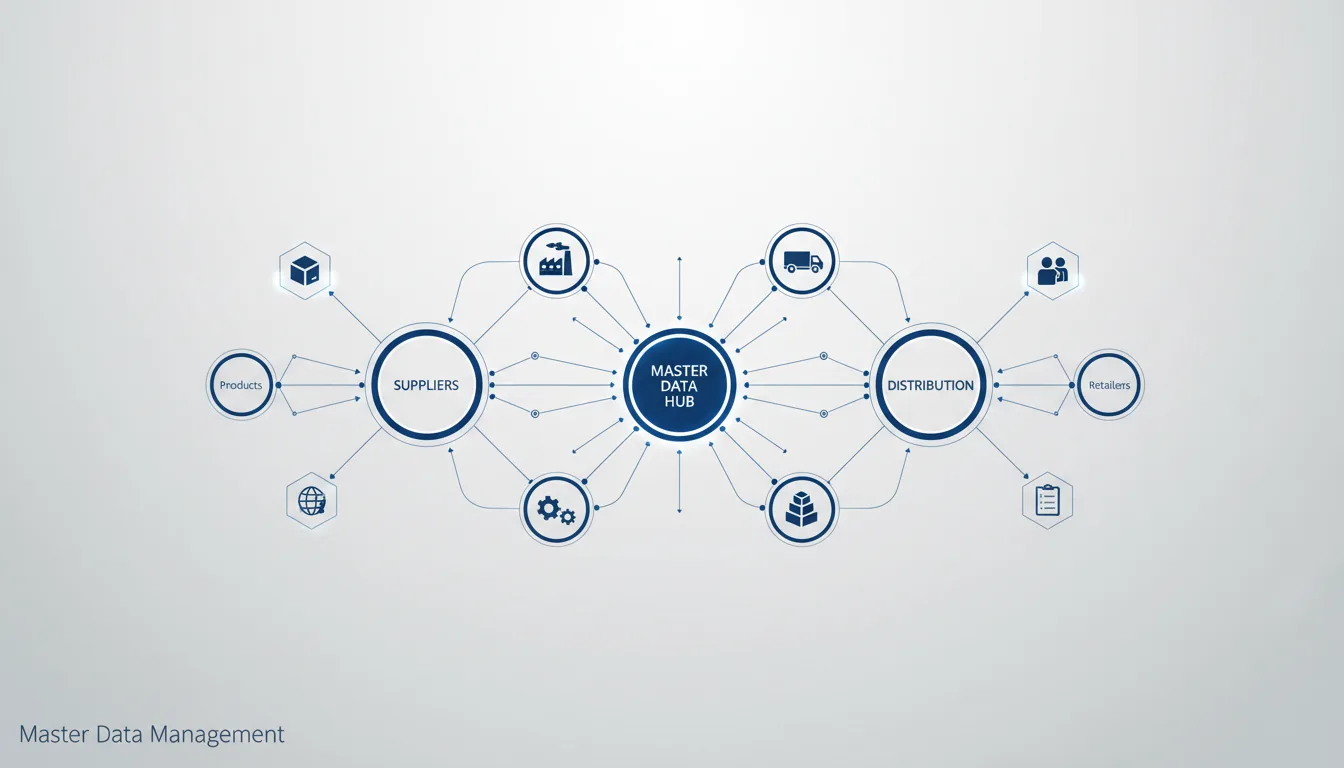
Overview
Master Data Management (MDM) refers to the comprehensive processes and technologies that organizations employ to ensure the accuracy, consistency, and accountability of an organization's shared master data. This critical data includes core business entities such as customers, products, suppliers, locations, and assets, which are foundational to operations. In logistics, effective MDM is essential for maintaining the integrity of information related to inventory, suppliers, customers, and even transportation routes, ultimately enhancing supply chain efficiency, regulatory compliance, and strategic decision-making.
Etymology and Origins
While the concept of managing core business data has existed for decades, the formal term "Master Data Management" began to emerge in the early 2000s, reflecting the growing complexities of data management as businesses increasingly relied on integrated information systems. It gained significant traction through analyses by firms like Gartner around 2003, as they identified the burgeoning market for solutions addressing customer data integration (CDI) and product information management (PIM), which are key pillars of MDM. The phrase denotes the management of essential corporate data (the "master data") crucial for operations across various departments and systems, aiming to create a "single source of truth" for these critical entities.
Historical Development
The evolution of MDM is deeply intertwined with the progression of enterprise information systems, moving from fragmented, manual record-keeping to highly integrated, automated data environments.
- Pre-1970s: Manual & Siloed Data Management: Before the widespread adoption of digital systems, master data was managed manually through ledgers, card catalogs, and departmental spreadsheets. Data was highly fragmented, inconsistent, and often duplicated across different functions within an organization.
- 1970s-1980s: Emergence of MRP and Early Database Systems: The advent of Material Requirements Planning (MRP) and later MRP II (Manufacturing Resource Planning) systems highlighted the critical need for accurate and consistent item master data, bills of material, and supplier information to optimize production schedules. Early relational databases began to offer more structured ways to store and retrieve data, though integration across different functional databases remained a challenge.
- 1990s: The Rise of ERP Systems: The widespread adoption of Enterprise Resource Planning (ERP) systems like SAP R/3 and Oracle Applications necessitated a focus on accurate and harmonized data across various business functions (finance, HR, manufacturing, supply chain). While ERPs consolidated data, they often struggled with data quality issues stemming from legacy systems and disparate data entry points, leading to the recognition of the "data integration challenge."
- Early 2000s: Formalization of MDM: The term "Master Data Management" gained traction as a formal discipline. This era saw the rise of specialized solutions for Product Information Management (PIM) and Customer Data Integration (CDI), addressing the need to unify product catalogs and customer records across multiple channels (e-commerce, CRM, call centers). Pioneer companies like SAP and Oracle began to integrate MDM capabilities into their suites, and dedicated MDM vendors emerged.
- 2010s: Mainstream Adoption and Cloud MDM: MDM software solutions became mainstream, with major software companies releasing their own versions aimed at enhancing data governance and compliance. The shift to cloud computing also brought about cloud-based MDM solutions, offering greater scalability, flexibility, and easier deployment. The impact of Big Data and analytics further underscored the need for clean, reliable master data.
- 2020s: AI, Machine Learning, and Real-time MDM: Modern MDM increasingly leverages AI and machine learning for automated data cleansing, matching, de-duplication, and anomaly detection. There's also a growing emphasis on real-time MDM to support immediate decision-making and dynamic supply chain operations.
Pioneers in the field include companies like SAP and Oracle, who implemented data management solutions to consolidate and clean data across organizational silos, alongside dedicated MDM vendors such as Informatica and Stibo Systems who focused exclusively on master data solutions.
Core Concepts
MDM integrates various aspects of data management, focusing on creating and maintaining a reliable, consistent, and accurate view of critical business entities. Key concepts include:
- Data Consolidation: The process of gathering data from disparate operational systems (ERP, CRM, WMS, e-commerce) and integrating it into a single, authoritative master data hub. This aims to eliminate data silos and create a unified view of master data.
- Data Quality: Ensuring the accuracy, completeness, consistency, validity, and timeliness of data. This involves defining data quality rules, profiling data to identify issues, and implementing automated and manual processes for data cleansing, standardization, and enrichment. For instance, ensuring all product SKUs follow a consistent format.
- Data Governance: Establishing the policies, processes, roles, and responsibilities for managing data assets effectively throughout their lifecycle. This includes defining data ownership, access rights, security protocols, and compliance requirements. Strong data governance ensures accountability for master data integrity.
- Data Stewardship: The practical application of data governance, where designated individuals (data stewards) are responsible for the quality, definition, and usage of specific master data domains (e.g., product data steward, customer data steward). They act as subject matter experts and enforcers of data quality standards.
- Data Security and Privacy: Protecting master data from unauthorized access, modification, or disclosure, and ensuring compliance with privacy regulations such as GDPR or CCPA, especially for customer master data.
For instance, the implementation of a mobile warehouse management system is often complemented by robust MDM practices to enhance inventory accuracy, manage lots and expiration dates, and minimize discrepancies by ensuring consistent product identifiers and attributes.
Types and Classifications
There are several architectural approaches to MDM, each suited to different organizational needs, data landscapes, and integration complexities in logistics management:
- Consolidation (Registry-Style MDM): This approach focuses on linking data from various operational systems to create a virtual, consolidated view of master data. It doesn't physically merge all data but maintains cross-references or pointers to the original data sources. It's often used when real-time physical consolidation is too complex or costly.
- Registry (Analytical MDM): A light-touch approach that identifies and stores only the key identifiers and relationships of master data entities from different systems in a central registry. It doesn't modify source systems but provides a "golden record" of core attributes for analytical purposes, often used for reporting and business intelligence.
- Centralized Hub (Transactional MDM): This is the most comprehensive approach, where master data from various source systems is physically merged, cleansed, and standardized into a single, authoritative central hub. All operational systems then consume master data from this hub, ensuring that all applications refer to the same consistent data. This is ideal for ensuring data consistency across transactional processes like order fulfillment or procurement.
- Coexistence: A hybrid model where master data is consolidated into a central hub, but each source system also maintains a copy of its relevant master data. Updates can originate from the hub or specific source systems, requiring careful synchronization mechanisms.
These models cater to different organizational needs and complexities in logistics management, from simple reporting needs to complex transactional data synchronization across global operations.
Industry Applications
MDM plays a critical role across various sectors in supply chain management by providing a consistent foundation for operational and analytical processes:
- Retail: Harmonizing product data (SKUs, descriptions, dimensions, pricing) across geographic locations, online stores, and physical outlets to ensure consistent inventory levels, accurate pricing, and a seamless customer experience. This also applies to managing customer master data for personalized marketing and loyalty programs.
- Manufacturing: Streamlining procurement processes by maintaining accurate supplier data, component specifications, bills of material, and purchase order management. This ensures the right parts are ordered from approved vendors, reducing errors, lead times, and costs.
- Pharmaceuticals & Healthcare: Ensuring stringent compliance through accurate tracking of products, suppliers, patient records, and regulatory standards. MDM is vital for drug traceability, adverse event reporting, and managing complex product hierarchies for regulatory submissions.
- Transportation & Logistics: Optimizing routing, capacity planning, and asset utilization through accurate master data on vehicle fleets, drivers, warehouses, and locations. Consistent location data, for example, is crucial for efficient shipping and fulfillment.
- E-commerce: Managing extensive product catalogs with rich attributes, images, and pricing for online sales. MDM ensures consistency across various sales channels, marketplaces, and backend inventory systems.
Benefits and Advantages
Implementing MDM provides numerous significant benefits that drive operational excellence and strategic growth:
- Enhanced Decision-Making: With accurate, reliable, and consistent data intelligence, decision-makers can rely on consistent information across departments and systems, leading to better-informed strategic and tactical choices regarding inventory, supply chain planning, and customer engagement.
- Operational Efficiency: MDM reduces data inconsistencies, minimizes manual data reconciliation efforts, and eliminates redundant systems and processes. This streamlines operations, reduces errors, improves data entry speed, and lowers operational costs across the supply chain, from bin put-away criteria to order fulfillment.
- Regulatory Compliance: It aids organizations in adhering to complex legal requirements related to data governance, privacy (e.g., GDPR, CCPA), and industry-specific regulations, especially in sectors like healthcare, finance, and pharmaceuticals. A single source of truth simplifies auditing and reporting.
- Improved Customer Experience: Consistent customer data across all touchpoints enables personalized interactions, accurate order fulfillment, and better customer service, fostering loyalty and satisfaction.
- Better Vendor Relationships: Accurate and up-to-date supplier master data facilitates smoother procurement processes, better negotiation leverage, and improved collaboration with vendors through transparent and reliable information-sharing, potentially via a vendor portal.
- Faster Time-to-Market: For product-centric businesses, efficient management of product master data (PIM) can significantly reduce the time it takes to introduce new products to the market by accelerating data creation and distribution to sales channels.
Challenges and Limitations
Despite its advantages, organizations often face significant challenges when implementing and sustaining MDM initiatives:
- Data Silos and Legacy Systems: Fragmented data residing in numerous disparate systems (often legacy systems) with inconsistent formats and definitions presents a major hurdle for integration and consolidation efforts.
- Resource Intensive: MDM initiatives are complex and often require substantial resources in terms of time, financial investment, and skilled personnel. This includes data architects, data stewards, and project managers.
- Change Management and Cultural Resistance: Implementing new data governance frameworks and shifting mindsets towards a data-centric culture can encounter resistance from departments accustomed to managing their data independently. Stakeholder buy-in is crucial.
- Data Quality Issues: The sheer volume of poor-quality data (duplicates, errors, incompleteness) in source systems can overwhelm initial MDM efforts, making data cleansing a significant and ongoing task.
- Defining the "Golden Record": Agreeing on a single, authoritative version of master data across diverse business units, each with their own data requirements and definitions, can be a complex political and technical challenge.
- Measuring ROI: Quantifying the direct return on investment (ROI) for MDM can be difficult, as many benefits are indirect (e.g., improved decision-making, reduced risk) and realized over time.
Best Practices
To successfully implement and sustain an effective MDM program, organizations should consider the following best practices:
- Strategic Planning and Business Alignment: Define clear business objectives for MDM and align them with overall organizational strategy. Start with a manageable scope (e.g., one domain like product or customer) and demonstrate quick wins.
- Stakeholder Engagement and Executive Sponsorship: Involve key stakeholders from multiple departments (IT, marketing, sales, supply chain, finance) early in the process and secure strong executive sponsorship to drive adoption and overcome resistance.
- Establish Robust Data Governance: Clearly define data ownership, roles (e.g., data stewards), responsibilities, and policies for data creation, maintenance, quality, and usage. Implement processes for data dispute resolution.
- Prioritize Data Quality: Invest in data profiling, cleansing, standardization, and enrichment tools and processes. Focus on preventing bad data from entering the system in the first place, perhaps using tools like barcode scanning for inventory.
- Iterative Approach: Adopt an agile, iterative implementation methodology. Start small, demonstrate value, gather feedback, and gradually expand the scope rather than attempting a "big bang" approach.
- Technology Selection: Choose an MDM solution that aligns with business needs, scales with growth, and integrates well with existing enterprise systems. Consider cloud-based solutions for flexibility.
- Continuous Improvement and Monitoring: Regularly review and update MDM practices, data definitions, and governance policies as business needs evolve. Monitor data quality metrics and system performance to ensure ongoing effectiveness.
By leveraging MDM alongside visual inventory management systems, organizations can achieve greater visibility and control over their inventory data, ensuring accuracy from receiving to pick, pack, and ship.
Technology and Tools
Modern MDM solutions are sophisticated platforms integrated with various technologies to manage and govern master data efficiently:
- MDM Hub Platforms: Dedicated software platforms (e.g., Informatica, Stibo Systems, Semarchy, TIBCO, Oracle, SAP) that provide capabilities for data modeling, data integration, data quality, data governance, and workflow management for master data.
- Cloud Computing: MDM systems are increasingly deployed in the cloud (SaaS or PaaS models) for improved scalability, flexibility, reduced infrastructure costs, and easier accessibility from anywhere.
- AI and Machine Learning: These technologies are integrated into MDM tools to enhance data quality through automated data cleansing, matching algorithms (e.g., fuzzy matching for duplicates), anomaly detection, and data classification.
- Data Integration Tools: ETL (Extract, Transform, Load) tools, API management platforms, and data virtualization solutions facilitate the seamless flow of master data between the MDM hub and other business applications (ERP, CRM, WMS, e-commerce).
- Data Quality Tools: Specialized software for data profiling, cleansing, standardization, validation, and enrichment to ensure master data accuracy and consistency.
- Data Governance Tools: Platforms that support the implementation and monitoring of data governance policies, including workflow for data stewardship, policy management, and audit trails.
- Data Modeling Tools: Used to design and maintain the conceptual, logical, and physical data models for master data entities.
Organizations are increasingly adopting composite applications that integrate MDM with order fulfillment and shipping software for improved logistics outcomes, ensuring that accurate product and customer data drives every step of the process.
Future Trends
Looking ahead, MDM is evolving to meet the demands of an increasingly data-driven and interconnected business landscape:
- Increased Personalization and Context-Aware MDM: Tailoring data management practices to specific business needs and customer expectations, with MDM solutions becoming more intelligent in delivering context-relevant master data to different applications and users.
- Real-Time Data Processing and Analytics: Enhanced focus on immediate data accessibility and usability due to the growing demand for real-time analytics, operational intelligence, and instant decision-making. This pushes MDM towards streaming data integration and processing capabilities.
- Graph Databases for Relationships: Greater adoption of graph databases for managing complex relationships within master data (e.g., product hierarchies, customer-to-customer relationships, supplier networks), providing deeper insights than traditional relational models.
- Data Fabric and Data Mesh Architectures: MDM will play a foundational role within emerging data architectures like Data Fabric and Data Mesh, which aim to provide a unified, governed access layer over distributed data sources, making master data more accessible and usable across the enterprise.
- Greater Use of Blockchain for Data Trust: Providing immutable records that could revolutionize data integrity and trust in collaborative supply chains, particularly for tracking product provenance, certifications, and shared supplier information across multiple organizations.
- Ethical AI in MDM: Ensuring that AI/ML-driven data quality and matching algorithms are fair, transparent, and unbiased, especially when dealing with sensitive customer or employee master data.
Through these trends, businesses will likely see enhanced transparency, responsiveness, and resilience in their logistics operations, driven by even more intelligent and reliable master data.
Related Concepts
Master Data Management is closely related to several other critical logistics and information technology concepts, as it often forms the backbone for their effective implementation:
- Data Governance: MDM is a key component of a broader data governance strategy, which defines the policies and processes for managing all organizational data assets.
- Data Quality: A prerequisite and continuous objective of MDM, ensuring the accuracy and reliability of master data.
- Product Information Management (PIM): A subset of MDM specifically focused on managing all product-related data, crucial for e-commerce and retail.
- Customer Data Integration (CDI): A subset of MDM focused on creating a single, comprehensive view of customer information across all touchpoints.
- Enterprise Resource Planning (ERP): MDM ensures the consistent and accurate master data that ERP systems rely on for their integrated business processes.
- Warehouse Management Systems (WMS): MDM provides the foundational item, location, and customer data essential for efficient warehouse operations like receiving, putaway, picking, and shipping.
- Supply Chain Management (SCM): MDM underpins SCM by providing consistent data on products, suppliers, customers, and locations, enabling better planning, execution, and visibility.
- Data Analytics and Business Intelligence (BI): Reliable master data is fundamental for accurate reporting, insightful analytics, and effective business intelligence initiatives.
- Information Systems (IS): MDM is a core discipline within the broader field of information systems, focusing on the strategic management of critical business data.
Sources
- Mobile WMS Overview
- Visual Inventory System
- Order Management System
- Shipping & Fulfillment Software
- Master Data Management (MDM) - Gartner Glossary
- History of Master Data Management - IBM
- Gartner Says CDI Market To Hit One Billion by 2007 - Gartner Press Release
- APICS Dictionary - Material Requirements Planning (MRP)
- What is ERP? | Enterprise Resource Planning | Oracle
- PIM vs. MDM: What is the Difference and Do You Need Both? - CMSWire
- MDM Market Poised to Soar - InformationWeek
- Cloud MDM Definition - TechTarget
- How AI Is Driving Data Management - Tableau
- Data Integration: Unifying Diverse Data Sources - SAS
- Lots & Expiration Dates - SkuSavvy Guide
- Master Data Management for Customer Data - LexisNexis Risk Solutions
- Purchase Order Management - SkuSavvy Product Page
- Bin Put-Away Criteria - SkuSavvy Guide
- Vendor Portal - SkuSavvy Product Page
- Barcodes - SkuSavvy Guide
- Pick, Pack, Ship Software - SkuSavvy Product Page
- Warehouse Layout Preview - SkuSavvy Product Page