Manufacturing Resource Planning (MRP II)
Manufacturing Resource Planning (MRP II) streamlines manufacturing processes, integrating production planning, scheduling, and inventory management.
Updated
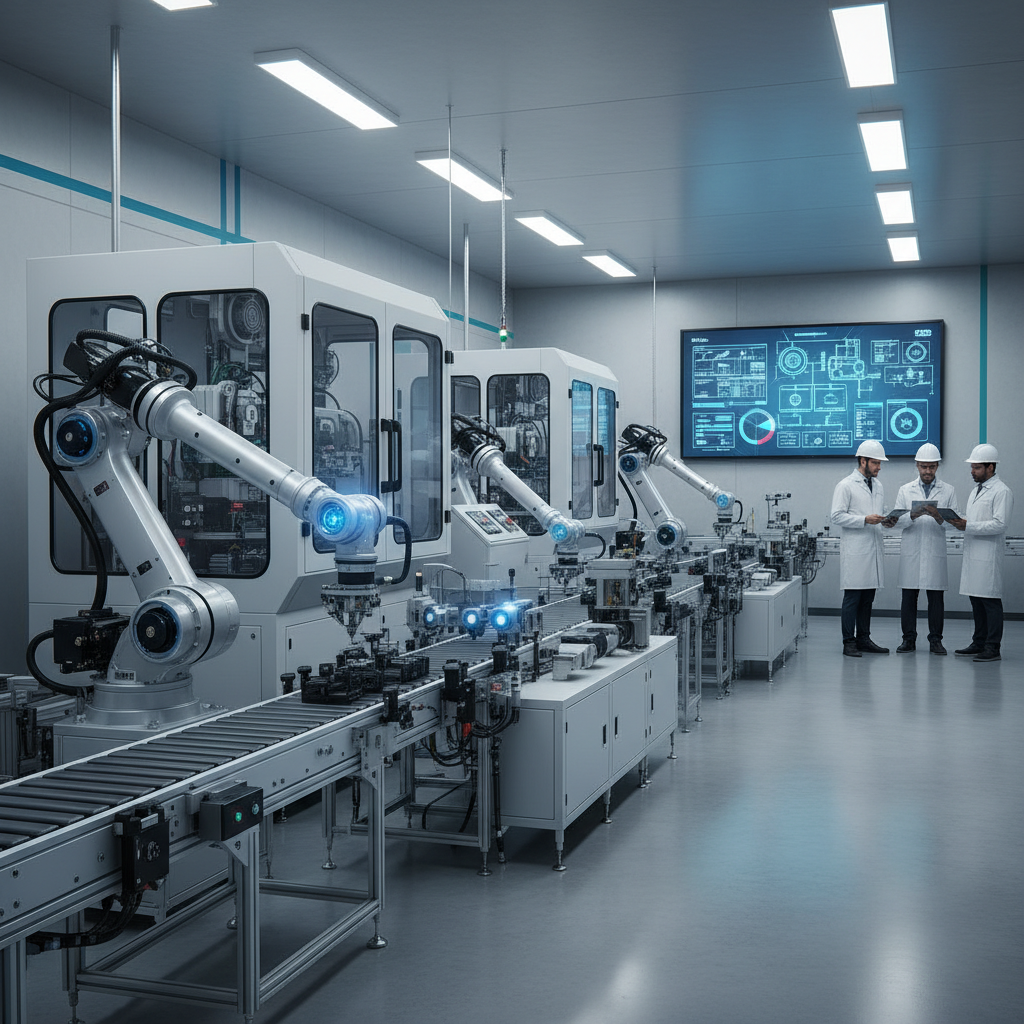
Title: Manufacturing Resource Planning (MRP II)
Overview
Manufacturing Resource Planning, commonly known as MRP II, is a comprehensive enterprise-wide planning and control system that evolved from earlier production planning systems, emerging prominently in the 1980s. MRP II goes beyond material planning by integrating various operational and financial components of a manufacturing organization to plan, control, and allocate resources effectively across all departments. This methodology encompasses not only materials planning but also incorporates diverse elements such as production scheduling, capacity planning, financial planning, sales and operations planning (S&OP), and human resources, establishing a holistic and iterative approach to manufacturing operations. The goal of MRP II is to provide a closed-loop system, ensuring that plans are realistic and executable, and allowing for continuous feedback and adjustment.
Etymology and Origins
The term "Manufacturing Resource Planning" is rooted in the concepts developed in the 1960s and 1970s involving Material Requirements Planning (MRP). MRP systems, pioneered by individuals like Joseph Orlicky at IBM and further developed by Oliver Wight and George Plossl, focused primarily on calculating the quantity and timing of materials required for production, based on a master production schedule (MPS) and bill of materials (BOM).
As companies recognized the limitations of early MRP systems—primarily their inability to address additional factors beyond inventory management, such as machine capacity, labor availability, and financial implications—the need for a more comprehensive approach became evident. The term "MRP II" was formally introduced and championed by the American Production and Inventory Control Society (APICS) (now part of ASCM) in the early 1980s. Key figures like Oliver Wight, often credited with defining MRP II, advocated for its expansion into a complete business management system that integrated production, sales, and finance. The "II" signified an evolution from mere material requirements to comprehensive resource planning, encompassing all aspects required to run a manufacturing business.
Historical Development
MRP II emerged as manufacturers sought more effective ways to manage their increasingly complex operations, driven by global competition and technological advancements:
- 1950s-1960s: Inventory Control and EOQ Models: The earliest forms of production planning focused on basic inventory management techniques like Economic Order Quantity (EOQ) and reorder points, often managed manually or with simple punch-card systems.
- 1960s-1970s: The Rise of MRP: The foundation of Material Requirements Planning (MRP) was established, moving from inventory control to dependent demand planning. Joseph Orlicky's work at IBM and subsequent book "Material Requirements Planning: The New Way of Life in Production and Inventory Management" (1975) formalized MRP as a computer-based system for managing production lead times and material flow. This era saw pioneers like George Plossl and Oliver Wight contributing significantly to early MRP concepts and their popularization through education and consulting.
- Early 1980s: Birth of MRP II: The limitations of "open-loop" MRP systems, which couldn't check for capacity constraints or integrate financial data, led to the development of MRP II. Oliver Wight's seminal work, "MRP II: Unlocking America's Productivity Potential" (1981), detailed how to extend MRP to a "closed-loop" system, incorporating elements like master production scheduling, capacity requirements planning, and financial planning. The introduction of MRP II transformed planning from a departmental function into a company-wide initiative, allowing for the incorporation of financial and other operational data into manufacturing processes. Early adopters and developers included large enterprises and software companies like SAP and IBM.
- Late 1980s - 1990s: Integration and Expansion: With advances in computing power, database technologies, and networking, MRP II systems became more robust. The rise of client-server architectures replaced mainframe-centric systems, making these solutions more accessible. The scope of MRP II expanded to include more detailed shop floor control, procurement, and distribution planning. This period also saw the development of industry standards for data exchange, improving integration capabilities.
- Mid-1990s: Evolution to ERP: As businesses sought even broader integration beyond manufacturing, MRP II naturally evolved into Enterprise Resource Planning (ERP). ERP systems extended the functional scope to include CRM, supply chain management (SCM), human resources, and business intelligence, making it a truly enterprise-wide solution. While ERP subsumed the functions of MRP II, the core manufacturing planning logic remained intact.
- 2000s - Present: Cloud, Analytics, and AI Integration: Modern manufacturing planning, whether standalone MRP II or as part of an ERP suite, continues to adapt. It leverages cloud computing for scalability and accessibility, advanced analytics for predictive insights, and artificial intelligence for enhanced forecasting and decision-making. Today, visual inventory management systems and mobile warehouse management systems complement these planning capabilities by providing real-time data from the operational floor.
Core Concepts
MRP II is built upon several core concepts that make it an effective tool for managing manufacturing operations, forming a closed-loop system:
- Master Production Schedule (MPS): This is the central input, defining what products are to be produced, when, and in what quantities. It drives all subsequent planning activities.
- Material Requirements Planning (MRP): Using the MPS, Bill of Materials (BOMs), and inventory data, MRP calculates the precise quantities of raw materials and components needed, along with their scheduled delivery dates, to meet the MPS. Effective purchase order management is critical here.
- Production Planning: This involves calculating the overall production volumes and scheduling the production timeline to maximize resource efficiency while meeting demand. It considers factors like labor, machinery, and plant capacity.
- Inventory Control: MRP II aims to maintain optimal inventory levels by aligning production schedules with customer demand, thus minimizing excess stock and stockouts. Such techniques are fundamental for effective stock replenishment and include managing lots and expiration dates for specific items. Real-time visibility, often facilitated by visual inventory management systems, is key.
- Capacity Planning: By assessing equipment limits, shop floor availability, and workforce capacity, MRP II assists in planning production capabilities. This includes Rough-Cut Capacity Planning (RCCP) at a strategic level and Capacity Requirements Planning (CRP) for detailed, short-term adjustments to ensure that resources are adequate to meet production schedules. Tools like warehouse layout preview can aid in optimizing physical capacity.
- Shop Floor Control: This module monitors and controls operations on the factory floor, tracking work-in-process (WIP), labor, and machine utilization, providing real-time feedback to adjust schedules as needed.
- Financial Planning: MRP II integrates production plans with financial data to project cash flow, profitability, and balance sheet impacts, allowing for comprehensive budgetary control and performance measurement.
- Integration with Other Functions: MRP II systems integrate with finance, human resources, sales, engineering, and distribution to create an interlinked management system that supports strategic and operational decision-making across the organization. This closed-loop feedback mechanism allows plans to be continuously reviewed and adjusted based on actual performance and changing conditions.
Benefits and Advantages
Implementing MRP II systems can yield significant benefits for manufacturing organizations, enhancing operational efficiency and strategic decision-making:
- Increased Operational Efficiency: By meticulously planning materials and capacities, MRP II reduces the likelihood of stockouts, minimizes work-in-process, and prevents over-production. This leads to smoother production flows and optimized resource utilization.
- Improved Forecasting Accuracy: The system's ability to integrate sales forecasts with production plans leads to better alignment of production schedules with market demand, minimizing discrepancies and reducing waste.
- Enhanced Collaboration and Communication: By providing a common data source and integrated processes, MRP II fosters better collaboration among departments (e.g., sales, production, finance, procurement), leading to streamlined processes and faster decision-making across the organization.
- Better Data Visibility and Informed Decision-Making: MRP II provides managers with real-time, comprehensive data on production status, inventory levels, capacity utilization, and financial performance. This visibility enables proactive problem-solving and informed strategic decisions at all levels of management.
- Reduced Costs: Through optimized inventory levels, efficient scheduling, and reduced waste, MRP II helps lower carrying costs, labor costs, and overall operational expenses.
- Improved Customer Service: By ensuring products are available when needed and by providing realistic delivery promises, MRP II contributes to higher customer satisfaction and loyalty.
Challenges and Limitations
Despite its benefits, implementing and operating MRP II systems can present several challenges:
- Complexity and Implementation Difficulty: MRP II systems are inherently complex, requiring significant investment in software, hardware, and personnel training. The implementation process can be lengthy, costly, and disruptive, especially for smaller organizations that may lack the internal resources or expertise.
- Resistance to Change: Employees accustomed to traditional, often manual, methods may resist adopting new technologies and the structured processes that MRP II requires. This necessitates strong change management strategies and comprehensive training programs.
- Data Integrity and Accuracy: Successful MRP II implementation relies heavily on accurate and timely data, including Bills of Materials (BOMs), inventory records, routing information, and lead times. Poor data quality can undermine the effectiveness of the entire system, leading to inaccurate plans and operational inefficiencies.
- Rigidity: Some early MRP II systems could be rigid, struggling to adapt quickly to sudden changes in demand or supply chain disruptions. Modern systems offer more flexibility, but careful configuration is still essential.
- Cost of Ownership: Beyond initial implementation, ongoing maintenance, upgrades, and licensing fees for MRP II software can be substantial, making it a significant long-term investment.
Future Trends
Looking ahead, the principles of MRP II remain foundational, but their implementation is poised to evolve further as technology advances and manufacturing paradigms shift. Key trends include:
- Advanced Analytics and Predictive Capabilities: Enhanced data analytics capabilities, leveraging big data, will allow companies to derive deeper insights from their manufacturing processes. This includes predictive maintenance to anticipate equipment failures and predictive demand forecasting to better align production with market changes, driving continuous improvement and efficiency.
- Integration with Artificial Intelligence (AI) and Machine Learning (ML): AI and ML can significantly enhance forecasting accuracy, optimize complex scheduling, and automate decision-making processes within MRP II. AI-driven systems can analyze vast datasets to identify patterns and anomalies, making MRP II systems even more responsive to changes in demand, supply chain disruptions, and operational constraints.
- Cloud-Based Solutions (SaaS MRP II): More companies are adopting cloud computing for their MRP II or ERP modules, facilitating easier updates, greater scalability, reduced IT infrastructure costs, and enhanced accessibility from anywhere. This trend democratizes access to sophisticated planning tools for businesses of all sizes.
- Internet of Things (IoT) Integration: Connecting shop floor machinery, sensors, and equipment via IoT allows for real-time data collection on production status, machine performance, and inventory movement. This granular, immediate data feeds directly into MRP II, enabling more accurate scheduling, capacity adjustments, and shop floor control. Mobile WMS systems are key for capturing this data effectively.
- Industry 4.0 and Smart Manufacturing: MRP II is a critical component of the broader Industry 4.0 vision, where smart factories use interconnected systems and data to achieve highly flexible and efficient production. It acts as the brain coordinating automated processes and cyber-physical systems.
Related Concepts
MRP II often synergizes with, and has evolved into, other critical methodologies in logistics and supply chain management:
- Material Requirements Planning (MRP): As its direct predecessor, MRP II builds upon MRP by adding capacity planning, financial planning, and a closed-loop feedback mechanism. MRP focuses on what materials are needed and when; MRP II addresses all resources needed to execute the plan.
- Enterprise Resource Planning (ERP): ERP systems are the direct evolution of MRP II. While MRP II integrates manufacturing-related resources, ERP extends this integration across the entire enterprise, including customer relationship management (CRM), human resources (HR), financial accounting, supply chain management (SCM), and more. MRP II is effectively the manufacturing module within a modern ERP system.
- Just-in-Time (JIT) Manufacturing: JIT is a production strategy focused on minimizing inventory and increasing efficiency by receiving goods only as they are needed for production. MRP II systems can support JIT principles by providing precise timing and quantity information, enabling manufacturers to reduce buffer stocks while maintaining production flow.
- Lean Manufacturing: A philosophy focused on eliminating waste and maximizing value. MRP II's efficiency-driven planning and control mechanisms can be instrumental in identifying and reducing waste across various manufacturing processes, aligning well with lean principles.
- Supply Chain Management (SCM): While MRP II focuses internally on the manufacturing enterprise, SCM extends planning and coordination across the entire supply chain, from raw material suppliers to end customers. Modern ERP/MRP II systems often include robust SCM modules to manage external logistics and supplier relationships, including efficient order fulfillment and purchase order management with external vendors through a vendor portal.
MRP II remains a crucial part of modern manufacturing strategy, continually incorporating evolving technologies to meet the dynamic demands of the market and continue driving efficiency and productivity.
Sources
- MRP vs ERP Analysis
- Stock Replenishment Guide
- APICS Dictionary, 16th Edition
- Material Requirements Planning: The New Way of Life in Production and Inventory Management
- MRP II: Unlocking America's Productivity Potential
- History of Inventory Management
- The Evolution of ERP: From MRP to the Digital Enterprise
- APICS Dictionary, 16th Edition
- Challenges in MRP II Implementation
- Artificial Intelligence in Manufacturing Resource Planning
- Just-in-Time Production Systems: Concepts, Approaches and Benefits