Manufacturing Operations Management
An overview of manufacturing operations management, its development, core concepts, and significance in modern supply chains.
Updated
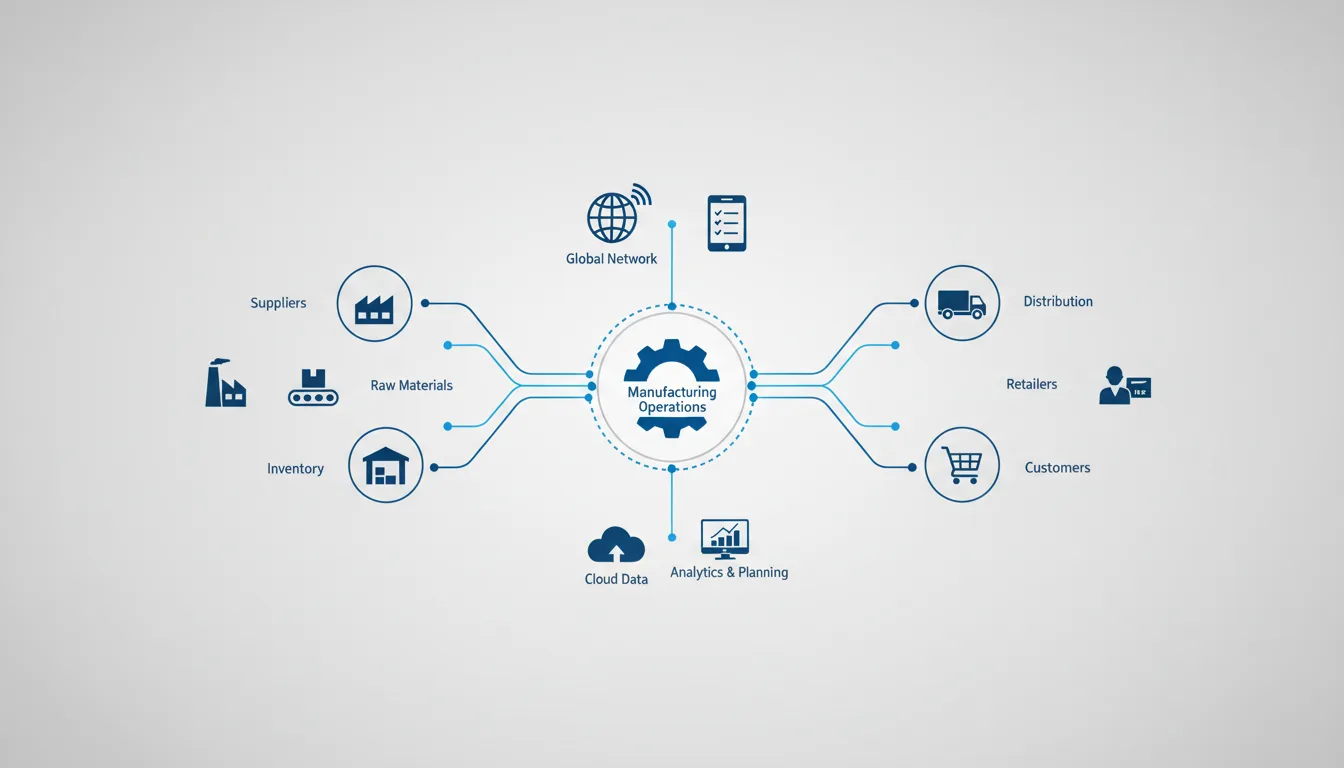
Overview
Manufacturing Operations Management (MOM) refers to the strategic administration and operational control of manufacturing processes to improve efficiency, quality, and productivity across the production lifecycle. It encompasses a comprehensive set of activities including planning, scheduling, execution, monitoring, and controlling production operations [1]. The significance of MOM lies in its ability to directly impact the profitability, sustainability, and competitive edge of manufacturing organizations by streamlining processes, reducing waste, enhancing product quality, and improving responsiveness to market demands.
Etymology and Origins
The term "manufacturing operations management" (MOM) as a distinct discipline gained significant prominence in the late 20th century as industrial processes became more complex and integrated, requiring more sophisticated oversight. However, its conceptual foundations are rooted much deeper in history. The word "manufacturing" stems from the Latin manu factus, meaning 'made by hand', evolving to signify production by machinery on a large scale, highlighting the transition from artisanal craftsmanship to systematic industrial production. The "operations" component draws from the discipline of operations research, which emerged during World War II to apply analytical methods to optimize military logistics and resource allocation. Over time, as manufacturing expanded globally and technologies advanced, the integration of these concepts became essential, leading to the formal recognition of MOM as a critical management function for coordinating diverse processes, from raw material handling to finished product delivery.
Historical Development
Pre-1960s: Foundations of Industrial Management
Before the formalization of MOM, the foundations were laid by pioneers in industrial engineering and management. Frederick Winslow Taylor's principles of scientific management in the early 20th century focused on optimizing individual tasks and worker efficiency. Concurrently, Henry Ford's assembly line innovations revolutionized mass production by standardizing processes and promoting flow, laying crucial groundwork for systematic process control and optimization within factories.
1960s-1980s: Emergence of Systems and Quality Focus
MOM began to take shape as a distinct discipline in the 1960s and 1970s with the development of formal production planning and control systems. The introduction of Material Requirements Planning (MRP) in the 1960s revolutionized how companies managed raw materials and production schedules, moving from manual methods to computerized systems. This evolved into Manufacturing Resource Planning (MRP II) in the 1980s, which expanded planning capabilities to integrate finance, marketing, and human resources with manufacturing. During this period, innovative companies like Toyota adopted lean manufacturing principles and Just-In-Time (JIT) production, focusing on eliminating waste, reducing inventory, and continuous improvement [3]. Total Quality Management (TQM) also gained traction, emphasizing customer satisfaction and defect prevention across the entire organization.
1990s: ERP Integration and Global Supply Chains
The 1990s marked significant technological advancements, particularly with the widespread adoption of Enterprise Resource Planning (ERP) systems. Major software vendors like SAP and Oracle became prominent, offering integrated solutions that linked manufacturing, finance, human resources, and supply chain functions. This era also saw the rapid expansion of global supply chains, making robust MOM critical for coordinating geographically dispersed operations and ensuring efficient supply chain management and logistics. The focus shifted towards seamless information flow and data integrity across the enterprise.
2000s-Present: Digital Transformation, Industry 4.0, and AI
In the 2000s, the advent of Industry 4.0 (the Fourth Industrial Revolution) and the Internet of Things (IoT) set the stage for further evolution in MOM. This era emphasized smart factories where cyber-physical systems, IoT devices, and cloud computing enabled real-time data exchange and autonomous decision-making. Manufacturers began leveraging digital technologies such as artificial intelligence (AI) and big data analytics to enhance decision-making, predictive maintenance, and operational agility. Modern MOM solutions increasingly incorporate advanced features like visual inventory management systems [14] and mobile warehouse management systems [15] to provide unprecedented real-time visibility and control over complex operations, leading to highly optimized manufacturing workflows [16].
Core Concepts
Manufacturing Operations Management encompasses several core concepts, each critical for efficient and effective production:
- Production Planning and Scheduling: This involves determining what products to make, how many, and when, taking into account available resources, capacity constraints, and demand forecasts. It covers everything from master production scheduling [17] to detailed shop floor scheduling, ensuring optimal resource allocation and throughput. Advanced systems can leverage tools for automated purchase quantity [18] to support material planning.
- Quality Management and Control: Focuses on maintaining high standards in products and processes throughout the manufacturing lifecycle. This includes implementing methodologies like Six Sigma [19] for process improvement, statistical process control (SPC) for monitoring variations, and fostering a culture of Total Quality Management (TQM) [20] to prevent defects and ensure customer satisfaction.
- Inventory and Material Management: Optimizes the flow of raw materials, work-in-progress (WIP), and finished goods. Key activities include stock replenishment [21], managing lots and expiration dates [22], and utilizing visual inventory management systems [14] to ensure materials are available when needed without excessive holding costs or obsolescence.
- Shop Floor Control and Execution: Deals with the real-time management of production activities directly on the factory floor. This includes dispatching work orders, tracking work-in-progress, collecting production data, and managing personnel and equipment. Modern solutions often use mobile warehouse management systems [15] for real-time data capture, task management, and improved operational visibility.
- Performance Monitoring and Analytics: Involves collecting, analyzing, and reporting data from all production processes to identify trends, measure key performance indicators (KPIs) like Overall Equipment Effectiveness (OEE), and facilitate informed decision-making. This can include tracking employee productivity [23] and identifying bottlenecks for continuous improvement.
Industry Applications
MOM is critical across various industries, each with unique operational demands:
- Automotive: Manufacturers apply MOM to optimize complex production lines, manage vast supply chains, and reduce lead times for vehicle assembly, often leveraging lean principles and automation.
- Consumer Electronics: The rapid pace of innovation and short product lifecycles require efficient operations management to bring new products to market quickly, manage intricate component sourcing, and maintain high quality standards.
- Pharmaceuticals: Strict regulatory compliance, stringent quality control, and batch traceability are paramount. MOM systems ensure adherence to Good Manufacturing Practices (GMP) and provide comprehensive audit trails.
- Food & Beverage: Focuses on managing perishable goods, ensuring food safety, optimizing shelf life, and handling complex batch processing and packaging requirements, often with advanced lot and expiration date tracking [22].
Benefits and Advantages
Implementing effective MOM practices provides numerous advantages that contribute to a manufacturer's overall success:
- Increased Efficiency and Throughput: Streamlining processes, reducing bottlenecks, and optimizing resource utilization leads to lower operational costs and enhanced production capacity.
- Improved Quality Control and Consistency: Systematic approaches, supported by real-time data and automated checks, result in fewer defects, reduced rework, and higher customer satisfaction. This directly contributes to brand reputation and loyalty.
- Enhanced Flexibility and Responsiveness: Advanced MOM systems allow manufacturers to adapt quickly to market changes, fluctuating customer demands, and unexpected disruptions, ensuring agility in a dynamic environment.
- Better Inventory Management: Optimized production planning and real-time tracking minimize excess inventory and stockouts, reducing carrying costs and improving cash flow. This is greatly aided by visual inventory management systems [14].
- Regulatory Compliance and Traceability: Particularly crucial in regulated industries, MOM systems provide the necessary data and controls to meet compliance requirements and ensure full product traceability from raw material to finished good.
Challenges and Limitations
Despite its benefits, organizations may face significant challenges in implementing and optimizing MOM systems:
- Resistance to Change: Employees may be hesitant to adopt new practices, technologies, or shifts in manufacturing workflows [16], hindering successful implementation and requiring robust change management strategies.
- Integration Issues: Aligning existing legacy systems with new MOM technologies, ERP platforms, and various shop floor equipment can be complex, costly, and time-consuming, often requiring significant IT investment and expertise.
- Data Management and Quality: The need for accurate, real-time, and consistent data across all operational stages is critical. Poor data quality, disparate data sources, or insufficient data governance can undermine the effectiveness of MOM systems and analytics efforts.
- High Implementation Costs: Investing in MOM software, hardware, training, and integration services can be substantial, particularly for small to medium-sized manufacturers.
- Complexity of Modern Systems: The advanced features of contemporary MOM solutions can be complex to configure, maintain, and fully leverage, requiring specialized technical skills and ongoing support.
Best Practices
To maximize the efficiency and effectiveness of manufacturing operations management, organizations should consider the following best practices:
- Holistic System Integration: Move beyond disparate systems by integrating MOM with ERP, WMS, and Supply Chain Management (SCM) platforms. This creates a unified data environment, improving data flow and decision-making. Tools like a visual inventory management system [14] can provide this comprehensive overview.
- Adoption of Advanced Technologies: Leverage Industry 4.0 technologies [24] such as IoT for real-time data collection, AI for predictive analytics, and robotics for automation. Implementing robust software solutions like mobile warehouse management systems [15] and comprehensive purchase order management [25] are crucial for tracking and managing operations.
- Employee Training and Empowerment: Invest in comprehensive training for staff on new systems, processes, and manufacturing workflows [16]. Empowering employees with digital tools and clear roles fosters adoption, improves operational efficiency, and enhances employee productivity [23].
- Continuous Improvement Culture: Regularly review and refine processes through methodologies like Lean and Six Sigma [26] to adapt to changing market conditions and technological advancements. This includes regular performance analysis, such as identifying areas for cycle counting [27] and process optimization.
- Data-Driven Decision Making: Establish robust data collection mechanisms and analytics capabilities to transform raw operational data into actionable insights. This enables proactive problem-solving, optimizes resource allocation, and informs strategic planning across all manufacturing operations.
Future Trends
As manufacturing continues to evolve, several key trends are shaping the future of operations management:
- Increased Automation and Robotics: Integration of advanced robotics, autonomous guided vehicles (AGVs), and collaborative robots (cobots) in manufacturing processes will further enhance efficiency, safety, and precision. This shift moves beyond traditional automation to intelligent, flexible systems.
- Sustainability and Circular Economy Initiatives: Growing emphasis on environmentally friendly practices, reducing the carbon footprint of manufacturing, and adopting circular economy principles (reduce, reuse, recycle). MOM systems will play a crucial role in tracking resource consumption and waste generation.
- Intelligent Analytics and Predictive Capabilities: Greater reliance on predictive analytics, machine learning, and AI to anticipate demand, forecast equipment failures, optimize production schedules, and inform proactive decision-making, moving from reactive to prescriptive management.
- Digital Twins and Simulation: The use of digital twins (virtual models of physical assets and processes) for simulation, testing, and optimization of manufacturing operations before physical implementation, enabling faster innovation and risk reduction.
- Resilient and Agile Supply Chains: Developing more robust and flexible supply chains capable of withstanding disruptions. MOM systems will support this by providing real-time visibility and agile planning capabilities to adapt to unforeseen circumstances.
Related Concepts
Manufacturing Operations Management closely relates to concepts such as supply chain management [11] (SCM), Enterprise Resource Planning (ERP) [10], warehouse management systems [15] (WMS), Total Quality Management (TQM), and project management. All these disciplines contribute to the holistic and efficient management of production processes, from strategic planning to execution and delivery.
By understanding and integrating the principles of MOM, organizations can significantly enhance their operational performance, competitive edge, and long-term sustainability.
Sources
- Mobile WMS Overview
- Order Management System
- ISO 22400-1:2014 - Automation systems and integration — Key performance indicators (KPIs) for manufacturing operations management — Part 1: Overview, concepts and terminology
- Operations Research - ScienceDirect Topics
- Frederick Winslow Taylor - Britannica
- Henry Ford - History.com
- Material Requirements Planning (MRP) - Investopedia
- What is MRP II (Manufacturing Resource Planning 2.0)? - CIO.com
- Lean Manufacturing - Lean Enterprise Institute
- Enterprise Resource Planning (ERP) - Gartner
- Supply Chain Management (SCM) - Investopedia
- What is Industry 4.0 and why is it important? - IBM
- What is Artificial Intelligence (AI)? - IBM Cloud Education
- Visual Inventory Management System - SkuSavvy
- Mobile Warehouse Management System - SkuSavvy
- Workflows Overview - SkuSavvy
- Master Production Schedule (MPS) - Investopedia
- Automated Purchase Quantity - SkuSavvy
- What is Six Sigma? - iSixSigma
- What is Total Quality Management (TQM)? - ASQ
- Stock Replenishment Guide - SkuSavvy
- Lots and Expiration Dates - SkuSavvy
- Employee Productivity Tracking - SkuSavvy
- What is Industry 4.0? - GE Reports
- Purchase Order Management - SkuSavvy
- Lean Six Sigma vs. Continuous Improvement: What is the difference? - Ascendant Strategy
- Cycle Counting Guide - SkuSavvy