Management Practices in Logistics and Supply Chain Management
An overview of management practices in logistics, emphasizing their importance, historical development, and core concepts critical for effective supply chain management.
Updated
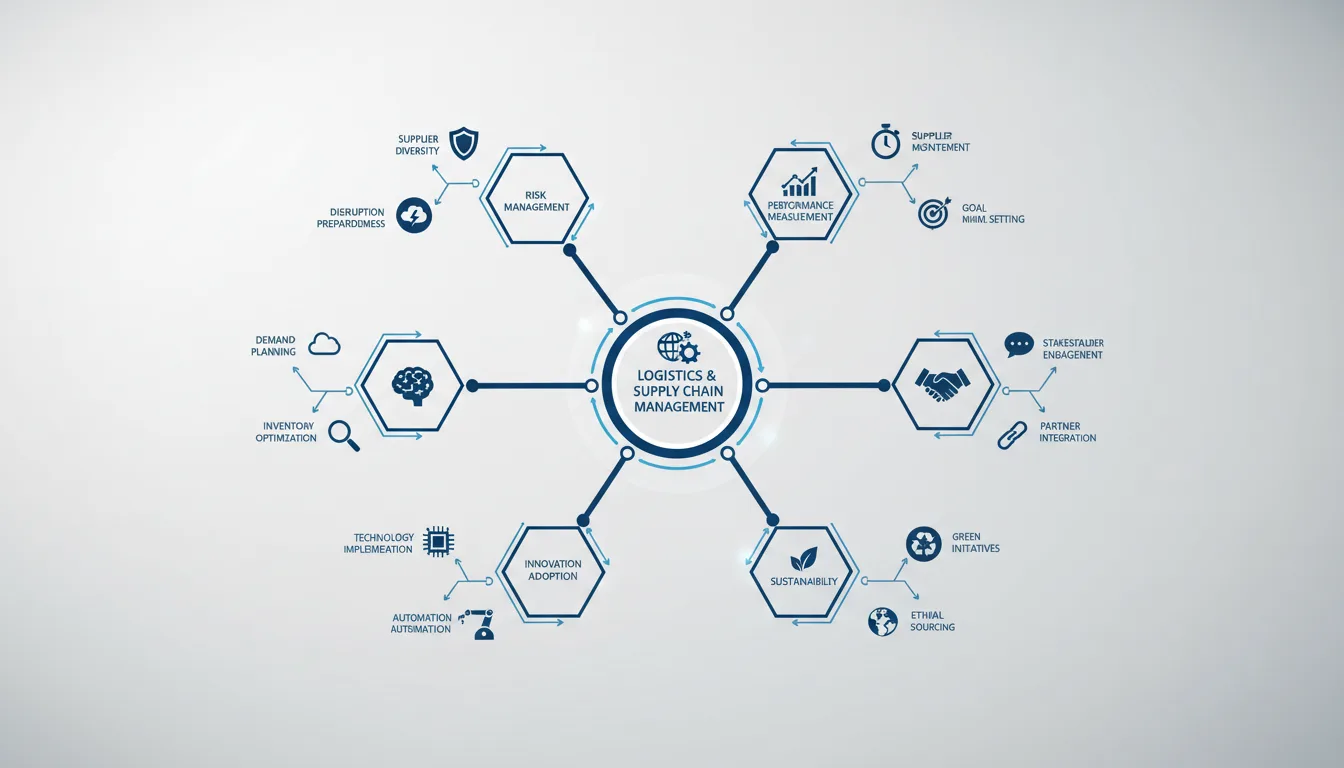
Management Practices in Logistics and Supply Chain Management
Overview
Management practices in logistics and supply chain management encompass the methodologies, processes, and strategies employed to optimize the flow of goods, services, and information 1. These practices are integral to ensuring efficiency, minimizing costs, enhancing customer satisfaction, and building resilient supply chains 2. Effective management practices lead to improved logistics performance, which is essential in today’s competitive global market, making it a vital area of knowledge for logistics professionals, supply chain managers, and students alike.
Etymology and Origins
The term "management" originates from the Latin word "manu agere," meaning "to lead by hand" 3. It evolved through Old French "ménagement" (meaning 'direction', 'housekeeping') to its modern English usage. In logistics, the concept of managing complex movements and resources has ancient roots, with early examples found in military logistics dating back to the Roman Empire, where the logistikas (officers responsible for provisioning armies) managed supplies and transportation 4.
The formal application of "management" to industrial and commercial operations began during the Industrial Revolution, as businesses sought systematic methods to enhance productivity and control processes. The documented usage of management in logistics settings can be traced back to the late 19th and early 20th centuries, as companies began to adopt structured approaches to distribute products more efficiently across growing national and international markets.
The term "logistics" itself emerged from military science, referring to the detailed organization and implementation of a complex operation. Its application to business began gaining traction in the mid-20th century, particularly after World War II, as businesses recognized the strategic importance of managing the flow of materials and information 5. The phrase "supply chain management" was coined much later, in the early 1980s by consultant Keith Oliver, to describe the integrated management of product flow from source to consumption 6.
Historical Development
Early Practices
Early practices in logistics primarily involved manual methods such as tracking inventories with ledgers and managing transportation routes through basic scheduling. This rudimentary approach dominated until the mid-20th century. A significant shift occurred in the 1950s with the introduction of operations research techniques, derived from World War II military planning, which brought scientific and mathematical rigor to logistics problems. Innovations such as just-in-time manufacturing (pioneered by Toyota in the 1950s and 60s) for inventory control drastically transformed how companies managed their supply chains by minimizing waste and optimizing production flows.
Key Figures and Milestones
- Frederick Winslow Taylor (1911) introduced the principles of scientific management, which emphasized efficiency, standardization, and process optimization. His work, detailed in "The Principles of Scientific Management," laid critical groundwork for modern logistics and supply chain efficiency, focusing on improving labor productivity and reducing costs.
- Henry Ford (early 20th century) implemented assembly line techniques and vertical integration, demonstrating the power of synchronized production and material flow, even before the term "logistics management" was widely adopted 7. His focus on efficiency and cost reduction through process design was revolutionary.
- In the 1960s, the nascent use of mainframe computers began to shape logistics operations, allowing for more sophisticated forecasting, inventory management, and route optimization. Early Materials Requirements Planning (MRP) systems started to emerge, automating the calculation of raw materials needed for production based on demand.
- The 1970s and 1980s saw logistics evolve into a distinct management discipline. The concept of total logistics cost gained prominence, encouraging companies to view transportation, warehousing, inventory, and order processing as interconnected elements. The coining of "supply chain management" in the early 1980s marked a shift towards a more holistic view, integrating suppliers and customers into a single, cohesive network 6.
- Notable publications such as "Logistics Management and Strategy" by Alan Harrison and Remko van Hoek, first published in the 2000s, helped define the frameworks for effective logistics practices and strategic thinking in the field.
Technological Evolution
The evolution of logistics management has paralleled and often been driven by advances in technology:
- 1960s-1970s: Mainframe Computing & MRP. Early computers facilitated basic inventory tracking and demand forecasting. MRP systems enabled systematic planning for manufacturing needs.
- 1980s-1990s: Personal Computers, Barcodes, ERP. The proliferation of personal computers made data management more accessible. Barcode technology revolutionized tracking of goods, dramatically increasing accuracy and speed. The adoption of Enterprise Resource Planning (ERP) systems in the 1990s, integrating various business functions like finance, HR, manufacturing, and supply chain, enhanced the integration and visibility of logistics operations 8. This allowed for a centralized approach to data and process management.
- 2000s: RFID, WMS, TMS, E-commerce. The rise of RFID technology improved real-time asset tracking. Warehouse Management Systems (WMS) became sophisticated tools for optimizing warehouse operations, from receiving to picking and shipping. Transportation Management Systems (TMS) optimized freight movement and carrier selection. The explosion of e-commerce necessitated robust and efficient fulfillment processes.
- 2010s-Present: Cloud, IoT, AI/ML, Automation. Cloud-based logistics platforms offer scalability and accessibility. The Internet of Things (IoT) enables real-time monitoring of goods and assets. Advanced artificial intelligence (AI) and machine learning (ML) are used for predictive analytics, demand forecasting, and autonomous operations. Robotic process automation (RPA) and automated guided vehicles (AGVs) are transforming warehouses into highly efficient, automated hubs 9.
Core Concepts
Management practices in logistics revolve around several core concepts aimed at maximizing efficiency and value:
- Inventory Management: This involves strategically managing the stock levels of raw materials, work-in-progress, and finished goods to meet customer demand without incurring excessive holding costs or stockouts 10. Key aspects include demand forecasting, setting reorder points and safety stock levels, and implementing strategies like Just-In-Time (JIT) or Vendor-Managed Inventory (VMI). Modern visual inventory management systems provide real-time visibility and control.
- Order Fulfillment: The comprehensive process of receiving, processing, picking, packing, and delivering customer orders efficiently and accurately Order Fulfillment Guide. This often involves optimized picking strategies such as batch picking, wave picking, and zone picking, enabled by mobile order fulfillment software.
- Supply Chain Optimization: Enhancing various components of the entire supply chain, from sourcing raw materials to delivering the final product, to reduce costs, improve service levels, and enhance resilience. This includes network design, transportation mode selection, and supplier relationship management.
- Performance Metrics: Utilizing key performance indicators (KPIs) to measure efficiency, effectiveness, and identify areas for continuous improvement. Common logistics KPIs include On-Time In-Full (OTIF) delivery, inventory turnover, perfect order rate, order cycle time, and warehouse space utilization.
- Warehouse Management: The strategic planning and control of all operations within a warehouse, including receiving, put-away, storage, picking, and shipping. This relies heavily on effective warehouse layout and advanced mobile WMS systems.
Types and Classifications
Management practices can be classified into several categories based on their strategic scope and focus:
- Strategic Logistics Management: Focuses on long-term planning and resource allocation to support overarching business goals. This includes decisions on facility location, network design, outsourcing logistics functions (e.g., 3PLs), and technology adoption to gain a competitive advantage over a multi-year horizon 11.
- Tactical Logistics Management: Involves short-to-medium term decision-making that aligns with strategic objectives. Examples include selecting transportation carriers, developing inventory policies, determining optimal production schedules, and managing supplier relationships over months or quarters.
- Operational Logistics Management: Deals with the day-to-day management of logistics operations to ensure smooth cycles of supply and demand. This encompasses activities like daily scheduling of deliveries, managing warehouse staff, processing individual orders, and handling returns. Workflows in a WMS are key to standardizing and optimizing these daily operations.
Industry Applications
Management practices find robust applications across various industries, demonstrating their versatility and critical importance:
- E-commerce: Essential for streamlining complex order fulfillment processes for high volumes of individual orders, often requiring rapid delivery. This industry heavily relies on integrated shipping and fulfillment software and sophisticated inventory synchronization, especially for platforms like Shopify with global inventory management.
- Healthcare: Crucial for efficient and compliant management of sensitive goods like pharmaceuticals, medical devices, and vaccines. This involves strict cold chain management, traceability (e.g., lots and expiration dates), and rapid response logistics for critical supplies, often governed by stringent regulatory requirements.
- Manufacturing: Utilizes lean principles and just-in-time methodologies to enhance operational efficiency, minimize waste, and optimize the flow of raw materials and finished goods. This includes precise purchase order management to ensure materials arrive exactly when needed for production.
- Retail: Adapting to omnichannel strategies, managing inventory across multiple channels (online, in-store, warehouse), and optimizing last-mile delivery to meet evolving customer expectations for convenience and speed.
- Automotive: Manages intricate global supply chains with thousands of components, often requiring precise sequencing and synchronous delivery to assembly lines (just-in-sequence), minimizing on-site inventory.
Benefits and Advantages
Adopting effective management practices leads to numerous significant advantages for organizations:
- Improved Customer Satisfaction: Achieved through timely, accurate, and reliable deliveries, leading to enhanced brand loyalty and repeat business.
- Enhanced Visibility: Providing real-time insights across the entire supply chain, allowing for proactive decision-making, rapid problem resolution, and better risk management. This visibility is often powered by advanced inventory systems.
- Increased Cost Efficiency: Optimized resource allocation, reduced waste (e.g., lower inventory holding costs, minimized obsolescence), efficient transportation routing, and streamlined processes directly contribute to lower operational expenses.
- Greater Supply Chain Resilience: The ability to withstand disruptions and adapt quickly to unexpected events (e.g., natural disasters, geopolitical issues) through diversified sourcing, robust risk management strategies, and agile operations.
- Competitive Advantage: Companies with superior logistics management can offer better service, lower prices, or faster delivery, differentiating themselves in the marketplace.
Challenges and Limitations
Despite their undeniable benefits, management practices in logistics and supply chain management face several inherent challenges:
- Resistance to Change: Implementing new systems, processes, or technologies often encounters organizational inertia, requiring significant change management efforts and employee training to overcome.
- Integration Issues: Achieving seamless data flow and process synchronization between disparate systems (e.g., ERP, WMS, TMS, e-commerce platforms) and across multiple trading partners (suppliers, manufacturers, distributors, retailers) remains a complex hurdle 12.
- Complexity of Global Supply Chains: Managing highly interconnected and geographically dispersed supply networks introduces challenges related to varying regulations, customs procedures, currency fluctuations, and geopolitical risks, all within a volatile and uncertain market environment.
- Data Overload and Quality: While data is crucial, managing vast quantities of data and ensuring its accuracy, completeness, and timely availability for decision-making can be overwhelming without robust data governance and analytical tools.
- Talent Gap: The logistics industry faces a shortage of skilled professionals capable of navigating complex supply chains, utilizing advanced technologies, and implementing sophisticated management practices.
Best Practices
To implement effective and sustainable management practices, companies should consider:
- Digital Transformation: Embrace modern technologies such as mobile warehouse management systems, AI-powered analytics, and IoT to gain real-time visibility and automate processes. This involves investing in scalable and integrated software solutions.
- Continuous Improvement (Kaizen): Foster a culture of ongoing process assessment and refinement. Regular audits, performance reviews (using KPIs), and feedback loops are essential for identifying bottlenecks and implementing solutions. Utilizing tools for cycle counting and stock replenishment ensures data accuracy and operational efficiency.
- Collaboration and Partnership: Build strong, collaborative relationships with suppliers, customers, and logistics partners. This includes sharing information, joint planning, and co-creating solutions to improve overall supply chain performance and resilience. A vendor portal can facilitate this.
- Data-Driven Decision Making: Leverage analytics and business intelligence to inform strategic and operational decisions. This moves beyond intuition to evidence-based choices for everything from demand forecasting to network optimization.
- Talent Development: Invest in regular training for staff to embrace new logistics technologies, understand evolving best practices, and develop critical analytical and problem-solving skills.
- Risk Management and Resilience Planning: Develop robust strategies to identify, assess, and mitigate potential disruptions across the supply chain. This includes contingency planning, diversification of suppliers, and building agility into operations.
Future Trends
As the logistics industry continues its rapid evolution, several key trends will shape the future of management practices:
- Increased Adoption of Artificial Intelligence (AI) and Machine Learning (ML): These technologies will drive predictive analytics for more accurate demand forecasting, dynamic route optimization, automated warehouse operations, and proactive risk management in supply chains 13.
- Hyper-Automation and Robotics: The deployment of automated systems like autonomous mobile robots (AMRs), automated storage and retrieval systems (AS/RS), and robotic process automation (RPA) will become commonplace, enhancing warehouse and inventory management efficiency and reducing manual labor 9.
- Sustainability and Green Logistics: Growing emphasis on environmentally friendly practices, including optimizing transportation routes to reduce carbon emissions, using electric vehicles, sustainable packaging, and embracing circular economy principles to minimize waste and promote resource efficiency 14.
- Blockchain for Transparency and Traceability: Distributed ledger technology will enhance supply chain transparency, improve traceability of goods, reduce fraud, and streamline customs processes, offering greater trust among participants.
- Digital Twins and Control Towers: The creation of virtual replicas (digital twins) of physical supply chains will allow for real-time monitoring, simulation of scenarios, and predictive insights. Integrated supply chain control towers will provide end-to-end visibility and orchestration.
- Customer-Centric Logistics: A continued focus on meeting and exceeding customer expectations through personalized delivery options, real-time tracking, and seamless returns processes, driven by robust order management systems.
In conclusion, management practices are the backbone of effective logistics and supply chain operations. The continued evolution of technology and methodologies, combined with a strategic focus on resilience, sustainability, and customer centricity, will further refine how companies approach logistics management, aiming for greater efficiency, adaptability, and ultimate customer satisfaction.
Sources
- Order Fulfillment Guide
- Supply Chain Management Review
- Merriam-Webster Dictionary: Management
- A Brief History of Logistics
- What is Logistics?
- The Origin of 'Supply Chain Management'
- Henry Ford's Logistics Strategy
- What is ERP? Enterprise Resource Planning Explained
- Warehouse Automation: A Complete Guide
- Inventory Management Best Practices
- Strategic Logistics Management: What it is and Why it Matters
- Addressing the Top Supply Chain Integration Challenges
- AI in Supply Chain Management: Benefits and Challenges
- Green Logistics: The Sustainable Future of Supply Chains
- Mobile Warehouse Management System
- Visual Inventory Management System
- Warehouse Layout Preview
- Batch Picking Guide
- Mobile Order Fulfillment Software
- Workflows Overview
- Order Management System
- Shopify WMS Overview
- Lots & Expiration Dates Guide
- Purchase Order Management
- Cycle Counting Guide
- Vendor Portal