Lean Principles in Logistics
Lean principles focus on enhancing efficiency by eliminating waste in logistics and supply chain management.
Updated
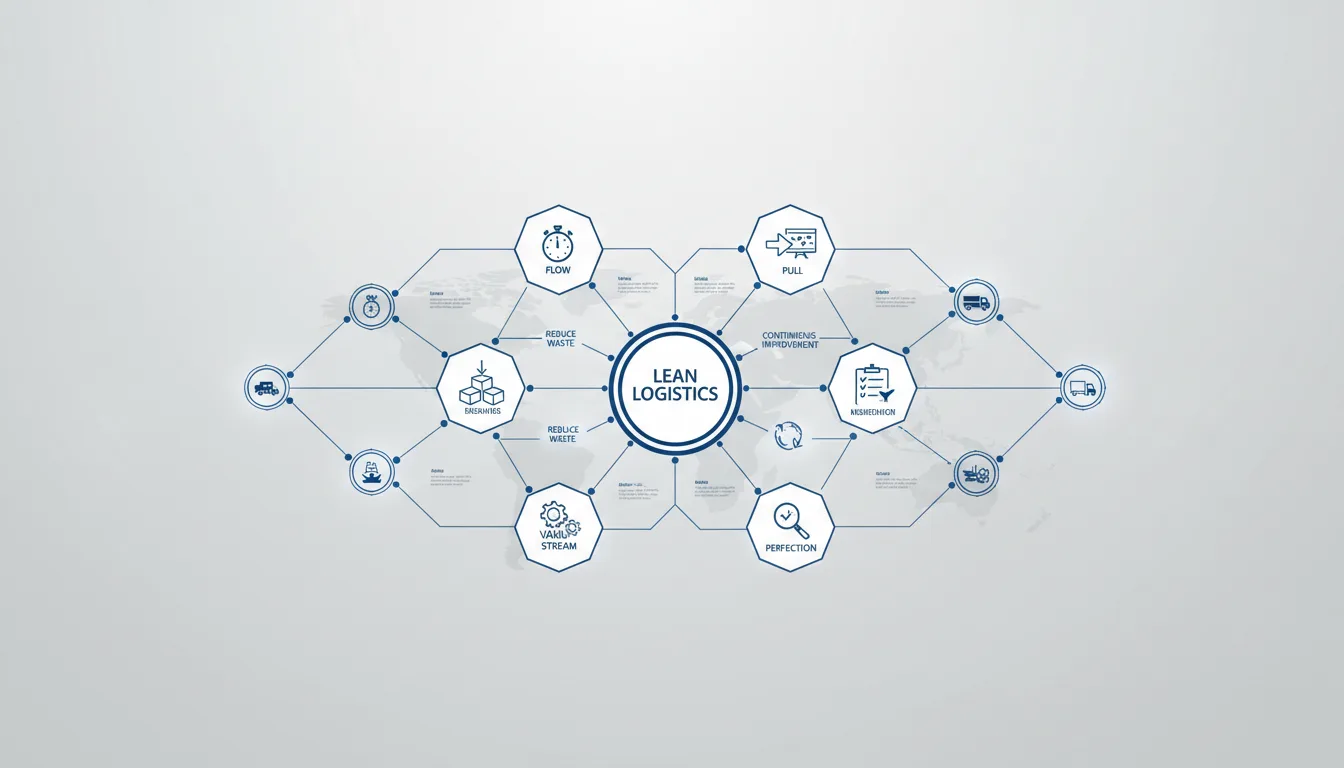
Overview
Lean principles refer to a management philosophy that seeks to maximize customer value while systematically minimizing waste. Originating in the manufacturing sector, particularly through the practices established by Toyota Production System (TPS) in the post-World War II era, these principles have extended into various domains, including logistics and supply chain management. The primary purpose of lean principles is to create a streamlined, agile, and efficient supply chain that enhances responsiveness, reduces lead times, and significantly lowers operational costs by eliminating non-value-adding activities.
Etymology and Origins
The term "lean" was first coined and documented in the 1980s. John Krafcik used the term in his 1988 article, "Triumph of the Lean Production System," published in the Sloan Management Review. Krafcik, then a researcher at MIT, studied various automotive plants and identified the Toyota Production System (TPS) as a uniquely efficient approach. He described TPS as a method designed to systematically eliminate waste (known as muda in Japanese), enhance quality, and provide greater value to the customer.
The concept was further popularized and given broader academic and industry recognition by the 1990 book, "The Machine That Changed the World" by James Womack, Daniel Jones, and Daniel Roos. This seminal work detailed Krafcik's findings and introduced the term "lean production" to a global audience, contrasting it with traditional mass production. The linguistic roots of the term are English, chosen to describe a system that uses less of everything—less human effort, less manufacturing space, less investment in tools, and less time to develop new products compared to craft or mass production methods.
The philosophical roots of lean can be traced back to various management theories and innovations but predominantly are associated with the continuous improvement processes introduced in Japan post-World War II. Early influences also include Henry Ford's development of continuous-flow production in the early 20th century, though TPS evolved this significantly by focusing on pull rather than push systems.
Historical Development
Lean principles gained prominence through a deliberate evolution, primarily led by Toyota:
- Pre-1950s: Foundations in Japan: Following World War II, Taiichi Ohno, along with Eiji Toyoda and Shigeo Shingo, began developing the Toyota Production System (TPS) at Toyota Motor Corporation. Their goal was to catch up with Western productivity while dealing with limited resources and small domestic markets. Early efforts focused on reducing inventory and enhancing efficiency, inspired partly by visits to Ford's factories and American supermarkets.
- 1950s-1970s: Development of TPS: Key components like Just-in-Time (JIT) production and Jidoka (automation with a human touch) were refined. Toyota aimed to produce only what was needed, when it was needed, and in the amount needed, thereby eliminating muda (waste), mura (unevenness), and muri (overburden).
- 1988: Coining of "Lean": John Krafcik uses the term "lean" in his article, "Triumph of the Lean Production System," giving a name to the revolutionary practices of Toyota.
- 1990: Global Popularization: "The Machine That Changed the World" is published, introducing "lean production" to a global audience and detailing its superiority over traditional mass production. This marked a pivotal moment for the widespread adoption and study of lean concepts.
- 1990s: Expansion Beyond Manufacturing: Lean practices spread beyond the automotive industry, influencing sectors such as healthcare, construction, and significantly, logistics and supply chain management. Companies began adapting JIT, VSM, and Kaizen to their distribution and operational networks.
- 2000s onwards: Technology Integration and Digital Lean: The application of lean principles in logistics has increasingly relied on advanced technology. This includes sophisticated Warehouse Management Systems (WMS), Transportation Management Systems (TMS), and data analytics platforms to identify inefficiencies, optimize routes, and automate processes. The rise of visual inventory management systems and AI-driven predictive analytics further enables real-time waste reduction and continuous improvement in complex supply chains.
Core Concepts
Lean principles operate on several key concepts designed to identify and eliminate waste, ultimately delivering more value to the customer:
- Value Stream Mapping (VSM): This is a powerful visualization tool used to analyze the current state of a process, identifying all steps involved in delivering a product or service to the customer. It categorizes activities as value-adding, non-value-adding but necessary, or non-value-adding waste, helping to visualize flow and identify bottlenecks and areas for improvement. The goal is to design a future state where waste is minimized.
- Just-in-Time (JIT): A production and delivery strategy aimed at reducing inventory holding costs and lead times by aligning production and procurement schedules precisely with demand. Materials and components are delivered exactly when needed in the production process or for customer fulfillment, minimizing storage and associated costs. Cross-docking is a logistics strategy that often supports JIT principles by moving products directly from inbound to outbound logistics with minimal or no storage.
- Kaizen (Continuous Improvement): A philosophy of constantly seeking small, incremental changes for improvement in all aspects of a business, involving every employee. This systematic approach fosters a culture of ongoing optimization, where processes are regularly reviewed and refined to enhance efficiency, quality, and safety.
- 5S System: An organizational methodology for maintaining an efficient, safe, and high-performance workplace. The five Japanese words, translated as Sort (Seiri), Set in order (Seiton), Shine (Seiso), Standardize (Seiketsu), and Sustain (Shitsuke), guide the process of workplace organization and cleanliness, which contributes to increased productivity and reduced waste.
- Poka-Yoke (Mistake-Proofing): The implementation of mechanisms to prevent errors from occurring or to make errors immediately obvious, ensuring processes are foolproof. In logistics, this can involve barcode scanning for accurate picking or automated checks during bin put-away to prevent misplacements.
- Heijunka (Production Leveling): The process of leveling production volumes and types over a fixed period to reduce batching and smooth the flow of production. This minimizes peaks and valleys in demand, leading to more stable resource utilization and less inventory.
Types and Classifications
Lean principles, while core in their philosophy, have spawned various methodologies and applications:
- Value-Driven Lean: This fundamental classification focuses intensely on identifying and delivering customer value while rigorously minimizing the seven wastes (overproduction, waiting, transportation, over-processing, excess inventory, motion, and defects). Every activity is scrutinized for its contribution to customer value.
- Lean Six Sigma: A powerful hybrid approach that combines the waste-reduction principles of lean with the variability-reduction and quality-improvement tools of Six Sigma. It uses the DMAIC (Define, Measure, Analyze, Improve, Control) methodology to systematically improve processes and eliminate defects, leading to both greater efficiency and higher quality.
- Agile Lean: Integrates the flexibility and iterative development of Agile methodologies with lean's focus on waste reduction. This allows organizations, particularly in software development and project management, to respond quickly to changing customer demands and market conditions while maintaining lean efficiencies. In logistics, this translates to flexible fulfillment strategies and rapid adaptation to supply chain disruptions.
Industry Applications
Lean principles are applied across a broad spectrum of industries, transforming operations and driving efficiency:
- Manufacturing: The birthplace of lean, where it is used to streamline production lines, reduce work-in-progress inventory, eliminate defects, and minimize waste through techniques like JIT and Kaizen. For example, implementing efficient stock replenishment within a factory to ensure materials are available just when needed for assembly.
- Healthcare: Applied to improve patient flow, reduce wait times in emergency rooms and clinics, optimize inventory of medical supplies, and enhance overall patient safety and experience through efficient resource management and process standardization.
- Logistics and Supply Chain Management: A critical area for lean application, focusing on optimizing warehouse operations, distribution processes, and transportation networks to enhance order fulfillment and reduce costs. Practical examples include:
- Implementing batch picking techniques to significantly consolidate tasks, leading to faster order processing and reduced labor costs.
- Optimizing warehouse layout and bin put-away criteria for efficient storage and retrieval, reducing travel time and search time for pickers.
- Leveraging cycle counting instead of annual physical inventories to continuously verify inventory accuracy with minimal disruption.
- Using Bin-to-Bin inventory transfers to dynamically manage space and product flow within the warehouse, preventing bottlenecks.
- Streamlining shipping and receiving with strategies like cross-docking to minimize storage time and expedite delivery.
Benefits and Advantages
Implementing lean principles in logistics yields substantial benefits:
- Cost Reduction: By identifying and eliminating the seven wastes (e.g., excess inventory, unnecessary transportation, over-processing), businesses can significantly lower operational expenses, storage costs, and labor costs.
- Improved Customer Satisfaction: Streamlined processes, reduced lead times, and higher quality lead to faster, more accurate deliveries and a better overall customer experience. This translates to increased loyalty and repeat business.
- Enhanced Flexibility and Agility: Lean organizations can respond more effectively and quickly to changes in market demand, unforeseen disruptions, and evolving customer preferences, making their supply chains more resilient.
- Higher Quality: Focusing on error prevention (Poka-Yoke) and continuous improvement (Kaizen) reduces defects and errors in logistics processes, leading to fewer returns and improved service quality.
- Increased Employee Engagement: Lean methodologies encourage employee participation in problem-solving and continuous improvement, fostering a culture of ownership and empowerment, which can boost morale and productivity.
Challenges and Limitations
While the lean approach offers numerous benefits, its implementation can present common challenges:
- Cultural Resistance: Employees and management accustomed to traditional processes may resist changes to established routines, requiring significant change management efforts and clear communication of benefits.
- Inadequate Training and Understanding: Successful implementation requires a deep understanding of lean methodologies. Insufficient training can lead to superficial application or misinterpretation of principles, undermining effectiveness.
- Overemphasis on Cost Cutting: Focusing solely on waste reduction without considering customer value or quality can lead to detrimental shortcuts, potentially compromising product integrity or service levels.
- Supplier Relationship Complexities: JIT systems require highly reliable suppliers and strong collaborative relationships. Any disruption or lack of synchronization in the supply chain can lead to stockouts and production halts.
- Initial Investment: Implementing lean, especially with new technology like advanced Warehouse Management Systems or automation, may require a significant upfront investment in training, process redesign, and new equipment.
- Vulnerability to Disruptions: Highly optimized, low-inventory systems can be more vulnerable to unexpected supply chain disruptions (e.g., natural disasters, geopolitical events) if not buffered by robust risk management strategies.
Best Practices
To successfully implement lean principles in logistics, consider the following best practices:
- Lead with Vision and Culture: Start with strong leadership commitment and foster a culture of continuous improvement, transparency, and problem-solving at all levels. Emphasize that lean is a journey, not a destination.
- Engage and Empower Employees: Involve frontline workers in identifying waste and proposing solutions. Implement employee productivity tracking and reward systems that encourage active participation in Kaizen initiatives. Provide comprehensive training in lean tools and techniques.
- Implement Data-Driven Decision Making: Leverage technology like advanced Order Management Systems and analytics to collect, analyze, and act on performance metrics. This allows for objective identification of inefficiencies and measurement of improvements. SkuSavvy's workflows can help standardize and optimize data capture.
- Focus on the Entire Value Stream: Don't just optimize individual departments. Instead, apply Value Stream Mapping across the entire supply chain, from supplier to customer, to identify system-wide inefficiencies.
- Foster Supplier Collaboration: Build strong, trust-based relationships with suppliers to enable smooth JIT operations and ensure consistent quality and delivery. This may involve sharing forecasts and collaborating on process improvements.
- Start Small and Scale Up (Pilot Programs): Begin with pilot projects in specific areas to demonstrate success and build momentum before rolling out lean initiatives across the entire organization.
- Utilize Appropriate Technology: Deploy modern logistics software that supports lean objectives. This includes Pick, Pack, Ship software for efficient order fulfillment, visual inventory management systems for real-time visibility, and automation solutions for repetitive tasks.
Future Trends
The future of lean principles in logistics will likely involve increased integration of cutting-edge technology to further streamline processes and enhance responsiveness. Key trends include:
- Advanced Automation and Robotics: Increased deployment of automated guided vehicles (AGVs), autonomous mobile robots (AMRs), and robotic picking systems within warehouses to reduce manual labor, increase speed, and improve accuracy, directly addressing motion and waiting wastes.
- Artificial Intelligence (AI) and Machine Learning (ML): AI/ML will drive predictive analytics for demand forecasting, inventory optimization, and preventative maintenance, enabling proactive waste reduction. It will also power dynamic routing and real-time decision-making in transportation and mobile order fulfillment software.
- Blockchain for Supply Chain Transparency: Distributed ledger technology can enhance transparency and traceability throughout the supply chain, reducing administrative waste and improving trust among partners.
- Internet of Things (IoT): Sensors and IoT devices will provide real-time data on asset location, environmental conditions, and equipment performance, enabling dynamic inventory management and proactive problem-solving.
- Digital Twins: Creating virtual replicas of physical supply chains will allow for simulation and optimization of lean processes before real-world implementation, identifying waste and improving flow in a risk-free environment.
- Sustainability Integration: Lean principles will increasingly be applied to environmental sustainability, focusing on reducing waste in energy consumption, packaging, and emissions, aligning with broader ESG (Environmental, Social, and Governance) goals.
In conclusion, lean principles represent a powerful socio-technical approach to managing logistics by fostering a culture of continuous improvement and efficiency. By systematically identifying and eliminating waste across the entire value stream, organizations can achieve significant cost savings, enhance customer satisfaction, and build more resilient and agile supply chains, ultimately leading to sustained competitive advantage.