Lean Management in Logistics
An exploration of Lean Management principles, their origins, historical development, and applications in logistics and supply chain management.
Updated
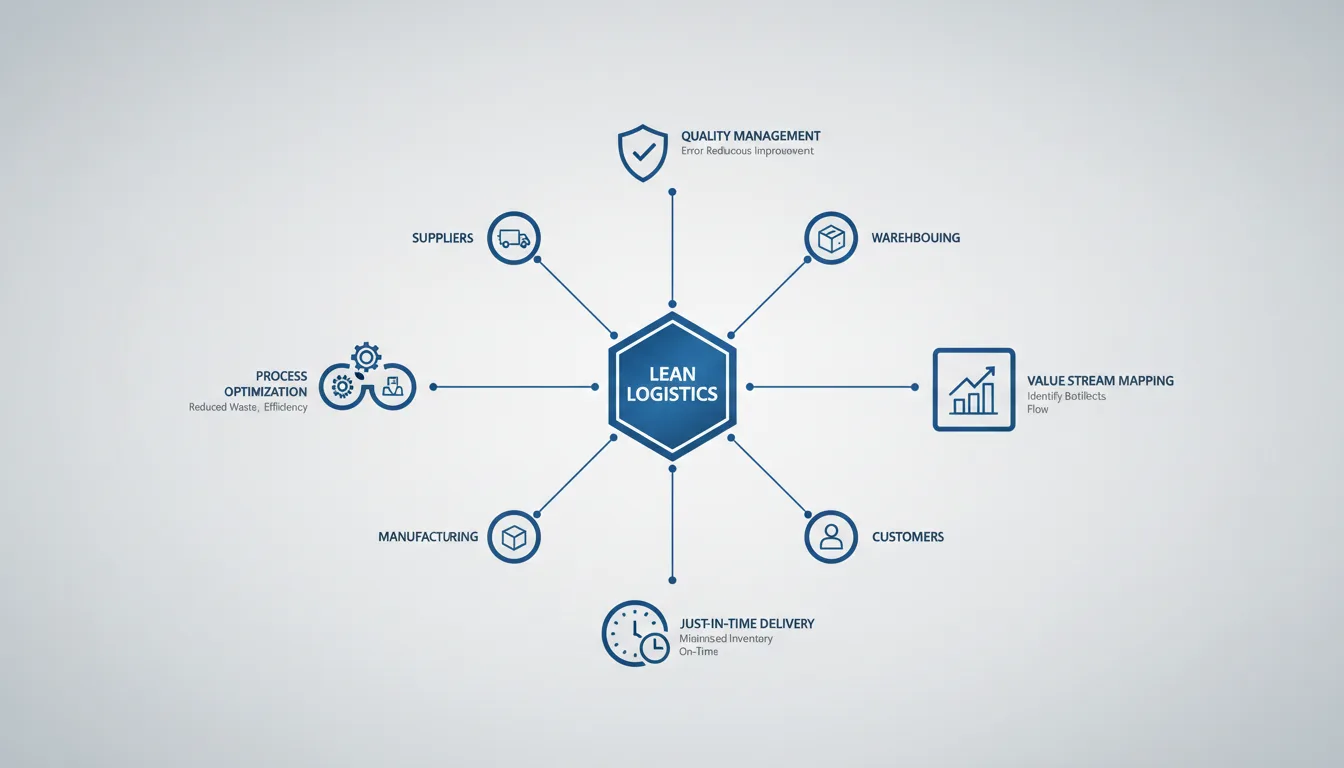
Lean Management in Logistics
Overview
Lean Management is a philosophy and methodology aimed at enhancing organizational efficiency by eliminating waste and optimizing processes. Its principles are widely applied in manufacturing, logistics, and service sectors to streamline operations, reduce costs, and increase customer satisfaction. By focusing on value creation through continuous improvement, Lean Management plays a critical role in modern supply chain management.
Etymology and Origins
The term "lean" was first documented in the 1980s but describes production systems that Toyota pioneered in the post-World War II era. The foundations of Lean Management originate from practices within the Toyota Production System (TPS), which sought to produce high-quality products with minimized resource waste, emphasizing efficiency and value delivery. The concept of waste reduction, known as muda, is central to these principles (Lean Manufacturing Overview). The evolution of the term reflects a growing recognition of efficiency across industries, transitioning from a manufacturing-focused perspective in the 1990s to a broader business methodology by the early 21st century.
Historical Development
Lean Management evolved through several key stages:
- 1940s–1960s: The emergence of the Toyota Production System, spearheaded by influential figures like Taiichi Ohno and Shigeo Shingo, laid the groundwork for Lean principles.
- 1990s: The term "Lean" was popularized by James Womack and Daniel Jones in their influential book Lean Thinking (published in 1996). This publication detailed principles that could be used beyond manufacturing to various other sectors, leading to a resurgence of interest in Lean practices.
- 2000s: Lean Management began to be integrated into various sectors, including logistics and healthcare. The adaptation and application of Lean principles were extensively studied, with contributions from various organizations and academic institutions. The Lean Enterprise Institute (founded in 1997) has been a major proponent of Lean principles in diverse fields (Lean Enterprise Institute).
- Technology Growth: The advancement from manual processes to computerized systems, such as warehouse management systems, significantly facilitated the implementation of Lean principles in logistics operations. Automation, robotics, and real-time data access have enhanced capabilities and sustained Lean initiatives.
Core Concepts
Lean Management is governed by several core principles, including:
- Value Mapping: Identifying value from the customer's perspective and eliminating waste that does not contribute to this value.
- Continuous Improvement (Kaizen): Fostering a culture where employees at all levels can contribute to incremental improvements.
- Just-in-Time Delivery: Ensuring that materials and products are available only as needed, which reduces inventory costs and increases responsiveness.
- Standardization of Work: Establishing uniform procedures to enhance quality and efficiency in operations.
Industry Applications
Lean Management principles are applied across various logistics and supply chain operations:
- Warehouse Operations: Efficient layout design, batch picking (Batch Picking Guide), and streamlined order fulfillment processes are enhanced through Lean methodologies.
- Inventory Management: Tools like Visual Inventory Management highlight how organizations can reduce waste associated with excess stock or stockouts.
- Transportation Logistics: Lean techniques help in optimizing routes and reducing cycle times, ultimately leading to faster and more cost-effective deliveries. Case studies have shown that companies implementing these strategies, such as Amazon, have significantly reduced delivery time while improving customer satisfaction (Amazon Supply Chain).
Benefits and Advantages
Employing Lean Management offers significant benefits:
- Increased operational efficiency by streamlining processes and minimizing delays.
- Enhanced product quality through a focus on continuous improvement and standardized procedures.
- Greater customer satisfaction owing to quicker response times and better service delivery.
- Lower costs associated with inventory and wasted resources.
Challenges and Limitations
Despite its advantages, Lean Management presents challenges:
- Resistance to change within an organization, as employees may be accustomed to traditional methods. Organizations that have succeeded in transitioning to Lean often implement comprehensive training to alleviate these concerns (Change Management Practice).
- The difficulty in measuring the impact of Lean initiatives in the short term can lead to skepticism from stakeholders. Emphasizing data-driven results through Lean Metrics can counteract this.
- Potential for over-emphasis on cost savings may compromise quality if not managed carefully.
Best Practices
To effectively implement Lean Management principles, organizations can adopt:
- Training Programs: Educating staff on Lean principles and fostering a culture of continuous improvement.
- Regular Audits: Continuously assessing processes and establishing benchmarks for improvement, which is crucial for sustaining Lean practices (Lean Audit Process).
- Cross-Functional Teams: Encouraging collaboration across departments to identify inefficiencies and drive holistic improvements that impact the organization positively.
Future Trends
As technology advances, Lean Management is set to evolve further. Notable trends include:
- Integration with Digital Tools: The adoption of advanced analytics and Artificial Intelligence (AI) to enhance decision-making and process efficiencies (Future of Lean).
- Sustainability Practices: Incorporating environmental considerations into Lean practices to reduce waste and improve supply chain sustainability, reflecting the growing demand for responsible business practices (Sustainable Lean Management).
- Agility in Operations: Increased focus on adaptability to changing market dynamics through Lean methodologies, allowing organizations to respond swiftly to demand fluctuations.
Related Concepts
Lean Management is interconnected with various concepts in logistics, such as Six Sigma for quality control and Agile Management for responsiveness. By understanding and integrating these methodologies, organizations can develop a holistic approach to operational excellence.
In conclusion, Lean Management remains a pivotal approach in logistics and supply chain management, driving efficiency and promoting a culture of continuous improvement. By adopting its principles, organizations are better equipped to meet customer demands while minimizing waste and maximizing value delivery.