Lean Inventory Management
Lean inventory management focuses on minimizing waste while maximizing productivity and efficiency within inventory processes.
Updated
Overview
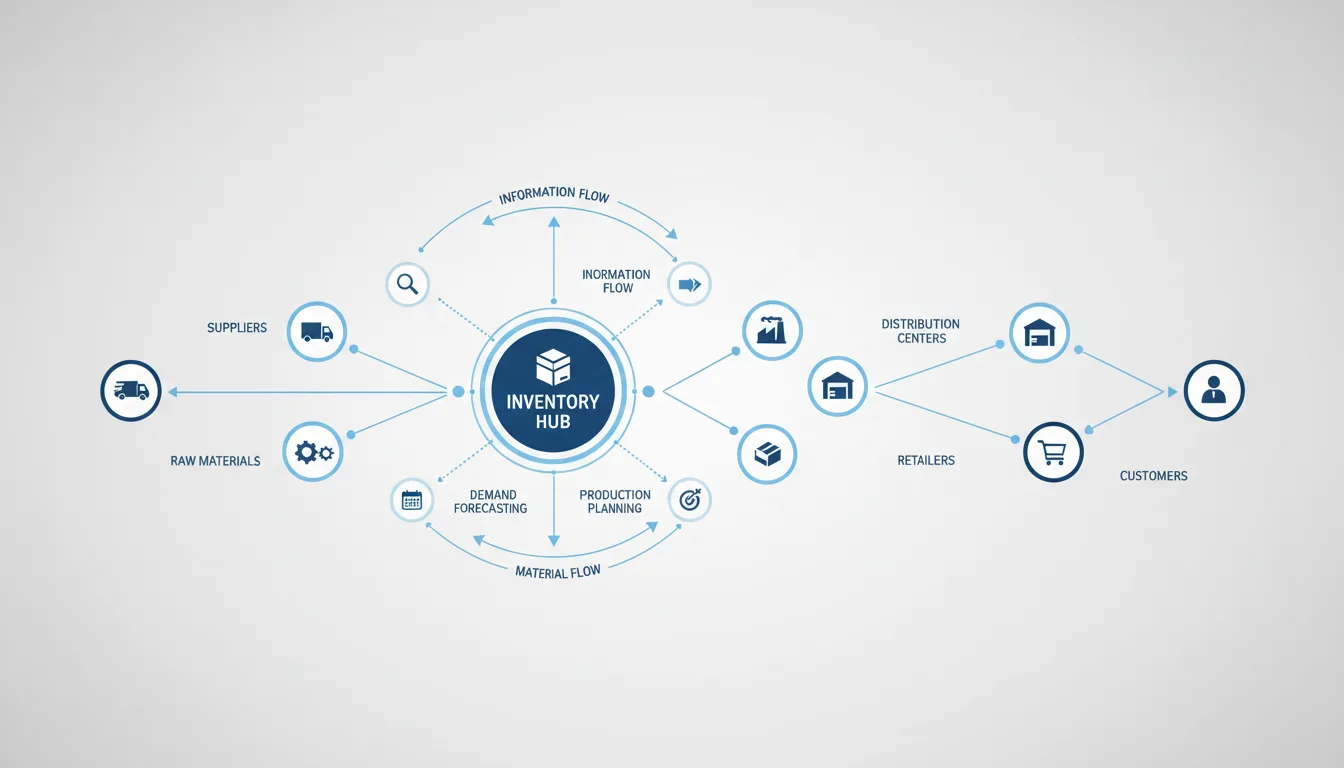
Lean Inventory Management is a critical approach in logistics and supply chain management, emphasizing the minimization of waste and enhancement of productivity and efficiency. This methodology aims to streamline inventory handling processes by adopting lean principles, which originated from the Toyota Production System. The core objective of lean inventory management is to maintain sufficient inventory levels while reducing excess stock, leading to cost savings, improved cash flow, and enhanced responsiveness to market demands. It moves beyond simply cutting costs, focusing on delivering maximum value to the customer through continuous improvement and elimination of non-value-added activities.
Etymology and Origins
The term "lean" was first introduced by John Krafcik in a 1988 article titled "Triumph of the Lean Production System" published in the MIT Sloan Management Review. Krafcik, then a researcher at MIT, used the term to describe the Toyota Production System (TPS) after conducting a study of the world automotive industry. The linguistic root of "lean" in this context refers to an operation that uses less of everything compared to mass production: less human effort, less manufacturing space, less investment in tools, and less time to develop new products [5].
Its conceptual roots, however, can be traced back much further than Krafcik's coining of the term. Practices that form the basis of lean, such as interchangeable parts and standardized work, emerged during the Industrial Revolution. Henry Ford's pioneering work with continuous-flow production and assembly lines in the early 20th century, aimed to minimize work-in-progress and optimize flow, can be seen as an early precursor to lean thinking [6]. The direct lineage, however, is firmly with Japan during the post-World War II era, particularly through Toyota's lean manufacturing principles. The philosophy aims to create more value for customers with fewer resources by systematically eliminating waste (Muda) in industrial processes, a concept deeply ingrained in TPS.
Historical Development
Pre-1950s: Foundations of Efficiency
While the term "lean" is relatively modern, the pursuit of efficiency and waste reduction has historical precedents. Frederick Winslow Taylor's scientific management principles, developed in the late 19th and early 20th centuries, focused on optimizing workflows and standardizing tasks, laying groundwork for process analysis [7]. Henry Ford's moving assembly line significantly reduced production times and work-in-progress inventory for the Model T, emphasizing continuous flow, though often at the cost of product variety and worker specialization [6]. These early innovations demonstrated the power of systematic process improvement, even if they lacked the holistic, customer-centric view that would define TPS.
1950s and 1960s: The Rise of the Toyota Production System
The true origins of lean inventory management and the broader lean philosophy can be traced to the 1950s when Toyota's production system emerged. Influenced by American manufacturing techniques, particularly statistical quality control (W. Edwards Deming) and grocery store inventory replenishment systems, key figures like Taiichi Ohno and Eiji Toyoda revolutionized manufacturing at Toyota. Facing resource scarcity and a small domestic market in post-war Japan, they developed a system focused on efficiency and flexibility. Core components included Just-In-Time (JIT) production—producing only what is needed, when it is needed, and in the amount needed—and Jidoka (autonomation), which means automation with a human touch, ensuring quality at the source [8]. These principles were designed to eliminate the seven types of waste (Muda): overproduction, waiting, unnecessary transport, over-processing, excess inventory, unnecessary movement, and defects [9]. Kanban, a visual signaling system, was also developed during this period to manage JIT production flow [10].
1980s and 1990s: Western Adoption and Popularization
The 1980s saw the introduction of lean concepts to Western companies as Japanese manufacturing prowess became undeniable. Researchers at MIT's International Motor Vehicle Program began studying Toyota, leading to the seminal book "The Machine That Changed the World" by James P. Womack, Daniel T. Jones, and Daniel Roos, published in 1990 [5]. This book popularized the term "lean production" and detailed the superiority of the Toyota Production System over traditional mass production, inspiring Western industries to adopt these principles. Material Requirements Planning (MRP) and later Manufacturing Resource Planning (MRP II) systems, while not strictly lean, also gained prominence in the 1970s and 80s, providing computerized tools for managing inventory and production schedules. However, these systems often focused on a "push" approach, contrasting with the "pull" philosophy of lean, highlighting the need for a shift in operational mindset alongside technology [11]. By the late 1990s, lean practices were being applied to various sectors outside manufacturing, including healthcare, finance, and logistics, recognizing that waste reduction principles were universally applicable.
2000s and Beyond: Digital Transformation and Advanced Analytics
With advancements in technology, lean inventory management began incorporating sophisticated data analytics, enterprise resource planning (ERP) systems, and specialized warehouse management systems (WMS). The shift towards automated processes, real-time data collection, and predictive analytics enabled organizations to refine their inventory strategies further, enhancing accuracy, reducing lead times, and improving demand forecasting. The rise of e-commerce further accelerated the need for highly efficient and flexible inventory management, pushing for even leaner operations to handle rapid order fulfillment and diverse product ranges. Today, technology plays an indispensable role, moving from simple data tracking to intelligent decision-making support systems.
Core Concepts
Lean inventory management comprises several core principles, each designed to identify and eliminate waste:
- Value Stream Mapping (VSM): A powerful visualization tool used to identify every step of the production process, from raw materials to the customer. It helps in distinguishing value-added activities from non-value-added ones (waste) and designing a more efficient future state [12].
- Just-In-Time (JIT): A cornerstone of lean, JIT involves receiving goods only as they are needed for production or sale, thus significantly reducing inventory holding costs, obsolescence, and storage space requirements. This "pull" system contrasts with traditional "push" systems, where goods are produced based on forecasts [8].
- Continuous Improvement (Kaizen): A philosophy emphasizing ongoing, incremental improvements across all aspects of an organization. Kaizen encourages every employee, from the shop floor to management, to identify inefficiencies and propose enhancements regularly, fostering a culture of problem-solving and optimization [13].
- Jidoka: Often translated as "autonomation with a human touch," Jidoka refers to the practice of stopping the production line automatically when a defect is detected. This prevents the spread of defects, ensuring quality at the source and preventing further waste [8].
- Heijunka (Production Leveling): The practice of leveling production volume and mix over time. Instead of producing large batches of one product and then another, Heijunka smooths the production schedule to minimize fluctuations, which in turn reduces inventory buffers and evens out demand on upstream processes [14].
Visual Inventory Systems are often critical tools in facilitating these principles by providing real-time visibility and control over inventory levels, allowing for quick identification of deviations and supporting continuous improvement efforts. Technologies like digital Kanban boards and automated alerts can enhance these visual controls.
Industry Applications
Lean inventory management is widely adopted across various sectors due to its universal applicability in waste reduction and efficiency enhancement:
- Manufacturing: Beyond its automotive origins, lean manufacturing principles help reduce lead times, minimize work-in-progress (WIP) inventory, and optimize production flow in industries from aerospace to electronics. By focusing on JIT component delivery, manufacturers can significantly cut carrying costs and respond faster to design changes [15].
- Retail: In retail, lean strategies optimize stock levels across stores and distribution centers to enhance customer satisfaction while minimizing overstocking. Techniques like cross-docking and efficient stock replenishment processes, often guided by real-time sales data, ensure products are available when and where customers want them without excessive inventory holding [16].
- Healthcare: Lean principles are applied to reduce surplus medical supplies, expedite critical equipment delivery, and streamline patient care processes. For instance, managing pharmaceutical inventory using JIT can reduce waste from expired drugs and optimize storage space in hospitals and pharmacies [17].
- E-commerce and 3PL: With the rapid growth of online retail, lean inventory helps manage vast product catalogs and variable demand. Third-Party Logistics (3PL) providers leverage lean to offer efficient pick-pack-ship services, optimizing warehouse layouts, batch picking strategies, and shipping processes to minimize costs and maximize throughput. Advanced bin put-away criteria and bin-to-bin inventory transfers are crucial here for spatial efficiency.
These applications consistently result in significant reductions in carrying costs, improved operational efficiency, and increased responsiveness to market demands, leading to a competitive advantage.
Benefits and Advantages
Implementing lean inventory management offers a multitude of advantages that positively impact a company's bottom line and operational agility:
- Cost Savings: A primary benefit is the significant reduction in holding costs (e.g., storage, insurance, security, obsolescence) due to decreased excess stock. Lean also reduces capital tied up in inventory, improving cash flow and freeing up funds for other investments [18].
- Increased Efficiency and Productivity: Streamlined processes, reduced waste, and optimized workflows lead to faster operational cycles and higher productivity. By eliminating non-value-added activities, resources are reallocated to tasks that directly contribute to customer value.
- Improved Quality: Lean principles, particularly Jidoka and Kaizen, foster a culture of quality at the source. By identifying and addressing problems immediately, defects are minimized, reducing rework, returns, and associated costs [8].
- Enhanced Responsiveness and Flexibility: Maintaining lower inventory levels and having agile production/replenishment systems allows businesses to respond more quickly to changes in customer demand, market trends, or supply chain disruptions. This flexibility is crucial in today's dynamic global market.
- Better Customer Satisfaction: Enhanced delivery performance, fewer stockouts, and higher product quality directly contribute to increased customer satisfaction and loyalty. By focusing on value creation, lean ensures that customer needs are met more effectively.
- Optimized Space Utilization: Reduced inventory means less storage space is required, which can lead to lower warehouse lease costs or allow for better utilization of existing facilities, potentially enabling expansion of production or fulfillment operations.
Companies adopting lean practices often observe a transformation in operational culture, fostering an environment where continuous improvement, problem-solving, and employee engagement are highly valued.
Challenges and Limitations
While lean inventory management offers substantial benefits, its implementation is not without challenges:
- Demand Variability and Stockouts: The core lean principle of maintaining low inventory levels makes systems highly susceptible to unexpected spikes in demand or supply chain disruptions. This can lead to costly stockouts, lost sales, and diminished customer satisfaction if not managed carefully [19]. Robust demand forecasting and supplier relationships are crucial.
- Cultural Resistance: Shifting from traditional "just-in-case" inventory practices to a lean "just-in-time" philosophy often requires a significant change in company culture. Employees and management accustomed to large buffers may resist new methods, perceiving low inventory as risky. Overcoming this requires strong leadership, consistent training, and clear communication of benefits.
- Implementation Costs: The initial investment in training, process redesign, and technology (e.g., advanced WMS, automation) can be substantial. While these often yield long-term savings, the upfront costs can be a barrier for some organizations [20].
- Supplier Dependence: JIT systems rely heavily on reliable, high-quality, and timely deliveries from suppliers. Any disruptions in the supply chain (e.g., natural disasters, geopolitical events, supplier failures) can halt production or fulfillment, highlighting the need for strong supplier partnerships and risk mitigation strategies.
- Lack of Buffer for Errors: With minimal inventory, there's little room for error in production, quality control, or logistics. A small issue can have a ripple effect throughout the entire supply chain, making meticulous planning and execution critical.
- Complexity for High-Variety/Low-Volume Products: Lean principles are sometimes more challenging to apply effectively in environments with a very high variety of products or extremely low production volumes, where economies of scale are harder to achieve for each individual item.
Best Practices
To successfully implement and sustain lean inventory management, organizations should consider the following best practices:
- Engage and Empower Employees: Foster a culture that encourages staff at all levels to identify inefficiencies, propose solutions, and actively participate in continuous improvement initiatives (Kaizen). Provide adequate training and support [13].
- Utilize Advanced Technology: Implement effective inventory management systems and warehouse management systems to automate and streamline inventory processes, ensure real-time visibility, and facilitate data-driven decision-making. Tools like SkuSavvy's Order Management System can centralize order fulfillment, while features like cycle counting enhance inventory accuracy.
- Implement Robust Demand Forecasting: Invest in advanced analytics and predictive modeling to improve the accuracy of demand forecasts. This minimizes the risk of stockouts in a lean environment and allows for more precise JIT planning [19].
- Strengthen Supplier Relationships: Develop strong, collaborative relationships with key suppliers to ensure reliability, quality, and flexibility in deliveries. Consider long-term partnerships and shared visibility into demand forecasts.
- Standardize Processes: Document and standardize work processes to reduce variability, improve consistency, and facilitate easier identification of waste. This also supports easier training and onboarding of new employees.
- Regularly Conduct Value Stream Mapping: Periodically review and update value stream maps to identify new opportunities for waste reduction and process optimization as business needs and market conditions evolve [12].
- Embrace Visual Management (e.g., Kanban): Implement visual controls throughout the warehouse and production floor to make workflow, inventory levels, and potential problems immediately apparent. Visual inventory management systems can greatly assist this.
- Focus on Quality at the Source (Jidoka): Empower employees to stop processes immediately when a defect or problem is detected, preventing the propagation of errors and ensuring that quality is built into every step.
Future Trends
The future of lean inventory management is likely to see further integration of cutting-edge technology and evolving strategic considerations:
- AI and Machine Learning for Demand Forecasting: Utilizing advanced predictive analytics and machine learning algorithms to process vast datasets for more accurate demand forecasting, inventory optimization, and automated stock replenishment decisions. This minimizes human error and reacts faster to market shifts [21].
- Automation and Robotics: Increased deployment of automation tools, such as autonomous mobile robots (AMRs) for material handling and robotic process automation (RPA) for administrative tasks, will enhance operational efficiency, reduce labor costs, and improve accuracy in warehouses and distribution centers. This will further enable leaner processes by reducing manual touchpoints.
- Real-time Visibility and IoT: Greater use of Internet of Things (IoT) devices and sensors for real-time tracking of inventory, assets, and environmental conditions. This provides unprecedented visibility across the supply chain, enabling proactive management and immediate responses to deviations.
- Blockchain for Supply Chain Transparency: Adoption of blockchain technology to enhance transparency and traceability throughout the supply chain, improving trust, reducing fraud, and providing immutable records for inventory movements and transactions.
- Sustainability and Circular Economy: Increasing emphasis on sustainable practices within inventory management, including reducing waste, optimizing packaging, and designing for product longevity and recyclability. Lean principles naturally align with sustainability goals by minimizing resource consumption [22].
- Hyper-personalization and Micro-fulfillment: The growth of e-commerce drives the need for micro-fulfillment centers and highly agile inventory strategies to cater to individualized customer orders and rapid delivery expectations, requiring extremely lean and flexible operations. Kitting and advanced bin packing solutions will be essential.
By adopting these future-oriented strategies, organizations can not only enhance their lean inventory management efforts but also build more resilient, agile, and sustainable supply chains, leading to improved efficiency, cost-effectiveness, and ultimately, superior customer satisfaction.
Sources
- Mobile Warehouse Management Overview
- Stock Replenishment Guide
- Visual Inventory Management System
- Order Management System
- The Machine That Changed the World: The Story of Lean Production -- Toyota's Secret Weapon in the Global Car Wars That Revolutionized Western Industry
- Mass Production - Ford's Assembly Line
- Scientific Management
- Toyota Production System - Principles of JIT, Jidoka, and Kaizen
- The Seven Wastes (Muda)
- Kanban
- Material Requirements Planning (MRP)
- Value Stream Mapping
- Kaizen
- Heijunka (Production Leveling)
- Lean Manufacturing in Practice: A Case Study
- Cross-Docking Guide
- Lean Management in Healthcare: A Comprehensive Review
- Cost of Holding Inventory
- Demand Forecasting in Supply Chain Management
- The Challenges of Implementing Lean
- AI in Supply Chain and Logistics
- Circular Economy and Sustainable Supply Chains
- Bin Put-Away Criteria
- Bin-to-Bin Inventory Transfer
- Pick, Pack, Ship Software
- Cycle Counting Guide
- Kitting Guide
- Bin Packing Visualizer
- Triumph of the Lean Production System