Inventory Management Integration
A comprehensive look into the integration of inventory management systems, highlighting its importance, historical development, core concepts, and benefits.
Updated
Inventory Management Integration
Overview
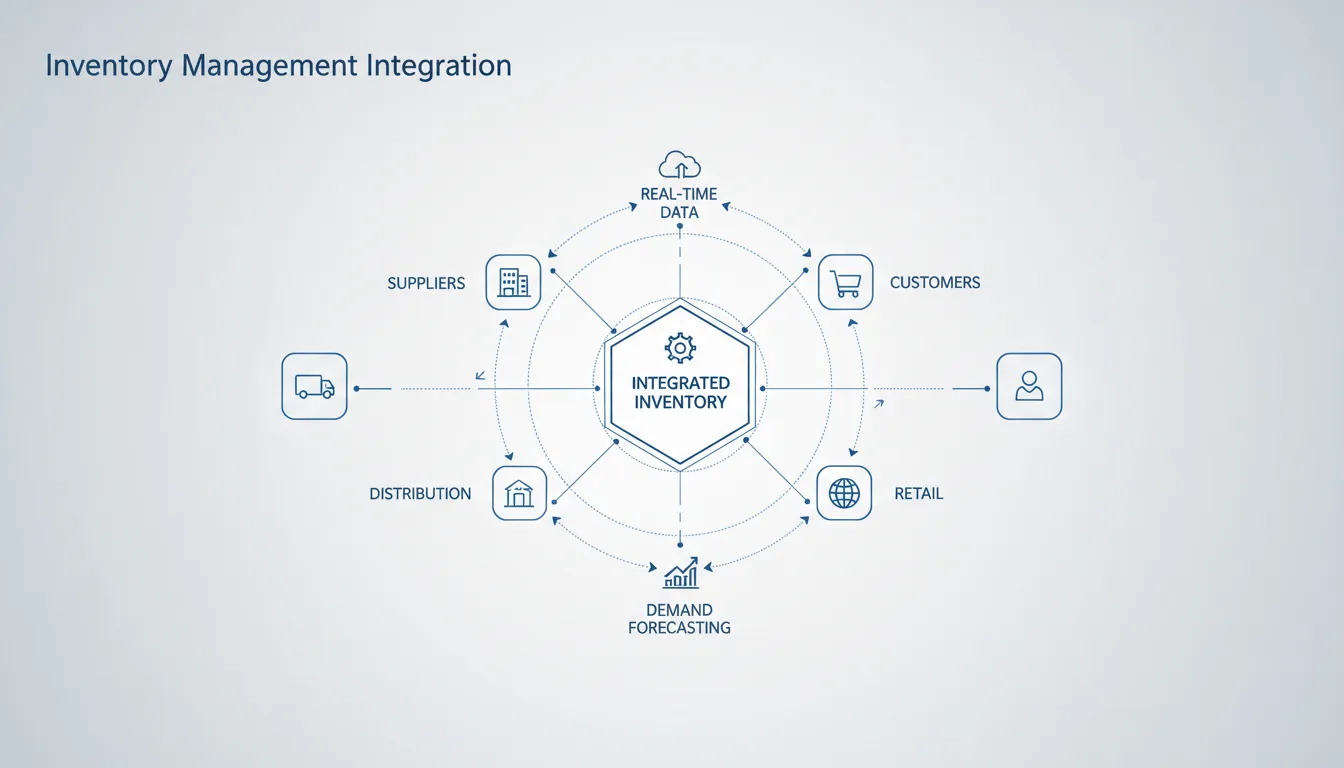
Inventory management integration refers to the process of aligning and combining various inventory management systems and processes to enhance operational efficiency and accuracy. This integration allows businesses to synchronize inventory data across platforms, improving visibility and control. The significance of inventory management integration cannot be overstated; it helps organizations minimize stockouts, reduce excess inventory, and streamline their supply chain operations effectively.
Etymology and Origins
The term "inventory management" is derived from the Latin word "invenire," meaning to find or come upon. Historically, inventory management practices date back to ancient civilizations where goods were counted and managed by scribes. The first documented usage of concepts closely related to inventory management can be traced back to the Mesopotamian civilization around 3000 BC, where detailed records of goods were maintained on clay tablets. Over time, the terminology has evolved significantly, transitioning from rudimentary counting methods to sophisticated techniques involving computerized systems and real-time data analytics.
Historical Development
The field of inventory management saw significant transformations over the decades:
- Pre-20th Century: Inventory was managed manually, often relying on physical counts and ledger entries. Merchants were the primary users of these early inventory methods.
- 1950s-1970s: The advent of computing technology led to the adoption of Electronic Data Interchange (EDI) and inventory management software. Companies like IBM began pioneering inventory control systems with the release of their first commercial inventory management systems in the 1960s.
- 1980s: The introduction of just-in-time (JIT) inventory strategies by companies such as Toyota fundamentally changed inventory practices. JIT emphasized stock minimization and waste reduction, leading to improved operational performance.
- 1990s-2000s: The development of ERP systems by companies like SAP allowed for greater integration of inventory management with other business functions, paving the way for sophisticated, holistic management approaches to information and resources.
- 2010s-Present: The rise of cloud computing and mobile technology has further driven advancements in inventory management integration. Solutions like Visual Inventory Management Systems are becoming commonplace, leveraging IoT and real-time data analytics to optimize inventory levels.
Core Concepts
At its core, inventory management integration involves several key technical elements:
- Real-time Inventory Tracking: Systems that continuously update inventory levels to ensure the accuracy and timeliness of information.
- Data Synchronization: Multiple systems (e.g., warehouse management, e-commerce platforms) that communicate seamlessly to keep inventory data consistent across channels.
- Automated Replenishment: Integration solutions can trigger replenishment orders based on predefined thresholds, optimizing stock levels effectively. This automation can significantly reduce order fulfillment cycles.
- Analytics and Reporting: Integrated systems allow for sophisticated analytics, providing insights into inventory performance and potential improvements, aiding in demand forecasting and decision-making.
Industry Applications
Inventory management integration has broad applications across various industries. For example:
- Retail: Companies use integrated inventory management systems to synchronize online and offline stock levels, enabling accurate inventory visibility across sales channels, as seen in Shopify Inventory Management.
- Manufacturing: Integration with enterprise resource planning (ERP) systems allows manufacturers to automate inventory processes, reducing delays and enhancing production scheduling, which can significantly enhance throughput and efficiency (Manufacturing Insights).
- E-commerce: Online businesses leverage integrated systems to manage stock levels across multiple platforms, ensuring they can meet customer demand without overstocks. For example, using SkuSavvy’s solutions, firms can achieve seamless integration and efficient order processing.
Benefits and Advantages
The advantages of effective inventory management integration include:
- Increased Efficiency: Automation reduces manual entry errors and administrative workload.
- Improved Accuracy: Real-time data updates mean businesses have the correct information at their fingertips, which helps in compliance and reporting.
- Cost Reduction: By optimizing stock levels, companies can minimize holding costs and avoid stockouts, enhancing financial performance (Cost Management in Supply Chain).
- Enhanced Customer Satisfaction: Reliable inventory management translates to better order fulfillment, increasing customer loyalty.
Challenges and Limitations
Despite the benefits, organizations may face challenges, including:
- Integration Complexity: Different systems may have compatibility issues, making integration difficult.
- Cost of Implementation: The initial investment required for new software and infrastructure can be daunting for some businesses.
- Training Requirements: Employees need thorough training to utilize new integrated systems effectively, which can impede productivity during the transition.
Best Practices
Here are recommended best practices for successful inventory management integration:
- Thorough Needs Assessment: Companies should evaluate their inventory management needs and processes before choosing an integration solution.
- Vendor Collaboration: Engaging with software providers to ensure compatibility and ease of use is crucial for successful integration.
- Continuous Monitoring: Regular audits of stock levels and system performance can identify areas for improvement in inventory management processes.
Future Trends
As technology advances, the future of inventory management integration is likely to be influenced by:
- Artificial Intelligence (AI): Leveraging AI for predictive analytics can enhance forecasting accuracy and inventory optimization (AI in Supply Chain).
- Blockchain Technology: This could improve traceability in supply chains, significantly impacting inventory management efficiency by ensuring security and transparency in transactions.
- Seamless Cross-Channel Integration: With the rise of omnichannel retailing, seamless integration across all sales channels will become increasingly important to maintain competitive advantage.
Related Concepts
Understanding inventory management integrations can also lead to insights into related areas such as Warehouse Management and Order Fulfillment. The interplay between these areas can provide a comprehensive approach to logistics and supply chain management.