Inventory Management Automation
A comprehensive overview of Inventory Management Automation, including its definition, history, benefits, and current trends in logistics.
Updated
Overview
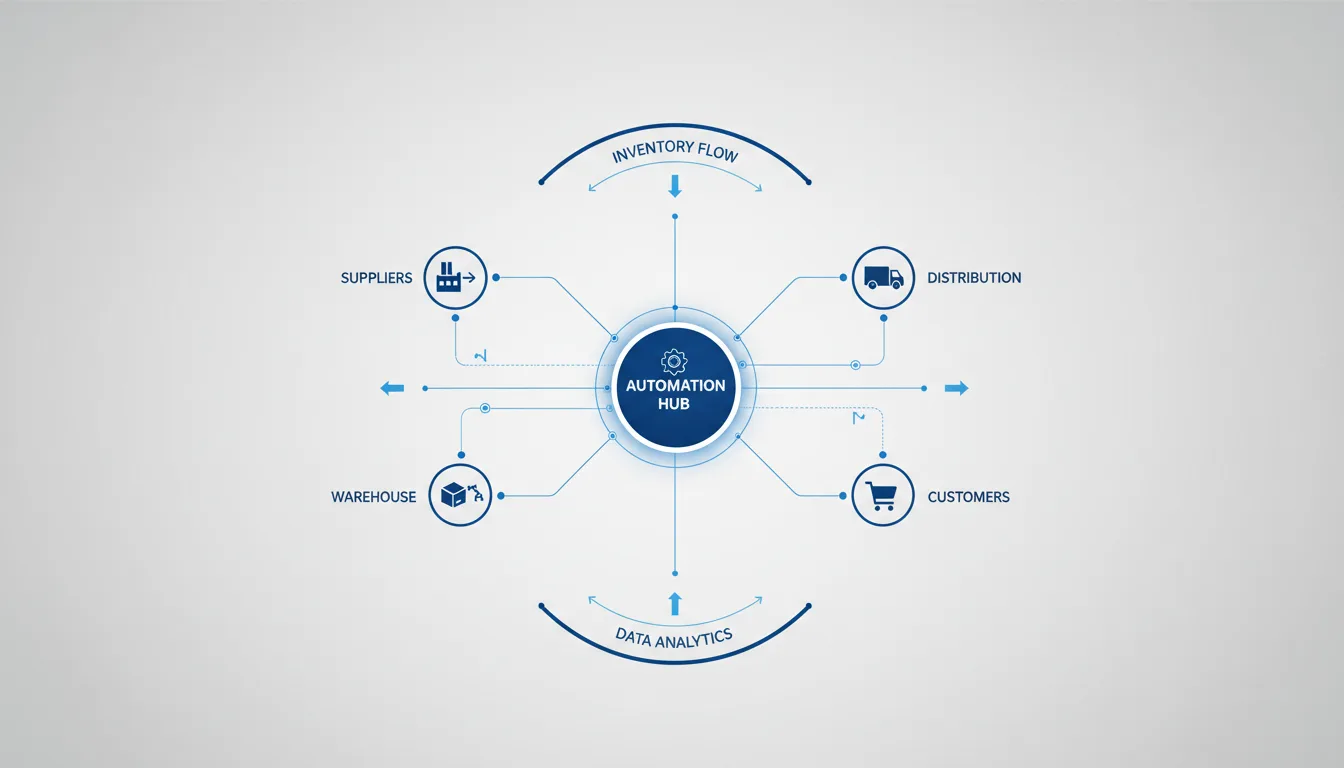
Inventory Management Automation refers to the technologies and processes that streamline the monitoring and management of inventory levels, orders, sales, and deliveries. It dramatically enhances the accuracy and efficiency of inventory operations, which are critical to supply chain success and resilience. By automating these processes, businesses can reduce manual errors, improve order accuracy, accelerate fulfillment, and ultimately enhance customer satisfaction while reducing operational costs.
Etymology and Origins
The term "inventory management" combines distinct linguistic roots that evolved to describe a sophisticated business function. "Inventory" stems from the Latin verb "invenire," meaning "to find" or "come upon," evolving into "inventarium," a list of things found or a catalog of goods 1. "Management" originates from the Latin "manus" (hand) and "agere" (to lead or act), conveying the idea of directing or handling with skill 2.
The concept of "automation" itself was coined in the late 1940s by Del Harder, an engineering manager at Ford Motor Company, to describe the automatic handling of parts between production processes 3. While inventory management has existed since ancient civilizations recorded goods in granaries, the modern concept of automation applied to inventory management truly began with the advent of information technology.
Initially, inventory management automation focused on basic tracking and calculation using early computing systems. The language around this field has continuously evolved, incorporating terms such as "real-time tracking," "cloud-based management," "predictive analytics," and "robotics" as technology advanced and integrated further into logistics and supply chain operations.
Historical Development
The evolution of inventory management automation mirrors the broader history of industrial efficiency and computational advancement.
Pre-1900s: Manual Systems and Early Scientific Management
For millennia, inventory was managed through manual ledger systems, physical counts, and simple reorder points based on experience. The late 19th and early 20th centuries saw the emergence of scientific management principles pioneered by figures like Frederick Winslow Taylor. While not automated, this era laid the groundwork for systematic process analysis and efficiency, leading to the development of the Economic Order Quantity (EOQ) model in 1913 by Ford W. Harris, providing a formula for calculating optimal order sizes to minimize inventory costs 4. This was a crucial theoretical step towards optimized inventory control.
1950s-1960s: Early Computerization and MRP
The mid-20th century marked the first significant shift from manual processes to computerized systems. Mainframe computers, primarily from companies like IBM, were initially used for payroll and accounting but quickly found application in inventory record-keeping. This period saw the birth of Material Requirements Planning (MRP) systems in manufacturing. Developed in the 1960s, MRP used master production schedules to calculate raw material and component needs, automating the planning of purchases and production orders based on bills of material 5. This was a foundational step in automating complex inventory calculations.
1970s: Dedicated WMS and Barcodes
The 1970s brought the development of dedicated Warehouse Management Systems (WMS) to optimize internal warehouse operations. These early WMS focused on improving storage location, picking routes, and overall throughput. Concurrently, the widespread adoption of barcode technology for product identification revolutionized data capture. The first UPC barcode scan occurred in 1974, marking a pivotal moment in automating data entry, significantly reducing errors, and enabling faster, more accurate tracking of goods from receiving to shipping 6.
1980s-1990s: ERP Integration and Just-In-Time
As technology advanced, so did the ambition for integrated systems. The 1980s saw the rise of Enterprise Resource Planning (ERP) systems. Companies like SAP and Oracle emerged as leaders, integrating inventory management with other critical business functions like finance, HR, and manufacturing, providing a unified view of operations. This era also embraced the Just-In-Time (JIT) philosophy, pioneered by Toyota, which sought to minimize inventory levels by receiving goods only as they were needed 7. Electronic Data Interchange (EDI) also gained traction, automating business-to-business document exchange, further streamlining supply chain interactions.
2000s: Internet, RFID, and Mobile Solutions
The turn of the millennium brought the internet's transformative power to inventory management. Web-based systems enabled broader access and collaboration. RFID (Radio-Frequency Identification) technology gained prominence, enabling automatic identification and tracking of inventory items without line-of-sight, greatly enhancing accuracy and speed in real-time operations, especially in retail and logistics. The introduction of mobile devices and applications, particularly mobile warehouse management systems, allowed for greater flexibility, accuracy, and responsiveness for warehouse staff directly on the floor 8.
2010s-Present: AI, Cloud, Robotics, and IoT
The current era is characterized by sophisticated, cloud-based solutions powered by artificial intelligence (AI), machine learning (ML), robotics, and the Internet of Things (IoT). AI and ML algorithms significantly improve demand forecasting accuracy, reduce stockouts, and automate purchase orders based on real-time inventory levels and predictive analytics 9. Robotics, including Automated Guided Vehicles (AGVs) and Autonomous Mobile Robots (AMRs), are transforming warehouse automation, handling tasks from picking to transportation. Widespread adoption of cloud computing has made powerful, scalable inventory solutions accessible to businesses of all sizes, leading to significant improvements in inventory turnover ratios and reduced carrying costs.
Core Concepts
Inventory management automation revolves around several interconnected core concepts:
-
Real-Time Inventory Tracking: This is the bedrock of automation. Systems constantly update inventory levels as products are received, moved, picked, packed, and shipped. This capability is crucial for maintaining optimal stock levels, preventing stockouts or overstock situations, and enabling efficient processes like cycle counting and stock replenishment. Businesses gain immediate visibility into their entire inventory footprint, often visualized through a visual inventory management system.
-
Order Management Automation: Integrating inventory management with order management systems streamlines the entire order-to-delivery process. This includes automated order entry, validation, routing to the correct warehouse, and initiation of fulfillment tasks like batch picking and pick-to-tote strategies. Such automation significantly reduces order processing times, minimizes errors, and enhances customer experience through faster and more accurate deliveries, leveraging sophisticated pick, pack, ship software.
-
Demand Forecasting Automation: Leveraging AI and machine learning, automated systems analyze historical sales data, seasonal trends, promotions, and external factors to predict future demand with high accuracy. This reduces the risk of stockouts and overstocking, allowing for more strategic purchasing and production planning. This capability is critical for optimizing inventory holding costs.
-
Automated Replenishment & Purchasing: Based on real-time inventory levels, demand forecasts, and predefined reorder points, automation can automatically trigger purchase orders or internal stock transfer requests. Features like automated purchase quantity and vendor portal integration streamline the procurement process, ensuring materials and products are available exactly when needed, optimizing cash flow and minimizing manual administrative tasks.
Types and Classifications
Inventory management automation systems can be classified based on their architectural approach and scope:
- Centralized Systems: These systems consolidate all inventory data from across an organization into a single, unified database. This provides a comprehensive, real-time overview of stock levels, movements, and locations across all facilities. While offering excellent oversight, they can be complex to manage for geographically dispersed operations with unique local needs.
- Distributed Systems: Ideal for businesses with multiple warehouses or retail stores, these systems allow individual units to manage their local stock autonomously while periodically syncing critical data with a central system for oversight and consolidated reporting. This offers flexibility and localized control but requires robust synchronization mechanisms to maintain data consistency.
- Hybrid Systems: Combining features from both centralized and distributed models, hybrid systems offer the best of both worlds. They typically maintain a central repository for strategic oversight and aggregate reporting, while allowing local sites significant autonomy in daily operations. This flexibility makes them adaptable to diverse business structures and varying operational needs, often seen in large enterprises or those with a mix of operational models.
Industry Applications
Inventory management automation is indispensable across a vast array of sectors, driving efficiency and competitive advantage:
- Retail: Large and small retailers use automation to manage thousands of SKUs, optimize shelf space, and handle peak season demands efficiently. It's crucial for omnichannel retail strategies to ensure consistent stock availability across online and physical stores. Solutions like Shopify inventory management are tailored for e-commerce retailers.
- Manufacturing: Automated inventory systems ensure raw materials and components are available precisely when needed for production lines, preventing costly downtime and supporting Just-In-Time (JIT) manufacturing. They also manage work-in-progress (WIP) inventory and finished goods, integrating with MRP/ERP systems.
- E-commerce: Online retailers leverage automation to handle high volumes of orders, optimize warehouse workflows (e.g., bin put-away criteria, pick-to-tote), and ensure timely and accurate fulfillment, directly impacting customer satisfaction and retention. This is particularly vital for platforms using dedicated Shopify WMS systems.
- Healthcare: Automation is critical for tracking medical supplies, pharmaceuticals (often with strict lots and expiration dates), and equipment. It ensures regulatory compliance, minimizes waste, and guarantees availability of life-saving items, often involving specialized cold chain management.
- Food & Beverage: This sector benefits from automation for managing perishable goods, ensuring compliance with food safety regulations, and optimizing stock rotation using First-In, First-Out (FIFO) or First-Expired, First-Out (FEFO) methods. Traceability from farm to fork is greatly enhanced.
Benefits and Advantages
The implementation of inventory management automation yields substantial advantages for businesses:
- Increased Efficiency: Automation streamlines various workflows, significantly reducing the time employees spend on manual inventory counts, data entry, and updates. This frees up staff for more strategic tasks and improves overall operational throughput, leading to more orders processed per hour or day.
- Improved Accuracy: By minimizing human intervention, automated systems drastically reduce errors in inventory tracking, order fulfillment, and data recording. This translates to fewer mispicks, fewer shipping errors, and more reliable inventory records, which are critical for demand forecasting and financial reporting.
- Cost Savings: Optimizing stock levels through accurate forecasting and automated replenishment reduces excess inventory, thereby lowering associated carrying costs (warehousing, insurance, obsolescence). Furthermore, reduced errors mean fewer returns, rework, and expedited shipping costs. Businesses can calculate the ROI on WMS and inventory management apps to quantify these savings.
- Enhanced Customer Satisfaction: Faster, more accurate order fulfillment and reliable stock availability directly contribute to a superior customer experience. Reduced stockouts and quick delivery times build trust and encourage repeat business.
- Better Decision-Making: Automated systems provide real-time data and generate comprehensive reports, offering deep insights into inventory performance, sales trends, and operational bottlenecks. This data-driven approach enables management to make more informed strategic decisions regarding purchasing, pricing, and promotions.
- Scalability: Automated systems are designed to handle fluctuating demand and business growth more effectively than manual processes. They can easily adapt to increased order volumes, new product lines, or additional warehouse locations without a proportional increase in labor.
Challenges and Limitations
While offering numerous benefits, inventory management automation also presents challenges that businesses must address:
- Implementation Costs: The initial investment in automated systems, including software licenses, hardware (scanners, RFID readers, robots), and infrastructure upgrades, can be substantial. This can be a barrier, particularly for small and medium-sized businesses, although cloud-based SaaS solutions have lowered the entry threshold.
- Training Requirements: Staff require extensive training to effectively operate and adapt to new automated systems. This transition period can impact short-term productivity and requires effective change management strategies to ensure user adoption and overcome resistance.
- Data Accuracy and Integrity: Automated systems are only as good as the data they receive. Inaccurate master data, incorrect initial inventory counts, or lapses in process adherence can lead to the "garbage in, garbage out" (GIGO) phenomenon, undermining the system's benefits. Maintaining data integrity is a continuous effort.
- Integration Complexity: Integrating new inventory automation solutions with existing ERPs, accounting software, e-commerce platforms, and shipping carriers can be complex and time-consuming. Seamless data flow between disparate systems is critical for full automation but often requires significant technical effort and expertise.
- Cybersecurity Risks: Cloud-based and highly connected automated systems are susceptible to cybersecurity threats. Protecting sensitive inventory data, customer information, and operational control systems from breaches is a significant concern that requires robust security protocols and continuous monitoring.
- Dependency on Technology: Over-reliance on technology means that system failures, power outages, or software glitches can bring operations to a halt. Businesses need robust backup systems, disaster recovery plans, and manual fallback procedures to mitigate these risks.
Best Practices
To maximize the benefits and mitigate the challenges of inventory management automation, businesses should adopt several best practices:
- Comprehensive Needs Assessment: Before investing, thoroughly evaluate specific business requirements, pain points, and growth objectives. This informs the selection of the most suitable automation solutions and ensures alignment with strategic goals. Consider factors like warehouse layout, inventory types, and order volume.
- Phased Implementation and Pilot Programs: Instead of a full-scale, immediate rollout, consider a phased approach. Implement automation in a specific area or for a subset of products first through a pilot program. This allows for testing, fine-tuning, and gathering user feedback before broader deployment.
- Data Standardization and Cleansing: Ensure all inventory data is standardized, accurate, and consistent across systems before automation. Clean and accurate data is fundamental to the success of any automated system. Regularly audit and cleanse data post-implementation.
- Robust Integration Strategy: Plan for seamless integration with existing business systems (ERP, CRM, e-commerce platforms). Utilize APIs, EDI, or pre-built connectors to ensure real-time data exchange and eliminate data silos. Many platforms offer comprehensive integration hubs.
- Continuous Improvement and Process Review: Automation is not a one-time setup. Regularly review automated processes, identify bottlenecks, and solicit feedback from users. Employ a Kaizen philosophy of continuous improvement to adapt to changing business environments, market demands, and technological advancements. Utilize features like workflows to optimize processes.
- Comprehensive Training and Change Management: Invest adequately in training staff on new systems and processes. Develop a strong change management strategy to address employee concerns, highlight benefits, and foster a culture of adoption. Engaged employees are critical to successful automation.
- Security and Backup Protocols: Implement robust cybersecurity measures to protect sensitive data. Establish regular data backup procedures and a clear disaster recovery plan to ensure business continuity in case of system failures or external threats.
Technology and Tools
Modern inventory management automation relies on a suite of sophisticated technologies and tools:
- Warehouse Management Systems (WMS): These are the core software platforms that optimize all warehouse operations, from receiving and putaway (e.g., using bin put-away criteria) to picking, packing, and shipping. Modern WMS often include features for visual inventory management, mobile capabilities, and advanced analytics to streamline workflows and maximize space utilization. Many integrate with ERPs and e-commerce platforms.
- Barcodes and RFID: These are fundamental for automatic identification and data capture (AIDC). Barcodes provide a cost-effective way to track individual items or batches, while RFID tags allow for faster, non-line-of-sight scanning of multiple items simultaneously, significantly enhancing inventory accuracy and speed.
- Artificial Intelligence (AI) and Machine Learning (ML): These technologies power advanced demand forecasting, predictive analytics for reorder points, anomaly detection (e.g., unexpected stock depletion), and dynamic pricing strategies. AI can also optimize warehouse slotting and picking paths for maximum efficiency.
- Robotics and Autonomous Mobile Robots (AMRs): Robots are increasingly employed in warehouses for tasks like automated storage and retrieval systems (AS/RS), goods-to-person picking, palletizing, and transportation. AMRs can navigate dynamically, working alongside humans to improve throughput and reduce labor costs.
- Internet of Things (IoT) Sensors: IoT devices enable real-time monitoring of inventory conditions such as temperature, humidity, and location. This is particularly crucial for perishable goods, cold chain logistics, and high-value assets, ensuring product quality and security.
- Order Management Systems (OMS): Specialized software designed to manage the entire order lifecycle, from capture to fulfillment. OMS integrate with inventory systems to confirm stock availability, route orders, manage returns, and provide customers with real-time order status updates. SkuSavvy offers robust order management system capabilities.
Future Trends
The landscape of inventory management automation is continuously evolving, driven by technological advancements and shifting market demands:
- Deeper AI and Machine Learning Integration: Expect even more sophisticated algorithms for hyper-personalized demand forecasting, predictive maintenance for warehouse equipment, and dynamic inventory optimization that adapts to real-time market changes, rather than relying solely on historical data.
- Increased Use of Robotics and Cobots: Beyond traditional AGVs and AMRs, collaborative robots (cobots) will become more prevalent, working alongside human employees to enhance productivity and safety. Robotic process automation (RPA) will also automate administrative inventory tasks.
- Digital Twins: The creation of digital twins – virtual replicas of physical warehouses and inventory – will allow businesses to simulate scenarios, optimize layouts, test new processes, and predict outcomes without disrupting physical operations. This enables proactive problem-solving and strategic planning.
- Blockchain for Transparency: Blockchain technology offers the potential for unprecedented transparency and traceability throughout the supply chain. It can create immutable records of inventory movements, ownership transfers, and compliance data, enhancing trust and reducing fraud, especially for high-value or regulated goods.
- Edge Computing: Processing data closer to the source (e.g., on warehouse floor devices) rather than sending it all to a central cloud will enable faster decision-making and reduce latency, particularly for real-time robotic controls and IoT sensor data analysis.
- Sustainability-Driven Automation: Future automation will increasingly focus on reducing environmental impact. This includes optimizing delivery routes, minimizing waste through better demand forecasting, and employing energy-efficient robotics and warehouse designs.
Related Concepts
Inventory Management Automation is intrinsically linked to and often integrated with a broader ecosystem of operational and strategic disciplines:
- Supply Chain Management: The overarching strategy for managing the flow of goods and services, from raw materials to end-consumer. Inventory automation is a critical component for optimizing this entire chain.
- Logistics Optimization: Focuses on improving the efficiency of transport, warehousing, and distribution processes. Automated inventory systems contribute by ensuring optimal stock placement and movement.
- Warehouse Operations: The day-to-day activities within a warehouse, heavily supported by automation through WMS, robotics, and mobile devices.
- Production Management: For manufacturers, inventory automation ties directly into production planning, ensuring components are available for manufacturing schedules and finished goods are managed efficiently.
- Order Fulfillment: The process of receiving, processing, and delivering customer orders. Inventory automation is foundational for efficient and accurate order fulfillment.
These interconnected concepts reflect a comprehensive approach to enhancing overall operational efficiency, responsiveness, and resilience in modern organizations.
Sources
- Mobile Warehouse Management System Overview
- Visual Inventory Management System
- Order Management System
- Barcodes Guide
- Inventory - Online Etymology Dictionary
- Management - Online Etymology Dictionary
- History of automation: From simple mechanisms to complex systems
- A note on the origin of the economic order quantity formula
- Material Requirements Planning (MRP) – a historical overview
- GS1 US: Our History
- The Lean Supply Chain: A Look Back At JIT's Origins
- Mobile computing in warehouse management systems: A case study
- The future of supply chain is now: AI-powered and automated
- Stock Replenishment Guide
- Pick, Pack, Ship Software
- Batch Picking Guide
- Pick-to-Tote Guide
- Automated Purchase Quantity
- Vendor Portal
- Shopify Inventory Management
- Lots & Expiration Dates
- Bin Put-Away Criteria
- Shopify WMS Overview
- How to Calculate ROI on Shopify Inventory Management App
- Integrations Hub
- Workflows Overview
- RFID Journal: What is RFID?
- What is a Digital Twin? - IBM