Integrated Planning in Logistics
Integrated planning is essential for optimizing logistics operations, enhancing collaboration across the supply chain, and improving overall efficiency.
Updated
Integrated Planning in Logistics
Overview
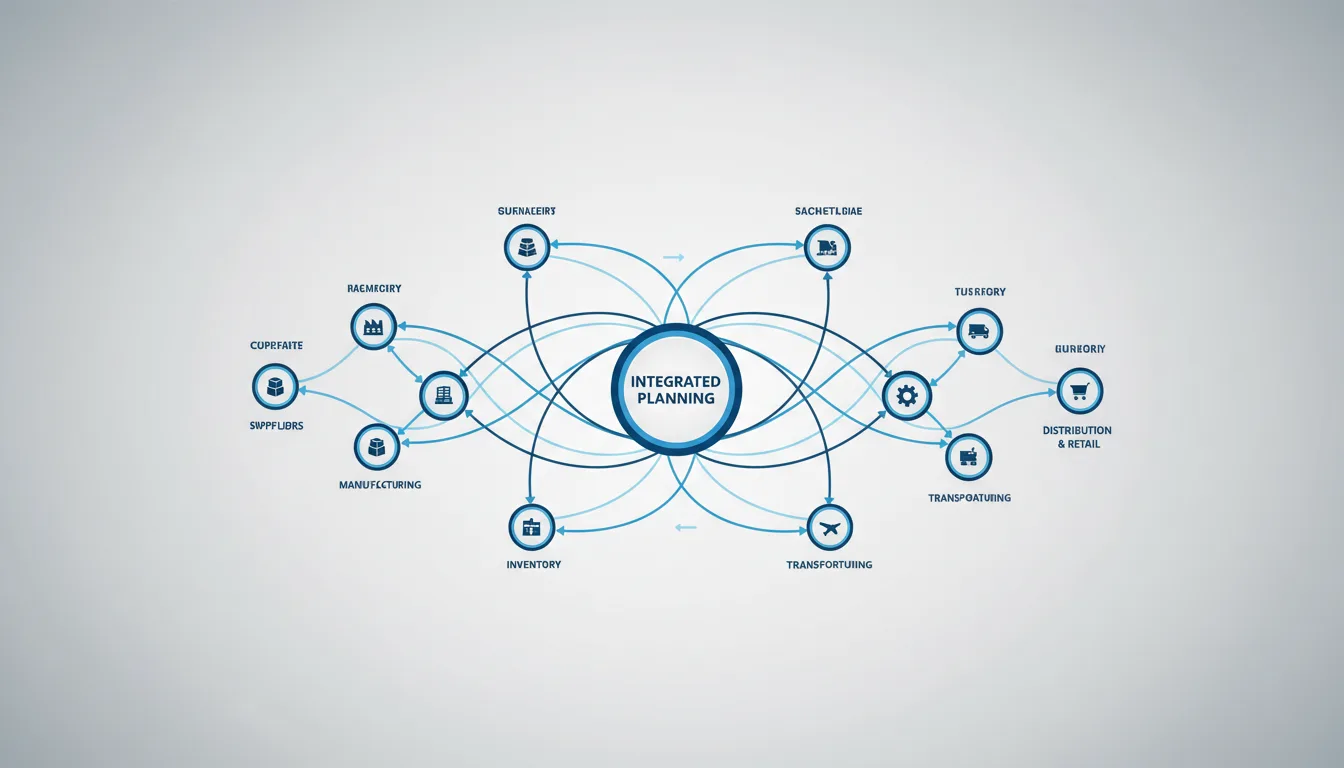
Integrated planning in logistics refers to the systematic coordination and alignment of various logistics activities across a supply chain to enhance efficiency, reduce costs, and improve service delivery. By integrating planning processes, companies can optimize their resources and respond quickly to changes in demand or supply. This concept plays a crucial role in modern supply chain management, contributing significantly to operational effectiveness and customer satisfaction.
Etymology and Origins
The term 'integrated planning' has its roots in the evolution of supply chain management, which began gaining traction in the late 20th century. Initially focused on operational efficiencies, logistics planning evolved to include strategic considerations, resulting in the emergence of integrated approaches. The first documented usage of the term can be traced back to various scholarly articles and industry reports in the 1990s, highlighting the shift towards comprehensive planning methodologies that encompass multiple facets of the logistics process. The term stems from the combination of 'integration,' meaning the act of combining parts into a whole, and 'planning,' referring to the process of making decisions for future actions. Over time, the terminology evolved as technological advancements and globalization necessitated a more holistic view of supply chain dynamics (source).
Historical Development
Integrated planning as a formalized practice began to take shape during the 1980s and 1990s with the advent of advanced planning systems (APS). Key figures in this development included pioneers like Dr. Michael P. Frank, who emphasized the importance of aligning supply and demand through technology. Major milestones include:
- 1986: The introduction of APS that utilized algorithms to optimize logistics routes and inventory management (source).
- 1997: The publication of “Logistics and Supply Chain Management” by Martin Christopher, which outlined integrated approaches to planning (source).
- 2000s: The integration of enterprise resource planning (ERP) systems with logistics functions, allowing for real-time data sharing across the supply chain (source).
Notably, technologies such as RFID and AI began playing a significant role in supporting integrated logistics practices, enabling enhanced visibility and data analytics (source).
Core Concepts
At its core, integrated planning involves:
- Alignment of supply chain activities such as procurement, production, and distribution to achieve a unified plan.
- Utilization of technology, such as warehouse management systems and order management systems, to streamline processes and enhance data accuracy.
- Continuous collaboration among stakeholders including suppliers, manufacturers, and retailers to ensure responsiveness to market demands. This collaborative framework is essential for maintaining efficiency and reducing operational costs.
Industry Applications
Integrated planning is widely applied across various sectors including manufacturing, retail, and e-commerce. For example:
- In manufacturing, companies utilize integrated planning to synchronize production schedules with inventory levels, minimizing overproduction and stockouts (source).
- Retailers leverage integrated supply chain solutions to harmonize inventory across multiple channels, improving customer service and fulfillment rates. The Order Management System is crucial for these applications.
- E-commerce platforms like Shopify rely on integrated logistics planning to manage real-time inventory levels and optimize shipping routes, enhancing customer satisfaction (source).
Benefits and Advantages
The advantages of integrated planning in logistics are manifold:
- Cost Reduction: Streamlined processes lead to lower operational costs through reduced waste and improved inventory management.
- Enhanced Responsiveness: Integrated systems enable quicker adjustments to changes in demand or supply disruptions, improving the agility of the supply chain.
- Improved Coordination: Aligning functions results in better communication and collaboration among stakeholders, fostering a more cohesive operational approach.
Challenges and Limitations
Despite its benefits, integrated planning faces challenges such as:
- Data Silos: Inconsistent data across departments can hinder effective integration and decision-making (source).
- Technology Implementation: The complexity of integrating various systems can lead to substantial initial investments and a steep learning curve for staff.
- Resistance to Change: Organizational culture may resist shifting towards integrated processes due to fear of disruption and the need for retraining.
Best Practices
To successfully implement integrated planning, organizations should consider:
- Establishing cross-functional teams to promote collaboration across departments (source).
- Implementing robust data management practices to ensure consistency and accuracy (source).
- Regularly reviewing and updating integrated plans to respond to evolving market conditions.
Technology and Tools
The advancement of technology has greatly facilitated integrated planning through tools such as:
- Warehouse Management Systems, which automate inventory tracking and logistics operations.
- Advanced analytics platforms that provide insights into supplier performance and inventory trends, helping businesses make data-driven decisions (source).
Future Trends
As logistics continues to evolve, the focus on integrated planning is expected to grow, driven by:
- The adoption of machine learning and AI for predictive analytics, helping organizations forecast demand more accurately (source).
- The increasing demand for sustainability in supply chains, pushing businesses to integrate eco-friendly practices into their planning processes (source).
- Expansion of global trade networks that necessitate stronger integration across borders and regulatory frameworks (source).
Related Concepts
Integrated planning is closely related to other logistics concepts such as supply chain management, inventory management, and collaborative logistics. Understanding how these concepts interconnect can provide a more holistic view of the logistics landscape.
In conclusion, integrated planning is essential for modern logistics operations, facilitating improved efficiency, cost reductions, and enhanced service delivery in a rapidly changing business environment.