HighJump Warehouse Management System (WMS)
An overview of HighJump WMS, its functionalities, history, and impact on warehouse management in logistics.
Updated
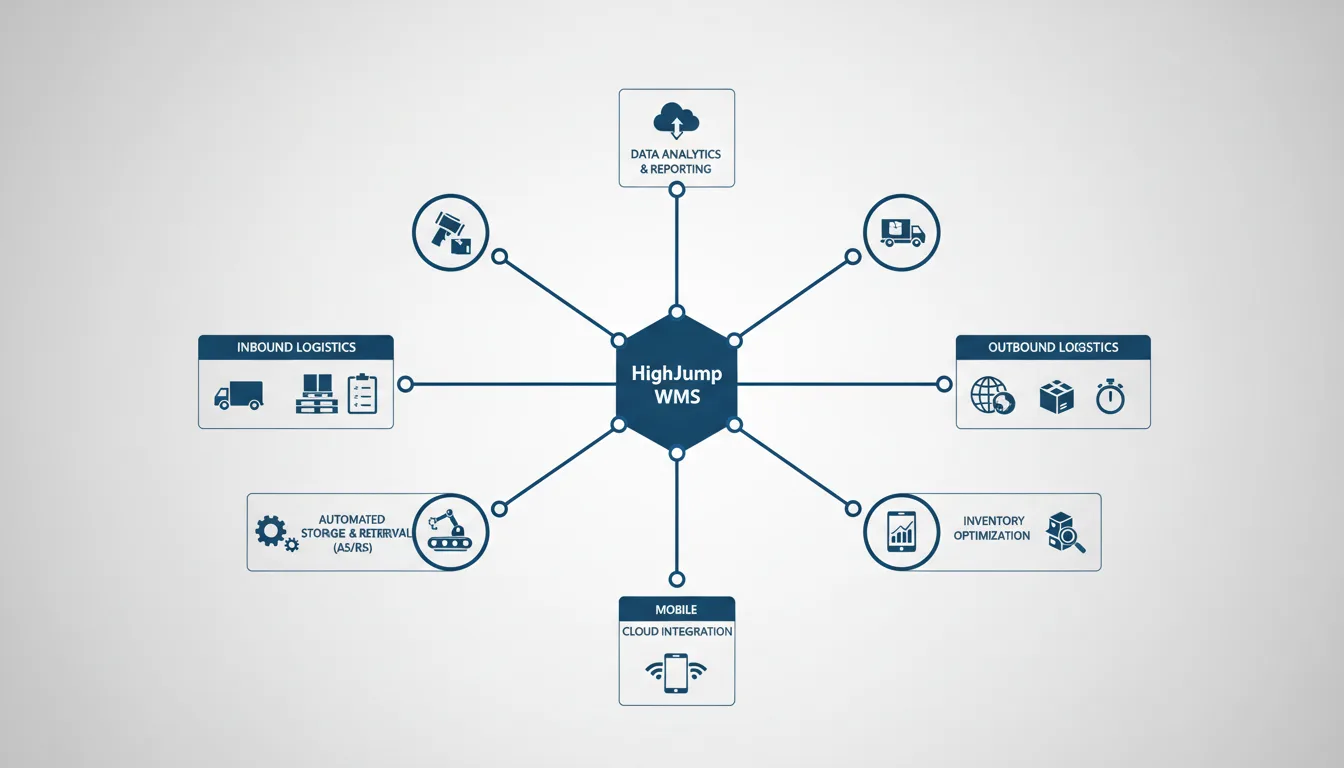
Title: HighJump Warehouse Management System (WMS)
Overview
HighJump Warehouse Management System (WMS) is a comprehensive platform designed to optimize warehouse operations, improve inventory accuracy, and enhance overall efficiency within supply chains. By leveraging advanced technologies such as automation and data analytics, HighJump WMS offers tools that support order fulfillment, inventory management, and resource tracking, making it essential for modern logistics teams aiming for cost reduction and increased throughput [5]. The strategic importance of WMS has grown significantly as businesses navigate the complexities of global supply chains and the rapid pace of e-commerce [6].
Etymology and Origins
The concept of managing goods within storage facilities dates back to ancient civilizations, which required systematic approaches for storing and retrieving food and materials [7]. However, the term 'Warehouse Management System' (WMS) describes specialized software designed to manage these operations effectively. The term began to gain traction in the logistics industry during the late 1970s and early 1980s, evolving from earlier inventory control and material handling systems [8]. It distinguished itself as a dedicated system focused on optimizing warehouse processes, rather than just tracking inventory levels.
The name 'HighJump' itself originates from HighJump Software, the company founded in 1983, which later evolved into a major player in the logistics industry. The WMS concept has its roots in the late 20th century as the need for organized warehouse operations grew alongside the explosion of e-commerce and global supply chains, demanding greater precision and speed than manual methods could offer.
Historical Development
HighJump's history mirrors the broader evolution of warehouse management technologies and the supply chain industry:
-
Pre-WMS Era (Before 1960s): Warehouse management was largely manual, relying on ledger books, bin cards, and physical checks. Efficiency depended heavily on experienced personnel and rudimentary organizational methods.
-
1960s-1970s: Emergence of Inventory Control & MRP: The introduction of mainframe computers led to the development of Material Requirements Planning (MRP) systems in the 1960s, primarily pioneered by companies like IBM for manufacturing resource planning [9]. These systems laid the groundwork for computerized inventory management but were not yet dedicated to warehouse operations.
-
1980s: Birth of Dedicated WMS & Barcoding: The 1980s saw the development of stand-alone WMS software, often running on mini-computers or early PCs. This era was revolutionized by the widespread adoption of barcoding technology, significantly improving inventory accuracy and data capture speed [10]. HighJump Software was founded in 1983, positioning itself at the forefront of this emerging market to address the diverse needs of warehouse and distribution management.
-
1990s: Client-Server Architecture & ERP Integration: WMS solutions transitioned from mainframe to client-server architectures, offering greater flexibility. As enterprise resource planning (ERP) systems like SAP and Oracle gained prominence, WMS began to integrate more closely, becoming a critical module within broader supply chain management suites. Specialized functionalities, such as radio-frequency (RF) technology for real-time data, became standard.
-
2000s: Web-Based & Mobile Capabilities: The internet boom led to web-based WMS interfaces, making systems more accessible. The introduction of mobile computing devices (e.g., handheld scanners) allowed for real-time inventory updates and task management directly on the warehouse floor, boosting operational efficiency [11]. The year 2000 marked a significant advancement for HighJump with the introduction of its WMS software, further automating warehouse processes.
-
2010s: Cloud-Based Solutions & Advanced Automation: This decade witnessed a significant shift towards cloud-based (SaaS) WMS solutions, offering enhanced scalability, lower upfront costs, and easier maintenance. HighJump expanded its functionality and scalability by embracing these cloud-based models. Integration with advanced automation, such as Automated Storage and Retrieval Systems (AS/RS) and Conveyors, became increasingly common [12].
-
2020s: AI, IoT, & Robotics Integration: The current decade emphasizes the integration of Artificial Intelligence (AI), the Internet of Things (IoT), and advanced robotics (AGVs, AMRs) to create truly intelligent warehouses. 2020 was a pivotal year for HighJump as it was acquired by Körber Supply Chain, further enhancing its potential in the logistics sector and integrating with other technological solutions to offer comprehensive supply chain suites.
Key publications that influenced WMS developments include the APICS Principles of Inventory Management and various industry standards, such as those set by GS1 for barcode specifications. These frameworks provided the theoretical and practical foundations for systematic inventory and warehouse operations.
Core Concepts
HighJump WMS operates on several core principles designed to streamline warehouse operations, transforming them from reactive to proactive and optimized:
- Inventory Management: HighJump allows for real-time tracking of stock levels and locations in the warehouse, enabling more efficient restocking and order processing. This includes capabilities like directed putaway, optimal slotting, cycle counting for continuous inventory accuracy checks, and managing inventory by lots and expiration dates [13].
- Order Fulfillment: The system streamlines order picking processes through features such as batch picking, wave picking, pick-to-tote strategies, packing, and shipping, significantly reducing order cycle times. It often integrates with a broader Order Management System to ensure seamless processing from order placement to delivery [14]. Effective bin packing algorithms ensure efficient use of carton space, reducing shipping costs and damage [15].
- Receiving and Putaway: HighJump provides guided processes for inbound goods, from initial check-in and quality control to efficient bin put-away criteria based on product characteristics, demand, and storage optimization [16]. This optimizes space utilization and ensures quick access to inventory upon demand.
- Automation & Workflow Optimization: HighJump incorporates automated workflows that enhance both picking efficiency and worker productivity. This can include task interleaving, labor management, and the orchestration of automated material handling equipment. Effective workflows are key to maintaining operational fluidity and minimizing manual intervention [17].
- Warehouse Layout and Spatial Management: Utilizing data and analytics, the system can assist in optimizing the physical warehouse layout and storage locations to maximize space utilization and minimize travel time for pickers, directly impacting operational efficiency [18].
Industry Applications
HighJump WMS has found application across various sectors, demonstrating its versatility and adaptability:
- E-commerce: Retailers utilize HighJump to manage fast-paced order fulfillment and inventory control effectively, crucial for meeting customer expectations for rapid delivery. This is essential in the shipping and fulfillment stages of logistics, especially with high SKU counts and fluctuating demand.
- Manufacturing: Manufacturers integrate HighJump to streamline component storage, work-in-progress tracking, assembly processes, and finished goods management. This ensures a smooth flow from raw materials to final products, often linking directly to MRP/ERP systems.
- 3PL Providers: Third-party logistics (3PL) companies leverage HighJump WMS for its flexibility and multi-client capabilities, allowing them to serve diverse clients with varying requirements efficiently. Its robust architecture supports complex billing and service-level agreements (SLAs).
- Retail (Brick-and-Mortar): Beyond e-commerce, traditional retailers use WMS to manage inventory flow to physical stores, ensuring shelves are stocked and regional distribution centers operate optimally.
Benefits and Advantages
Implementing HighJump WMS provides several key benefits that contribute to operational excellence and competitive advantage:
- Enhanced Accuracy: Businesses report improved inventory accuracy levels of up to 99% or higher, leading to reduced stock discrepancies, fewer lost sales due to out-of-stocks, and minimized carrying costs from excess inventory [19].
- Increased Efficiency & Productivity: Automation of workflows, real-time data access, and optimized picking routes significantly reduce operational costs and labor hours. This results in higher throughput and faster order processing, directly impacting customer satisfaction.
- Improved Space Utilization: Intelligent putaway and slotting algorithms help warehouses make the most of their available storage space, reducing the need for costly expansions and optimizing storage density.
- Scalability: HighJump's cloud-based solutions allow easy adjustments according to business growth and changing market demands, enabling companies to scale operations up or down without significant infrastructure changes. This flexibility is perfectly illustrated in their Mobile WMS Overview, which supports growth through mobile-first operations.
- Better Customer Service: Faster, more accurate order fulfillment directly translates to higher customer satisfaction, fewer returns, and improved brand loyalty.
Challenges and Limitations
While HighJump WMS is highly effective, organizations may encounter challenges during implementation and ongoing use:
- Implementation Complexity: Depending on the size of the warehouse, the complexity of operations, and the extent of needed integrations with existing ERP or other systems, implementation can be resource-intensive, requiring significant planning, configuration, and IT involvement.
- Training Requirements: Staff may need considerable training to fully leverage the benefits of the system. Initial resistance to new technology and workflows is common, necessitating strong change management strategies.
- Cost: While offering long-term ROI, the initial investment in WMS software, hardware, and implementation services can be substantial, particularly for larger enterprises or highly customized solutions.
- Data Migration: Moving historical inventory and operational data from legacy systems can be a complex and time-consuming process, with potential for errors if not managed carefully.
Best Practices
To maximize HighJump WMS effectiveness, organizations should adopt several best practices, moving beyond basic setup to continuous optimization:
- Comprehensive Staff Training & Change Management: Invest in continuous education for all staff, from warehouse floor operators to management. A robust onboarding guide and ongoing training ensure full system utilization and employee confidence.
- Regular System Updates: Keeping the system updated ensures access to the latest features, security improvements, and performance enhancements. This proactive approach prevents system degradation and leverages new innovations.
- Utilize Analytics & Reporting: Take advantage of built-in analytics and reporting tools to monitor performance metrics (e.g., picking accuracy, throughput, labor utilization), identify inefficiencies, and adjust workflows accordingly. This data-driven approach is critical for continuous improvement.
- Integration with Other Systems: Ensure seamless integration with ERP, TMS (Transportation Management Systems), and e-commerce platforms to achieve end-to-end supply chain visibility and data consistency [20].
- Optimize Warehouse Layout Regularly: Periodically review and optimize the physical warehouse layout and slotting strategies based on demand patterns and product velocity to maintain peak efficiency.
Future Trends
The future of HighJump WMS, and WMS in general, appears promising with an increasing emphasis on:
- Artificial Intelligence (AI) & Machine Learning (ML): Enhanced predictive analytics powered by AI could refine inventory management (e.g., dynamic slotting, predictive replenishment), demand forecasting, and even optimize labor scheduling [21].
- Integration with IoT: The Internet of Things (IoT) may lead to smarter warehouses with enhanced monitoring and tracking capabilities through connected devices (e.g., smart shelves, environmental sensors, asset trackers), providing real-time contextual data for WMS to act upon.
- Robotic Process Automation (RPA) & Robotics: RPA is set to revolutionize routine administrative tasks within WMS, while physical robotics (e.g., collaborative robots, autonomous mobile robots) will increasingly handle picking, putaway, and sorting tasks, increasing efficiency and reducing human error [22].
- Enhanced Visibility & Collaboration: WMS will continue to evolve to provide even greater real-time visibility across the entire supply chain, fostering better collaboration with suppliers, carriers, and customers.
- Sustainability Features: Future WMS will likely incorporate features aimed at reducing environmental impact, such as optimizing routes to reduce energy consumption, managing waste, and promoting sustainable packaging [23].
Conclusion
HighJump WMS exemplifies a robust solution for contemporary warehouse management challenges. By integrating advanced features to enhance efficiency, accuracy, and scalability, it sets the standard for how modern logistics operations can thrive in an ever-evolving marketplace. As supply chains become more complex and customer expectations continue to rise, advanced WMS solutions like HighJump will remain indispensable tools for businesses seeking to optimize their operations and gain a competitive edge.
Sources
- Visual Inventory System
- Batch Picking Guide
- Mobile WMS Overview
- Shipping & Fulfillment Software
- Top 5 Benefits of a Warehouse Management System
- The Strategic Imperative of Warehouse Management Systems
- A Brief History of Warehousing and Supply Chain Management
- Evolution of Warehouse Management Systems
- The History of MRP
- GS1: Barcode History
- The Evolution of Radio Frequency and Voice in the Warehouse
- Cloud-Based WMS: A Paradigm Shift
- Cycle Counting Guide
- Order Management System
- Bin Packing Visualizer
- Bin Put-Away Criteria
- Workflows Overview
- Warehouse Layout Preview
- Pick-to-Tote Guide
- Onboarding Guide
- How AI Is Transforming Warehouse Operations And The Future Of Logistics
- Robotics and Automation in the Warehouse
- Sustainable Warehousing: Key Trends and Strategies