Flow Shop in Logistics and Operations Management
The flow shop is a key concept in operations management, crucial for optimizing manufacturing and warehousing processes.
Updated
Flow Shop in Logistics and Operations Management
Overview
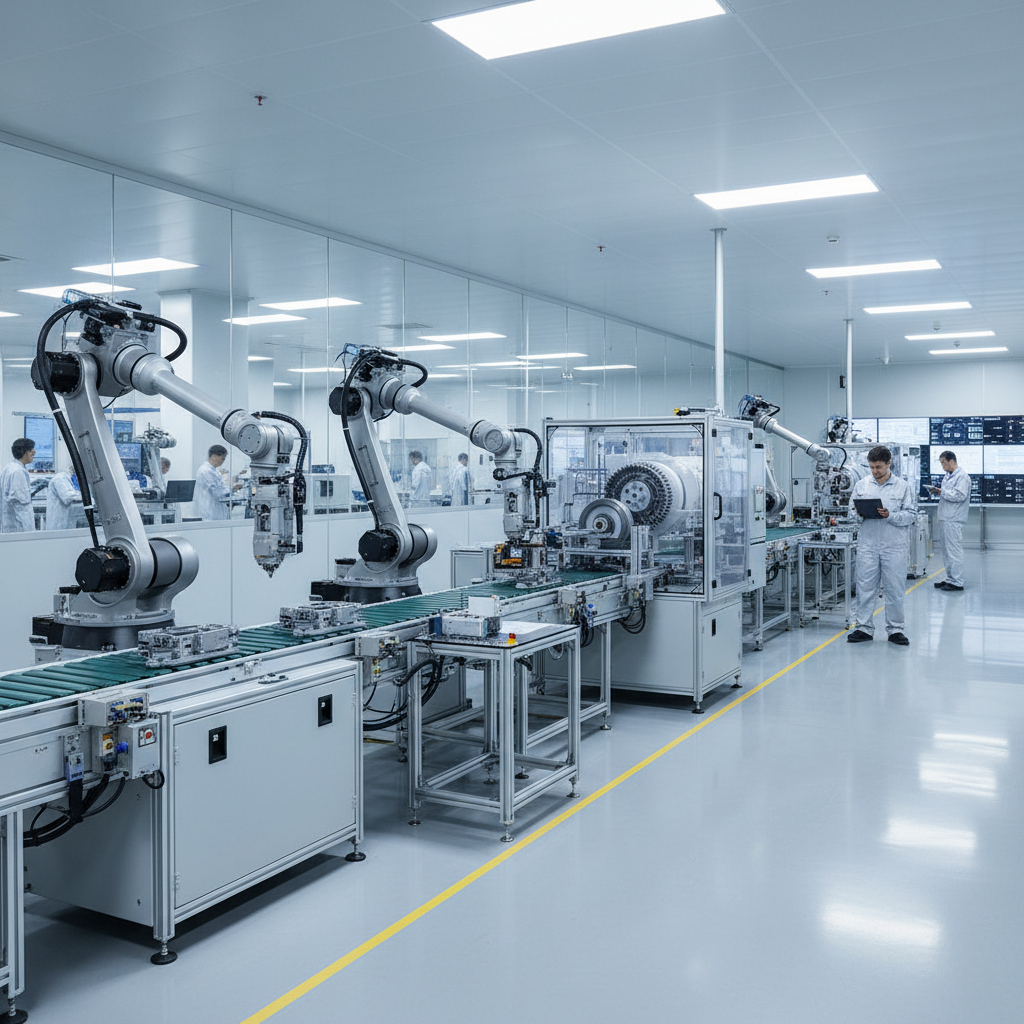
A flow shop is a production facility where operations are organized in a linear sequence to maximize efficiency and streamline processes. This concept is primarily utilized in manufacturing and assembly lines, where products move through various stages of production systematically. The importance of the flow shop model lies in its ability to enhance productivity, reduce cycle times, and minimize waste, thereby optimizing overall operational efficiency Flow Shop Overview.
In a flow shop setting, production flows in a straightforward manner, with each step logically leading to the next. This model is particularly effective in environments where tasks are repetitive, standardized, and production volumes are high Flow Shop Applications. Dedicated equipment and specialized workstations are typically arranged in a sequential layout, much like a visual warehouse layout is designed for optimal material flow. The flow shop system contrasts with other manufacturing systems, such as job shops, where processes may vary by product or require significant customization. Modern logistics often leverages principles of flow shops, particularly in order fulfillment centers and automated warehousing, to ensure smooth material handling and rapid processing. Robust visual inventory management systems are often deployed to support the continuous flow of goods.
Etymology and Origins
The concept underpinning the flow shop, often referred to as "flow production" or "line production," has roots in the industrial revolution's push for increased efficiency and specialization. While the precise term "flow shop" as a distinct operational model or scheduling problem gained prominence in the mid-20th century within operations research literature, its practical application can be traced back much earlier.
The linguistic roots are straightforward: "flow" refers to the continuous and sequential movement of materials or products, and "shop" denotes a place of production or work. The idea of organizing work to facilitate a continuous "flow" of production became central to industrial efficiency in the late 19th and early 20th centuries, heavily influenced by the principles of scientific management. Early industrial engineers and economists described concepts like "flow line" and "flow process" in the early 1900s, documenting methods to minimize material handling and optimize sequential operations Industrial Engineering Handbook.
Historical Development
Early Industrialization & Scientific Management (Late 18th - Early 20th Century)
The foundational ideas for flow shops emerged from the First and Second Industrial Revolutions, characterized by the mechanization of tasks, factory systems, and the drive for interchangeable parts. Early examples of systematized flow can be seen in Richard Arkwright's 1771 Cromford Mill in England, which organized cotton production into a series of continuous, power-driven steps. Eli Whitney's development of interchangeable parts in the late 1790s for musket production further laid the groundwork for standardized components essential for flow production Eli Whitney and Interchangeable Parts.
Frederick Winslow Taylor, through his work on scientific management in the early 1900s, emphasized optimizing individual tasks, standardizing work methods, and systematizing production processes. While Taylor focused on task-level optimization, his principles of efficiency and standardization were critical precursors to the structured, sequential nature of flow shops.
Fordism and the Assembly Line (1913)
The most seminal development was Henry Ford's introduction of the moving assembly line for the production of the Model T automobile at his Highland Park plant in 1913 The Moving Assembly Line. This innovation drastically reduced the time required to build a car from over 12 hours to just 93 minutes. Ford's system embodied the core principles of a flow shop: sequential workstations, specialized labor, continuous product movement via conveyors, and a dedicated layout. This era, known as "Fordism," established high-volume, low-variety production as a dominant manufacturing paradigm Fordism Definition, defining the industrial age's approach to mass production.
Formalization in Operations Research (Mid-20th Century)
As production systems grew in complexity, the need for systematic planning and scheduling intensified. The "flow shop scheduling problem" became a significant area of study in operations research. Pioneering work by S.M. Johnson in 1954 introduced an algorithm for optimizing the sequence of jobs in a two-machine flow shop, laying the mathematical foundation for managing such systems. This work established a formal framework for analyzing and optimizing the throughput and makespan of multi-stage production systems, leading to extensive research in job sequencing and scheduling heuristics Operations Research: Methods and Problems.
Lean Manufacturing and Toyota Production System (Post-WWII)
Following World War II, the Toyota Production System (TPS), developed by Taiichi Ohno and Eiji Toyoda, revolutionized flow shop principles. TPS, the precursor to lean manufacturing, focused not just on flow speed but also on eliminating waste (Muda), overburden (Muri), and inconsistency (Mura). Concepts like Just-in-Time (JIT) production Just-in-Time (JIT), Kanban (pull systems), and Jidoka (automation with a human touch) dramatically refined the flow shop model, making it more flexible, responsive, and quality-focused while maintaining efficiency. This paradigm shifted the focus from purely pushing production to pulling it based on demand.
Digitalization and Automation (Late 20th Century - Present)
The advent of computer technology brought further enhancements to flow shop management. Material Requirements Planning (MRP) systems in the 1970s and subsequent Enterprise Resource Planning (ERP) systems in the 1990s enabled better planning, tracking, and control of complex flow shop operations, integrating production with inventory and supply chain management. These systems provided a centralized view, improving coordination and resource allocation. The late 20th and early 21st centuries saw the rise of advanced automation, robotics, automated guided vehicles (AGVs), and sophisticated Manufacturing Execution Systems (MES) to automate and optimize physical processes within flow shops. Today, Mobile Warehouse Management Systems (WMS) are critical for managing the flow of materials within and between production stages, optimizing storage, retrieval, and stock replenishment. Real-time data analytics, artificial intelligence (AI), and machine learning (ML) are increasingly used for predictive maintenance, dynamic line balancing, quality prediction, and optimizing complex workflows in flow shop environments, contributing to the vision of Industry 4.0 The Role of AI in Manufacturing. Digital twin technology is also emerging, creating virtual replicas of flow lines for simulation and optimization Digital Twins in Manufacturing.
Characteristics of a Flow Shop
A flow shop system is defined by several key characteristics that distinguish it from other production environments:
- Sequential Layout: Machines and workstations are arranged in a fixed, linear order according to the product's processing steps. This physical arrangement dictates the material flow, minimizing backtracking and unnecessary movement, often visualized and managed with warehouse layout tools.
- Standardized Products: Flow shops are optimized for producing a high volume of identical or very similar products. Customization is minimal, ensuring consistent process steps and predictability.
- High Volume Production: The continuous nature of a flow shop is best suited for scenarios requiring large quantities of output, making unit costs low due to economies of scale. This often necessitates efficient bin packing strategies to optimize space and material flow.
- Specialized Equipment and Labor: Equipment is often dedicated to specific tasks, and labor is highly specialized, leading to increased efficiency and reduced training time for repetitive operations. Automation further enhances this specialization.
- Short Cycle Times: The streamlined, continuous flow design inherently leads to faster processing times per unit compared to more flexible systems, as products move constantly through the value chain.
- Predictable Scheduling: Due to the fixed routing and standardized tasks, scheduling in a flow shop can be highly predictable and efficient, often managed through advanced Order Management Systems and production planning tools. This predictability also aids in managing inventory levels and forecasting demand.
Advantages and Disadvantages
Advantages
- High Efficiency and Productivity: The linear layout and specialized tasks lead to high throughput and low per-unit costs, maximizing machine utilization.
- Reduced Work-in-Process (WIP): Materials move continuously, minimizing inventory accumulating between stages, which reduces carrying costs and potential for damage.
- Simplified Production Planning and Control: Fixed routings make scheduling easier and more predictable, often supported by robust workflows and automated systems.
- Lower Skilled Labor Requirements (for direct tasks): Repetitive tasks often require less training, though supervision, maintenance of automated systems, and process improvement demand highly skilled personnel.
- Easier Quality Control: Defects are often easier to spot and address early in the process due to the sequential nature and the ability to implement in-line inspection points.
Disadvantages
- Inflexibility: Flow shops are rigid and poorly suited for product variety or design changes. Adapting to new products often requires significant retooling and disruption to the entire line.
- High Initial Setup Costs: The investment in specialized machinery, automation, and a dedicated layout can be substantial, requiring significant capital expenditure.
- Susceptibility to Bottlenecks: A breakdown or slowdown at any single workstation can halt the entire production line, making preventative maintenance and strategic buffer management crucial. This vulnerability highlights the need for real-time monitoring.
- Worker Monotony: Repetitive tasks can lead to worker boredom, fatigue, and potentially lower morale or higher turnover, posing challenges for human resource management.
- Impact of Demand Fluctuations: Difficult to scale down production efficiently during low demand periods without incurring idle capacity costs. Conversely, scaling up rapidly can also be challenging due to fixed capacity.
Practical Examples and Applications
Flow shop principles are widely applied across various industries, underpinning the efficiency of modern mass production:
- Automotive Industry: The most classic example, where cars move along an assembly line, with various components added at each station, from body welding to final inspection. Tesla's Gigafactories, for instance, are modern interpretations of highly integrated flow shops.
- Electronics Manufacturing: Production of smartphones, computers, or other electronic devices often follows a flow shop model, from circuit board assembly (e.g., surface-mount technology lines) to final testing and packaging. High-volume component manufacturing also uses flow shop principles.
- Food Processing: Large-scale bakeries, beverage bottling plants, and meat processing facilities use flow shops to efficiently process raw materials into finished goods. Consider the continuous process of filling, capping, and labeling bottles.
- Pharmaceutical Manufacturing: Production of pills, vaccines, or other medications follows strict sequential processes to ensure quality, sterility, and consistency, from ingredient mixing to tablet pressing and packaging.
- Logistics and Fulfillment Centers: While not manufacturing, modern order fulfillment centers for e-commerce often mimic flow shop principles, with automated systems guiding items through picking (e.g., batch picking), packing, and shipping stations in a continuous flow to minimize delays and optimize delivery. Processes like cross-docking also maintain a continuous flow of goods, bypassing storage.
Optimizing Flow Shop Operations
Effective management is crucial for maximizing the benefits of a flow shop. Key optimization strategies include:
- Line Balancing: Ensuring that workload is evenly distributed across all workstations to eliminate bottlenecks and maximize throughput. This often involves detailed time studies, process analysis, and the use of simulation software to optimize task allocation and workstation design. The goal is to match cycle times at each station.
- Bottleneck Identification and Management: Continuously monitoring the slowest stage of production and implementing strategies to improve its efficiency, such as adding resources, re-engineering the process, offloading tasks, or creating buffers. Advanced analytics can pinpoint bottlenecks in real-time.
- Buffer Management: Strategic placement of limited inventory buffers (e.g., controlled WIP) between workstations can help absorb minor disruptions and ensure continuous flow, preventing a single delay from stopping the entire line. However, excessive buffering can negate WIP reduction benefits.
- Preventative and Predictive Maintenance: Implementing rigorous maintenance schedules for machinery to minimize unexpected breakdowns, which can be catastrophic in a continuous flow system. Predictive maintenance leveraging IoT sensors and AI further enhances reliability by forecasting potential equipment failures.
- Lean Principles: Adopting methodologies from the Toyota Production System, such as Kanban for pull-based inventory control, Jidoka for built-in quality, and Kaizen for continuous improvement, can enhance flexibility, waste reduction, and overall operational excellence.
- Technology Integration: Leveraging Mobile WMS systems for real-time inventory tracking, Order Management Systems for seamless order processing, and automation for tasks like batch picking, bin put-away, or cycle counting can significantly improve the efficiency and responsiveness of the flow shop's logistics component. Integration with purchase order management systems ensures a steady supply of raw materials, supporting uninterrupted flow.
By carefully designing, implementing, and continuously optimizing flow shop operations, businesses can achieve significant competitive advantages through high productivity, consistent quality, reduced costs, and improved customer satisfaction.
Sources
- Mobile WMS Overview
- Order Management System
- Warehouse Layout
- Stock Replenishment Guide
- Workflows Overview
- Mobile WMS Overview
- Order Management System
- Warehouse Layout
- Stock Replenishment Guide
- Workflows Overview
- Production Flow and Process Types
- Operations Research - Journal
- Scientific Management
- Scientific Management: Definition, Principles, & Criticisms
- The Moving Assembly Line
- Fordism: Definition, History, and Impact
- Optimal Two- and Three-Stage Production Schedules with Setup Times Included
- 8 Enterprise Fulfillment Best Practices for Shopify Plus Merchants
- Just-in-Time (JIT): How it Works in Manufacturing, Benefits, and Disadvantages
- The Role of AI in Manufacturing
- Pick, Pack, Ship Software
- Preventive Maintenance (PM): What it is and why you need it
- Batch Picking Guide
- Bin Put-Away Criteria
- Job Shop Definition
- Material Requirements Planning (MRP)
- What is ERP? Enterprise Resource Planning Explained
- Manufacturing Execution Systems (MES) e-book
- Process Analysis: A Guide to Process Improvement
- What is Kanban? An introduction to Kanban
- Flow Shop Overview
- Flow Shop Applications
- The Moving Assembly Line
- Fordism Definition
- Scientific Management
- Scientific Management: Definition, Principles, & Criticisms
- Just-in-Time (JIT): How it Works in Manufacturing, Benefits, and Disadvantages
- Industrial Engineering Handbook
- Cromford Mill
- Eli Whitney and Interchangeable Parts
- Operations Research: Methods and Problems
- Digital Twins in Manufacturing
- Visual Inventory Management System
- Bin Packing Visualizer
- Cross-Docking Guide
- Cycle Counting Guide
- Purchase Order Management