Enterprise Asset Management
An overview of Enterprise Asset Management (EAM) covering definitions, historical development, core concepts, applications, and future trends.
Updated
Overview
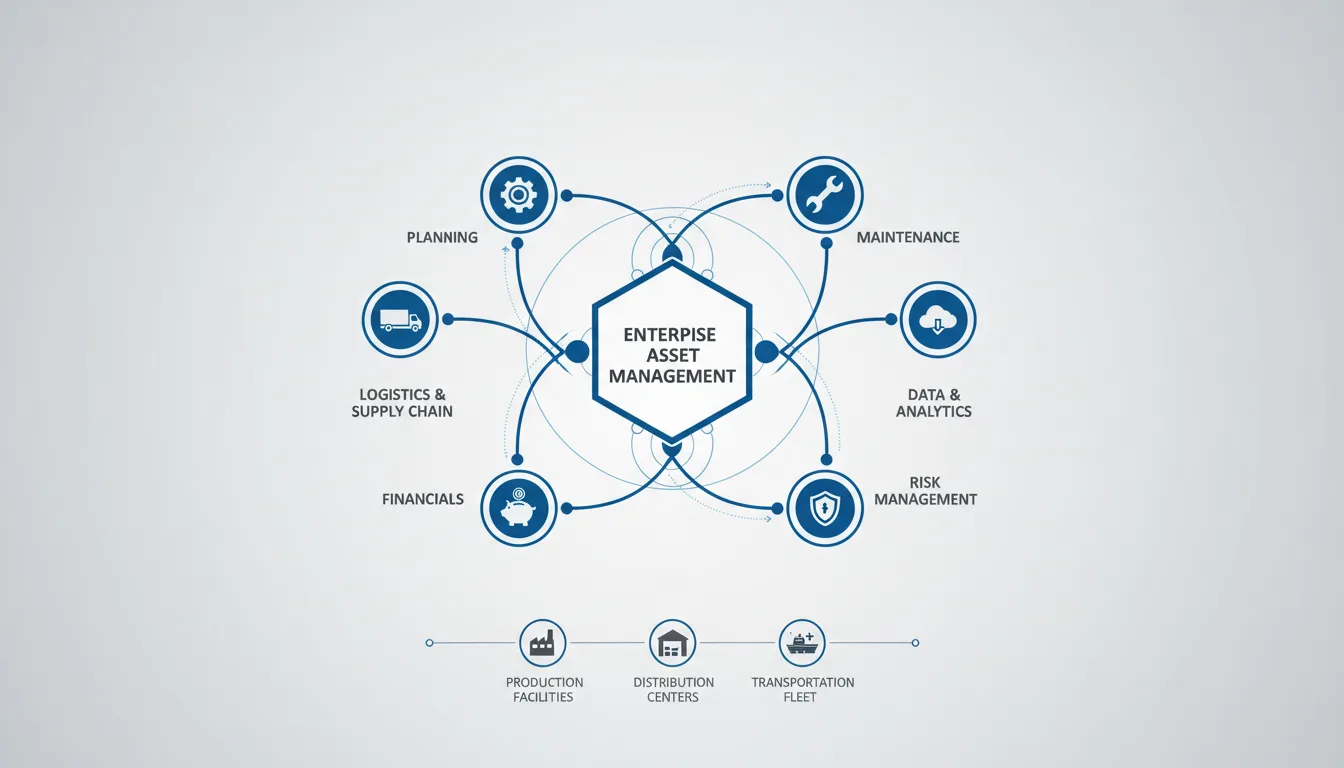
Enterprise Asset Management (EAM) is a systematic approach to managing an organization's assets throughout their lifecycle, ensuring optimal performance, reliability, and cost-effectiveness. EAM encompasses various processes, including planning, procurement, maintenance, and repair, with the goal of maximizing asset utilization while minimizing operational costs. Organizations that adopt EAM benefit from improved productivity, asset longevity, and compliance with regulatory standards.
Etymology and Origins
The term "Enterprise Asset Management" first emerged in the late 20th century during a period of rapid industrial change, especially in manufacturing and services. Its initial focus was primarily on maintenance management, a concept deeply rooted in earlier methodologies such as Total Productive Maintenance (TPM), developed by Professor Seiichi Nakajima in the 1960s. As technology evolved, the scope of EAM expanded to a more holistic approach to asset lifecycle management, incorporating advanced data analytics and automation. The term reflects a shift from reactive maintenance to strategic asset management, emphasizing proactive strategies to enhance the value of assets throughout their lifecycle.
Historical Development
Key Milestones
- 1960s: The development of Total Productive Maintenance (TPM) by Seiichi Nakajima in Japan revolutionized how organizations approach asset maintenance.
- 1980s: The introduction of computer-aided tools for maintenance management marked the advent of Computerized Maintenance Management Systems (CMMS). This period saw key publications, including foundational texts by Dr. Andrew W. F. Toleman that focused on maintenance systems and methodologies.
- 1990s: The emergence of Enterprise Resource Planning (ERP) systems integrated asset management with broader business functions, highlighting the interconnectedness of assets with overall organizational processes. Notably, practices of Just-In-Time (JIT) management at Toyota became influential in understanding efficient asset utilization.
- 2000s: Comprehensive EAM solutions started to evolve, utilizing predictive maintenance and automated asset tracking technologies fueled by the rise of the Internet of Things (IoT) and Artificial Intelligence (AI).
Key industry standards such as the ISO 55000 series established international benchmarks for effective asset management practices that organizations strive to achieve, ensuring alignment and consistency across different sectors.
Technology Evolution
The transition from manual asset management methods to computerized systems began in the 1980s with the adoption of CMMS software, which streamlined maintenance processes. This evolution further advanced with the adoption of IoT technologies and AI, transforming operational capabilities by enabling real-time monitoring and predictive maintenance strategies. For example, organizations today utilize IoT sensors to track asset performance remotely, allowing for predictive analytics that can forecast potential failures before they occur, significantly reducing downtime and maintenance costs.
Core Concepts
EAM consists of several core processes:
- Asset Lifecycle Management: Involves managing the asset from acquisition through disposal.
- Maintenance Management: Focuses on performing preventive and predictive maintenance to enhance asset performance and lifespan.
- Compliance and Risk Management: Ensures that assets meet legal and regulatory requirements, thereby mitigating potential risks associated with asset failure.
The implementation of a robust order management system is integral to EAM, as it helps track asset performance and manage associated costs effectively.
Types and Classifications
There are various types of EAM, including:
- CMMS (Computerized Maintenance Management Systems): Focus on maintenance tasks and scheduling.
- EAM Software: Provides more comprehensive capabilities, integrating maintenance, inventory, and procurement.
- Industrial EAM: Specialized for manufacturing and heavy industries, focusing on asset-intensive operations.
Industry Applications
EAM is widely implemented across various sectors:
- Manufacturing: To manage equipment uptime and maintenance schedules efficiently.
- Transportation and Logistics: For fleet management, ensuring vehicle availability and compliance.
- Energy and Utilities: To monitor and maintain crucial infrastructure such as power plants and grids.
Case studies, such as the implementation of EAM systems in the energy sector, demonstrate significant improvements in operational efficiency. For example, electric utility companies have reported reductions in unplanned outages and improved regulatory compliance by utilizing integrated asset management solutions that offer real-time data analytics.
Benefits and Advantages
Organizations implementing EAM experience several benefits:
- Improved asset availability and performance.
- Reduction in operational costs through effective maintenance strategies.
- Enhanced compliance and safety management, minimizing legal risks.
For instance, companies utilizing advanced mobile warehouse management systems can better track and manage assets on the move, leading to increased efficiency.
Challenges and Limitations
EAM faces challenges, including:
- High initial implementation costs associated with software and training.
- Resistance to change from personnel accustomed to legacy systems.
- Integration difficulties with existing IT infrastructure.
Addressing these challenges requires careful planning and a phased implementation approach, alongside engaging stakeholders throughout the transition for smoother adaptation.
Best Practices
Implementing best practices in EAM can significantly enhance effectiveness:
- Conducting regular training and development for staff to ensure they are adept in using the EAM systems.
- Prioritizing data accuracy and integrity in asset records, as discrepancies can lead to costly decisions.
- Leveraging data analytics to inform decision-making in asset management strategies.
Future Trends
Emerging trends in EAM include:
- The integration of AI and machine learning for predictive maintenance, allowing organizations to optimize their maintenance schedules based on usage and actual condition rather than time intervals.
- Increasing use of IoT devices for real-time asset monitoring and analytics, which provide insights that were previously unattainable.
- A shift towards sustainability practices in asset management, focusing on lifecycle impacts and resource efficiency.
As organizations strive for operational excellence, EAM remains a vital component in the quest for efficient and effective asset management.