Enhanced Risk Management in Logistics
Enhanced risk management ensures logistics professionals can identify, assess, and mitigate risks throughout the supply chain.
Updated
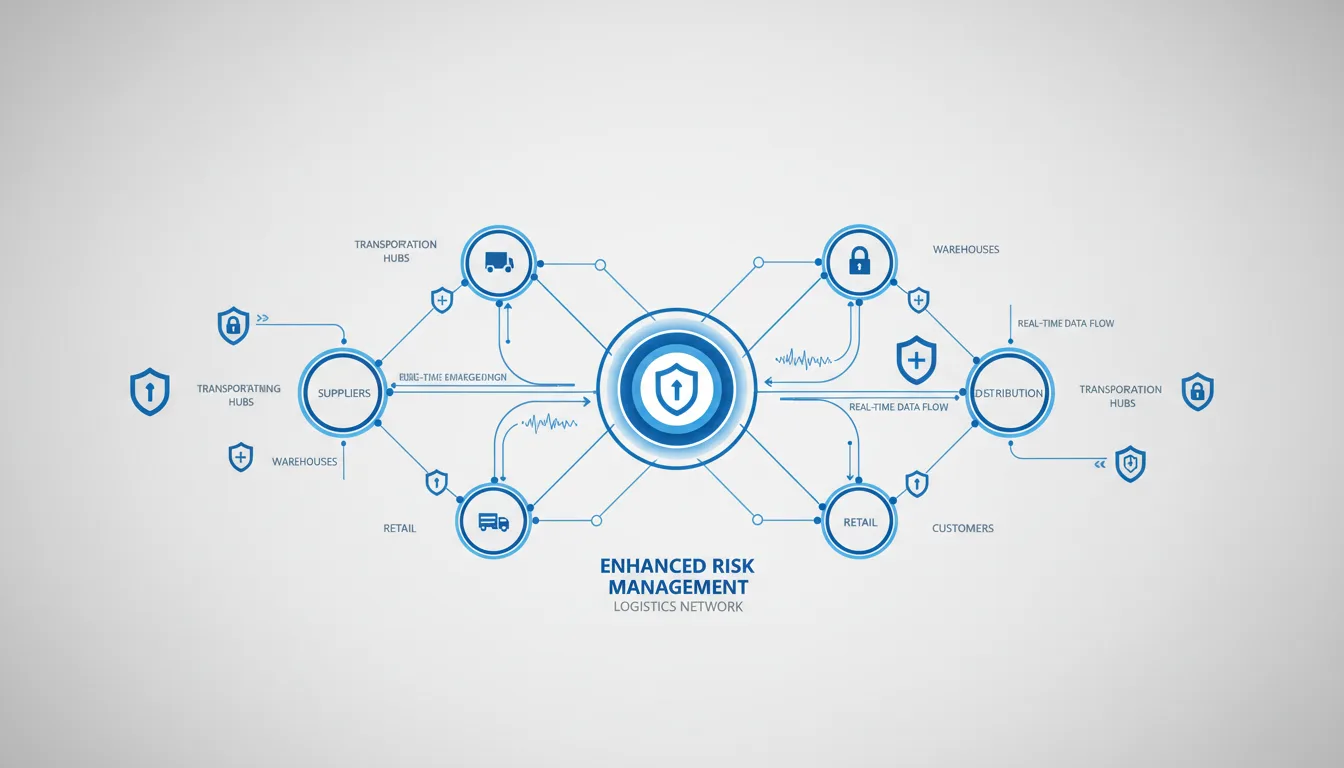
Overview
Enhanced Risk Management (ERM) in logistics represents a sophisticated and proactive approach to systematically identifying, assessing, mitigating, and monitoring risks that could adversely impact supply chain operations. This methodology is critical for maintaining operational efficiency, safeguarding business continuity, and building resilience, especially in a globalized landscape fraught with regulatory complexities, geopolitical instability, market volatility, and rapid technological shifts. By integrating robust ERM strategies, companies can not only enhance their resilience and adaptability but also transform potential threats into strategic opportunities for competitive advantage.
Etymology and Origins
The concept of "risk management" has deep roots, with its formal recognition emerging primarily from the fields of finance and insurance in the mid-20th century, particularly after World War II. Early discussions focused on insurable risks and financial hedging. The term itself gained prominence in the 1950s, evolving from actuarial science and statistical methods applied to business decision-making. C. Arthur Williams Jr.'s 1964 book, Risk Management and Insurance, is often cited as a foundational text in formalizing the discipline.
The integration of risk management principles specifically into logistics and supply chain contexts began to materialize as supply chains grew in complexity and geographical reach. Initially, this involved managing explicit risks like transportation damage or inventory obsolescence. The phrase "supply chain risk management" (SCRM) became widely adopted in the late 1990s and early 2000s, driven by increased globalization, outsourcing, and a series of high-profile supply chain disruptions. "Enhanced Risk Management" (ERM) in logistics denotes an evolution beyond traditional SCRM, signifying a move towards a more holistic, data-driven, and technology-enabled strategy that leverages advanced analytics, real-time visibility, and prescriptive capabilities to preempt and address risks proactively across the entire value chain.
Historical Development
While the formal discipline of risk management is relatively young, the practice of mitigating logistical risks dates back centuries. Ancient traders used diversified routes and marine insurance to protect against piracy and natural disasters, demonstrating early forms of risk management. The modern evolution can be categorized into several distinct phases:
-
Pre-20th Century (Early Forms of Risk Mitigation): Merchants engaged in rudimentary risk management through practices such as diversifying trade routes, pooling resources, and using early forms of insurance (e.g., bottomry contracts in ancient Greece). The development of maritime law and caravanserai systems facilitated safer trade over long distances.
-
Early 20th Century (Industrialization and Standardization): As industrialization progressed, companies began to formalize methods for managing losses from transportation delays, accidents, and quality control issues. This era saw the rise of detailed contractual agreements, standardized shipping procedures, and the establishment of dedicated logistics departments within larger corporations.
-
1950s-1970s (Emergence of Logistics and Operations Research): The formalization of logistics as a distinct management discipline began in the 1950s, fueled by post-war economic expansion and the development of operations research. Early computer systems supported inventory management and routing, leading to an initial focus on cost optimization and efficiency. The introduction of Material Requirements Planning (MRP) systems in the 1960s marked a significant step toward computerized control over material flows.
-
1980s (Global Supply Chains and JIT Philosophy): The widespread adoption of Just-in-Time (JIT) manufacturing, pioneered by Toyota, emphasized lean principles, minimal inventory, and tightly integrated supply chains. While dramatically improving efficiency, JIT also introduced new vulnerabilities by reducing buffer stocks, making supply chains more susceptible to disruptions. This period saw companies increasingly adopt computerized systems to manage complex global networks, enhancing early risk assessment capabilities.
-
1990s (Formalization of Supply Chain Risk Management): A series of major disruptions, such as the Kobe earthquake in 1995 and the Gulf War, highlighted the fragility of global supply chains. This spurred the development of formal Supply Chain Risk Management (SCRM) frameworks. Companies like Procter & Gamble were among the pioneers, implementing comprehensive risk assessments and mitigation strategies for their complex global logistics operations. Enterprise Resource Planning (ERP) systems became central, integrating various business functions and beginning to incorporate risk-related modules.
-
21st Century (Digital Transformation and Resilience Focus): The early 2000s brought new threats, including the 9/11 attacks (leading to increased focus on supply chain security), the SARS outbreak, and later events like the 2011 Fukushima earthquake and tsunami. These events underscored the need for supply chain resilience. The development of advanced analytics, artificial intelligence, and IoT technologies began to transform risk management processes. Companies increasingly used predictive analytics for better decision-making, enabling timely interventions. Modern WMS systems and order management systems now play a crucial role in providing real-time data for risk monitoring and response.
Core Concepts
Enhanced Risk Management in logistics involves a structured, continuous process encompassing several key components:
-
Risk Identification: This initial phase involves systematically recognizing and documenting potential risks across the entire supply chain. This includes internal operational risks (e.g., equipment failure, labor shortages), external environmental risks (e.g., natural disasters, pandemics), strategic risks (e.g., geopolitical shifts, market shifts), financial risks (e.g., currency fluctuations, credit defaults), and compliance risks (e.g., regulatory changes, trade sanctions). Techniques include brainstorming, checklists, process mapping, and stakeholder interviews.
-
Risk Assessment: Once identified, risks are analyzed to understand their potential likelihood and impact. This often involves qualitative and quantitative methods, such as risk matrices (likelihood vs. impact), probability analysis, and financial modeling. The goal is to prioritize risks, focusing resources on those with the highest potential to disrupt operations or incur significant losses. Tools like failure mode and effects analysis (FMEA) can also be employed.
-
Risk Mitigation Strategies: This phase focuses on developing and implementing proactive measures to reduce the probability or severity of identified risks. Strategies can include:
- Inventory optimization: Implementing visual inventory management systems to maintain optimal stock levels (e.g., safety stock, buffer stock) without incurring excessive holding costs.
- Diversification: Sourcing from multiple suppliers or utilizing diverse transportation routes to reduce reliance on single points of failure. Purchase order management systems can aid in managing diversified supplier relationships.
- Redundancy: Establishing alternative production sites, backup distribution centers, or redundant data systems.
- Process improvement: Employing automated fulfillment systems, robust quality control, and standardized operating procedures to enhance efficiency and reduce human error.
- Contractual agreements: Using clauses for penalties, force majeure, and service level agreements (SLAs) with logistics partners.
-
Continuous Monitoring: Risk management is not a one-time event but an ongoing process. Establishing real-time monitoring systems, often powered by IoT sensors, telematics, and integrated data platforms, allows for constant vigilance. Key Performance Indicators (KPIs) related to supplier performance, on-time delivery, inventory levels, and compliance are tracked to identify emerging risks or changes in existing risk profiles. Logistics control towers are increasingly used for centralized, real-time visibility.
-
Crisis Management Planning: Despite best efforts, some risks will materialize. Crisis management focuses on preparing for these disruptions with comprehensive contingency plans, emergency response protocols, and business continuity plans. This includes defining roles and responsibilities, establishing communication channels, and conducting regular training and drills for employees to ensure an effective and rapid response, minimizing downtime and recovery costs.
Industry Applications
Enhanced risk management is indispensable across various sectors, each facing unique logistical challenges:
-
Retail: Companies utilize predictive analytics to anticipate supply chain disruptions during peak seasons (e.g., holidays, sales events) and manage risks associated with fast-changing fashion trends, product seasonality, and high return rates in e-commerce. For example, a major apparel retailer might use demand forecasting algorithms to mitigate overstocking risks for seasonal items and optimize inventory across its global network.
-
Pharmaceuticals: The industry operates under stringent regulatory compliance (e.g., FDA, EMA) and requires rigorous risk management to ensure cold chain integrity, prevent counterfeiting, and manage product recalls efficiently. This avoids costly penalties, protects patient safety, and preserves brand reputation. A pharmaceutical company might implement advanced temperature monitoring and blockchain traceability to ensure vaccine viability from manufacturer to patient.
-
Manufacturing: For complex, global supply chains, risk assessment is critical to maintaining operational continuity. This includes managing risks from single-source suppliers, geopolitical instability impacting raw material sourcing, production line breakdowns, and intellectual property theft. An automotive manufacturer might map its tier-N suppliers to identify critical components sourced from high-risk regions and develop alternative sourcing strategies or build safety stock for those items.
-
Food & Beverage: Managing risks related to spoilage, contamination, cold chain failures, food safety regulations, and product recalls is paramount. Companies in this sector must ensure the integrity and safety of products from farm to fork, often requiring sophisticated temperature-controlled logistics.
Benefits and Advantages
Implementing enhanced risk management in logistics offers numerous strategic advantages:
- Increased Resilience and Adaptability: Organizations become better equipped to withstand and recover from unforeseen disruptions, leading to greater business continuity and operational stability.
- Cost Savings: Proactive risk mitigation reduces the likelihood and impact of disruptions, minimizing costs associated with expedited shipping, production stoppages, inventory write-offs, and insurance premiums.
- Improved Compliance: Robust ERM frameworks help companies adhere to international and local regulatory requirements, reducing legal liabilities, fines, and reputational damage.
- Enhanced Customer Satisfaction: By ensuring timely and reliable delivery, maintaining product quality, and minimizing supply chain failures, companies can build stronger customer loyalty and trust.
- Competitive Advantage: Companies with superior risk management capabilities can respond faster to market changes, offer more reliable services, and gain a distinct edge over competitors.
- Better Decision-Making: Data-driven risk insights enable more informed strategic and operational decisions, optimizing resource allocation and investment.
Challenges and Limitations
Despite its benefits, implementing effective enhanced risk management strategies presents several challenges:
- Complexity of Global Supply Chains: Modern supply chains are often multi-tier, geographically dispersed, and involve numerous stakeholders, making it challenging to achieve end-to-end visibility and manage interdependencies.
- Data Quality and Integration: The effectiveness of ERM heavily relies on accurate, real-time, and consistent data. Issues like data silos, disparate systems, and a lack of standardized data formats can hinder comprehensive risk assessment and monitoring.
- Resistance to Change: Organizations may face cultural hurdles, including a reluctance to invest in new technologies, a lack of risk awareness among employees, or resistance from management to shift from reactive to proactive approaches.
- Lack of Visibility Beyond Tier-1 Suppliers: Many companies lack transparency into their sub-tier suppliers, exposing them to hidden risks from events occurring deep within the supply chain.
- Resource Constraints: Implementing and maintaining sophisticated ERM systems requires significant investment in technology, specialized personnel, and ongoing training, which can be a barrier for smaller organizations.
- Identifying and Quantifying Emerging Risks: Predicting and accurately quantifying the impact of novel or black swan events (e.g., new pandemics, unprecedented geopolitical conflicts) remains inherently difficult.
Best Practices
To effectively implement and sustain enhanced risk management, logistics professionals should adopt a holistic and continuous approach:
- Develop a Risk-Aware Culture: Foster an organizational culture where risk management is embedded in daily operations and decision-making, encouraging all employees to identify and report potential risks.
- Invest in Integrated Technology: Leverage advanced platforms that provide real-time data integration, predictive analytics, and AI/ML capabilities. This includes using mobile warehouse management systems for operational visibility, shipping and fulfillment software for real-time tracking, and integrated ERP/SCM solutions.
- Supply Chain Mapping and Visualization: Create detailed maps of the entire supply chain, identifying critical nodes, key suppliers, and potential choke points. Digital twin technology can offer advanced visualization and simulation capabilities.
- Scenario Planning and Stress Testing: Conduct regular simulations of various disruption scenarios (e.g., natural disaster, cyber-attack, supplier failure) to test the robustness of mitigation strategies and response plans.
- Collaborative Risk Management: Engage actively with suppliers, logistics partners, and even customers to share information, align risk management strategies, and foster collective resilience. Utilizing a vendor portal can streamline communication and data exchange with suppliers.
- Regular Audits and Review: Periodically review and audit the effectiveness of ERM strategies against established benchmarks like ISO 31000 (Risk Management – Guidelines) to ensure continuous improvement and compliance.
- Training and Development: Provide ongoing training for staff on risk identification, assessment techniques, and crisis response procedures to build internal capabilities and promote best practices.
Future Trends
The future of enhanced risk management in logistics is characterized by increased digitalization, automation, and a greater emphasis on proactive resilience:
- Increased Automation and AI/ML: Greater reliance on artificial intelligence and machine learning for predictive and prescriptive analytics, automating risk identification, forecasting potential disruptions, and suggesting optimal mitigation strategies. This includes using AI for demand sensing, anomaly detection in data, and optimizing inventory levels.
- Integration of Blockchain: Blockchain technology will enhance transparency, traceability, and data integrity across the supply chain, reducing risks associated with fraud, counterfeiting, and data tampering. It can provide an immutable record of product origin, movement, and condition.
- Digital Twins: The creation of virtual replicas of physical supply chains will allow companies to simulate various scenarios, test the impact of potential disruptions, and optimize responses in a controlled environment before real-world implementation.
- Focus on Sustainability and ESG Risks: Growing emphasis on managing environmental, social, and governance (ESG) risks, including climate change impacts, labor practices, and ethical sourcing, shaping modern supply chain strategies and due diligence processes.
- Hyper-Personalization of Risk Models: Moving beyond generic risk models to highly customized, dynamic risk profiles based on specific company data, industry context, and real-time external factors.
- Reshoring and Nearshoring: As a response to global supply chain vulnerabilities exposed by recent crises, there's a growing trend towards bringing production closer to end markets to reduce lead times, transportation costs, and geopolitical risks.
Related Concepts
Enhanced risk management intersects with various critical concepts within logistics and supply chain management, forming a holistic approach to operational excellence:
- Supply Chain Resilience: The capacity of a supply chain to prepare for, respond to, and recover from disruptions. ERM is a key enabler of resilience, providing the tools and processes to build this capability.
- Business Continuity Planning (BCP): A comprehensive plan to ensure that essential business functions can continue during and after a disaster or disruption. ERM feeds directly into BCP by identifying critical risks and developing mitigation strategies.
- Supply Chain Management (SCM): ERM is an integral part of modern SCM, ensuring the efficient and effective flow of goods, services, and information despite uncertainties.
- Inventory Optimization: A critical mitigation strategy within ERM, focusing on balancing inventory costs with service levels and risk exposure.
- Strategic Sourcing: Involves identifying, evaluating, and engaging suppliers to procure goods and services, inherently requiring risk assessment related to supplier stability, quality, and reliability.
- Logistics Control Towers: Centralized hubs that provide end-to-end visibility and real-time decision support, crucial for monitoring risks and coordinating responses in ERM.
Sources
- Order Management System
- WMS vs ERP Analysis
- Mobile Warehouse Management System Overview
- Visual Inventory Management System
- The Emergence of Risk Management in Business
- Risk Management and Insurance
- A Review of Supply Chain Risk Management
- The History of Supply Chain Risk Management
- Procter & Gamble Sustainability: Supply Chain
- Supply Chain Analytics: Predictive Analytics in Manufacturing
- Risk Matrix Template
- Purchase Order Management
- Logistics Control Towers: The Power of End-to-End Visibility
- The Future of Retail Supply Chains
- How Blockchain Can Improve Pharma Supply Chain Transparency
- Cold Chain Logistics is Getting Hotter
- Supply Chain Resilience Report
- What Is Supply Chain Visibility?
- Shipping and Fulfillment Software
- Vendor Portal
- ISO 31000 Risk Management – Guidelines