Engineered Labor Standards
Engineered labor standards (ELS) are performance benchmarks derived from work-study data, crucial for optimizing productivity in logistics and supply chain operations.
Updated
Overview
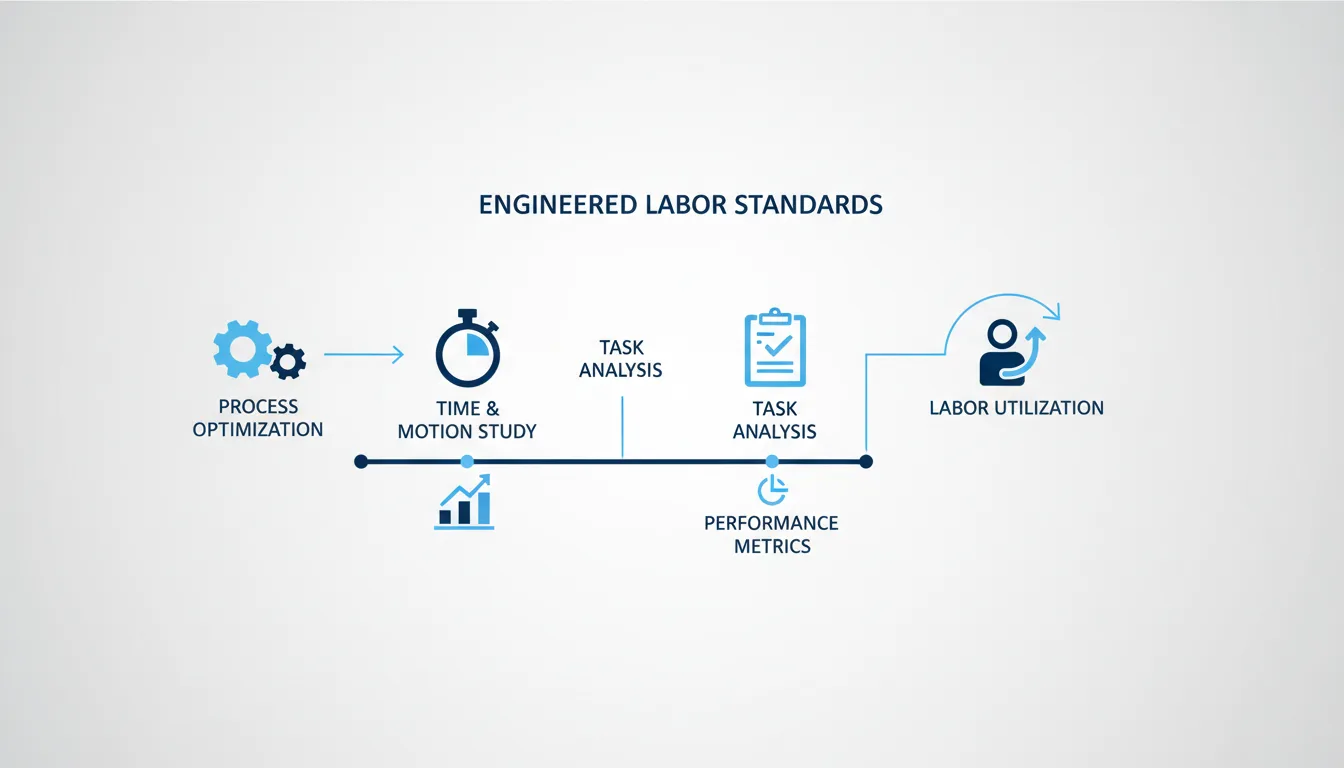
Engineered Labor Standards (ELS) are systematic methods used to establish performance standards for various tasks in logistics and warehouse operations. These standards are based on detailed analyses of labor times, work methods, and productivity benchmarks. The primary purpose of ELS is to increase efficiency, enhance productivity, and validate labor costs, thereby improving overall operational performance.
The significance of ELS in modern logistics cannot be overstated; it provides the data necessary for employee productivity tracking and is an essential tool for decision-making in workforce management. Establishing ELS helps organizations determine accurate staffing needs, optimize processes, and ultimately enhance service levels, contributing to a more efficient warehouse layout and overall operational excellence.
Etymology and Origins
The term "engineered labor standards" reflects a systematic and scientific approach to measuring work performance. The roots of labor standards can be traced back to early industrial engineering practices aimed at optimizing workflow. The concept emerged significantly in the early 20th century, influenced by Frederick Winslow Taylor, who is often referred to as the father of scientific management.
Historically, the concept of a "standard" for work has ancient roots, appearing in craft guilds and early manufacturing to define expected output. The term "engineered" became prominent with the rise of industrial engineering, signifying a precise, analytical, and data-driven approach to setting these standards, rather than relying on historical averages or estimates. The combination of "engineered" and "labor standards" gained traction as industrial processes became more complex and the need for scientific management grew in the early 20th century, solidifying its place in operations management literature by the mid-century.
Historical Development
The evolution of ELS occurred over many decades, paralleling the development of industrial engineering and management science:
-
Pre-20th Century Foundations: While formalized ELS are a 20th-century phenomenon, earlier thinkers laid groundwork. Adam Smith's 1776 work The Wealth of Nations highlighted the economic benefits of the division of labor, implicitly pointing towards the need for standardized tasks and performance measurement. Early industrialists like Eli Whitney in the late 18th century implemented interchangeable parts, which required highly standardized manufacturing processes and skilled, consistent labor.
-
Early 20th Century - Scientific Management (1900s-1920s): The genesis of modern ELS is firmly rooted in the scientific management movement.
- Frederick Winslow Taylor published The Principles of Scientific Management in 1911 [5], advocating for systematic time studies to determine the "one best way" to perform a task and set a "fair day's work." His emphasis on observation, measurement, and analysis revolutionized factory operations.
- Frank and Lillian Gilbreth (contemporaries of Taylor) pioneered motion studies, focusing on eliminating wasteful movements to improve efficiency and reduce fatigue. They developed techniques like therbligs (Gilbreth spelled backward, with 'th' transposed), which categorized fundamental hand motions, enabling granular analysis of work processes [6]. The Gilbreths' work introduced ergonomic considerations that remain vital in ELS today.
- Henry Gantt developed the Gantt chart, a visual tool for scheduling tasks, and also introduced a "task and bonus" wage system, directly linking pay to performance against a standard [7].
-
Mid-20th Century - Formalization and WWII (1930s-1960s):
- Time and Motion Studies: Became widespread, providing quantitative data for labor efficiency. The American Society of Mechanical Engineers (ASME) played a role in standardizing terminology and methodology.
- Predetermined Motion Time Systems (PMTS): Developed in the late 1940s, systems like Methods-Time Measurement (MTM) by H.B. Maynard, G.J. Stegemerten, and J.L. Schwab allowed for task times to be estimated before a job was even performed, by assigning time values to basic human movements [8]. Other systems like Work Factor also emerged, offering universal data that could be applied across different industries.
- Operations Research: During World War II, the need for efficient resource allocation spurred the development of Operations Research, which provided sophisticated analytical tools for optimizing complex systems, influencing later ELS methodologies.
-
Late 20th Century - Lean and Computerization (1970s-1990s):
- Lean Manufacturing and Toyota Production System (TPS): The rise of TPS, with its emphasis on waste elimination, standardized work, and continuous improvement (Kaizen), profoundly influenced ELS. It shifted the focus from merely speeding up tasks to optimizing entire value streams [9].
- MRP/ERP Systems: The integration of Manufacturing Resource Planning (MRP) and later Enterprise Resource Planning (ERP) systems in the 1980s and 90s provided platforms to collect and process operational data, allowing for more precise labor planning and performance tracking.
- Total Quality Management (TQM): Emphasized process control and consistency, further integrating ELS into broader quality initiatives.
-
21st Century - Automation and Data Analytics (2000s-Present):
- Technological Advancements: The proliferation of warehouse management systems (WMS), Labor Management Systems (LMS), and Warehouse Execution Systems (WES) integrated data analytics capabilities to enhance the precision and dynamism of labor standards. These systems moved ELS from static, manual measurements to real-time, adaptive benchmarks.
- Advanced Data Capture: Technologies like barcoding, RFID, and vision systems automated data collection, significantly improving the accuracy and efficiency of ELS implementation. Modern workflows within these systems often embed ELS principles.
- Big Data and AI: Current trends leverage big data analytics, machine learning, and artificial intelligence to create predictive models for labor needs, identify optimization opportunities, and even dynamically adjust standards based on real-time operational variables.
Core Concepts
Engineered Labor Standards vary between industries but generally follow a structured methodology to analyze work processes. Key components include:
- Work Measurement: This is the systematic determination of the amount of time required to perform a task by a qualified worker under specified conditions. Common techniques include:
- Time Studies: Direct observation and measurement of the time taken to complete tasks, often using a stopwatch, then normalizing for pace and adding allowances.
- Work Sampling: Statistical technique for determining the proportion of time workers spend on different activities by taking a large number of random observations.
- Predetermined Motion Time Systems (PMTS): As discussed in historical development, these systems (e.g., MTM, Work Factor) use established time values for basic human motions to build up a standard time for a complete task.
- Standard Data: Compiling elementary times from various work measurements to create a database of times for common task elements, allowing new task standards to be synthesized quickly.
- Standard Time: Establishing a baseline for how long a task should take based on observed or predetermined times, adjusted for a normal pace, and including allowances for personal needs, fatigue, and unavoidable delays (PF&D allowance). This provides a realistic and achievable target.
- Work Methods: This involves a detailed analysis of the sequence of operations, tools, equipment, and environment used to perform a task. Techniques like process mapping, ergonomic analysis, and motion economy are used to develop optimized processes that can be standardized across operations, for instance, by implementing efficient batch picking strategies or optimizing material flow.
These core principles ensure that organizations can accurately predict labor needs, improve operational efficiencies, and enhance the overall effectiveness of their employee management strategies effectively.
Types and Classifications
Engineered Labor Standards can be classified into several types based on the method of calculation and application:
- Predetermined Motion Time Systems (PMTS): These systems assign time values to basic human motions (e.g., reach, grasp, move, position), allowing for the estimation of task times without direct observation of the specific task. Examples include MTM and Work Factor. PMTS offer high consistency and can be applied before a job even exists, but require trained analysts and can be time-consuming for complex tasks.
- Time and Motion Study-based Standards: Derived from direct observation and measurements of work processes using a stopwatch and video analysis. These standards are highly specific to the observed task and environment, making them very accurate for existing operations, but they can be resource-intensive and prone to observer bias.
- Historical Data Analysis: Utilizing past performance records and operational data to establish benchmarks and standards. While quick and easy to implement, these standards may reflect past inefficiencies or variations and are less precise than direct measurement methods. They are often used for preliminary estimates or for tasks where detailed studies are impractical.
- Standard Data Standards: Created by compiling time values for common work elements from various time studies or PMTS analyses. These pre-established data tables allow for the rapid development of standards for new or modified tasks by combining existing elements, offering a balance between accuracy and efficiency.
Each method has its advantages and limitations, and the choice often depends on industry requirements, the required level of precision, and resources available.
Benefits and Advantages
Implementing ELS offers numerous advantages for logistics and supply chain operations, leading to significant improvements across various aspects:
- Increased Operational Efficiency: By establishing precise performance benchmarks, ELS enables more accurate staffing and resource allocation, reducing idle time and optimizing labor utilization. This leads to smoother operations and higher throughput.
- Improved Employee Productivity: Clear, fair standards provide employees with measurable targets, fostering a sense of accountability and motivating them to achieve established performance levels. It also helps identify and address performance bottlenecks.
- Enhanced Cost Control: Accurate labor standards allow businesses to forecast labor costs more precisely, validate labor spend, and identify areas for cost reduction. This contributes to better budget management and optimized resource usage.
- Simplified Performance Appraisal and Incentive Systems: ELS provides objective metrics for evaluating individual and team performance. This facilitates transparent performance appraisals and supports the implementation of fair incentive or bonus programs based on quantifiable achievements.
- Improved Process Design and Standardization: The detailed analysis required to establish ELS often uncovers inefficiencies in current work methods, leading to process improvements and the development of standardized best practices. This consistency is crucial for quality and training.
- Better Training and Onboarding: ELS documents the "one best way" to perform tasks, serving as a basis for structured training programs. New employees can be trained effectively to reach standard performance levels more quickly.
Challenges and Limitations
Despite its benefits, establishing and maintaining effective ELS is not without challenges:
- Resistance from Employees: Workers may perceive standards as rigid, arbitrary, or a means to increase workload without proper compensation. This can lead to decreased morale, union disputes, and active resistance. Effective change management and transparent communication are crucial to overcome this.
- Resource-Intensive Implementation: Conducting thorough time studies, implementing PMTS, and developing standard data banks require significant investment in skilled personnel (industrial engineers, analysts), time, and potentially specialized software or consultants.
- Need for Continuous Updates: ELS are not static. Changes in processes, technology, equipment, product mix, and facility layout necessitate regular review and update of standards, which can be resource-intensive and challenging to manage.
- Potential Inaccuracies and Bias: Data collection can be influenced by observer bias, atypical work conditions during studies, or incorrect assumptions, leading to inaccurate standards and misaligned expectations. Ensuring representative sampling and expert analysis is critical.
- Difficulty with Variable Tasks: ELS are most effective for repetitive, predictable tasks. For highly variable, creative, or knowledge-based work, establishing precise engineered standards can be difficult or inappropriate.
- Focus on Quantity over Quality: An overemphasis on meeting quantitative ELS targets without balancing quality metrics can lead to rushed work, increased errors, and customer dissatisfaction.
Best Practices
To effectively implement and sustain Engineered Labor Standards, organizations should adopt a comprehensive approach centered on accuracy, fairness, and continuous improvement:
- Engage Stakeholders Early and Transparently: Involve employees, supervisors, and union representatives in the ELS development process from the outset. Clearly communicate the purpose, methodology, and benefits of ELS to build trust and ensure buy-in. Address concerns proactively and foster an environment of collaboration.
- Ensure Accuracy and Objectivity: Utilize trained industrial engineers and robust methodologies (e.g., detailed time studies, PMTS) to develop standards. Conduct studies under typical working conditions and ensure sufficient sample sizes. Validate standards through pilot programs before full implementation.
- Regularly Review and Update Standards: Implement a structured process for reviewing and updating ELS to reflect changes in processes, technology, equipment, materials, product designs, or facility layouts. Outdated standards lose credibility and effectiveness. SkuSavvy's flexible workflows can help in adapting to process changes.
- Combine Quantitative Data with Qualitative Feedback: While ELS are data-driven, incorporate feedback from employees and supervisors to ensure standards are realistic and fair. This helps fine-tune standards and address practical challenges not captured by pure measurement.
- Provide Adequate Training and Support: Train employees on new methods and expectations stemming from ELS. Equip supervisors with the skills to coach employees, monitor performance against standards, and provide constructive feedback. Employee management tools can assist in this.
- Focus on Process Improvement, Not Just Speed: Use ELS as a tool for identifying process inefficiencies and driving continuous improvement, rather than solely as a means to push for faster work. Optimize methods first, then set standards. The goal is smarter, not just harder, work.
- Integrate with Performance Management Systems: Link ELS to employee productivity tracking, performance reviews, and incentive programs to reinforce desired behaviors and outcomes. Ensure a balance with quality and safety metrics.
By adhering to these best practices, organizations can optimize their labor standards, enhance operational performance, and cultivate a more productive and engaged workforce.
Technology and Tools
Modern technology has revolutionized how ELS is established and applied in logistics. The integration of advanced tools allows for real-time data collection, analysis, and dynamic adjustments, significantly improving the accuracy and effectiveness of engineered standards:
- Warehouse Management Systems (WMS): Advanced WMS, like SkuSavvy's mobile warehouse management system, are central to ELS. They capture detailed transaction data (e.g., pick times, putaway times, scan rates), providing the raw information needed to establish and validate labor standards. They also facilitate the implementation of optimized methods like batch picking and cycle counting.
- Labor Management Systems (LMS): Dedicated LMS platforms are designed specifically to manage, track, and optimize labor performance against ELS. They provide features for staffing optimization, performance reporting, incentive management, and real-time monitoring of productivity.
- Automated Data Capture Technologies: Barcode scanners, RFID, voice picking systems, and vision systems automatically record task completion times and sequences, eliminating manual data entry errors and providing highly accurate, granular data for ELS analysis.
- Simulation Software: Tools like discrete-event simulation allow logistics managers to model different operational scenarios, test new work methods, and predict the impact of changes on labor standards before physical implementation. This helps in validating ELS and optimizing processes.
- Wearable Technology and IoT Devices: Smart glasses, wrist-mounted scanners, and other IoT devices provide hands-free operation and real-time data feedback to workers, while simultaneously collecting performance data for ELS analysis and refinement.
- Advanced Analytics and Business Intelligence (BI) Tools: These platforms process vast amounts of operational data from WMS/LMS to identify trends, bottlenecks, and opportunities for process improvement. They are crucial for continuous ELS refinement and predictive staffing.
- Visual Inventory Management Systems: Systems like SkuSavvy's visual inventory management system can provide visual insights into warehouse activity and labor flow, helping to identify areas where ELS can be applied or improved.
Future Trends
As the logistics landscape continues to evolve, ELS will likely incorporate more advanced analytics, machine learning, and AI-driven insights. These developments will enable organizations to achieve dynamic and adaptive labor standards, tailored to real-time operational needs.
- Dynamic and Adaptive Standards: AI and machine learning will allow ELS to adjust in real-time based on fluctuating demand, varying product mixes, employee skill levels, and environmental factors (e.g., temperature, congestion). This moves beyond static standards to more agile benchmarks.
- Predictive Labor Planning: Leveraging AI, systems will predict future labor requirements with higher accuracy, optimizing staffing levels to prevent under- or over-staffing, and enhancing overall order fulfillment efficiency.
- Human-Robot Collaboration (Cobots): As automation and robotics become more integrated into warehouses, ELS will evolve to define standards for tasks performed in collaboration between humans and robots, optimizing the combined output of this hybrid workforce.
- Gamification and Personalized Feedback: ELS data will be used in gamified applications to motivate employees and provide personalized, immediate feedback on performance, fostering continuous improvement and engagement.
- Sustainability Integration: Future ELS will likely integrate eco-efficiency measures, considering not just labor time but also resource consumption (e.g., energy, waste) associated with tasks, ensuring that organizations operate not only efficiently but also responsibly.
- Ethical AI and Fairness: With increased reliance on AI for ELS, there will be a greater focus on ensuring algorithms are unbiased, fair, and transparent, promoting equitable treatment of the workforce.
The future of ELS lies in creating highly responsive, intelligent, and employee-centric systems that drive both productivity and job satisfaction in the increasingly complex supply chain.
Sources
- Mobile Warehouse Management System Overview
- Employee Productivity Tracking
- Batch Picking Guide
- Cycle Counting Guide
- The Principles of Scientific Management
- Frank Bunker Gilbreth and Lillian Moller Gilbreth
- Henry Laurence Gantt
- Industrial Engineering: Methods-Time Measurement
- The Toyota Production System: An Overview of Its History and Philosophy
- Operations Management: An Integrated Approach
- Staffing Plan
- The Power of Pulling People into Your Process
- Visual Warehouse Layout
- Employee Management
- Workflows Overview
- Visual Inventory Management System
- Order Fulfillment Guide