Employee Management in Logistics
This article chronicles the essence of employee management in logistics, its evolution, challenges, and best practices for supply chain success.
Updated
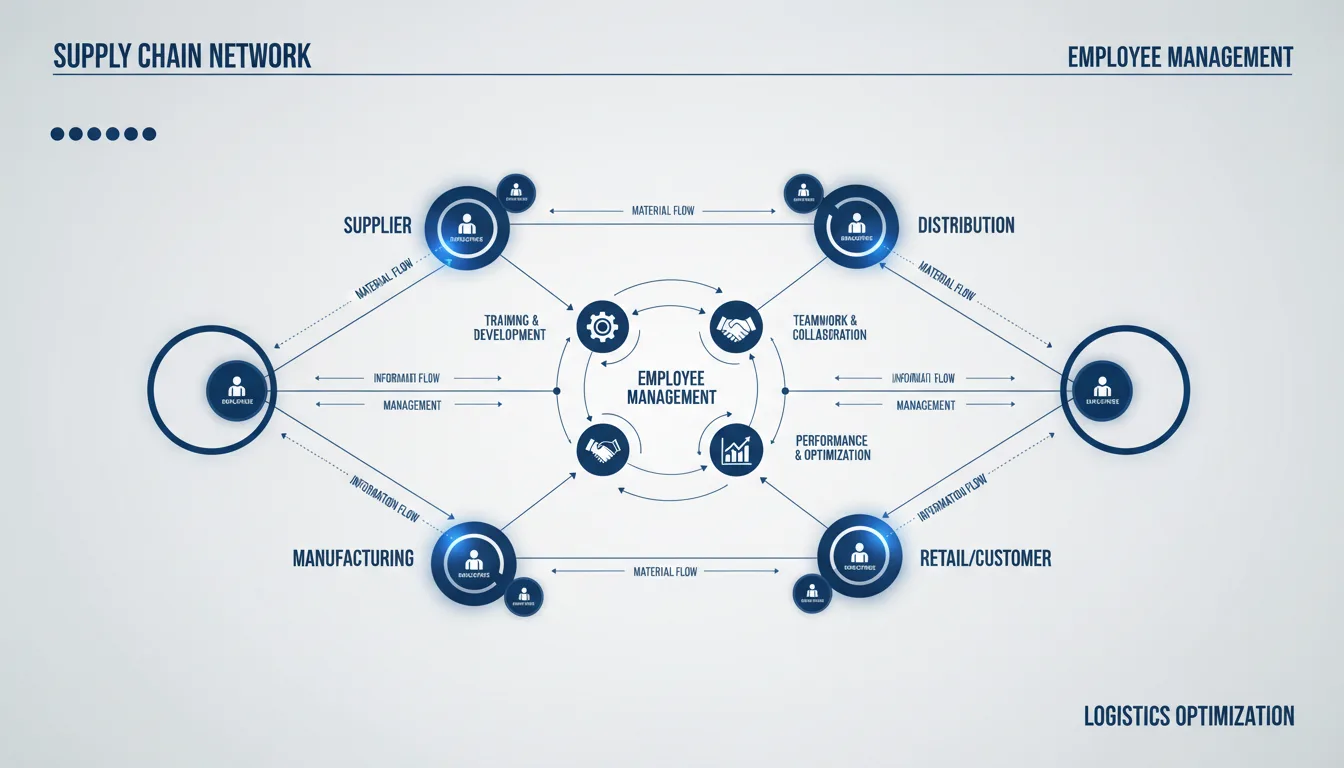
Overview
Employee management refers to the systematic approach of hiring, training, and overseeing employees to ensure organizational effectiveness and efficiency. In the logistics sector, effective employee management is paramount as it directly impacts productivity, safety, and operational success. A well-structured employee management system can optimize workforce capabilities, foster a positive work environment, and facilitate the achievement of strategic objectives in critical supply chain functions such as warehousing, transportation, and order fulfillment.
Etymology and Origins
The term "employee management" evolved from earlier concepts like "personnel administration" and "industrial relations" [6]. Its roots can be traced to the late 19th and early 20th centuries as industrialization led to larger workforces and a burgeoning need for systematic organization of labor [7]. Influential figures like Frederick Winslow Taylor, often hailed as the father of scientific management, published "The Principles of Scientific Management" in 1911. His work emphasized optimizing individual tasks and worker efficiency, laying a foundational stone for structured employee oversight [6].
The rise of labor movements, the formation of labor unions, and early labor laws in industrialized nations also necessitated a more formal approach to managing the relationship between employer and employee [7]. By the mid-20th century, as the focus shifted from mere administration to valuing employees as strategic assets, the terminology evolved. The term "human resources" began gaining traction in the 1960s, broadening the scope of "employee management" beyond just efficiency to include development, engagement, and strategic alignment with business goals [9].
Historical Development
- Late 19th Century - Early 1900s: Scientific Management Era. The nascent stages of employee management were largely dominated by Frederick Winslow Taylor's scientific management principles. His research, alongside that of Frank and Lillian Gilbreth, introduced time-and-motion studies to standardize tasks, increase output, and define clear roles for workers, particularly in manufacturing and early logistics operations [6, 10]. This period emphasized efficiency and productivity measurement, often prioritizing output over worker well-being.
- 1920s-1930s: The Human Relations Movement. Sparked by the groundbreaking Hawthorne Studies conducted by Elton Mayo at Western Electric's Hawthorne Works, this movement challenged the purely scientific view of labor. It highlighted the critical impact of social factors, informal group dynamics, and employee morale on productivity, shifting managerial focus towards employee satisfaction and psychological well-being [11]. This was pivotal for understanding motivation beyond monetary incentives, especially in repetitive industrial tasks common in nascent warehousing.
- 1940s-1960s: Personnel Management and Legal Frameworks. Post-World War II, the field formalized as "personnel management." This era saw the growth of dedicated personnel departments responsible for hiring, firing, payroll, and basic training. Key legislation, such as the Fair Labor Standards Act (FLSA) in the US, began to codify worker rights and employer responsibilities, further professionalizing the role [12]. The integration of formal personnel functions within organizations became a standard practice, laying the groundwork for modern HR.
- 1970s-1980s: Emergence of Human Resources (HR). The shift from "personnel" to "human resources" reflected a broader understanding of employees as valuable organizational assets rather than mere costs. This period focused on talent development, strategic planning, and employee relations. Concepts like Management by Objectives (MBO) and increased emphasis on employee training and career development became prevalent [9]. In logistics, this meant a growing recognition of specialized skills needed for roles like truck drivers, dispatchers, warehouse managers, and early supply chain analysts.
- 1990s: Total Quality Management (TQM) and Lean Principles. The rise of TQM and Lean manufacturing principles, heavily influenced by Japanese practices (e.g., the Toyota Production System), brought employee empowerment and continuous improvement to the forefront [13]. Employees were no longer just task performers but were encouraged to identify and solve problems, contributing to process optimization. This approach was particularly impactful in logistics, aiming to reduce waste and improve efficiency in warehousing and transportation through direct employee involvement.
- 2000s-Present: Digital Transformation and Strategic Human Capital Management. The advent of widespread internet use, enterprise resource planning (ERP) systems, and specialized human resource information systems (HRIS) revolutionized employee management. Technology enabled global talent acquisition, sophisticated performance analytics, and automated administrative tasks. For logistics, this meant the integration of Workforce Management (WFM) systems with Warehouse Management Systems (WMS) to optimize labor scheduling, track productivity, and manage training records for specialized equipment operators [14]. The focus shifted towards "strategic human capital management," viewing employees as key drivers of competitive advantage, particularly in complex global supply chains. More recently, Artificial Intelligence (AI) and Machine Learning (ML) are being leveraged for predictive analytics in talent acquisition, workforce planning, and identifying training needs, especially in the context of increasing automation within warehouses and transportation networks [15].
Core Concepts
Effective employee management in logistics encompasses several core concepts, tailored to the unique demands of the industry:
- Recruitment and Selection: Identifying and attracting the right talent for specific logistics roles, from warehouse associates and forklift operators to supply chain analysts and last-mile delivery drivers, often requiring specialized skills and certifications [16]. This includes strategic sourcing to combat talent shortages endemic to the industry [17].
- Training and Development: Continuous education and skill development are crucial for employees to adapt to new technologies (e.g., automated guided vehicles, advanced WMS) and evolving compliance regulations in logistics [18]. This includes safety training, technical skills, and leadership development.
- Performance Management: Systematic evaluation of employee performance against established key performance indicators (KPIs) like pick rates, delivery accuracy, safety records, and adherence to operational workflows to optimize productivity and identify areas for improvement [19]. Regular feedback and goal setting are integral.
- Compensation and Benefits: Designing competitive salary structures and comprehensive benefit packages to attract and retain skilled logistics professionals. This must consider industry benchmarks, regional labor costs, and the demanding nature of many logistics roles (e.g., night shifts, physical labor) [20].
- Employee Engagement: Creating a workplace environment that fosters motivation, initiative, and satisfaction among workers. High engagement is directly tied to retention, safety compliance, and overall operational effectiveness [21]. This often involves robust feedback mechanisms, recognition programs, and clear career pathing within logistics organizations.
- Workplace Safety and Compliance: Ensuring strict adherence to safety regulations (e.g., OSHA guidelines for warehousing, DOT regulations for transportation) and promoting a proactive culture of safety to minimize accidents, injuries, and ensure legal compliance. This is especially critical in hazardous warehouse and transportation environments [22].
Industry Applications
In logistics, effective employee management manifests in various ways across different functional areas:
- Warehouse Operations: Utilizing a Mobile Warehouse Management System allows for real-time tracking of employee activities, task assignment via workflows, and enhancement of workflow efficiency. This includes managing teams for specific tasks such as batch picking, cycle counting, and bin put-away, all optimized within a visual warehouse layout to ensure optimal labor utilization [23].
- Transportation Management: Efficient driver management, encompassing robust scheduling, route optimization, compliance with hours of service regulations, and ongoing safety training, directly improves delivery times, reduces fuel costs, and enhances customer satisfaction. Telematics and GPS tracking systems are often used to monitor driver performance, adherence to routes, and safety metrics [24].
- Order Fulfillment: Through effective employee training on order fulfillment procedures, including efficient pick, pack, ship processes, logistics companies can significantly reduce errors, expedite processing, and improve customer satisfaction. Systems that support mobile order fulfillment empower workers with real-time data and instructions on the go [25].
- Inventory Management: Training employees on precise inventory management techniques, such as proper receiving, storage, kitting, and handling of items with lots and expiration dates, is vital for maintaining inventory accuracy, reducing shrinkage, and ensuring product quality and traceability [8].
Benefits and Advantages
The advantages of effective employee management in logistics are multifaceted, contributing to both operational efficiency and organizational resilience:
- Enhanced Productivity and Efficiency: Optimized workforce capabilities lead to higher throughput in warehouses, faster delivery cycles, and reduced processing times across the supply chain.
- Improved Employee Morale and Retention: A well-managed and engaged workforce experiences higher job satisfaction, leading to lower turnover rates, which is critical in an industry often facing labor shortages [17].
- Reduced Operational Costs: Efficient processes, minimized errors, and lower recruitment expenses due to better retention directly contribute to cost savings.
- Higher Customer Satisfaction: Timely, accurate, and damage-free order fulfillment and delivery, driven by a competent workforce, translates directly into improved customer loyalty.
- Enhanced Safety and Compliance: Robust safety programs and employee training lead to fewer workplace accidents, better adherence to regulatory standards, and reduced legal liabilities.
- Greater Adaptability and Innovation: An empowered and well-trained workforce is better equipped to adapt to new technologies, market changes, and contribute to continuous improvement initiatives.
Challenges and Limitations
Common challenges faced in employee management within the logistics industry include:
- High Turnover Rates: The physically demanding nature, irregular hours, and competitive labor market often lead to high employee turnover, especially for warehouse staff and drivers [26]. Attracting and retaining talent remains a significant hurdle.
- Talent Gap and Skill Shortages: There's a growing need for skilled workers proficient in advanced technology (e.g., WMS, data analytics, automation maintenance) that often outpaces the available talent pool [17].
- Maintaining Consistent Training Programs: Especially challenging across geographically dispersed facilities and for a diverse workforce, ensuring uniform and effective training requires scalable solutions and significant investment.
- Adapting to Technological Advancements: Integrating new technologies like automation, AI, and advanced analytics requires continuous upskilling and reskilling of the existing workforce, which can be costly and time-consuming [27].
- Workforce Diversity and Inclusion: Managing a diverse workforce with varying cultural backgrounds, languages, and generations requires inclusive practices, effective cross-cultural communication strategies, and fair treatment policies.
- Regulatory Compliance: Navigating complex and evolving labor laws, safety regulations (e.g., OSHA, DOT), and international trade compliance requires constant vigilance, specialized knowledge, and robust internal controls [28].
Best Practices
To enhance employee management in logistics, the following best practices are recommended:
- Invest in Comprehensive Training and Development: Implement robust, continuous training programs that cover technical skills (e.g., WMS operation, forklift certification), safety protocols, and essential soft skills like problem-solving and teamwork. Utilize blended learning approaches, including onboarding guides and hands-on practice, to ensure practical competency [29].
- Leverage Technology for Workforce Optimization: Adopt Human Resource Information Systems (HRIS) for streamlined administration, and integrate Workforce Management (WFM) modules with WMS for real-time task management, productivity tracking, and labor forecasting [14]. SkuSavvy's Employee Management features are designed to support this by organizing employee data, tasks, and communication.
- Foster a Culture of Engagement and Empowerment: Encourage employee feedback through regular surveys and open forums, implement recognition programs for outstanding performance, provide clear opportunities for career advancement, and involve employees in process improvement initiatives (e.g., Lean workshops). This builds loyalty, commitment, and a sense of ownership [30].
- Prioritize Safety and Ergonomics: Implement rigorous safety training, provide appropriate personal protective equipment (PPE), and design workspaces with ergonomics in mind to reduce injuries, improve working conditions, and promote a healthy environment [31].
- Data-Driven Decision Making: Utilize analytics from HRIS, WMS, and TMS to identify performance trends, predict staffing needs, assess training effectiveness, optimize labor allocation, and proactively address potential issues [32].
- Implement Fair and Competitive Compensation: Regularly benchmark salaries and benefits against industry standards to attract and retain top talent in a competitive market. Consider performance-based incentives to motivate and reward high-achieving employees [20].
Technology and Tools
Technology plays a crucial role in modern employee management, transforming traditional approaches into data-driven, strategic functions. In logistics, this often means integrated platforms:
- Human Resource Information Systems (HRIS): Centralize employee data, payroll, benefits administration, recruitment tracking, and compliance reporting, providing a single source of truth for HR functions.
- Workforce Management (WFM) Systems: These specialized systems optimize scheduling, time and attendance tracking, labor forecasting, and task assignment, often integrated directly with WMS to manage warehouse labor effectively [14].
- Learning Management Systems (LMS): Deliver and track employee training modules, certifications, and professional development programs, ensuring a skilled and compliant workforce.
- Warehouse Management Systems (WMS): Advanced WMS, like SkuSavvy's Mobile WMS, often include modules for employee productivity tracking, real-time task management, and assigning roles within workflows based on skills and availability [23]. SkuSavvy's Employee Management documentation highlights its capabilities in overseeing and communicating with logistics staff, enhancing overall operational efficiency.
- Transportation Management Systems (TMS): These manage driver scheduling, route optimization, and compliance with regulations (e.g., ELD mandates), often including features to track driver performance, safety metrics, and fuel efficiency [24].
- AI and Analytics Platforms: Used for predictive workforce planning, identifying skill gaps, personalizing training content, and enhancing employee engagement strategies by analyzing behavioral and performance data [15].
Future Trends
Looking ahead, trends in employee management are expected to evolve significantly, driven by advances in technology and changing workforce dynamics:
- Hyper-Personalization of Employee Experience: Leveraging data and AI to tailor training programs, career paths, and benefit packages to individual employee needs and preferences, enhancing engagement and retention.
- Increased Automation and Reskilling Imperative: As automation (e.g., robotics, automated guided vehicles) becomes more prevalent in warehouses and transportation, the focus will shift from repetitive tasks to upskilling employees for roles in monitoring, maintenance, data analysis, and complex problem-solving [27].
- Gig Economy and Flexible Workforce Models: Greater reliance on temporary, contract, and on-demand workers to manage peak demands and seasonal fluctuations will require robust systems for flexible workforce management, scheduling, and onboarding [33].
- Emphasis on Well-being and Mental Health: Growing recognition of the importance of employee well-being, leading to more comprehensive wellness programs, mental health support systems, and initiatives to promote work-life balance, particularly for demanding logistics roles [34].
- AI-Powered Workforce Analytics: Advanced data analytics will provide deeper, predictive insights into workforce performance, engagement, retention drivers, and potential safety risks, enabling proactive strategic decisions in logistics. This includes using AI for optimizing shift patterns and predicting staffing needs [15].
- Sustainable and Ethical Supply Chain Practices: Employee management will increasingly incorporate principles of ethical labor practices, fair wages, transparent working conditions, and social responsibility throughout the entire supply chain, driven by consumer demand and regulatory pressures [35].
Related Concepts
Employee management is intrinsically linked to various broader logistics and operational concepts:
- Supply Chain Management: Effective employee management is a cornerstone of a resilient and efficient supply chain, as human capital drives all processes from procurement to last-mile delivery [36].
- Lean Management and Six Sigma: These methodologies emphasize continuous improvement, waste reduction, and employee involvement in process optimization. Empowering employees to identify and resolve issues directly contributes to Lean goals in logistics operations and drives higher quality outcomes [13].
- Talent Management: A broader strategic concept encompassing the attraction, development, motivation, and retention of highly skilled employees. In logistics, this is crucial for roles requiring specialized knowledge (e.g., customs brokerage, cold chain management, hazardous materials handling) [37].
- Workforce Planning: The strategic process of analyzing current workforce capabilities and projecting future needs to align with business objectives, particularly important in volatile logistics environments characterized by fluctuating demand and technological change [38].
- Operational Excellence: Employee management directly contributes to achieving operational excellence by fostering a highly skilled, motivated, and efficient workforce capable of executing complex logistics operations flawlessly.
Sources
- Employee Management Guide
- Productivity Tracking
- Mobile Warehouse Management System
- Order Fulfillment Guide
- Workflows Overview
- The Principles of Scientific Management
- A History of Personnel Management: From the Administrative to the Strategic Role
- Visual Inventory Management System
- From Personnel to Human Resources: The Changing Nature of the HR Profession
- The Gilbreths: Founders of Modern Management
- Hawthorne effect
- Fair Labor Standards Act of 1938
- Lean Thinking: Banish Waste and Create Wealth in Your Corporation
- Why Integrated Workforce Management is Key to Supply Chain Success
- The future of AI in supply chain management
- Building a Strong Logistics Workforce
- The logistics labor crisis deepens
- The Importance of Training in Logistics and Supply Chain Management
- Performance Management in Logistics: A Comprehensive Guide
- Logistics and Supply Chain Salary Guide
- Employee Engagement in the Supply Chain: A Critical Success Factor
- Warehouse Safety Guidelines - OSHA
- Mobile Warehouse Management System
- Transportation Management Systems (TMS) for Fleet Management
- Mobile Order Fulfillment Software
- Addressing High Turnover in the Logistics Industry
- Reskilling the Logistics Workforce for Automation
- Staying Compliant: Navigating Labor Laws in Logistics
- Quick Start Guide
- Employee Empowerment in Logistics: Driving Performance
- Ergonomics in Warehousing: Protecting Your Workforce
- Using Data Analytics for Workforce Planning in Supply Chain
- The Gig Economy's Impact on Logistics Labor
- Employee Well-being in the Logistics Industry
- Ethical Labor Practices in Supply Chains
- Supply Chain Management: An Overview
- Talent Management in the Supply Chain: A Strategic Imperative
- Workforce Planning in Logistics