Early Integration in Supply Chain Management
This article explores the concept of early integration within supply chains, tracing its historical development, core concepts, applications, and future trends.
Updated
Overview
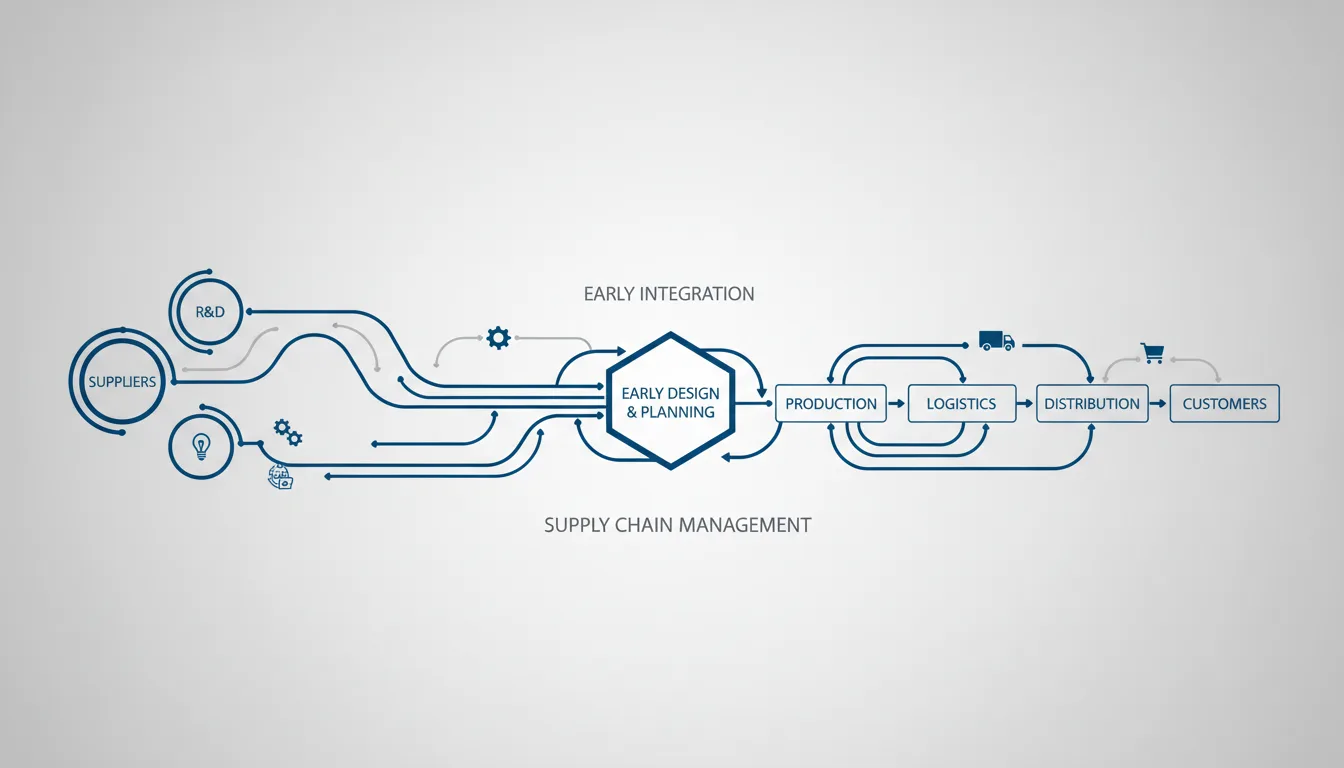
Early integration refers to the strategic approach in supply chain management (SCM) that emphasizes the alignment and collaboration of all partners involved in the production and distribution processes from the outset of product development. This concept is crucial as it improves communication, reduces lead times, and ultimately enhances customer satisfaction. By fostering cooperation among suppliers, manufacturers, and retailers, companies can achieve greater efficiencies and responsiveness in responding to market demands.
Etymology and Origins
The term "early integration" finds its roots in the evolution of supply chain management practices, particularly during the late 20th century when businesses began to recognize the importance of holistic supply chain strategies. The first documented usage of the term correlates with just-in-time manufacturing, which emerged in the 1970s and 1980s and highlighted the need for synchronized operations from the very start of product development. Initially, integration was seen as a way to achieve operational efficiency; however, it has since evolved to encompass broader strategic initiatives, including collaborative planning and supplier relationship management.
Historical Development
Emergence
The practice of integrating supply chain functions can be traced back to the 1980s when companies started adopting total quality management and other operational frameworks. The introduction of technologies like Enterprise Resource Planning (ERP) systems in the late 20th century promoted coordination across various supply chain departments, shifting the paradigms around operational integration.
Key Figures
Pioneers of this concept include companies such as Toyota, which perfected lean manufacturing principles in the 1950s, highlighting the significance of supplier collaboration. In the 1990s, the concept gained traction through the writings of experts like Michael Porter, who advocated for integrated value chains in his book, Competitive Advantage (1985), and Henry Ford, whose assembly line innovation laid the groundwork for modern supply chain integration.
Milestones
- 1980s: Adoption of total quality management and the rise of integrated production systems. Companies began recognizing the need for supply chain roles to collaborate early in development.
- 1990s: Expansion of ERP systems and SCM software, which facilitated greater integration and real-time data sharing among partners.
- Early 2000s: Rising importance of global supply chains, necessitating early integration across borders that included managing geographical and cultural differences.
Technology Evolution
From manual processes to computerized solutions, early integration significantly transformed with the advent of digital technologies, such as RFID and AI analytics, allowing for real-time inventory management and demand forecasting. The shift to automated systems began in the late 1990s, when SCM software incorporated predictive algorithms that enabled firms to anticipate market shifts and adjust supply chains accordingly. This evolution has continued into the 21st century with the increasing adoption of machine learning and advanced analytics.
Core Concepts
Early integration operates on several key principles:
- Collaboration: Engaging all stakeholders early in the product development process ensures that inputs from suppliers and distributors are considered. For example, automotive manufacturers now involve parts suppliers from the design phase, enhancing production timing.
- Information Sharing: Timely and accurate data exchange enables proactive decision-making and risk management. Companies using optimal Warehouse Management Systems (WMS) report significant improvements in both coordination and performance.
- Flexibility: Adapting strategies and processes in response to market changes is vital for maintaining competitive advantage. Firms need to remain agile amidst changing conditions.
Industry Applications
Early integration is prevalent in various sectors, such as:
- Automotive: Manufacturers work closely with parts suppliers during the design phase to optimize logistics and manufacturing processes. This practice was notably implemented by Toyota, which utilizes a collaborative approach to streamline automotive supply chains.
- Consumer Goods: Fast-moving consumer goods (FMCG) companies leverage integrated planning to ensure product availability in stores, responding swiftly to demand fluctuations during peak seasons, such as holidays.
Benefits and Advantages
The primary advantages of early integration include:
- Enhanced Decision-Making: By involving stakeholders early, firms can make informed decisions that benefit the entire supply chain.
- Cost Reduction: Improved collaboration leads to minimized redundancies and optimized resource allocation. Fast-paced industries report a reduction in operating costs through better integration practices.
- Increased Customer Satisfaction: Timely and efficient fulfillment processes enhance the overall customer experience, directly impacting brand loyalty.
Challenges and Limitations
Despite its benefits, early integration can face challenges such as:
- Resistance to Change: Established companies may struggle with shifting to integrated practices due to legacy systems or entrenched mindsets.
- Communication Barriers: Different organizational cultures among partners can hinder effective collaboration, necessitating targeted relationship management efforts to overcome these barriers.
Best Practices
To implement early integration successfully, companies should:
- Foster a culture of collaboration and trust among all supply chain partners. For example, regular workshops and joint strategy sessions can help bridge gaps between teams.
- Utilize technologies such as Warehouse Management Systems (WMS) to streamline operations and enhance communication across different stakeholders.
Future Trends
As technology continues to evolve, early integration will likely see further advancements in areas such as:
- Blockchain: Providing transparent and secure data sharing among supply chain participants, significantly improving visibility and trust.
- AI and Machine Learning: Enhancing predictive analytics capabilities to further refine integration strategies, allowing firms to anticipate market trends before they arise.
Conclusion
Early integration represents a crucial shift in the approach to supply chain management, emphasizing collaboration and connection among various stakeholders. As industries continue to evolve, those who thoroughly embrace these principles will likely lead in efficiency and customer satisfaction in the competitive marketplace.