Dunnage in Logistics and Supply Chain Management
This article explores the definition, history, applications, and benefits of dunnage in logistics.
Updated
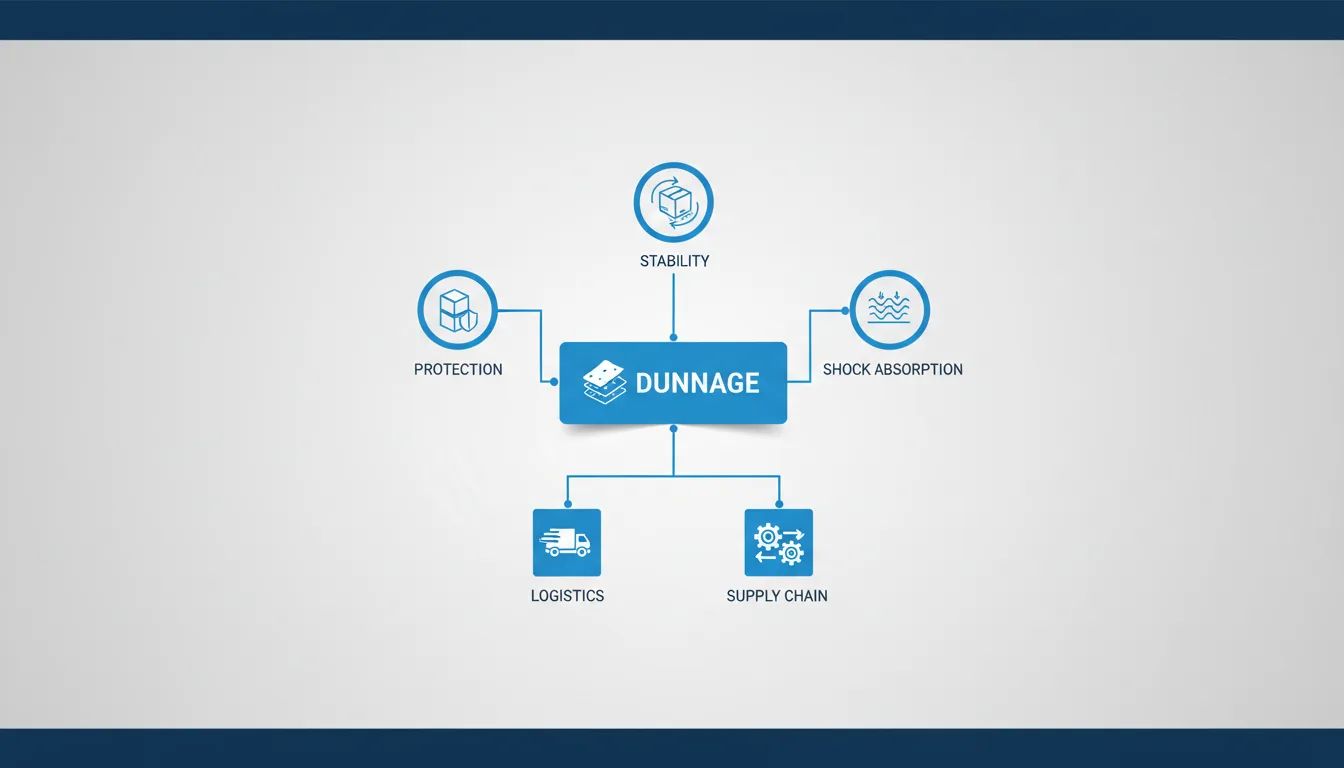
Dunnage in Logistics and Supply Chain Management
Overview
Dunnage refers to materials used to protect products and cargo during transportation and storage. Its purpose is to prevent damage from movement, vibrations, or environmental factors, ensuring that goods arrive at their destination in optimal condition. Used in various forms, dunnage plays a vital role in logistics by minimizing losses and improving supply chain efficiency. The types of dunnage can include packaging materials like air-filled bags, foam, wood, and even reusable plastic dunnage forms.
Etymology and Origins
The term "dunnage" likely originates from the Middle English dunage, indicating a protective padding or material. The earliest documented use of the term dates back to the mid-15th century, reflecting its importance in maritime contexts. Initially, it referred to any kind of ballast or padding that might be used on vessels for protection, derived from the Old French doner, meaning to give or bestow. The concept evolved, with dunnage becoming integral to modern logistics as industries began recognizing the importance of safeguarding goods during transport.
Historical Development
The use of dunnage has deep historical roots, showcasing its evolution through time:
- Early Uses (Ancient Times): Dunnage materials such as straw, sawdust, and stones were utilized by early traders to protect cargo from movement and damage.
- Shipbuilding Era (15th - 18th Centuries): With maritime trade expanding, dunnage became crucial for securing goods during sea travel. The development of shipbuilding techniques emphasized the need for effective cargo protection.
- 20th Century Innovations: The advent of standardized transportation methods, such as containers in the 1950s, led to innovations in dunnage materials. The introduction of specialized foam and inflatable packaging systems emerged to better secure goods. In the 1960s, the use of expanded polystyrene (EPS) began gaining prominence due to its lightweight and resilient properties, revolutionizing the field of dunnage.
- Recent Developments: The late 20th and early 21st centuries ushered in automated solutions for cargo management. The introduction of technologies such as artificial intelligence (AI) in dunnage systems and automated packing machines have further optimized the use of dunnage in logistics processes.
Core Concepts
Dunnage functions primarily to:
- Prevent cargo movement during transit
- Absorb shock and vibrations
- Protect against moisture and environmental damage
- Enhance stability within shipping containers and pallets.
Common dunnage materials include:
- Inflatable dunnage bags: Ideal for filling voids between goods and preventing shifting.
- Foam Inserts: Tailored to specific products, ensuring a snug fit that minimizes movement.
- Wooden Crates and Pallets: Often used in heavier shipments to provide a robust structure that keeps goods secure.
Industry Applications
Dunnage is widely applied across various industries, including:
- Food and Beverage: Use of temperature-sensitive dunnage in transporting perishables, where dunnage solutions help maintain the desired temperature and reduce spoilage.
- Electronics: Foam dunnage ensuring fragile components remain undamaged during transit, protecting against impact and vibration.
- Automotive: Hard plastics and wood dunnage supporting heavy machinery components, such as in custom dunnage solutions in automotive logistics to secure parts during transport, reducing the risk of breakage and improving supply chain reliability.
Benefits and Advantages
The effective use of dunnage brings numerous benefits, such as:
- Reduced Damage: Companies experience lower rates of product loss and damage, directly impacting overall profitability.
- Cost Efficiency: Minimizing replacements and repairs lead to savings in logistics costs, allowing businesses to allocate resources elsewhere.
- Environmental Impact: Many dunnage materials, particularly biodegradable options and reusable forms, enhance sustainability outcomes, aligning with corporate social responsibility goals.
Challenges and Limitations
Despite its benefits, using dunnage presents challenges:
- Cost of Quality: High-quality dunnage can increase initial shipping costs, which may deter cost-sensitive companies.
- Material Waste: Some traditional dunnage methods produce significant waste, necessitating a shift towards sustainable options that are still effective.
- Regulatory Compliance: Industries such as food and pharmaceuticals demand strict adherence to regulations ensuring that materials used do not compromise product safety.
Best Practices
To maximize the benefits of dunnage, businesses should:
- Assess Needs: Evaluate product types and configurations to select the optimal type of dunnage that minimizes risk.
- Implement Training: Proper training for staff on dunnage handling can minimize mishaps during packing and shipping, ensuring that protocols are followed.
- Consider Automation: Utilizing automated packing systems can enhance efficiency and consistency in dunnage application.
Technology and Tools
Advancements in technology have led to the integration of automated systems that incorporate dunnage, such as:
- Automated packing machines capable of optimizing space and reducing handling time through sophisticated dunnage systems.
- Software platforms that assist in packaging optimization consider dunnage usage, facilitating cost savings and efficiency gains in logistics management.
Future Trends
The future of dunnage is leaning towards sustainable materials and innovative designs:
- Increased adoption of biodegradable dunnage is expected as environmental concerns rise, signaling a shift in industry practices.
- Smart dunnage technologies are on the horizon, integrating sensors that monitor product conditions and send alerts if any deviate from acceptable ranges.
In conclusion, dunnage is a critical component in logistics, safeguarding products during transit and significantly impacting supply chain efficiency. As industries adapt to changing market demands and sustainability goals, the evolution of dunnage will continue to shape its role in logistics operations.