Drone Delivery: Transforming Logistics and Supply Chain Management
This article explores drone delivery in logistics, covering its origins, core concepts, industry applications, and future trends.
Updated
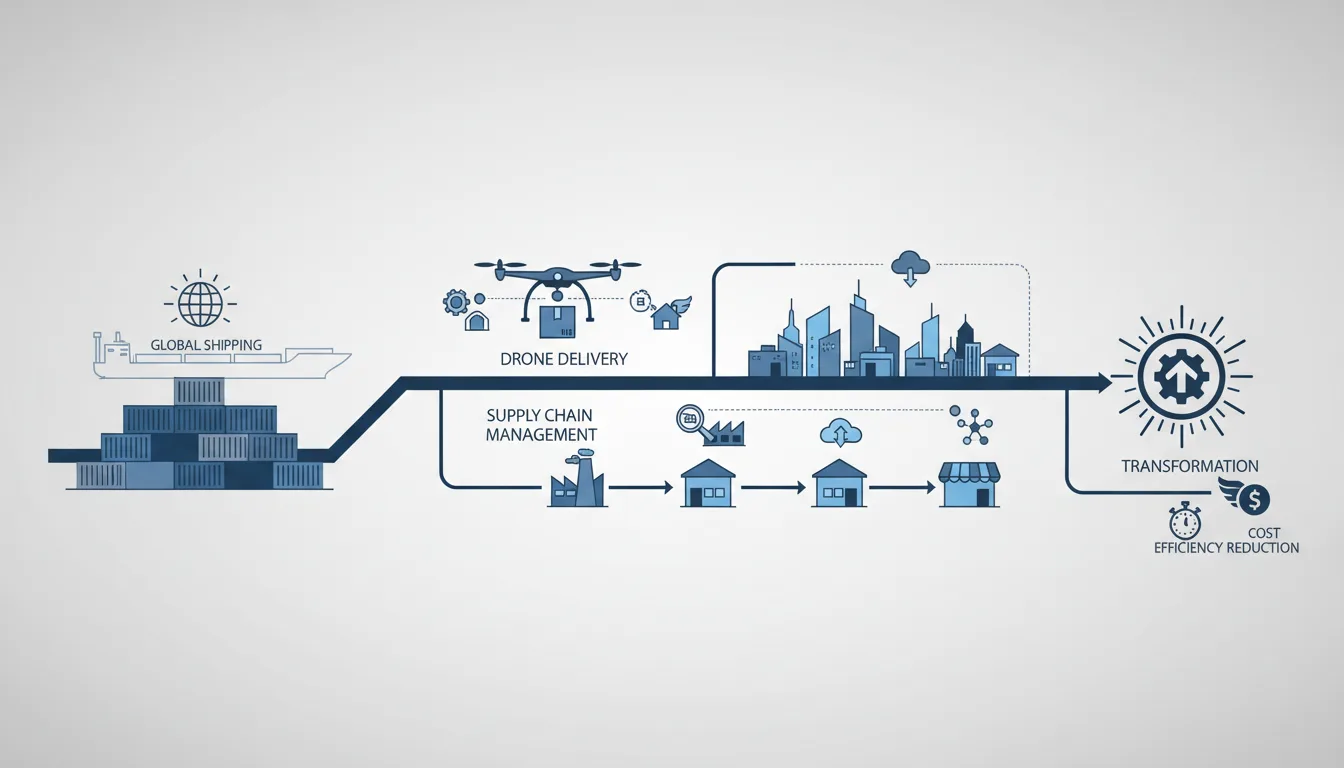
Drone Delivery: Transforming Logistics and Supply Chain Management
Overview
Drone delivery refers to the use of unmanned aerial vehicles (UAVs) to transport goods directly to consumers or businesses. This technology aims to increase efficiency and speed in the logistics and supply chain sectors. As urbanization intensifies and customer delivery expectations rise, drone delivery presents a potential solution to address challenges like traffic congestion and last-mile logistics costs. The global drone delivery market, valued at approximately $1.6 billion in 2022, is projected to reach over $31 billion by 2030, driven by advancements in automation and regulatory frameworks [3].
Etymology and Origins
The term "drone" has deep historical roots, originating from the Old English word "drān", referring to the male bee, known for its humming sound and lack of sting. This linguistic association with a buzzing, non-threatening, but functional entity was later adopted to describe early forms of unmanned aerial vehicles. Its military application emerged in the early 20th century, initially describing remotely controlled target aircraft used for anti-aircraft gunnery practice. For instance, the British called their early target aircraft the "Queen Bee" in the 1930s, and the term "drone" was popularized in the US following this naming convention.
The idea of unmanned flight for commercial purposes gained traction with the rise of modern robotics and GPS technology. While prototypes for package delivery appeared in academic and experimental settings in the late 1990s, the first significant public demonstration of a drone specifically for parcel delivery is often attributed to the German postal service DHL in 2013, shortly before Amazon's widely publicized announcement. Amazon announced its Prime Air project in 2013, showcasing the delivery potential of this technology and significantly boosting public awareness and investment in the sector.
Historical Development
Drone delivery's journey from military accessory to commercial logistics tool has been marked by technological breakthroughs and evolving regulatory landscapes.
Milestones
- 1980s-1990s: Advancements in GPS technology and miniaturization of electronics lay the groundwork for more sophisticated UAVs. Academic research into autonomous navigation begins to explore non-military applications.
- Early 2000s: Initial testing of commercial drones begins, primarily in specialized fields like agriculture for crop dusting and remote sensing, and for military reconnaissance. The concept of using UAVs for logistics is explored in nascent research [4].
- 2013: Amazon publicly announces its Prime Air initiative, intending to deliver packages within 30 minutes. This announcement sparks a global interest and investment surge in drone delivery technology [5]. DHL also conducts its first successful parcelcopter flight in Germany [6].
- 2016: The Federal Aviation Administration (FAA) in the U.S. establishes Part 107 rules for commercial drone operations, a critical step facilitating their integration into regular logistics by providing a legal framework for commercial use. Similar regulatory efforts begin across Europe and other regions.
- 2019: UPS Flight Forward receives the first FAA Part 135 certification for a drone airline, allowing it to operate as a full-fledged air carrier for package delivery [7]. This was a landmark approval enabling routine commercial operations beyond visual line of sight.
- 2020s: Companies like Zipline, Wing (a Google subsidiary), and others conduct extensive commercial deliveries. Zipline significantly expands operations for medical supplies in Rwanda and Ghana, proving the concept's viability in challenging terrains [8]. Wing launches residential drone delivery services in multiple countries, delivering consumer goods from retail partners.
Core Concepts
Drone delivery systems operate on a foundation of advanced robotics and sophisticated software. At their core, these systems utilize GPS technology for precise navigation and aerial platforms optimized for payload carriage. Key technologies and operational principles include:
- Autonomous Flight Systems: These systems enable drones to execute complex flight plans, including take-off, route following, obstacle avoidance, and landing, with minimal or no human intervention. They rely on real-time data from onboard sensors (e.g., LiDAR, cameras, ultrasonic sensors) and pre-programmed algorithms.
- Payload Systems: Drones are designed with various payload mechanisms, from simple hooks for dropping small items to sophisticated compartments for delicate medical supplies. Capacity varies significantly, from under 5 lbs for last-mile consumer goods to 50 lbs or more for larger cargo or specialized medical equipment.
- Real-time Tracking and Communication Systems: Essential for logistics management, these systems provide end-to-end visibility of the drone's journey, package status, and estimated arrival times. This data is often integrated with order management systems (OMS) to provide customers and businesses with up-to-date delivery information.
- Unmanned Aircraft System Traffic Management (UTM): A critical developing concept, UTM systems are designed to safely manage drone traffic in low-altitude airspace, preventing collisions and coordinating flight paths, much like traditional air traffic control for manned aircraft [9].
Industry Applications
Drone delivery is rapidly diversifying its applications across various sectors, demonstrating versatility and efficiency.
Use Cases
- Medical Deliveries: Zipline has been a pioneer, successfully conducting deliveries of blood, vaccines, and medical supplies to remote clinics in Rwanda and Ghana, dramatically reducing delivery times from hours to minutes and saving lives [8]. This model has since expanded to the U.S. for prescription deliveries.
- Retail and E-Commerce: Companies like Wing (a Google company) and Amazon Prime Air are actively deploying drones for fast, on-demand delivery of everyday retail items, groceries, and convenience goods. This enhances customer satisfaction by offering same-day delivery capabilities and provides a competitive edge in the last-mile segment.
- Food Delivery: Platforms like DoorDash and Uber Eats have explored and piloted drone options to meet the growing demand for quick meal deliveries, particularly for suburban and less dense urban areas where drone operations are more feasible.
- Industrial Logistics & Parts Delivery: Drones are being tested for delivering critical parts to offshore platforms, remote construction sites, or even within large industrial complexes, significantly reducing transport time and associated costs for urgent supplies.
Benefits and Advantages
Drone delivery offers numerous advantages that are reshaping logistics paradigms:
- Speed and Responsiveness: Deliveries can be completed significantly faster compared to traditional courier methods, especially in congested urban areas or challenging terrains, bypassing ground traffic and geographical barriers. This rapid response capability is crucial for time-sensitive goods like medical supplies.
- Cost Efficiency: By reducing reliance on traditional vehicles, fuel, and human labor for last-mile delivery, drones can lower operational expenses. Automated flight paths and optimized battery usage contribute to reduced overall logistics costs in many scenarios.
- Environmental Impact: Electric drones have the potential to significantly reduce carbon emissions and noise pollution compared to conventional fossil-fuel-powered delivery vehicles, aligning with global sustainability goals and corporate social responsibility initiatives.
- Access to Remote Areas: Drones can reach geographically isolated or infrastructure-poor regions that are difficult or costly for traditional vehicles, providing vital supply chain links in emergencies or for underserved populations.
Challenges and Limitations
Despite the promising advantages, several significant challenges and limitations continue to impede widespread adoption and scalability:
- Regulatory Hurdles: Navigating complex and evolving air traffic regulations remains the single largest obstacle. Issues include beyond visual line of sight (BVLOS) operations, night operations, public safety, privacy concerns, and international harmonization of airspace rules [10]. Each country and often individual regions have distinct requirements.
- Technical Limitations: Current battery life and payload capacity restrict the range, size, and weight of packages that can be delivered. Weather sensitivity (wind, rain, extreme temperatures) also limits operational windows. Furthermore, drone security against hacking or hijacking is a growing concern.
- Public Acceptance and Infrastructure: Concerns regarding noise, privacy (onboard cameras), safety (risk of crashes), and the visual impact of widespread drone traffic are significant. The lack of dedicated drone landing infrastructure (e.g., vertiports, package lockers) also complicates last-mile delivery to individual residences.
- Integration Complexity: Seamless integration with existing logistics and warehouse management systems is complex. Ensuring that drone delivery processes, from order fulfillment to final drop-off, are synchronized with warehouse operations and inventory tracking requires robust software solutions.
Best Practices
To effectively implement and scale drone delivery operations, companies should adopt a strategic, phased approach:
- Conduct Pilot Programs in Controlled Environments: Start with small-scale pilot projects in specific, controlled geographic areas. This allows for testing operational workflows, evaluating technology performance, gathering data on costs and efficiencies, and identifying unforeseen challenges before a full-scale rollout. Partnerships with local authorities are crucial.
- Engage Proactively with Regulatory Bodies: Foster collaborative relationships with aviation authorities (e.g., FAA, EASA) and local governments. Participate in regulatory discussions, contribute to safety standards development, and seek specific waivers or certifications (like FAA Part 135) to facilitate broader operations and ensure compliance with evolving safety standards.
- Invest in Integrated Technology and Automation: Implement advanced drone technology alongside robust logistics and warehouse management software. This includes AI-powered route optimization, predictive maintenance for drone fleets, and real-time inventory synchronization. Solutions that offer visual inventory management can provide enhanced oversight of drone fleet assets and their payloads.
- Prioritize Safety and Security: Develop stringent safety protocols, including redundant systems, fail-safes, and emergency landing procedures. Implement robust cybersecurity measures to protect drones from unauthorized access and data breaches. Public communication about these safety measures is key to building trust.
- Focus on Specific Use Cases: Instead of a broad deployment, identify specific niches where drone delivery offers the most significant advantages, such as urgent medical transport, remote area deliveries, or high-value, low-weight items. Expanding from these proven use cases can ensure sustainable growth.
Technology and Tools
Modern drone delivery systems are powered by a confluence of cutting-edge technologies:
- Artificial Intelligence (AI) and Machine Learning (ML): Essential for optimizing flight paths, dynamically avoiding obstacles, predicting maintenance needs, and managing drone fleets efficiently. AI algorithms can analyze real-time weather data and airspace conditions to make intelligent routing decisions.
- Cloud Computing: Provides the backbone for data synchronization, real-time tracking, fleet management, and operational analytics. Cloud platforms enable seamless communication between drones, ground control stations, and centralized logistics software.
- Advanced Sensors and Computer Vision: Drones are equipped with high-resolution cameras, LiDAR (Light Detection and Ranging), ultrasonic sensors, and thermal imaging to perceive their environment, navigate precisely, and ensure safe package placement. Computer vision allows for autonomous landing and obstacle detection.
- Enhanced Battery Technology: Ongoing research into higher energy density batteries (e.g., solid-state, hydrogen fuel cells) is crucial for extending drone range and payload capacity, overcoming current technical limitations [11].
- Blockchain Technology: While still nascent in drone logistics, blockchain could potentially enhance transparency and security in supply chain operations by providing an immutable ledger for tracking package provenance, delivery confirmation, and regulatory compliance [12].
Future Trends
Looking ahead, the drone delivery market is expected to expand dramatically as technological advancements mature and regulatory environments adapt. Key trends include:
- Increased Integration with Existing Logistics: Drones will become more seamlessly integrated into existing logistics frameworks, working in tandem with traditional ground transportation and automated warehouses. This 'hub-and-spoke' model will see drones deployed from micro-fulfillment centers or mobile delivery hubs [13].
- Expansion of Use Cases Beyond E-commerce: Beyond retail and medical, industries such as agriculture (precision delivery of pesticides/fertilizers), disaster response (delivering emergency aid), and infrastructure inspection (delivering sensors or repair kits) may increasingly rely on drone deliveries.
- Urban Air Mobility (UAM): The development of larger, more capable drone fleets and electric vertical take-off and landing (eVTOL) aircraft may offer solutions not just for logistics but also for urban passenger transportation, creating a shared airspace for both goods and people. This will necessitate advanced unmanned traffic management systems (UTM).
- Standardization and Interoperability: As the industry matures, there will be a greater push for global standards for drone hardware, software, and communication protocols, enabling greater interoperability and scalability across different providers and regions.
Conclusion
Drone delivery is poised to revolutionize logistics and supply chain management by enhancing speed, reducing costs, and offering innovative solutions to modern challenges. While significant hurdles, particularly regulatory and technical ones, remain, the progress made by pioneers in the field demonstrates its undeniable potential. As technology evolves and regulatory environments adapt, the deployment of drones in delivery services is likely to grow significantly, reshaping how goods are transported and managed in the future, providing more efficient and sustainable supply chains for a rapidly urbanizing world.
Sources
- How to Set Up Shopify Custom Fulfillment Service
- Mobile Warehouse Management System Overview
- Drone Delivery Market Size, Share & Trends Analysis Report
- A Review of Unmanned Aerial Systems for Logistics
- Amazon Prime Air: The Drone Delivery Story
- DHL Parcelcopter: Pioneering autonomous drone delivery
- UPS Flight Forward first to get FAA’s OK for package delivery by drone
- Zipline: Changing the face of logistics in Africa
- Unmanned Aircraft System Traffic Management (UTM)
- Drone delivery: Opportunities and challenges
- Recent advances in drone battery technology
- Blockchain for Drone Delivery: Opportunities and Challenges
- Drones, Automation, and the Future of Logistics
- Order Management System
- Order Fulfillment Guide
- Visual Inventory Management System
- Integrations Hub