Documentation Management in Logistics
Documentation management is crucial in logistics, ensuring accurate handling of information throughout the supply chain.
Updated
Documentation Management in Logistics
Overview
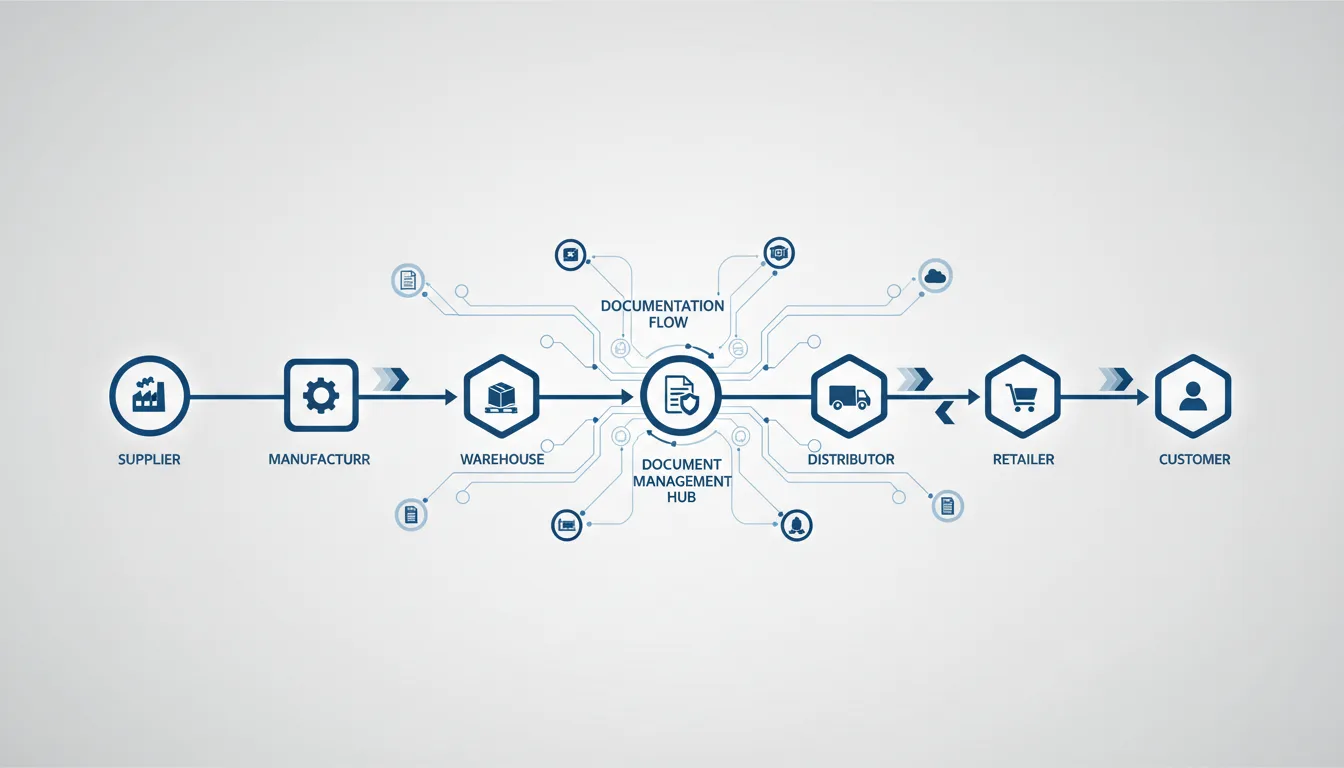
Documentation management refers to the systematic control of the creation, storage, retrieval, and eventual disposition of documents and records within an organization. In the logistics sector, effective documentation management is pivotal for streamlined operations, compliance with complex domestic and international regulations, and maintaining accurate, auditable records of transactions and processes Supply Chain Documentation: Importance, Types & Best Practices. As logistics involves numerous stakeholders—from raw material suppliers, manufacturers, and carriers to distribution centers, customs agencies, and final retail outlets or consumers—the importance of accurate, timely, and accessible documentation cannot be overstated. It serves as the legal and operational backbone of every shipment, transaction, and inventory movement, ensuring transparency and accountability across the entire supply chain.
Etymology and Origins
The term 'documentation' originates from the Latin word documentum, which means "lesson," "example," or "proof," derived from docere, "to teach." Its earliest documented usage referred to something that served to teach or provide instruction, as seen in the Online Etymology Dictionary.
By the 17th century, the English term 'document' began to denote a piece of written or printed matter that provides information or evidence. The concept of 'documentation' as the process of collecting, organizing, and preserving such materials gained prominence in the early 20th century, particularly within scientific and academic fields, focusing on the systematic arrangement of information for retrieval. Its application to business and administration, including logistics, evolved as trade became more complex and regulated, demanding rigorous record-keeping practices.
Historical Development
The need for documentation in logistics can be traced back to ancient civilizations. From early trade routes like the Silk Road, merchants used basic forms of manifests and waybills to track goods and ownership, which were crucial for accountability and dispute resolution in a pre-digital world A Brief History of the Bill of Lading.
The Industrial Revolution and Early Standardization (18th-19th Centuries)
The rise of the Industrial Revolution and mass production led to increased trade volumes and the establishment of more formal shipping processes. The development of railways and steamships necessitated standardized bills of lading and customs declarations to manage cargo across expanding networks. These documents evolved from simple notes to legally binding contracts, delineating responsibilities and liabilities between shippers, carriers, and consignees.
Post-World War II and the Information Age (Mid-20th Century)
The mid-20th century saw a significant increase in global trade and the formalization of logistics as a distinct management discipline. This era brought about greater emphasis on standardized forms and procedures to handle the burgeoning volume of international shipments. The introduction of the Uniform Commercial Code (UCC) in the United States, for instance, standardized many aspects of commercial transactions, including those related to shipping documents like bills of lading. The advent of mainframe computers in the 1960s began the slow shift from purely manual paper-based systems to computer-aided record-keeping, laying the groundwork for digital transformation.
Digitalization and EDI (Late 20th Century)
The 1980s and 1990s witnessed the widespread adoption of personal computers and the internet, fundamentally transforming documentation. Electronic Data Interchange (EDI) emerged as a crucial technology, allowing businesses to exchange logistics documents (like purchase orders, invoices, and advance ship notices) electronically, significantly reducing manual effort, errors, and processing time What is EDI? Electronic Data Interchange Explained. This period also saw the initial development of early Warehouse Management Systems (WMS) and Transportation Management Systems (TMS) that began to integrate and manage digital documentation.
Modern Era: Cloud, Automation, and Advanced Technologies (21st Century)
Today, documentation management in logistics is characterized by advanced digital solutions. Cloud-based platforms offer real-time accessibility and collaboration across global supply chains. Automation, driven by technologies like Robotic Process Automation (RPA) and Artificial Intelligence (AI), now handles routine document processing, data extraction, and validation. The use of barcodes and RFID technology has made physical tracking intrinsically linked to digital records. Furthermore, emerging technologies like blockchain are being explored for creating immutable, transparent records of transactions, enhancing trust and security in complex logistics chains. Modern WMS platforms, like SkuSavvy, seamlessly integrate these functionalities, from purchase order management to order fulfillment, providing comprehensive digital documentation capabilities.
Types of Logistics Documents
Effective documentation management requires handling a diverse array of documents throughout the logistics lifecycle. Key document types include:
- Purchase Orders (POs): Formal documents issued by a buyer to a seller, indicating types, quantities, and agreed prices for products or services. SkuSavvy's purchase order management system streamlines their creation and tracking.
- Sales Orders: Internal documents confirming a customer's order, often generated from a PO.
- Packing Lists: Itemize the contents of a shipment, including quantities, descriptions, and packaging details. Crucial for warehouse operations and customs clearance.
- Bills of Lading (BOL): A legal document issued by a carrier to a shipper, detailing the type, quantity, and destination of the goods being carried. It also serves as a receipt of shipment, a contract of carriage, and a document of title.
- Air Waybills (AWB): Similar to a BOL but for air cargo, serving as a contract of carriage between the shipper and the airline.
- Customs Declarations: Required for international shipments, providing details about the goods for import/export duties and regulations.
- Commercial Invoices: A bill for the goods from the seller to the buyer, essential for customs valuation and payment.
- Certificates of Origin: States the country in which the goods were produced, often required for preferential trade agreements or regulatory compliance.
- Proof of Delivery (POD): A signed document or electronic record confirming that the goods have been received by the consignee in good condition.
- Inventory Records: Detailed accounts of stock levels, locations, and movements, often managed within a visual inventory management system.
- Quality Control Documents: Records of inspections, testing, and compliance with quality standards.
- Return Merchandise Authorization (RMA): Authorizes the return of goods from a customer to a seller, crucial for reverse logistics processes.
Key Challenges in Documentation Management
Logistics documentation presents several significant challenges for businesses:
- Manual Processes and Human Error: Reliance on paper-based documents and manual data entry is prone to errors, delays, and inconsistencies, leading to misshipments, lost goods, and compliance issues The Challenges of Paper-Based Logistics Documentation.
- Data Silos and Lack of Integration: Disparate systems across different departments or supply chain partners can lead to fragmented information, making it difficult to get a holistic view of operations.
- Regulatory Compliance: Navigating complex and evolving international trade regulations, customs laws, and safety standards requires meticulous documentation and adherence, with penalties for non-compliance being severe.
- Security and Confidentiality: Logistics documents often contain sensitive commercial information. Ensuring their security against unauthorized access, loss, or alteration is paramount.
- Accessibility and Retrieval: Inefficient storage systems can make finding specific documents time-consuming, hindering quick decision-making and audit responses.
- Cost: Managing paper documents incurs significant costs related to printing, storage, labor, and potential errors.
- Environmental Impact: Large volumes of paper documents contribute to environmental concerns, making digitization an important sustainability initiative.
Best Practices for Effective Documentation Management
To overcome these challenges, organizations should implement robust documentation management strategies:
- Digitization and Automation: Convert paper documents to digital formats and automate processes like data entry, document routing, and archiving. Utilize mobile warehouse management systems to capture data at the source.
- Standardization: Implement consistent formats, templates, and nomenclature for all documents across the organization and with key partners. Adhere to international standards (e.g., ISO for quality management documentation).
- Centralized Document Management Systems (DMS): Employ a single, integrated platform for storing, organizing, and retrieving all logistics documents. This ensures a single source of truth and improves accessibility.
- Integration with Core Systems: Ensure the DMS integrates seamlessly with ERP, WMS, TMS, and CRM systems to facilitate data flow and reduce redundant data entry.
- Access Control and Security: Implement strict access permissions, encryption, and regular backups to protect sensitive information. Establish audit trails for all document access and modifications.
- Workflow Automation: Design automated workflows for document approval, review, and distribution, reducing bottlenecks and improving efficiency. SkuSavvy's workflow capabilities can be tailored for this purpose.
- Training and Education: Provide comprehensive training to staff on documentation procedures, system usage, and compliance requirements.
- Regular Audits and Review: Periodically audit documentation processes and records to ensure compliance, identify areas for improvement, and maintain data accuracy.
- Disaster Recovery Planning: Have a plan in place for data recovery in case of system failures or unforeseen events to ensure business continuity.
Technological Solutions
Modern logistics relies heavily on technology to manage documentation:
- Document Management Systems (DMS) / Enterprise Content Management (ECM): Dedicated software for managing the lifecycle of documents, from creation to archiving.
- Warehouse Management Systems (WMS): SkuSavvy's WMS integrates documentation for inventory receiving (e.g., PO check-in), putaway, picking, packing (e.g., packing lists), and shipping (e.g., shipping labels, manifests).
- Transportation Management Systems (TMS): Manages shipping documents like BOLs, AWBs, and customs declarations.
- Enterprise Resource Planning (ERP) Systems: Often includes modules for managing purchase orders, sales orders, and financial documents.
- Electronic Data Interchange (EDI): Standardized electronic exchange of business documents between trading partners.
- Optical Character Recognition (OCR): Technology to convert scanned images of text into machine-readable text, automating data extraction from paper documents.
- Blockchain Technology: Offers potential for creating secure, transparent, and immutable records of transactions across the supply chain, enhancing trust and reducing disputes.
Benefits of Robust Documentation Management
Implementing a robust documentation management system yields significant benefits for logistics operations:
- Improved Efficiency and Productivity: Automation and digitization reduce manual effort, speed up processes, and free up staff for more value-added tasks.
- Reduced Operational Costs: Minimizes printing, storage, and retrieval costs, and significantly lowers expenses associated with errors and delays.
- Enhanced Compliance and Risk Mitigation: Ensures adherence to regulatory requirements, reduces the risk of penalties, and provides a clear audit trail for accountability.
- Greater Data Accuracy and Visibility: Centralized digital records provide real-time, accurate information, leading to better decision-making and inventory control.
- Faster Dispute Resolution: Readily available and verifiable documents facilitate quick resolution of discrepancies with suppliers, carriers, and customers.
- Improved Customer Satisfaction: Accurate and timely documentation contributes to reliable deliveries and clear communication, enhancing the overall customer experience.
- Sustainability: Reduced paper consumption contributes to environmental sustainability goals.
By embracing modern documentation management practices and technologies, logistics companies can transform a traditionally cumbersome process into a strategic asset that drives efficiency, compliance, and competitive advantage. SkuSavvy provides tools to help manage many aspects of these digital records, from visual inventory to comprehensive order fulfillment.
Sources
- Supply Chain Documentation: Importance, Types & Best Practices
- Online Etymology Dictionary - Document
- A Brief History of the Bill of Lading
- The Evolution of Supply Chain Management: A Historical Perspective
- What is EDI? Electronic Data Interchange Explained
- The Challenges of Paper-Based Logistics Documentation