Document Management in Logistics
This article explores the role of document management in logistics, its historical development, core concepts, and best practices, targeting logistics professionals and supply chain managers.
Updated
Overview
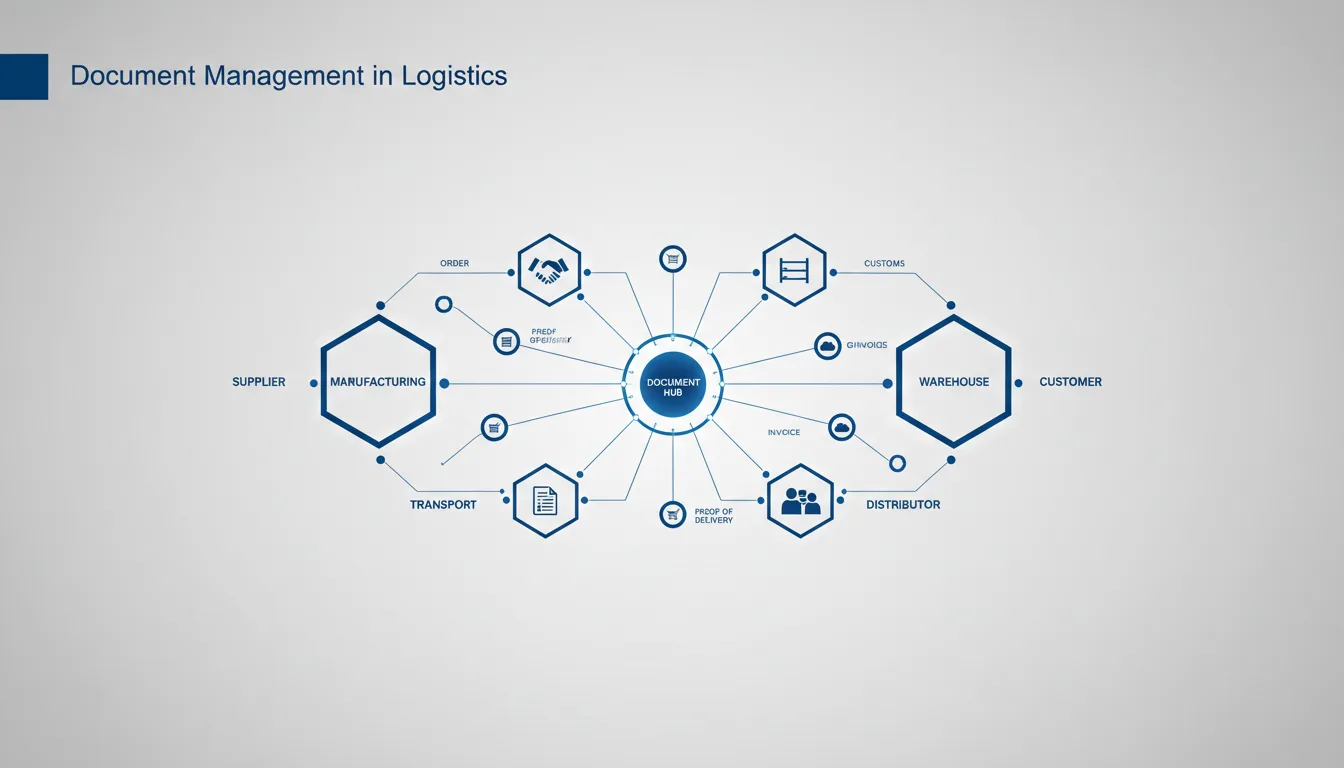
Document management in logistics refers to the systematic control of documents, both physical and digital, that are essential for the operations and record-keeping within supply chain activities. Effective document management ensures that information is easily accessible, securely stored, and properly maintained throughout its lifecycle. The importance of document management cannot be overstated; it supports compliance, enhances efficiency, and improves communication within organizations, serving as a critical component of digital transformation strategies.
Etymology and Origins
The concept of systematically organizing and preserving records has ancient roots, dating back to early civilizations that used cuneiform tablets and papyrus scrolls for administrative purposes and trade documentation [4]. Historically, the discipline was known as "records management," focusing on the lifecycle of information, from creation to disposition, often in physical archives [5].
The term "document management" as a specific technological field began to gain prominence in the late 1980s and early 1990s [6], driven by the advent of personal computing and imaging technologies. With the increasing complexity of business operations, regulatory demands, and the sheer volume of paper, industries sought more efficient methods. The term "electronic document management system" (EDMS) emerged to describe software solutions designed to capture, store, retrieve, and manage digital documents [6]. This transition from physical "records" to digital "documents" marked a significant shift, emphasizing accessibility, searchability, and workflow integration over mere archival preservation.
Historical Development
Document management's evolution mirrors the progression of information technology:
- Pre-20th Century: Manual Archiving. For centuries, document management was synonymous with records management, involving physical filing systems, libraries, and archives [5]. Methods ranged from medieval scriptoriums to the extensive card catalogs and microfiche prevalent through the mid-20th century.
- 1960s-1970s: Micrographics and Early Imaging. The rise of microfilming and microfiche offered a compact way to store paper documents, reducing physical storage space and improving retrieval times [7]. Companies like Eastman Kodak were pioneers in this field. Early computer-aided retrieval (CAR) systems were developed, indexing microfilm rolls for faster access.
- 1980s: The Dawn of EDMS. The proliferation of personal computers and optical scanners laid the groundwork for electronic document management. Early systems, often proprietary, focused on image capture (scanning) and storage on optical disks [6]. Key players like Xerox played a significant role in developing technologies for document reproduction and digital imaging, influencing the first wave of EDMS. The concept of workflow automation began to integrate with document handling during this period [8].
- 1990s: Web-Enabled Document Management & PDF. The internet revolutionized document sharing. Systems became more distributed, allowing access over networks. The introduction of Adobe's Portable Document Format (PDF) in 1993 provided a universal format for viewing and sharing documents, independent of software or hardware, which significantly accelerated digital document adoption. The term "document management system" (DMS) became widely used.
- 2000s: Enterprise Content Management (ECM) & Cloud. The scope expanded from just documents to all forms of unstructured content (emails, web pages, multimedia). This led to the concept of Enterprise Content Management (ECM), which integrated document management with records management, workflow, web content management, and digital asset management [9]. The advent of cloud computing offered scalable and accessible solutions, reducing the need for extensive on-premise infrastructure.
- 2010s and Beyond: AI, Blockchain, and Content Services Platforms. Advancements in artificial intelligence and machine learning enabled automated classification, intelligent search, and data extraction from documents. Blockchain technology began to be explored for ensuring document authenticity and integrity. The trend shifted towards "Content Services Platforms" (CSPs), which are modular, flexible, and often cloud-native, integrating with various business applications like warehouse management systems to provide content as a service [10]. Modern systems like SkuSavvy integrate advanced document and data handling with operational logistics, providing features such as mobile access to order fulfillment documents and automated purchase order management.
Core Concepts
Document management encompasses several core concepts:
- Document Capture: The process of converting physical documents into digital formats through scanning, optical character recognition (OCR), and intelligent document processing (IDP) [11]. IDP leverages AI to extract and categorize specific data points, not just convert images to text.
- Storage & Archiving: Ensuring that documents are securely stored in digital repositories, often with robust access control measures and encryption to protect sensitive information. This also includes defining retention schedules and archiving policies for legal and regulatory compliance [5].
- Version Control: Managing multiple versions of documents to track changes over time, audit revisions, and prevent errors during collaboration. This is crucial for maintaining a reliable audit trail for compliance documentation.
- Workflow Automation: Streamlining document processes, such as approvals, reviews, and distribution, to enhance efficiency and reduce manual errors. This is often facilitated by workflows integrated into logistics platforms like mobile warehouse management systems, which automate the flow of documents like pick lists, packing slips, and proofs of delivery [1].
- Metadata Management: Attaching descriptive information (metadata) to documents to improve searchability, categorization, and retrieval. Proper metadata is essential for quickly finding specific documents among vast digital archives [12].
- Information Governance: Establishing policies and procedures for how information is managed, including its creation, storage, use, retention, and disposition, to meet legal, regulatory, and operational requirements [13].
Industry Applications
Document management plays a crucial role in various logistics sectors. For instance:
- Supply Chain: Managing contracts, agreements, customs declarations, vendor invoices, quality control reports, and compliance documents is vital for smooth supply chain functioning [14]. A robust DMS supports purchase order management by centralizing all related documents, from initial vendor quotes to final delivery receipts.
- Transportation: Bills of lading (BOLs), shipping instructions, freight manifests, customs declarations, proofs of delivery (PODs), and vehicle maintenance records can be digitally managed to ensure accuracy, timeliness, and regulatory adherence [15]. This is critical for efficient shipping and fulfillment software operations, allowing for quick retrieval during audits or customer inquiries.
- Inventory Management: Accurate records of stock levels, movements, receipts, quality inspection reports, and lot and expiration date tracking can be maintained through a robust document management system, contributing to more effective visual inventory management. Digitized cycle counting sheets and audit trails are also crucial for maintaining inventory accuracy and reconciliation.
Benefits and Advantages
The advantages of an efficient document management system in logistics include:
- Enhanced Efficiency: Streamlining document access and retrieval reduces operational time and effort, automating tasks like order fulfillment processes.
- Improved Compliance: Maintaining accurate, verifiable records helps ensure adherence to international trade regulations, safety standards (e.g., ISO 9001), and industry-specific mandates, minimizing risks of fines and legal issues.
- Increased Security: Digital documents can be encrypted, access-controlled, and audited, providing higher security and disaster recovery capabilities compared to physical documents vulnerable to loss or damage [16].
- Cost Reduction: Reducing reliance on paper, physical storage, and manual processes leads to significant savings in printing, storage, and labor costs, as well as reduced errors [17].
- Better Decision-Making: Centralized, accessible information enables faster and more informed decisions across the supply chain, from procurement to delivery, by providing a single source of truth.
- Enhanced Auditability: Comprehensive audit trails document who accessed, modified, or approved a document, which is invaluable for internal audits and external regulatory checks.
Challenges and Limitations
While implementing document management solutions can offer substantial benefits, there are common challenges:
- Integration Issues: Ensuring that the document management system integrates smoothly with existing logistics software, such as ERP or WMS, can be complex, requiring careful planning and potentially custom development. This often involves careful consideration of the WMS vs ERP relationship.
- Resistance to Change: Employees may show reluctance in transitioning from traditional paper-based practices to new digital solutions, necessitating comprehensive training and change management strategies.
- Cost of Implementation: The initial investment in technology, software licenses, infrastructure, and training can be a barrier for smaller companies, though the long-term ROI of WMS and DMS often justifies it.
- Data Migration: Moving large volumes of existing physical and digital documents into a new system can be time-consuming and prone to errors.
- Security Concerns: While digital documents offer enhanced security features, they also introduce new vulnerabilities such as cyber-attacks and data breaches if not properly managed.
Best Practices
To maximize the effectiveness of document management in logistics, consider the following best practices:
- Standardization: Establishing standardized procedures for document creation, naming conventions, metadata tagging, storage, and access can streamline workflows and improve searchability. Implementing consistent workflows across the organization is key to consistency.
- Metadata Strategy: Develop a clear strategy for metadata creation and application to ensure documents are easily discoverable and categorized, enhancing retrieval efficiency and supporting automated processes [12].
- Regular Training: Providing ongoing training for employees ensures they are familiar with the document management system, its features, and the importance of data integrity [18]. This includes training on proper barcode usage for document and item tracking.
- Integration with Core Systems: Ensure seamless integration with other critical logistics systems such as Enterprise Resource Planning (ERP) systems, warehouse management systems, and order management systems to create a unified information environment and prevent data silos.
- Security and Access Control: Implement granular access permissions, encryption, and regular security audits to protect sensitive information from unauthorized access or breaches [16].
- Retention and Disposition Policies: Define clear policies for how long documents must be retained and when they can be securely disposed of, ensuring compliance with legal requirements and reducing storage clutter [5].
- Regular Audits and Review: Periodically review the document management system's performance, user adoption, and compliance effectiveness to identify areas for improvement and ensure it remains aligned with business needs.
Technology and Tools
Modern document management systems include advanced features such as:
- Cloud Storage Solutions: Offer scalability, remote access, and collaboration across different locations, crucial for geographically dispersed logistics operations and fostering real-time data sharing.
- Mobile Access: Enabling workers to access and update documents on-the-go via smartphones or tablets, which is critical in dynamic logistics environments like warehouses for mobile order fulfillment and inventory checks. This improves accuracy and speeds up processes.
- Integration with ERP/WMS Systems: Linking document management with enterprise resource planning systems and warehouse management systems can enhance overall operational efficiency by providing contextual document access within operational workflows.
- Optical Character Recognition (OCR) and Intelligent Document Processing (IDP): Automate the extraction of data from scanned documents, converting unstructured data into structured, searchable information, thereby reducing manual data entry and errors.
- Automated Workflow Engines: Automate routing, approvals, and notifications for document-centric processes, reducing manual intervention and speeding up operations. This is directly supported by platforms that offer configurable workflows.
- Audit Trails: Automatically log all actions performed on a document, including viewing, editing, and sharing, providing a complete history for compliance and accountability.
Future Trends
The future of document management in logistics seems poised for continued growth with trends like:
- Artificial Intelligence: Usage of AI to automate document classification, intelligent data extraction, sentiment analysis from customer feedback documents, and improved retrieval systems.
- Blockchain Technology: Ensuring the authenticity and integrity of documents, such as bills of lading and certificates of origin, through immutable records, enhancing trust and transparency in the supply chain.
- Increased Use of Analytics: Leveraging data analytics to gain insights into document processes, identify bottlenecks, measure efficiency, and improve service delivery.
- Hyperautomation: Combining advanced technologies like AI, machine learning, and robotic process automation (RPA) to automate virtually any repeatable task, including complex document-centric processes.
Related Concepts
Document management is closely related to several other logistics concepts:
- Information Management: Similar in scope but broader, encompassing all forms of information handling, including data, documents, and content, across an organization.
- Supply Chain Management: A field heavily reliant on effective document management for operational efficiency, transparency, and compliance across global networks.
- Data Security: The underlying requirement in any document management system to protect sensitive information across the logistics operation, ensuring confidentiality, integrity, and availability.
- Compliance Management: Ensuring that all logistics operations, including document handling, adhere to relevant laws, regulations, and industry standards (e.g., customs, health and safety, environmental).
By optimizing document management practices, logistics professionals can significantly enhance organizational efficiency and ensure regulatory compliance, ultimately contributing to overall business success.
Sources
- Mobile WMS Overview
- Visual Inventory System
- Order Management System
- Document Management: A Digital Strategy for Logistics Companies
- Records Management in the Digital Age
- The Evolution of Document Management Systems
- A Brief History of Micrographics
- Workflow Automation: Past, Present, and Future
- What is Enterprise Content Management (ECM)?
- From ECM to Content Services Platforms
- Intelligent Document Processing (IDP): The Future of Document Automation
- The Importance of Metadata in Document Management
- What is Information Governance?
- Supply Chain Document Management Best Practices
- Digital Transformation in Transportation and Logistics
- Document Security in the Digital Age
- Cost Savings with Document Management Systems
- Employee Training for Document Management Systems
- Workflows Overview
- Purchase Order Management
- Mobile Order Fulfillment Software
- Shipping & Fulfillment Software
- Lots & Expiration Dates
- Cycle Counting Guide
- Order Fulfillment Guide
- WMS vs ERP Analysis
- WMS ROI Calculator
- Barcodes Guide