Distribution Requirements Planning
Distribution Requirements Planning (DRP) is a vital logistical strategy aimed at optimizing inventory levels and efficient distribution channels.
Updated
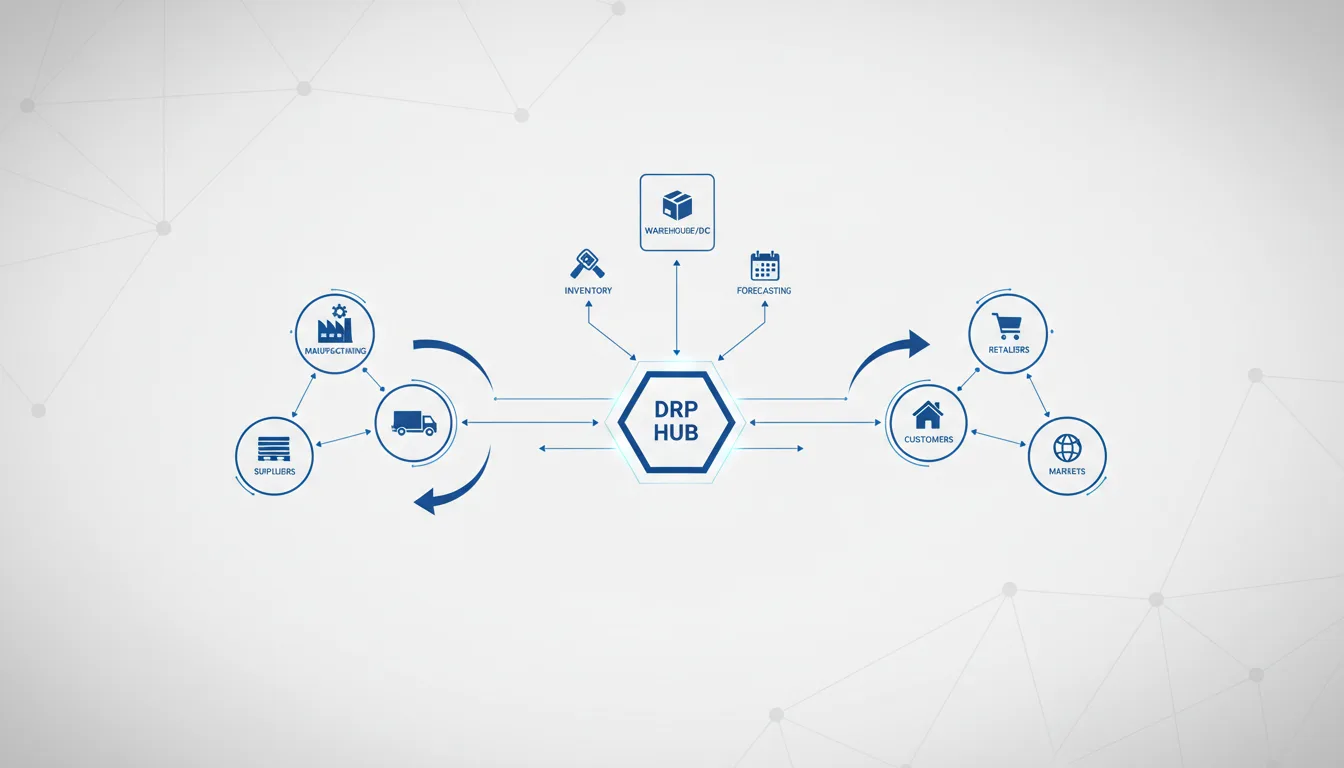
Distribution Requirements Planning
Overview
Distribution Requirements Planning (DRP) is a systematic, time-phased approach to managing inventory and distribution processes across a supply chain. It acts as a critical link, translating forecasted customer demand into specific replenishment plans for every stock-keeping unit (SKU) at each distribution center (DC) or warehouse within a network [1]. The primary objective of DRP is to ensure that the right products are available in the right locations at the right time, thereby optimizing inventory levels, minimizing stockouts, and reducing overall logistics costs. In an increasingly complex global market characterized by fluctuating demand and extended lead times, effective DRP is crucial for enhancing customer satisfaction and maintaining a competitive advantage.
Etymology and Origins
The term 'Distribution Requirements Planning' (DRP) emerged in the late 1970s and became formalized in the early 1980s [4]. It represents a logical extension of Material Requirements Planning (MRP), which focuses on planning raw materials and components for manufacturing. As businesses grew more complex and supply chains extended, there was a recognized need for a similar systematic planning approach for finished goods distribution [5].
Linguistically, DRP directly mirrors MRP, substituting 'Distribution' for 'Material' to indicate a shift in focus from internal production components to external distribution network needs. While MRP answered 'what materials are needed for production?', DRP sought to answer 'what products are needed at each distribution node, and when?'
This conceptual leap was championed by industry pioneers such as Andre J. Martin, whose seminal 1983 book, DRP: Distribution Resources Planning, codified the methodologies and brought widespread attention to the concept [6]. Martin emphasized that DRP was not just about planning requirements but also about planning the resources necessary to meet those requirements, linking logistics, transportation, and warehousing into a cohesive system. This marked a significant evolution from simpler reorder point systems, moving towards a more predictive and interconnected approach to inventory management across the entire distribution network [5].
Historical Development
DRP methodologies began to gain significant traction in the late 20th century, particularly driven by technological advancements and the increasing complexity of global supply chains.
- Pre-1970s: Traditional Inventory Management: Before the advent of systematic planning, inventory management often relied on reorder point systems, manual tracking, and aggregate forecasting. This often led to either stockouts or excessive inventory, especially in multi-echelon distribution networks [5].
- 1960s-1970s: The Rise of MRP: The development of Material Requirements Planning (MRP) in the 1960s, pioneered by companies like IBM and popularized by Joseph Orlicky, revolutionized manufacturing planning [7]. MRP demonstrated the power of backward scheduling from a master production schedule to determine component needs. However, MRP primarily focused on internal manufacturing and didn't explicitly address the complexities of distributing finished goods to multiple warehouses and customer locations.
- Late 1970s - Early 1980s: Birth of DRP: Recognizing this gap, logistics experts began adapting MRP principles for distribution. Andre J. Martin's work was instrumental during this period, outlining how to use a time-phased approach to plan distribution center inventory and replenishment, effectively linking factory output to market demand [6]. This era saw the first dedicated DRP software solutions emerge, often as standalone modules or custom applications.
- 1990s: ERP Integration and Globalization: The advent of Enterprise Resource Planning (ERP) systems in the 1990s provided a platform for integrating DRP functionality with other business processes like manufacturing, finance, and sales. This allowed for better data synchronization and a holistic view of the supply chain [8]. Globalization also accelerated DRP adoption, as businesses needed more sophisticated tools to manage international distribution networks, longer lead times, and diverse market demands.
- 2000s: E-commerce and Advanced Analytics: The explosion of e-commerce created new pressures for faster, more accurate fulfillment. DRP systems evolved to incorporate more sophisticated demand forecasting models, often leveraging statistical methods and historical sales data. The focus shifted towards optimizing the 'last mile' and integrating with warehouse management systems for operational efficiency [9].
- 2010s - Present: AI, IoT, and Resilience: The current era of DRP is characterized by the integration of advanced technologies like Artificial Intelligence (AI) and Machine Learning (ML) for predictive analytics, anomaly detection, and dynamic optimization of distribution plans. The Internet of Things (IoT) provides real-time visibility into inventory and transit, enabling more responsive adjustments. Furthermore, recent global disruptions have highlighted the critical role of DRP in building supply chain resilience, focusing on scenario planning, risk management, and diversification of distribution strategies [10].
Important publications in this field include the seminal works of experts like Gianluca Spina [2] on supply chain planning, and Edward A. Silver [3] for foundational inventory management principles, both of whose contributions laid the groundwork for modern inventory and distribution practices.
Core Concepts
At its core, DRP involves hierarchical planning and forecasting techniques that help businesses make informed decisions about inventory replenishment and distribution networks. Key components and considerations of DRP include:
- Demand Forecasting: Utilizing historical sales data, promotional plans, and market intelligence to predict future customer demand at various distribution nodes. This often involves statistical models and collaborative forecasting techniques.
- Inventory Control: Determining optimal safety stock levels, reorder points, and replenishment quantities for each SKU at each location, considering lead times, demand variability, and service level targets. DRP aims to balance inventory carrying costs with the risk of stockouts.
- Distribution Network Design: Assessing the current and future logistics infrastructure to optimize transportation routes, warehouse locations, and inventory placement strategies. This includes decisions on centralized vs. decentralized stocking.
- Lead Times: Accurately factoring in supplier lead times, internal transfer times, and transportation times is crucial for DRP's time-phased planning.
- Bill of Distribution (BOD): Similar to a Bill of Materials (BOM) in MRP, a BOD outlines the structure of the distribution network, showing where products are stored and how they flow from central warehouses to regional ones and then to customers [11].
These components work together to create a cohesive strategy for managing distribution effectively and efficiently, often integrating with a visual inventory management system for real-time visibility.
Industry Applications
DRP is widely utilized across various sectors due to its ability to synchronize supply and demand across diverse distribution channels:
- Retail: Ensuring optimal stock levels in stores and e-commerce fulfillment centers to meet customer needs while minimizing holding costs. Retail giants like Walmart utilize sophisticated DRP systems to coordinate their extensive network of distribution centers and thousands of stores, ensuring shelves are stocked and online orders are fulfilled efficiently [12].
- Manufacturing: Managing the distribution of finished goods from factory to regional warehouses and ultimately to customers. DRP is crucial here for translating production schedules into actionable distribution plans, maintaining optimal inventory buffers, and meeting delivery timelines for a diverse product portfolio. It also informs the timing of raw material and component purchase order management by feeding requirements back to MRP.
- E-commerce: Leveraging DRP to streamline fulfillment processes, manage inventory across multiple fulfillment centers, and enhance customer satisfaction through timely, cost-effective deliveries. Companies use DRP to handle rapid fluctuations in online demand and manage complex return logistics [13].
- Healthcare: Managing the distribution of medical supplies, pharmaceuticals, and equipment to hospitals, clinics, and pharmacies, where timely and accurate delivery can be critical for patient care.
- Food & Beverage: Addressing challenges like perishability, cold chain management, and varying seasonal demand to ensure fresh products reach consumers efficiently and safely.
Benefits and Advantages
The implementation of DRP offers numerous benefits, such as:
- Improved Inventory Management: By synchronizing inventory levels with actual demand, businesses can reduce excess stock, minimize stockouts, and lower associated holding costs.
- Enhanced Customer Satisfaction: Timely delivery of products, fewer backorders, and improved service levels lead to greater customer loyalty and uplifted relations.
- Cost Efficiency: Optimizing distribution channels, transportation routes, and inventory placement leads to reduced transportation, warehousing, and operational costs.
- Better Resource Utilization: DRP helps in planning labor, equipment, and storage space requirements more accurately, avoiding costly under or over-utilization.
Challenges and Limitations
While DRP presents many advantages, it also comes with challenges:
- Data Accuracy: The effectiveness of DRP relies heavily on accurate and up-to-date data, especially for demand forecasts, lead times, and current inventory levels. Inaccurate forecasts can lead to costly stockouts or overstock situations [14].
- Complexity of Supply Chains: With global supply chains becoming more intricate, managing numerous variables, multiple echelons, and diverse product portfolios can be daunting, necessitating robust planning systems and skilled personnel.
- Integration with Existing Systems: Ensuring DRP systems seamlessly integrate with other supply chain management tools (like ERP, WMS, TMS) can pose significant operational and IT hurdles.
- Bullwhip Effect: DRP can be susceptible to the bullwhip effect, where small fluctuations in retail demand can cause increasingly larger fluctuations in orders upstream in the supply chain, if not managed carefully with collaborative planning.
Best Practices
To maximize the effectiveness of DRP, organizations should consider the following best practices:
- Robust Data Analytics and Forecasting: Utilize advanced analytics tools and techniques to enhance forecasting accuracy, identify demand patterns, and ensure high inventory visibility. This includes incorporating external factors like economic trends and competitor actions [14].
- Collaborative Planning, Forecasting, and Replenishment (CPFR): Engage all stakeholders within the supply chain – including suppliers, manufacturers, distributors, and retailers – in a collaborative planning process to ensure a unified approach and shared demand signals.
- Continuous Monitoring and Adjustment: Implement systems that allow for real-time performance tracking, exception reporting, and rapid adjustments based on changing market conditions, supply disruptions, or unexpected demand spikes. Leveraging a mobile warehouse management system tools enables real-time updates and operational flexibility.
- Tiered DRP Implementation: Start with a high-level DRP plan and progressively refine it into more detailed plans for individual warehouses and product lines, leveraging automation and workflows where possible.
- Strategic Use of Technology: Invest in modern DRP software that integrates with ERP, WMS, and TMS (Transportation Management Systems) to automate processes, improve data accuracy, and provide decision support [15].
Technology and Tools
Modern DRP solutions leverage technology to enhance their effectiveness:
- ERP Systems: These enterprise-wide systems often incorporate DRP capabilities, allowing for better synchronization between supply chain elements, from production planning (MRP) to customer order fulfillment. Companies like SkuSavvy offer integrated Order Management Systems [1] and Purchase Order Management features that support DRP's output by streamlining procurement and fulfillment.
- Dedicated DRP Software: Specialized DRP software provides advanced features for multi-echelon inventory optimization, sophisticated forecasting algorithms, and scenario planning, often as modules within broader supply chain planning suites.
- AI and Machine Learning: These technologies enable predictive analytics that can significantly improve demand forecasting accuracy, identify optimal inventory placement, and even suggest dynamic pricing or promotion strategies. They can analyze vast datasets to uncover patterns beyond traditional statistical methods.
- Warehouse Management Systems (WMS): A robust WMS, such as a mobile warehouse management system, is critical for executing the detailed replenishment plans generated by DRP. It manages inbound receipts, inventory storage (e.g., bin put-away criteria), order picking, and outbound shipping, providing real-time inventory updates back to the DRP system.
- Transportation Management Systems (TMS): These systems optimize freight routes, carrier selection, and load consolidation, translating DRP's replenishment quantities into efficient shipping plans.
Future Trends
As technology continues to evolve, the future of DRP will likely see:
- Increased Automation: More automated systems will be developed to handle DRP tasks, reducing manual intervention and increasing response speed. This includes automated order generation and dynamic routing adjustments.
- Integration with IoT: The Internet of Things will enhance data collection capabilities through smart sensors on inventory, vehicles, and warehouse equipment, allowing for more granular, real-time visibility and responsive distribution networks.
- Sustainability Focus: There will be a growing emphasis on sustainable practices in distribution, influencing how companies strategize their supply chains to minimize carbon footprint, optimize routes, and reduce waste.
- Resilience and Agility: DRP systems will increasingly incorporate advanced risk management and scenario planning capabilities to help supply chains become more resilient and agile in the face of disruptions.
Related Concepts
DRP is closely related to several other logistics and supply chain planning concepts, forming a hierarchy of planning within an organization:
- Sales and Operations Planning (S&OP): A high-level, cross-functional planning process that balances demand and supply at the aggregate level. S&OP provides the overall production and inventory goals that DRP then breaks down for the distribution network.
- Master Production Schedule (MPS): The MPS specifies what products will be produced, when, and in what quantities. DRP takes the finished goods output from the MPS as an input to plan their distribution.
- Material Requirements Planning (MRP): Focuses on raw materials, sub-assemblies, and components needed for production, taking input from the MPS. DRP complements MRP by focusing on the finished goods after production.
- Just-In-Time (JIT): A manufacturing and inventory strategy that works hand-in-hand with DRP to minimize inventory costs by receiving goods only as they are needed. DRP helps synchronize the flow of goods to support JIT principles in distribution.
- Warehouse Management System (WMS): While DRP plans inventory movement, a WMS executes those plans within the physical warehouse, managing inventory receipt, storage, picking, and shipping. A visual inventory management system can offer a real-time view of inventory as managed by the WMS, informing DRP decisions.
As businesses navigate the complexities of modern supply chains, effective DRP will remain a critical function in ensuring operational success, optimizing costs, and ultimately enhancing customer satisfaction.
Sources
- Order Management System
- Order Management System
- An Integrated Approach to Supply Chain Planning and Control
- Inventory Management and Production Planning and Scheduling
- History of Logistics & Supply Chain Management
- DRP: Distribution Resources Planning: Distribution Management's Most Powerful Tool
- Orlicky's Material Requirements Planning
- Mobile Warehouse Management System
- ERP Systems and Supply Chain Management: An Empirical Investigation
- Supply Chain Management: Strategy, Planning, and Operation
- How Walmart Optimizes Its Supply Chain
- Purchase Order Management
- Visual Inventory Management System
- The Impact of Data Accuracy on Supply Chain Performance
- Workflows Overview
- Bin Put-Away Criteria
- The Future of Supply Chain: AI, IoT, and Resilience
- E-commerce Logistics and Supply Chain Management
- Implementing Advanced Planning Systems