Distribution Management
An overview of distribution management, its history, core concepts, and best practices for effective logistics and supply chain operations.
Updated
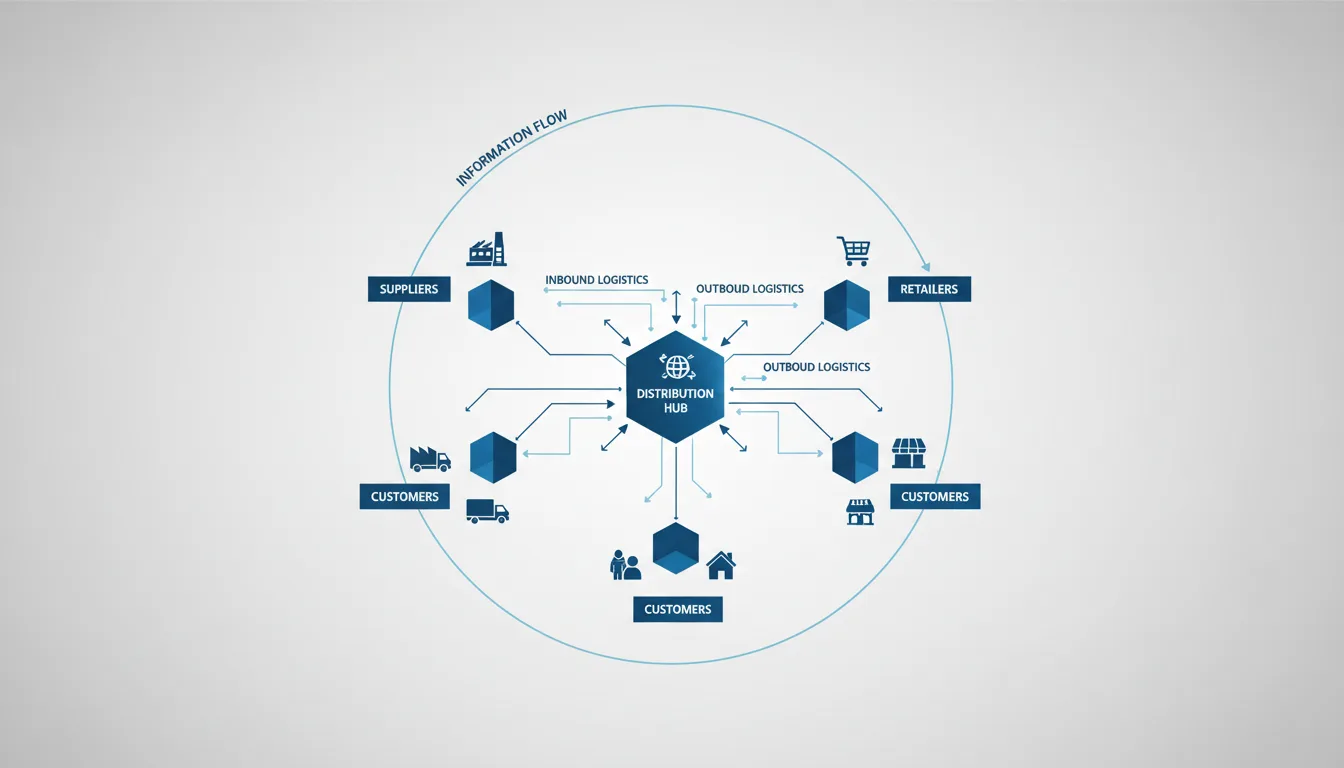
Distribution Management
Overview
Distribution management is a crucial component of supply chain management that encompasses the planning, implementing, and controlling of the flow and storage of goods and services from the point of origin to the point of consumption. It aims to ensure that products are delivered efficiently and effectively to meet customer demand. Given the significant impact of distribution on customer satisfaction and operational costs, organizations strive for optimized distribution strategies to enhance their competitiveness and achieve strategic advantage.
Etymology and Origins
The term "distribution" originates from the Latin word distributio, meaning "apportioning" or "sharing out." The concept of moving goods from producers to consumers is as old as civilization itself. Early forms of distribution can be traced back to ancient trade routes like the Silk Road (active from 2nd century BCE) and maritime trade networks of the Roman Empire (1st-5th century CE), which facilitated the movement of goods over vast distances [6]. During these periods, distribution involved rudimentary warehousing, basic transportation (pack animals, carts, ships), and a network of merchants and traders who acted as early intermediaries. The systematic study and management of these processes, however, only gained prominence with the advent of mass production.
Historical Development
Distribution management has seen considerable evolution over the years, driven by technological advancements, economic shifts, and changes in consumer behavior:
- Ancient & Medieval Eras: Distribution was primarily localized or reliant on rudimentary trade networks. Goods moved via human porterage, animal transport, river barges, and sailing vessels. Storage was often decentralized, and inventory levels were low due to limited production capacities and high transportation costs [7].
- Industrial Revolution (late 18th - early 19th centuries): The rise of factory systems and mass production led to a dramatic increase in goods, necessitating more organized methods of moving products from factories to markets. The development of canals, steamships, and later railroads revolutionized transportation, enabling goods to be distributed over wider geographic areas. This era heightened the need for systematic logistical frameworks to manage the movement of goods [8].
- Early 20th Century (1900s-1940s): With the advent of scientific management principles by pioneers like Frederick W. Taylor and the assembly line innovations of Henry Ford, companies began to focus on efficiency in production and distribution. The trucking industry emerged, providing flexible door-to-door delivery, complementing rail and sea transport. Standardization of packaging and shipping containers began to take hold.
- Mid-20th Century (1950s-1970s): This period saw significant advancements in infrastructure and logistics theory. The concept of containerization, pioneered by Malcolm McLean in the mid-1950s, revolutionized intermodal freight transport, dramatically reducing shipping costs and transit times [9]. The first commercial computers also began to be used for inventory control and basic logistics calculations, marking the dawn of digital distribution management.
- Late 20th Century (1980s-1990s): The rise of information technology facilitated the development of sophisticated systems for inventory management and logistics. The adoption of Just-In-Time (JIT) manufacturing principles, popularized by Toyota, emphasized minimizing inventory and waste, thereby transforming distribution into a highly precise and responsive operation. Warehouse Management Systems (WMS) and Enterprise Resource Planning (ERP) systems became integral, centralizing data and automating processes across the supply chain. The emergence of third-party logistics (3PL) providers also allowed companies to outsource their distribution functions, focusing on core competencies.
- 21st Century (2000s-Present): The integration of e-commerce has profoundly transformed distribution approaches, emphasizing speed, flexibility, and direct-to-consumer fulfillment. Global supply chains became more intricate, leading to a greater focus on supply chain visibility, risk management, and sustainability. Advanced analytics, Artificial Intelligence (AI), and Machine Learning (ML) are now employed for demand forecasting, route optimization, and autonomous operations within warehouses and transportation networks. Technologies like mobile order fulfillment software have become essential for modern distribution centers.
Core Concepts
At its core, distribution management involves several key processes, all aimed at optimizing the flow of goods:
- Order Processing: Efficiently handling the order capture, picking, packing, and shipping of products. Modern order management systems integrate with inventory and shipping to automate much of this process, ensuring accuracy and speed from customer click to delivery. Solutions like pick, pack, ship software are critical for streamlining these steps.
- Inventory Management: Maintaining optimal inventory levels to meet demand without overstocking or stockouts. This includes tracking goods, managing storage locations, and implementing strategies like ABC analysis to prioritize items. Techniques like cycle counting are commonly employed for accuracy, and managing lots and expiration dates is crucial for perishable or regulated goods.
- Transportation Management: Selecting the best methods and routes for product delivery to minimize costs and maximize efficiency. This involves carrier selection, freight optimization, and ensuring compliance with shipping regulations. Tools that integrate automated rate selection help choose the most cost-effective shipping options.
- Warehouse Operations: Implementing effective warehouse layouts and storage strategies, such as optimizing storage through a visual warehouse layout or utilizing practices like cross-docking to streamline product flow. This also includes efficient picking strategies like batch picking and pick-to-tote to improve throughput.
Types and Classifications
Distribution management can be divided into various types based on the nature of goods and customer needs:
- Direct Distribution: Products are distributed directly from manufacturers to consumers, commonly seen in e-commerce and direct-to-consumer (D2C) brands. This model offers greater control over the customer experience and brand message.
- Indirect Distribution: Involves intermediaries, such as wholesalers, distributors, and retailers, to reach end consumers. This method can provide broader market reach and leverage existing retail infrastructure.
- Omnichannel Distribution: Integrates various channels (physical stores, online, mobile) to provide a seamless customer experience. Customers can buy online and pick up in-store (BOPIS) or return online purchases at a physical location, demanding highly synchronized inventory and fulfillment processes.
- Reverse Logistics: The process of moving goods from their final destination back to the supplier for returns, recycling, repair, or disposal. This is a critical but often overlooked aspect of distribution, impacting sustainability and customer retention.
- Forward Logistics: The traditional flow of products from the point of origin to the point of consumption, encompassing all activities involved in getting goods to the customer.
Industry Applications
Distribution management plays a vital role in various sectors, underpinning their ability to serve customers and operate efficiently:
- Retail Industry: Efficient distribution ensures that products are available on shelves when customers need them, positively impacting sales and preventing stockouts. For online retailers, rapid and accurate fulfillment is a key differentiator.
- Manufacturing: Timely delivery of raw materials to production facilities is crucial for maintaining production schedules and minimizing downtime, often managed through just-in-time (JIT) deliveries. The distribution of finished goods to wholesalers and retailers is equally important.
- E-Commerce: Rapid fulfillment capabilities are essential to meet consumer expectations for quick delivery and free shipping, showcasing the need for robust distribution strategies and mobile order fulfillment software.
- Healthcare/Pharmaceuticals: Distribution management is critical for the safe and timely delivery of sensitive products like vaccines and medicines, often requiring cold chain logistics and strict regulatory compliance.
- Automotive: Manages the complex flow of components to assembly plants (often JIT) and the distribution of finished vehicles to dealerships worldwide.
Benefits and Advantages
Effective distribution management offers numerous advantages that contribute to a company's success and resilience:
- Cost Reduction: Streamlined distribution processes can significantly reduce transportation, warehousing, and inventory holding costs. Optimized routes and efficient warehouse layouts contribute directly to the bottom line.
- Enhanced Customer Satisfaction: Timely, accurate, and damage-free deliveries improve customer experiences, leading to brand loyalty, repeat purchases, and positive word-of-mouth.
- Operational Efficiency: Properly managed distribution channels lead to better inventory control, optimized resource allocation, and improved throughput in warehouses and transit.
- Competitive Advantage: Companies with superior distribution capabilities can offer faster delivery, wider product availability, and more reliable service, setting them apart from competitors.
- Market Expansion: Efficient distribution networks enable businesses to reach new geographic markets and customer segments more effectively.
Challenges and Limitations
While distribution management is vital, it faces several persistent and emerging challenges:
- Demand Fluctuations: Sudden changes in customer demand, often seasonal or influenced by economic factors, can create significant challenges for inventory management and fulfillment, leading to either stockouts or excess inventory.
- Logistical Complexity: The growing number of distribution channels (e.g., e-commerce, retail, wholesale), global supply chains, and evolving customer expectations (e.g., same-day delivery) make logistics increasingly intricate.
- Technology Integration: Implementing and maintaining advanced technologies, such as warehouse automation, AI-driven analytics, and IoT devices, can be resource-intensive, requiring significant investment and skilled personnel.
- Transportation Costs & Infrastructure: Volatile fuel prices, driver shortages, and aging or inadequate transportation infrastructure can impact delivery times and costs.
- Sustainability Pressures: Growing environmental concerns and regulatory pressures require companies to adopt more eco-friendly distribution methods, such as optimizing routes to reduce emissions and using sustainable packaging.
- Geopolitical Risks: Trade wars, natural disasters, and pandemics can disrupt global supply chains, highlighting the need for robust risk management strategies.
Best Practices
To navigate these challenges and maximize the benefits, organizations adopt several best practices in distribution management:
- Data-Driven Decision Making: Utilizing advanced analytics and business intelligence for demand forecasting, inventory optimization, and route planning can significantly improve efficiency and responsiveness. AI-powered insights provide predictive capabilities for better planning.
- Continuous Improvement: Regularly evaluating distribution strategies and processes to identify areas for enhancement, adopting lean principles, and implementing feedback loops ensure adaptability in a changing market.
- Collaboration: Building strong, transparent relationships with suppliers, carriers, and 3PL partners can enhance flexibility, responsiveness, and information sharing across the supply chain.
- Supply Chain Visibility: Implementing technologies that provide real-time tracking and monitoring of goods in transit and in storage allows for proactive problem-solving and better decision-making.
- Risk Management & Resilience: Developing contingency plans for disruptions, diversifying suppliers and routes, and building agile supply chains are crucial for mitigating risks from unforeseen events.
Technology and Tools
Modern distribution management relies heavily on advanced technology to optimize operations:
- Warehouse Management Systems (WMS): Solutions like the Visual Inventory Management System and Mobile Warehouse Management Systems improve productivity, accuracy, and efficiency in inventory control, order fulfillment, and overall warehouse operations. They facilitate processes like stock replenishment and bin put-away criteria.
- Transportation Management Systems (TMS): These systems help manage the planning, execution, and optimization of transportation activities. They assist with route optimization, carrier selection, freight auditing, and compliance, often integrating with tools for automated rate selection and managing complex shipping requirements like multi-box shipments.
- Order Management Systems (OMS): These systems centralize order information from various channels, streamline order processing, and coordinate fulfillment activities, integrating seamlessly with WMS and TMS for end-to-end efficiency.
- Automated Solutions: Robotics (e.g., Autonomous Mobile Robots - AMRs), Automated Storage and Retrieval Systems (AS/RS), and conveyor systems in warehousing speed up processes like picking, packing, and sorting. Bin packing visualizers can optimize container utilization.
- Predictive Analytics & AI/ML: Used for demand forecasting, optimizing inventory levels, predicting potential supply chain disruptions, and dynamic route adjustments.
- Internet of Things (IoT): Sensors and IoT devices provide real-time data on product location, environmental conditions (e.g., temperature for cold chain), and asset utilization.
Future Trends
Looking ahead, distribution management will likely evolve through several transformative trends:
- Increased Automation: Advancements in robotics, drones for inventory counting, and AI will further enhance the efficiency and reduce labor dependency in distribution centers, leading to lights-out operations in some cases.
- Sustainability Practices: More companies will focus on environmentally friendly distribution methods, such as optimizing transportation routes to reduce emissions, adopting electric vehicles, sustainable packaging, and reverse logistics programs for circular economy initiatives.
- Blockchain Technology: This may improve transparency, traceability, and security across the supply chain by providing an immutable ledger for transactions and product movements, aiding in dispute resolution and compliance.
- Hyper-personalization & Last-Mile Innovation: Growing consumer demand for personalized and rapid delivery will drive further innovation in last-mile logistics, including drone delivery, crowd-sourced delivery, and micro-fulfillment centers.
- Digital Twins: Creation of virtual models of physical supply chains and distribution networks to simulate scenarios, optimize performance, and predict outcomes before implementing changes in the real world.
Related Concepts
Distribution management is closely related to several logistics concepts, forming an integral part of the broader supply chain ecosystem:
- Supply Chain Management: Encompassing broader logistics efforts, including procurement, manufacturing, and product delivery, with distribution management as a key downstream component.
- Inventory Management: A critical aspect of ensuring efficient distribution and fulfillment processes, focused on optimizing stock levels and locations.
- Logistics Operations: The comprehensive management of resources as they flow from point of origin to consumer, with distribution management being a specialized subset.
- Demand Planning: The process of forecasting customer demand to inform production schedules and inventory levels, directly impacting distribution strategies.
- Procurement: The process of acquiring goods and services, which directly feeds into the inbound logistics and distribution of raw materials for manufacturing or finished goods for resale.
Sources
- Mobile WMS Overview
- Cycle Counting Guide
- Cross-Docking Guide
- Visual Inventory System
- Automated Rate Selection
- Roman Trade - World History Encyclopedia
- The History of Technology - Volume 2: The Mediterranean Civilizations and the Middle Ages c. 700 BC to c. AD 1500
- The First Industrial Revolution: Causes, Inventions, and Impact
- History of Containerization - U.S. Department of Energy
- Order Management System
- Pick, Pack, Ship Software
- Lots & Expiration Dates
- Visual Warehouse Layout
- Bin Put-Away Criteria
- Batch Picking Guide
- Pick-to-Tote Guide
- Cold chain - WHO
- Stock Replenishment Guide
- Multi-Box Shipping
- Bin Packing Visualizer
- AI in Supply Chain Planning - Accenture