Device Management in Logistics
An overview of device management, its importance in logistics, historical context, core concepts, and current technologies.
Updated
Overview
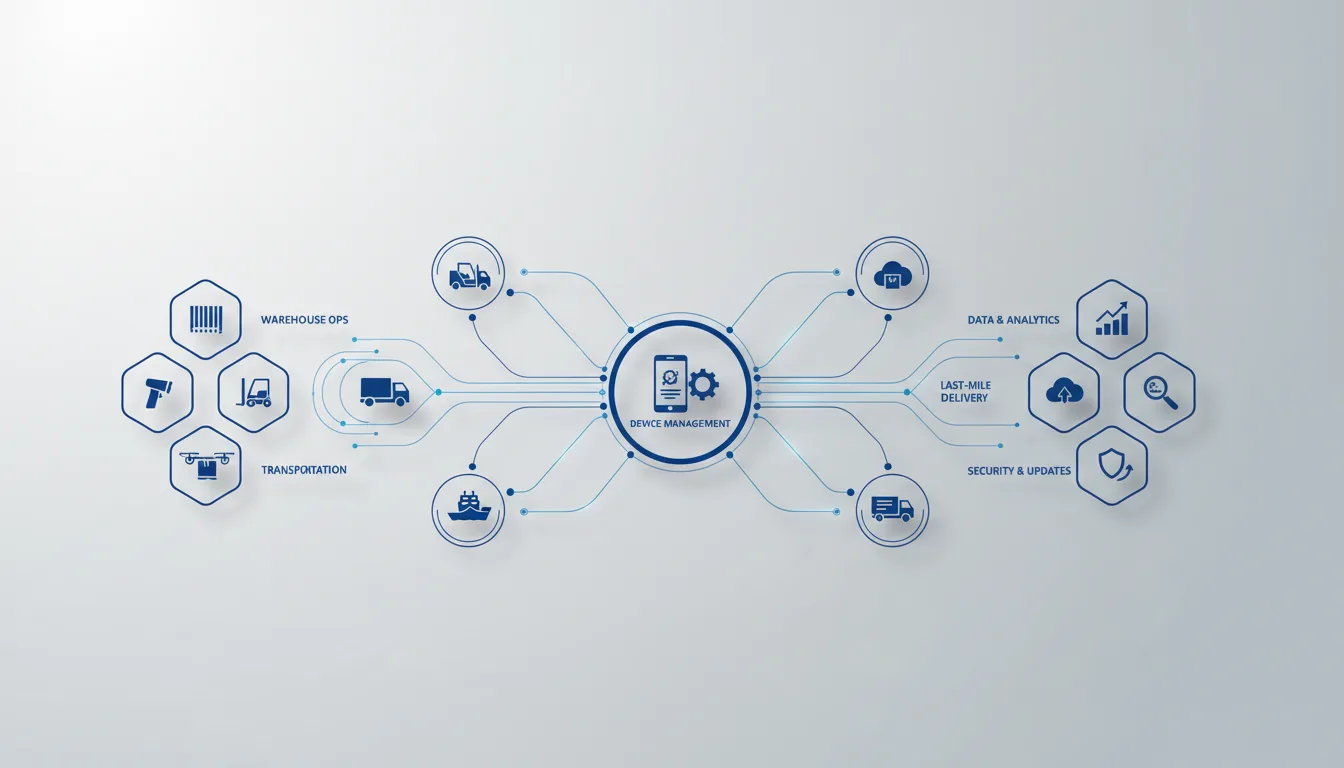
Device management refers to the comprehensive administration and optimization of various hardware and software assets used within logistics and supply chain operations. This includes ensuring that devices are operational, appropriately configured, secure, and performing optimally throughout their lifecycle. Effective device management is not merely about maintenance; it’s a strategic imperative that significantly enhances operational efficiency, minimizes downtime, reduces costs, and improves the overall management and visibility of complex logistics processes. As logistics becomes increasingly reliant on digital transformation and sophisticated technologies, robust device management has become critical in maintaining a competitive advantage.
Etymology and Origins
The concept of 'device management' as a distinct discipline began to solidify with the proliferation of networked computing devices. While the management of physical equipment has always existed, the term gained prominence in the information technology sector during the late 1980s and early 1990s with the rise of personal computers, client-server architectures, and local area networks (LANs). Initially, it encompassed managing peripheral devices connected to mainframes or servers.
In the context of logistics, the term specifically evolved as operations began to adopt electronic devices for tasks like inventory control and material handling. Early forms of 'device management' in logistics were primarily focused on the hardware maintenance of data capture terminals and simple computers. As logistics technologies became more sophisticated, incorporating barcode scanners, portable data terminals (PDTs), and eventually wireless devices, the scope expanded to include software deployment, configuration, security, and connectivity, reflecting the growing complexity and interdependence of modern logistics technologies.
Historical Development
Device management in logistics has evolved dramatically, paralleling advancements in computing and automation:
- 1960s-1970s: Mainframe Era: Early forms of inventory and order processing were handled by large mainframe computers, primarily in data centers. Device management was minimal, focusing on the core system and attached peripherals like printers and tape drives. The emphasis was on data processing rather than distributed device control.
- 1980s: Dawn of Automation: The introduction of personal computers and specialized industrial terminals began to decentralize data entry. Early barcode scanners emerged, requiring basic connectivity and occasional troubleshooting. These devices were often proprietary and managed in isolation, primarily by IT specialists, laying the groundwork for what would become modern warehouse management systems (WMS). Pioneers like Intermec (now Honeywell) and Symbol Technologies (now Zebra Technologies) began developing robust handheld devices for industrial use.
- 1990s: Networking and Client-Server: The widespread adoption of local area networks (LANs) and early wireless (RF) technologies in warehouses allowed devices to communicate in real-time. This era saw the rise of specialized handheld terminals and vehicle-mounted computers. The need for centralized configuration, software updates, and network connectivity management became critical. Enterprise Resource Planning (ERP) systems began to integrate these devices into broader operational workflows.
- 2000s: Mobile and Wireless Proliferation: The Internet's expansion and advancements in Wi-Fi and mobile computing led to a surge in mobile devices used in logistics. Ruggedized tablets and smartphones became common for tasks ranging from inventory scanning to proof of delivery. This era saw the emergence of Mobile Device Management (MDM) solutions to handle the increasing number and diversity of devices, enabling remote management and security protocols.
- 2020s-Present: IoT, AI, and Automation: The proliferation of Internet of Things (IoT) sensors, robotics, autonomous vehicles, and wearable technologies has pushed device management into a new era of complexity and opportunity. Cloud-based device management platforms, often augmented with Artificial Intelligence (AI) for predictive maintenance and operational optimization, are now essential. The focus has shifted from simply managing devices to orchestrating entire ecosystems of interconnected assets, impacting everything from picking efficiency to cold chain monitoring.
Key figures and companies, such as the development teams behind early mobile warehouse management systems, and hardware innovators like Zebra Technologies, have continuously paved the way for sophisticated device management practices in logistics, making it an indispensable part of modern supply chain operations.
Core Concepts
Device management in logistics encompasses several interconnected core components, crucial for maintaining an efficient and secure operational environment:
- Configuration Management: This involves ensuring that devices are set up correctly and consistently across the fleet for optimal performance and compatibility. It includes centralizing the tracking of device settings, operating system versions, software installations, and updates. Robust configuration management reduces errors, streamlines deployment of new devices, and maintains standardized operational workflows.
- Monitoring and Diagnostics: Continuous oversight of device health, performance metrics (e.g., battery life, network connectivity, processing load), and error reporting. This involves diagnostic tools that assess operational health in real-time, enabling proactive identification of potential issues and facilitating preventive maintenance to avoid costly downtime.
- Security Management: Safeguarding devices from unauthorized access, data breaches, and cyber threats. This includes implementing secure access protocols (e.g., strong passwords, multi-factor authentication), data encryption for sensitive supply chain information, remote wipe capabilities for lost or stolen devices, and regular security patch management. Protecting data integrity and operational continuity is paramount.
- Lifecycle Management: Managing the entire journey of devices from acquisition and initial deployment to ongoing maintenance, upgrades, and eventual retirement and secure disposal. This includes tracking asset inventories, managing warranties, scheduling replacements, and ensuring that organizations can keep pace with technological advancements efficiently and cost-effectively, often guided by a comprehensive hardware guide.
- Software Deployment and Update Management: Efficiently distributing, installing, and updating applications, operating system patches, and firmware across a fleet of devices. This ensures all devices run the latest, most secure, and feature-rich software, critical for performance and security.
Industry Applications
Device management is indispensable across multiple sectors within the supply chain, driving efficiency and innovation:
- Warehouse Management: Crucial for optimizing the use of handheld scanners, voice-picking headsets, tablets, automated guided vehicles (AGVs), and robotic systems. Effective device management ensures these tools are operational and integrated, enhancing picking accuracy and efficiency through systems like pick, pack, ship software and improving overall warehouse throughput. For example, ensuring all scanners have the latest firmware and are accurately connected to the WMS prevents data synchronization issues.
- Retail and E-commerce Fulfillment: Implementing mobile devices for in-store inventory management, point-of-sale (POS) systems, and customer engagement provides real-time data for operational decisions and enhanced customer experience. Device management ensures these devices are secure, up-to-date, and connected, facilitating seamless omnichannel operations and visual inventory management.
- Manufacturing and Production: Integrating IoT devices for monitoring machinery and equipment performance, predictive maintenance, and quality control. Device management ensures continuous data flow from sensors, minimizing downtime and maximizing productivity by alerting technicians to potential failures before they occur. For instance, managing the firmware and calibration of robotic arms on an assembly line.
- Transportation and Fleet Management: Utilizing GPS trackers, onboard diagnostics (OBD) devices, and in-cab tablets to monitor vehicle location, driver behavior, fuel consumption, and delivery status. Effective device management ensures these critical telemetry devices are always functioning, providing real-time visibility into the fleet and optimizing routes while also ensuring compliance with electronic logging device (ELD) mandates.
- Cold Chain Logistics: For perishable goods or pharmaceuticals, device management extends to temperature and humidity sensors (IoT devices) placed in storage units and transport vehicles. Ensuring these sensors are accurately calibrated, powered, and transmitting data reliably is vital for maintaining product integrity and regulatory compliance, and for preventing spoilage or waste.
Benefits and Advantages
Effective device management yields significant advantages that directly impact a logistics operation's bottom line and strategic capabilities:
- Enhanced Operational Efficiency and Productivity: By streamlining device setup, maintenance, and troubleshooting, organizations can significantly reduce manual processes and device-related delays. This leads to faster order fulfillment, improved employee productivity, and optimized resource utilization, allowing staff to focus on core logistics tasks rather than device issues.
- Significant Cost Savings: Proactive management, monitoring, and preventive maintenance reduce the likelihood of equipment failure, thereby lowering repair costs, minimizing operational interruptions, and extending the lifespan of valuable assets. Centralized software deployment also cuts down on IT labor costs.
- Improved Data Accuracy and Reliability: Real-time data collection from well-maintained and correctly configured devices minimizes human errors in inventory counts, order picking, and shipment tracking. This leads to more precise inventory levels, fewer mis-shipments, and better decision-making based on reliable data.
- Enhanced Security and Compliance: Robust security management protocols protect sensitive supply chain data from cyber threats and ensure compliance with industry regulations (e.g., data privacy, safety standards). This mitigates risks associated with data breaches and strengthens trust among partners.
- Optimized Asset Utilization: By tracking device usage and performance, businesses can better understand where and how devices are being used, identifying underutilized assets or areas needing more investment. This ensures that every piece of hardware contributes maximally to operational goals.
Challenges and Limitations
Despite its advantages, implementing and maintaining effective device management faces several challenges:
- Complexity and Fragmentation: Managing a diverse ecosystem of devices (handhelds, tablets, sensors, robotics, vehicles) from multiple vendors, often with different operating systems and connectivity protocols, can be overwhelmingly complex. Integrating these disparate systems with existing ERP, WMS, and other logistics platforms requires advanced technical knowledge and significant effort.
- Security Threats and Data Privacy: As devices become increasingly connected and generate vast amounts of data, the risk of cyberattacks, data breaches, and privacy violations grows. Protecting sensitive logistics data, ensuring secure access, and complying with evolving data privacy regulations (e.g., GDPR, CCPA) necessitate thorough vigilance and sophisticated security measures.
- Scalability and Cost: Scaling device management solutions to accommodate growth in device numbers or geographic distribution can be costly, involving investments in software, infrastructure, and skilled personnel. The initial investment and ongoing maintenance can be a barrier for smaller operations.
- Integration with Legacy Systems: Many logistics operations still rely on older, legacy systems that may not easily integrate with modern device management platforms, leading to data silos, manual workarounds, and reduced automation potential.
- Keeping Pace with Technological Change: The rapid evolution of technology means that devices and their management paradigms are constantly changing. Organizations must continuously adapt, upgrade, and train staff to leverage new capabilities, which can be a significant operational and financial burden.
Best Practices
To effectively leverage device management in logistics and overcome its inherent challenges, organizations should consider adopting the following best practices:
- Implement Comprehensive Device Lifecycle Management: Develop a clear strategy for managing devices from procurement to disposal. This includes standardizing device selection (referencing a hardware guide), planned refresh cycles, asset tracking, and secure end-of-life procedures to maximize value and minimize waste.
- Utilize a Centralized MDM/UEM Solution: Deploy a robust Mobile Device Management (MDM) or Unified Endpoint Management (UEM) platform. This centralizes control over device configuration, security policies, application deployment, and remote troubleshooting across all device types and operating systems, simplifying management and enhancing security.
- Prioritize Security at Every Layer: Implement a multi-layered security approach including strong authentication, encryption for data at rest and in transit, regular security patching, and remote wipe capabilities. Conduct frequent security audits and penetration testing to identify and mitigate vulnerabilities.
- Establish Robust Training Programs: Ensure that staff are thoroughly trained in device usage, operational workflows, basic troubleshooting techniques, and security protocols. Well-trained users are less likely to cause device issues and can contribute to quicker problem resolution, thereby improving employee productivity.
- Regularly Update Software and Firmware: Establish automated processes for keeping devices up to date with the latest operating system patches, application versions, and firmware updates. This protects against known vulnerabilities, improves performance, and introduces new functionalities.
- Conduct Periodic Device Audits and Performance Reviews: Regular checks can help identify underperforming devices, misconfigurations, or underutilized assets before they significantly impact operations. Analyze performance data to inform future device procurement and strategic planning.
- Standardize Devices Where Possible: While diversity is often inevitable, standardizing on a limited number of device models and operating systems can significantly simplify management, reduce support costs, and improve interoperability.
Technology and Tools
Several modern technologies and tools are instrumental in enhancing device management capabilities within logistics:
- Mobile Device Management (MDM) / Unified Endpoint Management (UEM): Software solutions that help organizations manage, secure, and deploy applications on a fleet of mobile devices (smartphones, tablets, ruggedized handhelds) and increasingly, other endpoints like laptops and IoT devices. MDM/UEM enables remote configuration, policy enforcement, application deployment, remote troubleshooting, and data security features such as remote wipe and encryption.
- Remote Monitoring and Management (RMM) Systems: Tools for continuously monitoring device performance, diagnostics, and network health remotely. RMM systems provide real-time alerts, performance metrics, and remote access capabilities, ensuring timely maintenance interventions are applied and proactively addressing potential issues before they cause downtime. These are particularly critical for geographically dispersed assets.
- Integration with ERP and WMS Systems: Combining device management platforms with enterprise systems like Enterprise Resource Planning (ERP) and Warehouse Management Systems (WMS) allows for seamless data sharing and improved operational insights. This integration ensures that device data (e.g., scan events, location data) flows directly into operational workflows, informing inventory updates, order fulfillment processes, and overall supply chain visibility. Modern WMS platforms often include built-in capabilities for managing associated hardware, guided by resources like a hardware guide.
- IoT Device Platforms: Specialized platforms designed to connect, manage, and analyze data from a vast array of IoT sensors and devices. These platforms facilitate secure communication, data ingestion, and often include analytics tools for deriving insights from device telemetry, enabling predictive maintenance and real-time asset tracking in complex logistics environments.
Future Trends
The future of device management in logistics is likely to be shaped by transformative technologies, further integrating devices into an intelligent, autonomous supply chain:
- Increased Automation and Orchestration: Further advancements in automation technologies will not only manage devices but also orchestrate their actions in concert. This includes autonomous deployment of software updates, self-healing device networks, and automated policy enforcement, reducing human intervention and increasing system resilience. This aligns with broader trends in workflow automation.
- Artificial Intelligence (AI) and Machine Learning (ML): AI-driven analytics will move beyond predicting device failures to proactively optimizing maintenance schedules, forecasting device needs, and even self-configuring devices based on operational patterns. ML algorithms will identify anomalies in device performance that indicate impending issues, significantly improving uptime and operational efficiency.
- Expanded IoT Integration and Edge Computing: The proliferation of IoT devices will continue, with more sensors embedded in every part of the supply chain. Edge computing will become critical, processing data closer to the source (e.g., on a warehouse robot or delivery vehicle) to enable real-time decision-making, reduce latency, and minimize bandwidth requirements.
- Digital Twins for Device Management: Creating virtual replicas (digital twins) of physical devices will allow for real-time monitoring, simulation of operational scenarios, and predictive analysis without impacting physical operations. This enables better planning for device deployment, maintenance, and upgrades.
- Blockchain for Device Provenance and Security: Blockchain technology could enhance device security and traceability by providing an immutable record of a device's lifecycle, from manufacturing and ownership changes to software updates and maintenance history. This could significantly improve trust and security in complex supply chain networks.
Related Concepts
Device management intersects with various other crucial logistics and supply chain concepts, highlighting the interconnectedness of modern operations and the critical role technology plays in enhancing efficiency and accuracy. These include Inventory Management, where accurate device data ensures correct stock levels; Order Fulfillment, which relies on functional devices for picking, packing, and shipping; Warehouse Automation (e.g., AGVs, robotics), where device management ensures continuous operation; and Supply Chain Visibility, which is heavily dependent on data streamed from connected devices across the network. The effectiveness of any modern logistics operation is inextricably linked to the robust and intelligent management of its underlying technological devices.
Sources
- Mobile Warehouse Management System
- Pick, Pack, Ship Software
- Barcodes Guide
- Logistics 2030: The Long-Term Trends Transforming the Supply Chain
- On the Evolution of Distributed System Management
- What is ERP? And why is it important to successful businesses?
- Hardware Guide
- Workflows Overview
- Preventive Maintenance: Its Key Role in Supply Chain Efficiency
- Visual Inventory Management System
- Employee Productivity
- Developers / API
- IoT in the Supply Chain: Driving Digital Transformation
- Order Management System
- Warehouse Layout Preview
- The Importance of Supply Chain Visibility in Today's Logistics Landscape