Desired Outcomes in Logistics and Supply Chain Management
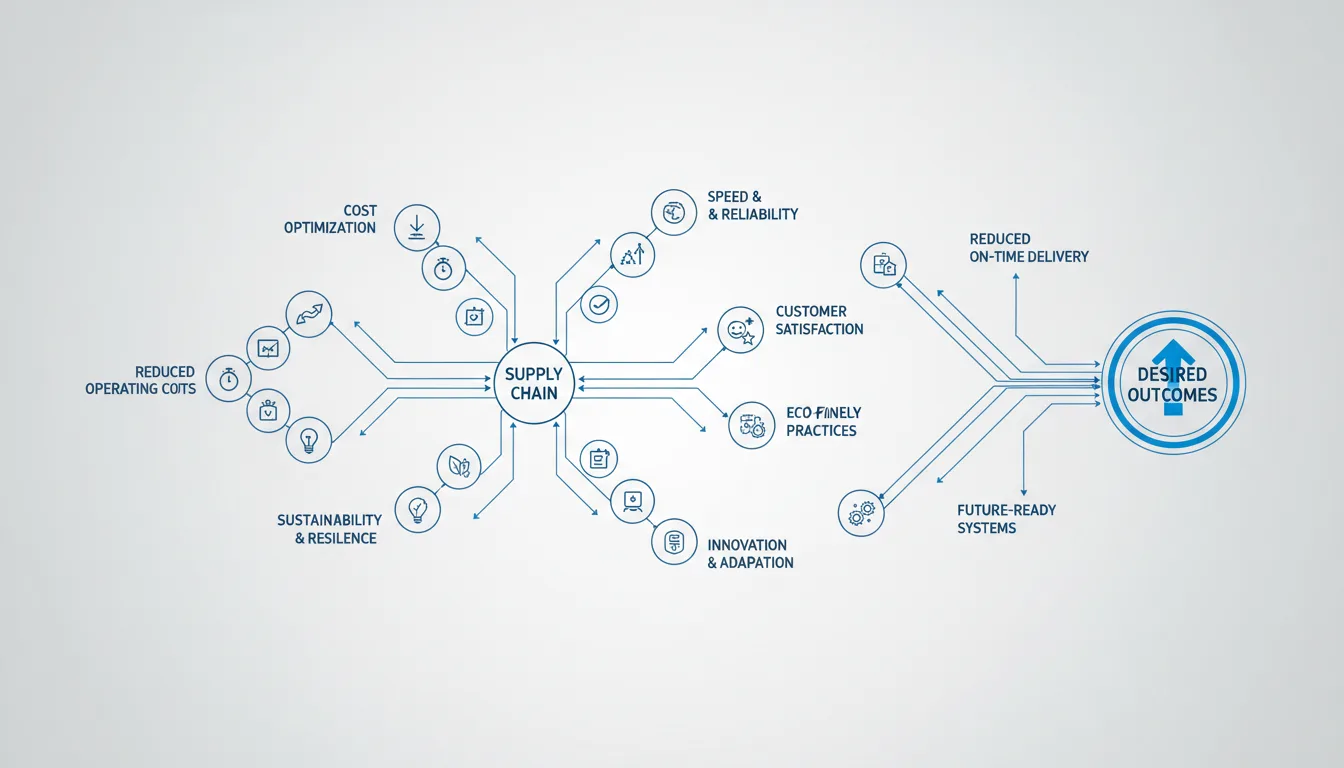
Desired outcomes in logistics outline the key performance indicators and goals that businesses aim to achieve through effective supply chain management.
Updated
Overview
Desired outcomes in logistics refer to the specific objectives that organizations strive to achieve through efficient supply chain management and logistics practices. These outcomes are integral for assessing the performance and effectiveness of logistics operations. Common objectives include cost reduction, increased customer satisfaction, improved inventory management, and enhanced operational efficiency. Achieving these outcomes contributes to a competitive advantage in the marketplace, allowing companies to fulfill customer demands swiftly and accurately.
Etymology and Origins
The term "desired outcomes" in logistics originates from broader concepts of goal-setting and performance measurement in business management. The earliest documented use of similar terminology can be traced back to management theories in the 20th century, particularly in works such as Peter Drucker's advocacy for management by objectives in the 1950s. Over time, this concept evolved to include specific targets associated with logistics and supply chain functions, reflecting the increasing complexity and interconnectivity of modern supply chains. The linguistic roots can be traced back to the idea of operational efficiency and effectiveness, which are critical to the success of any enterprise.
Historical Development
Emergence
The desire to optimize logistics practices began to take shape during the Industrial Revolution, when companies recognized the importance of efficient resource management and transportation in increasing productivity. The inception of railroads and steamships significantly improved the transportation of goods, marking the first significant leap toward modern logistics.
Key Figures and Milestones
- Henry Ford, in the early 20th century, introduced the assembly line, significantly reducing production time and costs. This innovation laid the groundwork for future logistics enhancements by demonstrating the effectiveness of streamlined processes.
- The container shipping model, introduced by Malcolm McLean in the 1950s, revolutionized global transportation of goods, allowing for intermodal transport and significant reductions in shipping costs and transit times.
- In the 1980s, the field of supply chain management began to formalize, driven by advances in computing technology and the increasing complexity of global trade, leading to the introduction of sophisticated logistics software.
Publication and Standards
Seminal works like The New Science of Retailing by Marshall Fisher in 2006 emphasized systematic approaches to achieving desired outcomes in supply chains. Additionally, the establishment of international standards such as ISO 9001 has pushed companies toward quality management systems that focus on outcomes and efficiency, promoting a culture of continuous improvement within logistics operations. The emergence of Just-In-Time (JIT) inventory systems at Toyota in the 1970s also played a pivotal role in shaping modern logistics methodologies.
Core Concepts
Desired outcomes in logistics are typically structured around key performance indicators (KPIs), including but not limited to:
- Cost Efficiency: Managing logistics costs while maintaining service levels leads to a focus on shipping and fulfillment software for better cost management.
- Service Level Performance: Ensuring timely deliveries and accurate order fulfillment enhances customer satisfaction, a primary objective in modern logistics. Proactive service level monitoring has become essential to meet customer expectations.
- Inventory Accuracy: Maintaining optimal inventory levels and accurate tracking through tools like visual inventory management systems to avoid stockouts and overstocks ensures smooth operation and customer trust.
Industry Applications
In various sectors, desired outcomes take different shapes, influenced by specific industry needs:
- Retail: Brands aim for rapid fulfillment and minimal costs through efficient order management systems, such as those outlined in the Order Fulfillment Guide. For example, Amazon uses advanced robotics and predictive analytics to enhance its logistics performance and meet customer demands swiftly.
- Pharmaceuticals: Achieving compliance with stringent regulations while ensuring timely delivery of medications and medical supplies involves maintaining rigorous tracking and reporting standards.
- Manufacturing: Lean methodologies implemented for Just-In-Time (JIT) inventory enhance production efficiency and reduce waste. Companies like Dell have famously implemented JIT and direct shipping to streamline their logistics operations.
Benefits and Advantages
Achieving desired outcomes leads to numerous benefits:
- Higher customer satisfaction rates due to improved service levels and timely delivery.
- Increased operational efficiency, contributing to sustainable growth and profitability.
- Enhanced transparency across the supply chain fosters better collaboration among partners, leading to improved decision-making and innovation.
Challenges and Limitations
Organizations face several challenges in pursuing desired outcomes:
- Balancing cost reduction with quality service can be a delicate act that requires constant evaluation of logistics strategies.
- Supply chain disruptions, such as natural disasters or geopolitical tensions, can hinder the ability to meet established goals. This emphasizes the need for adaptable workflow settings and risk management strategies.
Best Practices
To achieve desired outcomes, some best practices include:
- Implementing robust inventory management systems to enhance decision-making and respond dynamically to market demands.
- Utilizing data analytics for continuous improvement in logistics operations, which aids in identifying inefficiencies and optimizing transport routes.
- Engaging in regular performance reviews to align logistics strategies with organizational goals and realigned KPIs.
Technology and Tools
Advancements in technology play a crucial role in achieving desired outcomes:
- Warehouse Management Systems (WMS): Tools such as the Mobile WMS Overview streamline operations and improve accuracy in inventory management, leading to higher efficiency rates.
- Automated Procurement Systems: Solutions that facilitate better purchasing strategies enable organizations to adapt quickly to market changes and volatility, improving cost management and supplier relationships.
Future Trends
As logistics continues to evolve, desired outcomes are likely to focus more on sustainability and resilience:
- Innovations in AI and machine learning are improving demand forecasting, logistics planning, and supply chain visibility, paving the way for smarter logistics operations.
- The push toward greener supply chains is driving companies to pursue eco-friendly outcomes alongside traditional financial metrics, as consumer demand for sustainability rises.
Related Concepts
Understanding desired outcomes also connects to various logistics concepts like Supply Chain Management (SCM), Lean Logistics, and the Theory of Constraints, which emphasize optimal resource utilization for goal achievement. Additionally, techniques like the SCOR model provide a framework for measuring and improving supply chain performance effectively.
References
- Drucker, P. F. (1954). The Practice of Management. Harper & Row.
- Fisher, M. (2006). The New Science of Retailing. Harvard Business Press.
- Heizer, J., & Render, B. (2017). Operations Management (12th ed.). Pearson.