Data Management in Logistics
An exploration of data management practices essential for logistics, covering its overview, historical context, challenges, and emerging technologies.
Updated
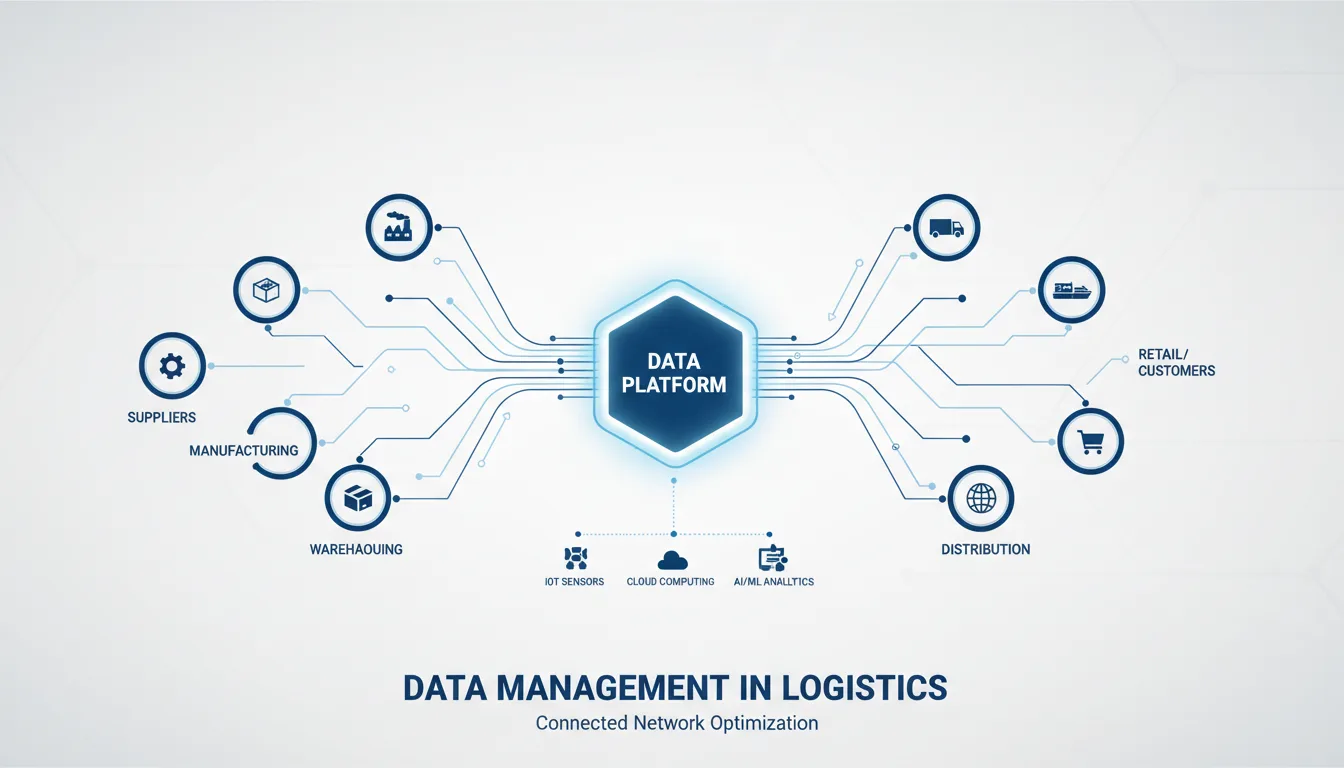
Data Management in Logistics
Overview
Data management in logistics refers to the processes and systems involved in collecting, storing, and utilizing data to enhance decision-making and operational efficiency in supply chain management. Effective data management is crucial as it enables the optimization of operations, reduces costs, and improves service delivery. The integration of data management strategies in logistics ensures that stakeholders can access accurate and timely information, which is essential for inventory management, order fulfillment, and overall operational effectiveness.
Etymology and Origins
The term 'data management' originated from the need to effectively handle and manipulate data generated in various business processes. The earliest documented usage of the term dates back to the 1960s, when organizations began recognizing the value of data, leading to the emergence of database management systems that enabled efficient storage and retrieval of data. Linguistically, 'data' is derived from the Latin word 'datum,' meaning 'something given,' indicating the foundational level of data as a concept, while 'management' stems from the Old French 'ménagement,' which translates to 'the handling of.' Over the decades, the concept of data management has evolved significantly, spurred by advancements in technology and the proliferation of the internet, which transformed how data is collected and analyzed in logistics, reflecting a shift from mere storage to strategic utilization.
Historical Development
Data management has undergone significant changes since its inception:
- 1960s - 1970s: The first database management systems, such as IBM's Information Management System (IMS), were launched, marking the beginning of structured data handling. This allowed logistics companies to manage data more efficiently and set the foundation for modern database practices.
- 1980s: The introduction of relational databases like Oracle and Microsoft SQL Server enabled more sophisticated data queries and management techniques, significantly improving logistics operations. Noteworthy publications, such as Edgar F. Codd’s work on the relational model, provided essential frameworks for database theorization and development.
- 1990s: The rise of enterprise resource planning (ERP) systems facilitated the consolidation of data across departments, leading to improved inventory and supply chain management. Companies like SAP and PeopleSoft contributed to the establishment of ERP as a critical business strategy during this era.
- 2000s: The advent of big data transformed data management practices. Technologies enabled organizations to process vast amounts of structured and unstructured data, fostering a new era of insight generation and predictive analytics.
- 2010s and beyond: The incorporation of real-time data collection methods, including IoT sensors and cloud computing, has significantly enhanced logistics data management capabilities. This shift has been documented in various industry publications focusing on the management of logistics data amidst evolving technologies. The focus has shifted toward integrating machine learning and artificial intelligence for predictive analytics, with organizations exploring advanced methodologies to improve decision-making and resource allocation.
Core Concepts
Data management in logistics encompasses several core functions, including:
- Data Collection: Gathering data from various sources, which can include order data, inventory levels, shipping information, and more.
- Data Storage: Storing data in centralized databases or cloud systems, which allows for easy access and management.
- Data Analysis: Utilizing analytical tools to interpret data and generate actionable insights for decision-making.
- Data Governance: Establishing policies and standards to ensure data integrity, security, and compliance with regulations.
- Data Integration: Combining data from different systems, such as warehouse management systems (WMS), to provide a comprehensive view of operations.
Industry Applications
The application of data management practices is vast across various logistics sectors:
- Retail: Logistics companies employ data management to monitor inventory levels, forecast demand, and optimize supply chain operations. For example, Amazon leverages data management to refine its inventory processes, ensuring optimal stock levels based on predictive analytics.
- Manufacturing: In this sector, data management supports production planning and quality control by ensuring accurate data flow from supply chains to manufacturing units. Use of ERP systems in automotive manufacturing exemplifies this integration.
- Transport and Freight: Companies utilize data management to track shipments, monitor transportation costs, and ensure timely deliveries. A practical example is UPS's use of data science to optimize delivery routes, leading to reduced fuel consumption and enhanced service efficiency.
Benefits and Advantages
Effective data management practices lead to numerous benefits, including:
- Improved visibility across the supply chain, enabling real-time tracking and monitoring.
- Enhanced decision-making through data-driven insights and forecasts.
- Increased efficiency in operations by reducing waste and optimizing resource allocation.
- Heightened customer satisfaction due to more reliable order fulfillment and transparency in processes.
Challenges and Limitations
Despite its advantages, data management in logistics faces several challenges:
- Data Silos: Often, data is dispersed across different systems, making it hard to access comprehensive information. To combat this, companies must invest in data integration strategies and tools.
- Data Quality Issues: Inaccurate or outdated data can lead to poor decision-making and operational inefficiencies. Regular audits and data cleaning processes are essential to maintaining high data quality.
- Regulatory Compliance: Adhering to various data protection regulations, such as GDPR, can complicate data management practices. Organizations should employ data governance policies that encapsulate compliance measures.
Best Practices
Implementing best practices for data management helps mitigate challenges:
- Establish clear data governance policies to ensure data integrity and security.
- Invest in robust data integration tools to connect disparate systems effectively.
- Regularly audit data for quality and relevance, and update processes as necessary. The use of analytics tools can further support these audits.
Technology and Tools
Emerging technologies play a pivotal role in refining data management practices:
- Cloud Computing: Facilitates scalable storage solutions for vast amounts of data, allowing businesses to expand their data capabilities seamlessly.
- Analytics Tools: Software that enables advanced data analysis, helping organizations derive actionable insights. Tools like Tableau and Power BI have become industry standards for data visualization.
- AI and Machine Learning: These technologies empower businesses to predict trends and optimize logistics operations effectively, as observed in companies using machine learning algorithms for demand forecasting.
Future Trends
Looking ahead, data management in logistics is expected to transform further with advancements in technologies such as:
- Blockchain: Promising enhanced transparency and security in data transactions across supply chains, blockchain technology is being explored in sectors such as food safety and pharmaceuticals for traceability.
- Advanced Analytics and AI: Will continue to evolve, offering more sophisticated tools for predicting demand and managing inventories efficiently, thus redefining logistics strategies.
Related Concepts
Data management in logistics intersects with various other concepts in the field, including data analytics, inventory management, and supply chain optimization. A comprehensive approach to these interconnected areas is essential for organizations aiming for operational excellence.