Cost Management in Logistics
An in-depth exploration of cost management practices in logistics, covering key concepts, historical developments, benefits, and best practices.
Updated
Overview
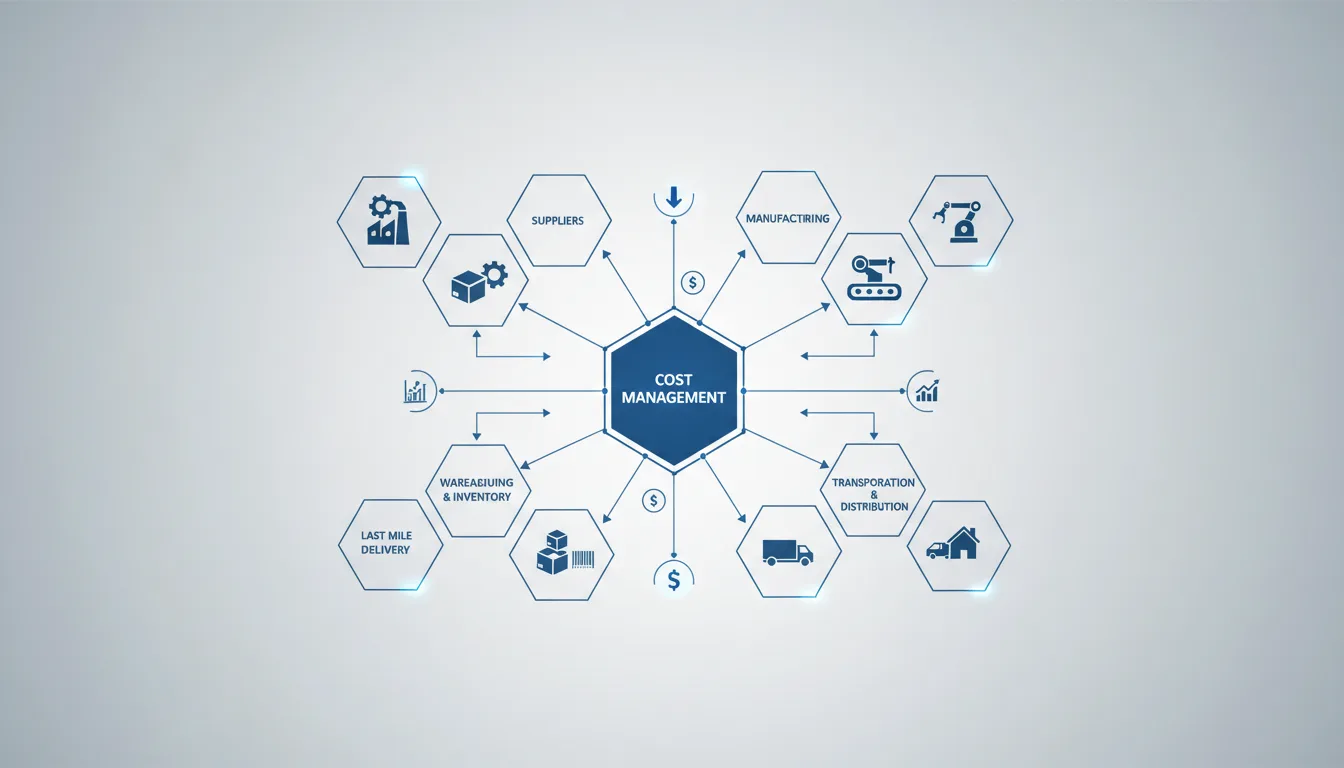
Cost management in logistics refers to the strategic process of planning, controlling, analyzing, and optimizing all expenditures related to logistics activities throughout the supply chain. It plays a crucial role in enhancing profitability, ensuring financial health, and maintaining a competitive advantage by systematically reducing inefficiencies and waste. Key areas of focus include transportation, warehousing, inventory holding, order fulfillment, and procurement, each of which can significantly impact overall logistics costs. Effective cost management not only enhances profitability but also improves service delivery, customer satisfaction, and supports strategic business objectives like sustainability [5].
Etymology and Origins
The concept of "cost management" originated from the broader field of financial and managerial accounting in the early 20th century. Its linguistic roots are deeply intertwined with the industrial revolution's demand for greater control over production expenses and the rise of scientific management principles championed by figures like Frederick Winslow Taylor. Initially, the focus was on cost accounting to record and report production costs [6].
The term evolved to "cost management" in the mid-20th century, reflecting a shift from mere cost tracking to active control and optimization [7]. As businesses grew in complexity and supply chains became more global, the application of cost management principles expanded beyond manufacturing to encompass all operational facets, particularly logistics. The increasing recognition of logistics as a strategic function, rather than merely an operational overhead, further solidified the need for specialized cost management approaches within this domain.
Historical Development
Cost management in logistics has experienced significant evolution, reflecting advancements in business theory, technology, and global trade dynamics. Its development can be charted through several key eras:
-
Pre-1950s: Early Cost Tracking & Efficiency Drives
Before the formalization of logistics, rudimentary cost tracking existed for freight and storage. The early 20th century saw the application of scientific management principles to optimize factory layouts and processes, laying groundwork for later logistics efficiency. Companies primarily focused on departmental cost reduction rather than an integrated view. -
1950s-1960s: The Rise of Total Cost Concept
This period marked a paradigm shift. Management thinkers like Peter Drucker, known for his emphasis on management by objectives and efficiency, highlighted the importance of controlling costs across the entire business. Crucially, the Total Cost Concept in logistics emerged, popularized by researchers like Donald J. Bowersox and John F. Magee. This concept advocated for considering all trade-offs between logistics functions (e.g., faster transport vs. lower inventory holding) to achieve the lowest overall cost, rather than minimizing individual functional costs in isolation [8]. This led to a more holistic view of logistics expenditures. -
1970s: Activity-Based Costing (ABC) and Early Computerization
The introduction of Activity-Based Costing (ABC) allowed firms to allocate costs more accurately based on specific activities (e.g., order picking, packing, shipping) rather than broad categories. This provided a clearer picture of cost drivers in complex logistics operations. The advent of early computer systems also began to automate basic record-keeping and inventory management, offering initial insights into cost data that was previously manual and cumbersome. -
1980s: Just-In-Time (JIT) and Material Requirements Planning (MRP)
The 1980s saw significant advancements. The development of Just-in-Time (JIT) inventory systems by Toyota revolutionized manufacturing and logistics by minimizing inventory holding costs and waste. Concurrently, the widespread adoption of Material Requirements Planning (MRP) systems, initially developed in the 1960s but gaining traction with more powerful computers, allowed companies to better plan and manage raw materials and components, directly impacting procurement and inventory costs. -
1990s: Enterprise Resource Planning (ERP) and Supply Chain Management (SCM)
The 1990s witnessed the rise of Enterprise Resource Planning (ERP) systems, which integrated financial, operational, and logistics data across an entire enterprise. This provided unprecedented visibility into costs and processes, enabling more sophisticated cost management strategies. This decade also saw the formalization of Supply Chain Management (SCM) as a strategic discipline, emphasizing end-to-end optimization of costs and value across interconnected businesses. -
2000s-Present: Advanced Analytics, Automation, and Digital Transformation
The 21st century has been characterized by rapid technological advancements. The adoption of advanced analytics, business intelligence tools, and Big Data has enabled more predictive and prescriptive cost management. Automation, including robotics in warehouses and automated material handling systems, has significantly reduced labor and operational costs. The emergence of cloud-based Warehouse Management Systems (WMS) and other logistics software, often integrated with AI and machine learning, has led to smarter decision-making, dynamic pricing, route optimization, and enhanced demand forecasting, thereby continuously improving cost efficiency and responsiveness.
Core Concepts
Cost management in logistics primarily focuses on tracking, analyzing, and optimizing costs through several key components, often driven by a holistic total cost of ownership (TCO) approach:
- Budgeting and Forecasting: Establishing a financial plan that aligns with operational goals and market demand, ensuring resource allocation is effectively managed. This involves setting realistic expenditure targets for each logistics function and forecasting future costs based on historical data and projected activities.
- Cost Analysis: In-depth analysis of different logistics costs, including direct costs (transportation, warehousing labor, packaging) and indirect costs (administrative overhead, IT infrastructure, demurrage fees). Tools and systems, such as warehouse management systems and robust data analytics platforms, help streamline analysis processes, identifying cost drivers and areas for improvement.
- Cost Reduction Strategies: Implementing proactive strategies to lower expenses without compromising service levels. Examples include:
- Route Optimization: Utilizing software to find the most efficient transportation routes, reducing fuel consumption and delivery times.
- Inventory Optimization: Employing techniques like effective stock replenishment, demand forecasting, and cycle counting to minimize excess inventory holding costs while avoiding stockouts.
- Warehouse Efficiency: Optimizing warehouse layouts, streamlining picking processes (e.g., batch picking, pick-to-tote), and leveraging automation to reduce labor and operational expenses.
- Supplier Negotiation: Securing better rates and terms with carriers, warehousing providers, and raw material suppliers through strategic sourcing and purchase order management.
- Packaging Optimization: Reducing material costs and shipping volume through efficient packaging design.
Industry Applications
Cost management practices are widely implemented and critical across various sectors, demonstrating its universal importance:
- E-commerce: Online retailers utilize cost management to minimize logistics expenses through strategies like consolidated shipping, optimizing last-mile delivery, and efficient order fulfillment processes. For instance, Amazon continuously invests in robotics and algorithms to reduce fulfillment center operational costs and speed up delivery [9].
- Manufacturing: Companies like Boeing apply cost management to optimize materials handling, inbound logistics, and production scheduling, thereby reducing waste, minimizing inventory buffers, and lowering overall production costs. Lean manufacturing principles are often directly linked to cost management in this sector.
- Healthcare: Hospitals and pharmaceutical distributors manage the intricate logistics costs of medications, medical supplies, and equipment through precise inventory management practices, often involving strict lot tracking and expiration date management, to reduce waste and ensure critical supplies are available while minimizing holding costs [10].
- Retail: Large retailers like Walmart use sophisticated logistics networks and advanced analytics to optimize their supply chain, reducing transportation costs through efficient routing and backhauling, and managing warehouse operations for maximum throughput at minimal expense.
Benefits and Advantages
Well-executed cost management in logistics offers a multitude of strategic benefits:
- Increased Profitability: By systematically minimizing costs across all logistics functions, companies can significantly enhance their net profit margins without necessarily increasing sales volume.
- Competitive Advantage: Effective cost control methods enable firms to offer lower prices, provide faster or more reliable services, or invest more in product development, thereby gaining a significant edge over competitors.
- Operational Efficiency: Streamlined processes, optimized resource allocation, and reduced waste lead to a leaner, more agile logistics operation. This also translates to improved employee productivity.
- Improved Decision-Making: Access to accurate, real-time cost data through tools like visual inventory management systems aids strategic decisions regarding network design, technology investments, and outsourcing opportunities.
- Enhanced Customer Satisfaction: Cost savings can be reinvested into improving service quality, such as faster shipping options or more flexible return policies, directly benefiting customers.
- Risk Mitigation: Better cost visibility allows companies to identify and mitigate financial risks associated with supply chain disruptions, fluctuating fuel prices, or changing trade policies.
Challenges and Limitations
While essential, cost management in logistics faces numerous challenges that require careful navigation:
- Data Integrity and Visibility: Inaccuracies, inconsistencies, or lack of granular data across disparate systems can lead to poor decision-making and hinder effective cost optimization. Achieving complete visibility into all logistics costs remains a significant hurdle for many organizations.
- Complex and Global Supply Chains: Modern supply chains are increasingly global and multi-tiered, introducing significant variabilities, geopolitical uncertainties, and regulatory complexities that make cost management efforts inherently challenging. The interdependencies mean that cost reductions in one area might inadvertently increase costs elsewhere (the Total Cost Concept trade-off).
- Resistance to Change: Employees or departments may resist new processes, technologies, or cost-cutting initiatives due to fear of job loss, inertia, or lack of understanding of the broader benefits. Effective change management is crucial.
- Balancing Cost and Service: A perpetual challenge is finding the optimal balance between aggressive cost reduction and maintaining or improving service levels. Overly aggressive cost-cutting can lead to service degradation, customer dissatisfaction, and ultimately, lost business.
- Fluctuating External Factors: Fuel prices, labor costs, tariffs, exchange rates, and unexpected events (e.g., pandemics, natural disasters) are external factors that are difficult to control but significantly impact logistics costs, requiring agile and adaptive management strategies.
Best Practices
To overcome challenges and optimize cost management, logistics professionals should implement a systematic approach incorporating the following best practices:
- Adopt a Total Cost Approach: Move beyond departmental cost reduction to evaluate the aggregate impact of logistics decisions across the entire supply chain. Consider the total cost of ownership for assets and services.
- Invest in Robust Technology: Implement and integrate modern WMS, TMS (Transportation Management Systems), ERP, and data analytics platforms. Tools like SkuSavvy's WMS provide real-time data and automation capabilities essential for identifying cost savings.
- Implement Performance Metrics (KPIs): Establish clear, measurable Key Performance Indicators (KPIs) for ongoing cost tracking and performance monitoring. Examples include 'Cost per Order,' 'Freight Cost as a % of Sales,' 'Inventory Carrying Cost,' and 'Warehouse Labor Cost per Unit.'
- Foster Cross-Functional Collaboration: Break down silos between logistics, procurement, finance, sales, and IT. Encourage shared goals and understanding of how decisions in one area impact overall logistics costs.
- Strategic Sourcing and Vendor Management: Regularly review and negotiate contracts with carriers, 3PLs, and suppliers. Leverage purchase order management systems to streamline procurement and ensure competitive pricing.
- Continuous Process Improvement: Regularly analyze logistics workflows using methodologies like Lean or Six Sigma to identify and eliminate waste, reduce cycle times, and improve efficiency. This includes optimizing bin put-away criteria and order fulfillment processes.
- Employee Training and Engagement: Train staff on cost-effective logistics practices and the importance of cost awareness. Empower employees to identify and suggest efficiency improvements, fostering a culture of continuous optimization.
- Risk Management and Contingency Planning: Develop strategies to mitigate the impact of unforeseen events on logistics costs, such as having alternative carriers or inventory buffer strategies for critical items.
Technology and Tools
Incorporating technology is vital for successful cost management in logistics, providing the necessary visibility, automation, and analytical capabilities:
- Warehouse Management Systems (WMS): Modern WMS, such as SkuSavvy's WMS, streamline warehouse operations from receiving to shipping. They provide granular data on labor costs, storage costs, picking efficiency, and inventory accuracy, offering critical insights into cost structures and opportunities for optimization. Features like visual warehouse layout preview can also help optimize space utilization and flow, directly impacting costs.
- Transportation Management Systems (TMS): These systems optimize shipping routes, carrier selection, load consolidation, and freight auditing, directly reducing transportation expenses, which often represent the largest component of logistics costs.
- Data Analytics and Business Intelligence (BI) Platforms: Leveraging advanced analytics tools allows organizations to assess costs, identify trends, predict future expenses, and uncover hidden inefficiencies across the entire supply chain. This enables data-driven decision-making for cost reduction.
- Automation Tools: Implementing robotics, Automated Guided Vehicles (AGVs), and other automated material handling equipment in warehouses can significantly reduce labor costs, improve throughput, and minimize errors, especially for repetitive tasks. Automated purchase quantity features in procurement systems also contribute to cost control.
- Enterprise Resource Planning (ERP) Systems: ERPs integrate various business functions, providing a centralized platform for financial, operational, and supply chain data, which is crucial for holistic cost management and reporting.
- Inventory Management Systems: Dedicated visual inventory management systems track inventory levels in real-time, helping to reduce carrying costs, prevent obsolescence, and optimize order quantities. Features like lot and expiration date tracking are vital for industries with perishable goods.
Future Trends
Looking ahead, cost management in logistics is likely to evolve significantly with:
- Enhanced Use of Artificial Intelligence (AI) and Machine Learning (ML): AI will increasingly be used for predictive analytics (e.g., predicting demand fluctuations, carrier rates), prescriptive analytics (e.g., suggesting optimal routes or inventory levels), and automation of complex decision-making, leading to unprecedented levels of cost optimization [11].
- Increased Focus on Sustainability and Green Logistics: Future cost management will intertwine with sustainability goals. Initiatives will focus on reducing environmental impact (e.g., optimizing fuel consumption, waste reduction, electric vehicle fleets) while simultaneously reducing costs. Carbon footprint reduction will become a key performance indicator [12].
- Blockchain for Transparency and Efficiency: Blockchain technology holds promise for improving supply chain transparency, reducing administrative costs, and enhancing trust among supply chain partners, potentially streamlining payment processes and dispute resolution.
- Hyper-Automation and Digital Twins: The integration of advanced automation with digital twin technology (virtual models of physical logistics systems) will allow for real-time simulation and optimization of operations, identifying cost-saving opportunities before physical implementation.
- Data-Driven Collaboration and Ecosystems: Greater emphasis on data sharing and collaboration within logistics ecosystems, enabled by cloud platforms and APIs, will allow for collective optimization of resources and costs across multiple companies, moving towards more resilient and efficient supply chains.
Related Concepts
Cost management in logistics is closely related to various interconnected concepts, forming the backbone of efficient supply chain operations:
- Supply Chain Management: A strategic approach focusing on optimizing the entire supply chain from raw material acquisition to final consumer delivery for maximum efficiency, cost effectiveness, and customer value. Cost management is a foundational pillar of successful SCM.
- Inventory Management: Practices concerning the management of inventory levels, locations, and movements to minimize holding, ordering, and stockout costs while meeting demand. Effective inventory management is a direct contributor to logistics cost control.
- Financial Management: Encompasses overall cost management practices, including budgeting, forecasting, financial reporting, and investment analysis, providing the financial framework within which logistics cost management operates.
- Lean Logistics: Applying lean principles to logistics operations to identify and eliminate waste (e.g., unnecessary movement, waiting, overproduction, defects, excess inventory), thereby reducing costs and improving efficiency.
- Operations Management: The broader discipline focused on designing, controlling, and supervising production and service delivery processes, of which logistics cost management is a critical component.
Sources
- SkuSavvy Order Management System
- SkuSavvy Mobile Warehouse Management System
- SkuSavvy Visual Inventory Management System
- SkuSavvy Stock Replenishment Guide
- The Strategic Role of Logistics in Achieving Sustainability
- Scientific Management
- A History of Cost Management: From Cost Accounting to Strategic Cost Management
- A Reexamination of the Total Cost Concept
- How Amazon's robotic workforce powers its e-commerce business
- Visual Inventory Management System
- AI and Machine Learning in Supply Chains
- Green Logistics: Reducing the Environmental Impact of Supply Chains
- The Hidden Costs of Complexity
- Enterprise Resource Planning (ERP)
- Total Cost of Ownership (TCO)
- Warehouse Layout Preview
- Batch Picking Guide
- Pick-to-Tote Guide
- Purchase Order Management
- Mobile Order Fulfillment Software
- Productivity Tracking
- Bin Put-Away Criteria
- Automated Purchase Quantity
- Lots & Expiration Dates
- Shopify Inventory Management
- Cycle Counting Guide