Core Concepts in Logistics
An in-depth exploration of the fundamental concepts that underpin logistics, essential for professionals and students in the field.
Updated
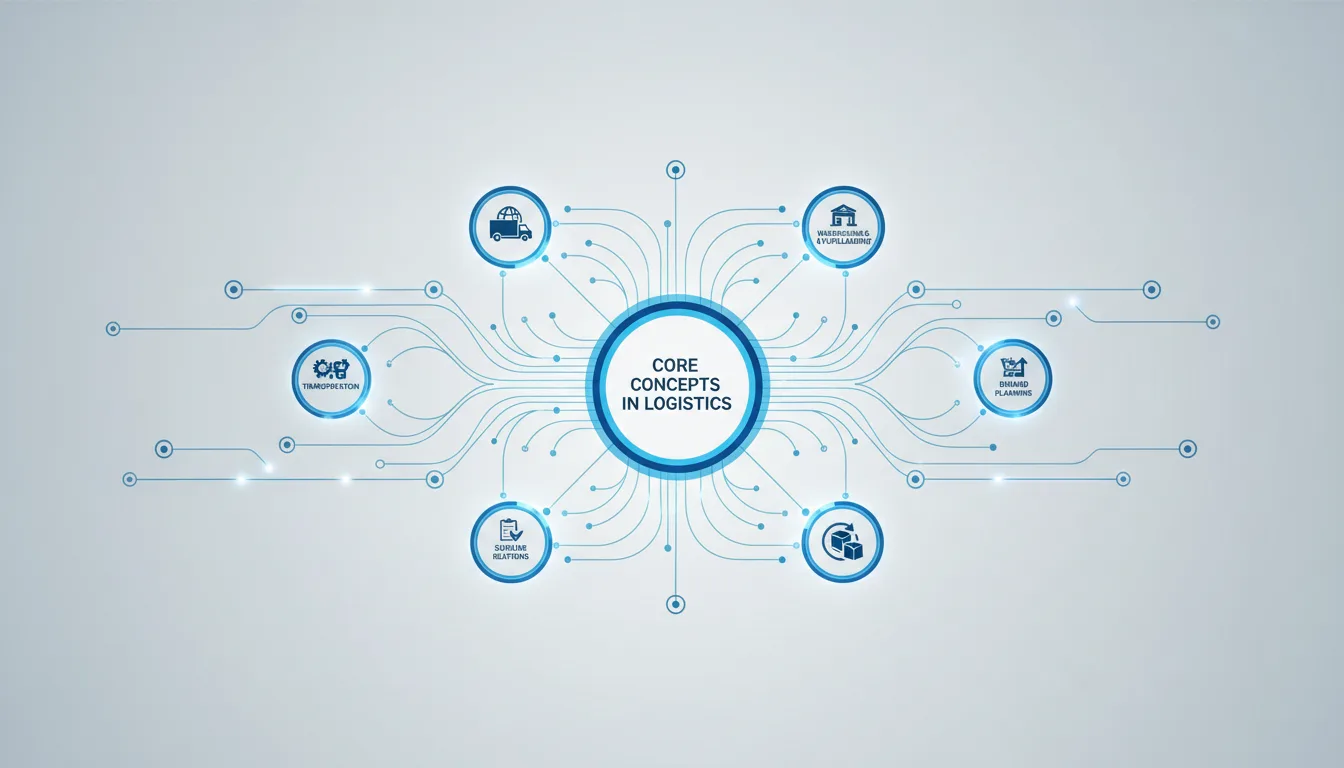
Overview
Logistics refers to the comprehensive management of the flow of goods, services, and information from origin to consumption. It encompasses various activities such as transportation, warehousing, inventory management, order fulfillment, and distribution. The core concepts in logistics provide professionals with the framework necessary to ensure efficient operations and effective supply chain management. By optimizing these areas, businesses can reduce costs, improve customer satisfaction, and gain a competitive edge in a global marketplace.
Etymology and Origins
The term 'logistics' has a rich history, primarily rooted in military science. It is widely believed to be derived from the French word 'logistique,' which refers to the art of calculating and reasoning, or perhaps from 'loger,' meaning to lodge or quarter troops. Its earliest documented usage in a structured, military context dates back to the 17th century, where it described the movement, housing, and supply of troops and equipment. Baron Antoine-Henri Jomini, a Swiss military theorist, further popularized the term in his 1838 treatise, "Précis de l'Art de la Guerre," defining logistics as "the practical art of moving armies."
While its origins are distinctly military, the term began to migrate into commercial usage in the mid-20th century. This shift was largely driven by the increasing complexity of global trade and the recognition that the strategic principles of managing resources in wartime could be applied to business operations. Research from the International Journal of Logistics Management details how the logistics industry has shifted from pure military applications to complex commercial systems, emphasizing the strategic importance of integrated supply chain planning.
Historical Development
Logistics as we understand it today has deep historical roots, tracing back to ancient civilizations that managed the supply of resources for armies, such as the Roman Empire's intricate supply lines. Key milestones in its evolution include:
- Pre-20th Century: Early forms of logistics were predominantly military, focused on provisioning armies and managing trade routes. The Industrial Revolution brought advancements in transportation (canals, railroads) and manufacturing, laying the groundwork for more complex commercial supply systems, though the term 'logistics' was still primarily military.
- Early 20th Century (1900-1940s): The principles of scientific management, pioneered by Frederick W. Taylor, began to influence efficiency in production and distribution. World War I and II demanded unprecedented logistical coordination, leading to significant innovations in transport, storage, and inventory management techniques within the military. These experiences highlighted the importance of a holistic approach to resource management.
- Post-WWII & 1950s-1960s: As military logistics experts transitioned into civilian roles, they applied their knowledge to business. The concept of 'physical distribution' emerged, focusing on the outbound movement of goods from factory to customer. Early computational methods, including operations research, began to optimize warehousing and transportation networks. The term 'supply chain management' was notably introduced by Dr. Oliver Wight and his peers in the 1960s, fostering a shift towards a more integrated approach and laying the groundwork for strategic logistics management.
- 1970s-1980s: The energy crises of the 1970s spurred a focus on cost reduction, leading to the development and widespread adoption of Material Requirements Planning (MRP) systems to optimize manufacturing inventory. The Japanese manufacturing philosophy of Just-In-Time (JIT) gained prominence, pioneered by Toyota, emphasizing lean inventory and efficiency across the entire production and supply process. This period marked the development of logistics as a distinct business function, driven by advancements in technology and management practices. Key texts from this period include "Logistics and Supply Chain Management" by Martin Christopher, which emphasizes the growing importance of logistics integration.
- 1990s: The advent of the internet and globalization significantly accelerated the evolution of logistics. The integration of logistics with information technology led to the rise of comprehensive systems like Enterprise Resource Planning (ERP) that revolutionized data management, real-time inventory functions, and inter-departmental communication. E-commerce began its ascent, demanding faster and more complex distribution networks.
- 2000s and Beyond: The 21st century has seen rapid technological advancements transform logistics into a highly sophisticated and data-driven discipline. Technologies such as Radio-Frequency Identification (RFID), GPS, advanced analytics, and automation (e.g., automated guided vehicles, robotics in warehouses) became commonplace. More recently, the adoption of AI and machine learning has transformed logistics to become more predictive, responsive, and resilient, enabling capabilities like advanced demand forecasting and route optimization. A seminal paper by the Council of Supply Chain Management Professionals discusses the evolution of logistics through education and professional standards, reflecting its maturation as an academic and professional field.
Throughout its evolution, logistics has increasingly relied on technology, moving from manual systems to sophisticated computerized solutions, including warehouse management systems (WMS) and transportation management systems (TMS). The integration of big data analytics has further enhanced decision-making capabilities, allowing for proactive problem-solving and continuous optimization across the supply chain.
Core Concepts
The core concepts of logistics are interdependent and crucial for building an efficient and responsive supply chain:
1. Transportation
Transportation involves the physical movement of goods by various modes, including road, rail, air, and sea. Effective transportation management ensures timely delivery, cost efficiency, and minimized environmental impact. Key considerations include mode selection, route optimization, carrier management, and freight consolidation. Understanding automated rate selection can significantly enhance decision-making in this area, allowing businesses to compare real-time rates across multiple carriers and select the most economical or fastest option. For example, FedEx employs sophisticated algorithms to determine optimal shipping methods and routes, saving time and costs while ensuring global reach. Modern logistics emphasizes intermodal transportation to leverage the strengths of different modes.
2. Warehousing
Warehousing is critical for storing goods, managing inventory, and facilitating efficient order fulfillment. It involves activities like receiving, putaway, storage, picking, packing, and shipping. The layout of a warehouse must be strategically designed to facilitate efficient operations, as detailed in the Visual Warehouse Layout principles. Modern warehousing practices often incorporate advanced techniques like cross-docking (moving goods directly from inbound to outbound without storage) and batch picking (collecting items for multiple orders simultaneously) to maximize throughput and minimize handling. For instance, Amazon's fulfillment centers exemplify scalable warehousing, leveraging robotics and advanced WMS technology for optimal space usage, rapid deployment, and high-volume processing.
3. Inventory Management
Inventory management focuses on overseeing stock levels to meet customer demands without incurring excess costs due to overstocking or lost sales due to stockouts. This involves balancing inventory costs (holding, ordering, shortage) with service levels. Practices such as cycle counting (regularly counting a small portion of inventory to maintain accuracy) and stock replenishment (triggering new orders when inventory reaches a predefined level) are crucial for maintaining inventory accuracy and availability. SkuSavvy's visual inventory management system can provide real-time visibility and control. Companies like Walmart have showcased inventory optimization through the strategic implementation of RFID technology, resulting in reduced stockouts, improved shelf availability, and increased customer satisfaction.
4. Order Fulfillment
Order fulfillment encompasses the complete process of processing customer orders efficiently, from the moment an order is placed to its final delivery. This includes order receiving, picking (retrieving items from storage), packing (preparing items for shipment), and shipping (handing off to a carrier). Companies can leverage modern pick, pack, and ship software to streamline operations, reduce errors, and enhance customer satisfaction by automating these critical steps. SkuSavvy's mobile order fulfillment software empowers warehouse staff with real-time data on the go. Zappos, renowned for its customer service and efficient delivery, demonstrates highly efficient order fulfillment processes that help maintain its competitive edge and build customer loyalty through reliable and fast shipping.
5. Supply Chain Integration
Successful logistics operations require seamless integration across various supply chain functions, including procurement, production, and distribution, as well as collaboration with suppliers and customers. This involves sharing information, coordinating activities, and aligning goals to create a cohesive and responsive network. Tools like SkuSavvy's Order Management System facilitate this integration by providing a centralized platform for managing orders, inventory, and fulfillment across multiple channels, helping organizations achieve operational synergies. Effective supply chain integration strategies lead to improved visibility, reduced lead times, optimized inventory levels, and reduced operational costs across the entire value chain. Companies excelling in this area often report significant competitive advantages due to their agility and responsiveness.
Benefits and Advantages
Understanding and effectively implementing the core concepts of logistics allows professionals to realize significant benefits for their organizations:
- Improved Operational Efficiency: By streamlining processes in transportation, warehousing, and inventory management, businesses can reduce waste, optimize resource utilization, and accelerate throughput. This includes using tools like SkuSavvy's workflow management to automate repetitive tasks.
- Enhanced Customer Satisfaction: Timely, accurate, and reliable delivery, coupled with efficient order processing and returns management, directly contributes to a positive customer experience, fostering loyalty and repeat business.
- Reduced Operational Costs: Optimizing inventory levels minimizes holding costs and obsolescence. Efficient transportation planning reduces freight expenses, and streamlined warehousing operations lower labor and facility costs. This directly impacts the bottom line.
- Increased Responsiveness and Agility: A well-managed logistics system can quickly adapt to market changes, demand fluctuations, and unexpected disruptions, ensuring business continuity and maintaining service levels.
- Foster Collaboration Among Supply Chain Partners: Integrated logistics promotes better communication and coordination with suppliers, carriers, and retailers, leading to stronger relationships and a more resilient ecosystem. A practical example of this can be seen in Procter & Gamble, which utilizes collaborative logistics strategies to enhance both supplier relationships and customer service, creating a robust and interconnected supply network.
Challenges and Limitations
Despite its vital role, the logistics sector faces several persistent challenges:
- Rising Transportation Costs: Volatile fuel prices, increasing labor costs, and infrastructure limitations continue to drive up transportation expenses. Managing these costs requires constant optimization and negotiation with carriers.
- Supply Chain Disruptions: Geopolitical events, natural disasters, pandemics, and cybersecurity threats can severely disrupt supply chains, leading to delays, shortages, and increased costs. The COVID-19 pandemic highlighted the vulnerability of global supply chains, pushing for greater resilience and diversification.
- Complexity in Managing Global Supply Chains: Operating across international borders introduces challenges related to varied regulations, customs procedures, trade agreements, currency fluctuations, and cultural differences, requiring sophisticated planning and compliance.
- Talent Shortages: The industry often struggles with a shortage of skilled labor, from truck drivers to warehouse operators and supply chain analysts, impacting efficiency and service levels.
- Sustainability Pressures: Growing environmental concerns and regulatory pressures demand greener logistics solutions, including reducing emissions, optimizing packaging, and managing reverse logistics for recycling and waste reduction.
Utilizing technologies like AI and advanced analytics can help mitigate these challenges by improving demand forecasting, optimizing routes, providing greater visibility across the supply chain, and enabling proactive risk management.
Best Practices
To effectively implement logistics practices and navigate contemporary challenges, professionals should adopt several best practices:
- Leverage Technology: Implement modern logistics software solutions such as mobile warehouse management systems for real-time data access, inventory tracking, and task management. Utilize TMS for route optimization and freight management, and advanced analytics for predictive insights. SkuSavvy's Barcode Label Creator can also enhance tracking accuracy.
- Embrace Data-Driven Decision Making: Regularly collect, analyze, and interpret logistics performance metrics (e.g., on-time delivery rates, inventory turnover, cost per shipment) to identify areas for improvement and benchmark against industry standards. A case study with Target demonstrates how such metrics were streamlined to improve overall shipping efficiency by nearly 15%, showcasing the power of analytics.
- Optimize Network Design: Periodically review and optimize warehouse locations, distribution centers, and transportation routes to minimize transit times and costs. Consider strategies like decentralization for faster delivery or consolidation for cost savings, depending on business needs.
- Foster Collaboration: Build strong relationships with suppliers, carriers, and third-party logistics (3PL) providers. Share information openly and collaborate on planning and problem-solving to create a more resilient and efficient supply chain.
- Invest in Continuous Improvement and Training: Regularly train staff on emerging technologies, industry best practices, and new processes. Encourage a culture of continuous improvement through feedback loops and performance reviews. Continuous improvement through staff education can lead to significant advancements in operational efficiency and adaptability.
- Prioritize Sustainability: Integrate sustainable practices into logistics operations, such as optimizing routes to reduce fuel consumption, using eco-friendly packaging, and exploring electric vehicle fleets. This not only benefits the environment but can also enhance brand reputation and reduce long-term costs.
Conclusion
The core concepts of logistics are foundational to successful supply chain management. By mastering these principles and continuously adapting to technological advancements and market dynamics, logistics professionals can navigate the complexities of modern supply chains, drive operational efficiency, enhance customer satisfaction, and achieve sustainable growth. As the backbone of global commerce, effective logistics remains a critical differentiator for businesses aiming for excellence.
Sources
- Order Management System
- Visual Warehouse Layout
- Cycle Counting Guide
- Pick, Pack, Ship Software
- Mobile Warehouse Management System
- Automated Rate Selection
- Stock Replenishment Guide
- International Journal of Logistics Management - Evolution of Logistics
- Logistics and Supply Chain Management by Martin Christopher
- Council of Supply Chain Management Professionals - Education in Logistics
- Big Data in Logistics
- Case Study: FedEx Logistics
- Amazon's Fulfillment Strategy
- Walmart's RFID Technology
- Zappos Order Fulfillment Success
- Supply Chain Integration Strategies
- Procter & Gamble Logistics Collaboration
- AI Applications in Supply Chain
- Target Shipping Efficiency Case Study
- Staff Education Impact on Logistics
- International Journal of Logistics Management - Evolution of Logistics
- Council of Supply Chain Management Professionals - Education in Logistics
- Logistics and Supply Chain Management by Martin Christopher
- Big Data in Logistics
- Jomini, Antoine-Henri. "Précis de l'Art de la Guerre." (1838)
- Roman Army Logistics
- Industrial Revolution
- Scientific Management
- What is MRP? Material Requirements Planning and why is it still important
- What is RFID? How does RFID work?
- Visual Inventory Management System
- Mobile Order Fulfillment Software
- Workflows Overview
- Barcode Label Creator
- Batch Picking Guide