Core Concepts of Automation in Logistics
An overview of automation in logistics, exploring its significance, historical context, core functionalities, and industry applications.
Updated
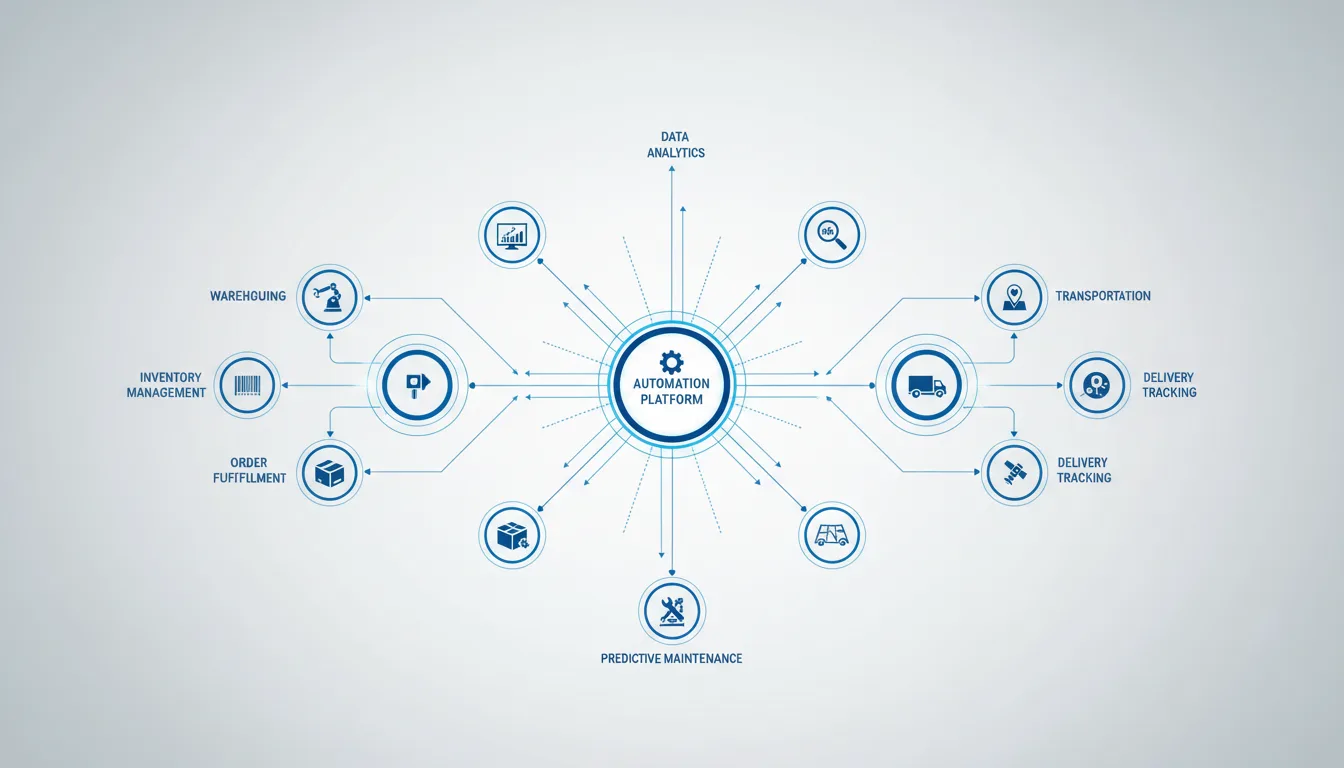
Overview
Automation in logistics refers to the strategic application of diverse technologies and systems designed to autonomously execute tasks within the complex supply chain and logistics processes. It fundamentally enhances efficiency, accuracy, and speed in operations, encompassing everything from sophisticated warehouse management to precise order fulfillment. The critical importance of automation lies in its ability to significantly reduce operational costs, elevate service levels, and enable unprecedented scalability within dynamic logistics operations, a necessity in today's globalized and demand-driven market [5]. Automation is not merely a tactical improvement but a strategic imperative for businesses seeking to maintain a competitive edge and meet escalating customer expectations.
Etymology and Origins
The term 'automation' is rooted in the Greek word 'automatos', meaning 'acting of itself' or 'self-moving.' This ancient concept found modern re-expression as technological advancements began to enable machines to perform tasks with minimal human intervention. While the idea of self-operating mechanisms dates back centuries, the specific term 'automation' was coined in the late 1940s by D.S. Harder, an engineering manager at Ford Motor Company, to describe the automatic handling of parts in and out of processes [6].
Initially emerging in the manufacturing sector and heavily influenced by the principles of cybernetics pioneered by Norbert Wiener in the 1940s and 1950s, the concept soon transcended factory floors. As logistics practices evolved, driven by increasing supply chain complexity and global trade, the terminology shifted to encompass logistics-specific processes, reflecting the profound integration of technology into every facet of supply chain management.
Historical Development
Automation in logistics has a rich history, predating modern computing and evolving through several distinct phases:
-
Early Mechanization (Late 19th - Early 20th Century): The roots of logistics automation can be traced to the Industrial Revolution's emphasis on mechanization. Early forms included conveyor belt systems and rudimentary material handling equipment, significantly improving factory and warehouse throughput. Henry Ford's assembly line, while manufacturing-focused, laid foundational principles for streamlined movement and process standardization that would later influence logistics [7].
-
Post-WWII & Operations Research (1940s-1960s): The industrial boom following World War II spurred a focus on efficiency. The rise of operations research, a discipline that applied mathematical methods to optimize complex systems, began to influence inventory control and routing strategies, albeit largely through manual calculations initially. Norbert Wiener's work on cybernetics provided a theoretical framework for control systems, paving the way for automated feedback loops.
-
Computerization & Early Inventory Systems (1970s): The advent of affordable computing power marked a pivotal shift. Companies like IBM introduced early computing systems for inventory tracking and accounting, replacing cumbersome manual ledgers. This decade also saw the commercialization of sophisticated material handling equipment like Automated Storage and Retrieval Systems (AS/RS) and early forms of Automated Guided Vehicles (AGVs) in large-scale distribution centers.
-
Warehouse Management Systems (WMS) & JIT (1980s): This era witnessed the emergence of dedicated Warehouse Management Systems (WMS) software. These systems moved beyond simple inventory tracking to manage complex warehouse operations, including receiving, putaway, picking, and shipping. Concurrently, the 'Just-in-Time' (JIT) philosophy, pioneered by Toyota, emphasized lean inventory and efficient flow, driving further demand for automated and precise logistics control [8].
-
Barcodes & EDI (1990s): The widespread adoption of barcode technology revolutionized inventory management and tracking accuracy. Electronic Data Interchange (EDI) became standard for inter-company communication, automating document exchange between trading partners and significantly enhancing supply chain visibility. Early iterations of Enterprise Resource Planning (ERP) systems began to integrate various business functions, including logistics, under one umbrella [9].
-
E-commerce Boom & RFID (2000s): The explosion of e-commerce created unprecedented demands for faster, more accurate fulfillment. This spurred advancements in WMS capabilities, including wave picking and slotting optimization. Radio-Frequency Identification (RFID) technology began to gain traction for automated item-level tracking, further improving inventory accuracy and reducing manual scans. The integration of ERP with WMS became crucial for end-to-end process control.
-
Robotics, AI & IoT (2010s-Present): The current decade is defined by advanced robotics, artificial intelligence (AI), and the Internet of Things (IoT). Autonomous Mobile Robots (AMRs), collaborative robots (cobots), and robotic arms are now commonplace in warehouses, handling picking, packing, and sorting. AI and machine learning are employed for predictive analytics, demand forecasting, and route optimization. IoT sensors provide real-time visibility into asset location, condition, and environmental factors, facilitating truly responsive and intelligent supply chains. Technologies like visual inventory management systems and mobile order fulfillment platforms represent the cutting edge, offering intuitive control and enhanced operational flexibility.
Core Concepts
The core concept of automation in logistics encompasses several advanced technologies and practices designed to streamline and optimize processes:
- Inventory Management: Automation tools are crucial for maintaining optimal stock levels, reducing carrying costs, and preventing stockouts. This includes Automated Storage and Retrieval Systems (AS/RS) that automatically store and retrieve items, RFID technology for real-time tracking, and software-driven processes like cycle counting and stock replenishment. Modern visual inventory management systems provide a comprehensive, real-time overview of all stock, enabling proactive decision-making.
- Order Fulfillment: This area sees extensive automation to enhance speed and accuracy. Technologies include robotic picking arms, Automated Guided Vehicles (AGVs) or Autonomous Mobile Robots (AMRs) for transporting goods, pick-to-light systems, and advanced sortation equipment. Software like mobile order fulfillment systems and those facilitating batch picking or pick-to-tote significantly enhance throughput and order accuracy. SkuSavvy's pick, pack, and ship software is an example of an integrated solution for these tasks.
- Shipping and Receiving: Automated systems optimize the inbound and outbound flow of goods. For receiving, this involves automated palletizers/depalletizers, optical scanning systems for rapid product identification, and sophisticated purchase order management systems to streamline check-in processes. For shipping, automation includes automated labeling, dimensional weighing, package sortation, and advanced algorithms for route optimization and automated rate selection, reducing delivery times and costs.
- Material Handling Automation: Dedicated systems like conveyor belts, robotic arms for palletizing and depalletizing, AGVs/AMRs, and AS/RS are fundamental. These systems minimize manual labor, increase safety, and ensure continuous material flow throughout the warehouse or distribution center [10].
- Data Analytics & AI: Leveraging historical and real-time data, advanced analytics, and artificial intelligence (AI) models forecast demand, optimize inventory placement, predict equipment maintenance needs, and refine routing. This data-driven approach allows for dynamic adjustments to supply chain operations and provides insights into operational efficiency, including employee productivity.
- Process Automation (RPA): Beyond physical automation, Robotic Process Automation (RPA) automates repetitive, rule-based administrative tasks such as data entry, invoice processing, and report generation, freeing up human staff for more complex problem-solving [11].
Industry Applications
Automation is widely utilized across various sectors, transforming their operational models:
- E-commerce: Automated systems are vital for managing the high volume and speed demanded by online retail. This includes robotic fulfillment centers (e.g., Amazon's Kiva robots), micro-fulfillment centers located closer to urban consumers, and advanced Shopify WMS integrations to streamline order processing, inventory tracking, and rapid delivery. Drone delivery trials are also emerging for last-mile efficiency.
- Manufacturing: Automation integrates machines for real-time inventory control, automated assembly lines, and quality inspection. Concepts like 'lights-out' manufacturing, where facilities operate with minimal human presence, and the use of collaborative robots (cobots) working alongside humans are increasingly common [12].
- Retail: Beyond e-commerce fulfillment, automation in physical retail involves automated checkout systems, inventory robots that scan shelves for stock levels and planograms, and smart shelving systems that monitor product availability. Automated last-mile delivery solutions are also being explored to enhance customer convenience.
- Third-Party Logistics (3PLs): 3PL providers leverage automation to manage diverse client needs, offering services like high-volume sorting, sophisticated cross-docking operations, and specialized handling for various product types, ensuring efficiency and cost-effectiveness across multiple supply chains.
Benefits and Advantages
Integrating automation into logistics operations yields significant competitive advantages:
- Cost Reduction: By minimizing manual labor, optimizing routes, and reducing energy consumption through efficient machinery, automation significantly lowers operational expenses. For example, automated picking systems can drastically reduce labor costs associated with manual order selection [13]. Calculating the ROI on WMS and inventory apps is crucial for justifying these investments.
- Increased Accuracy: Automation reduces human error in tasks like data entry, picking, and packing, leading to fewer mis-shipments, improved inventory integrity, and fewer returns. This directly translates to higher customer satisfaction and reduced reverse logistics costs.
- Improved Throughput: Automated systems can operate continuously, 24/7, at speeds far exceeding human capabilities. This results in faster processing times, quicker order fulfillment, and increased overall operational capacity, especially crucial during peak seasons.
- Scalability: Automation provides the flexibility to manage fluctuating volumes without proportionally increasing workforce or infrastructure. For instance, an order management system paired with robotic material handling allows businesses to scale up rapidly during peak demand like Black Friday or scale down during slower periods, maintaining efficiency.
- Enhanced Safety: Automating hazardous or repetitive tasks, such as heavy lifting or working in extreme temperatures, significantly reduces workplace injuries and improves employee well-being.
- Better Customer Satisfaction: Faster, more accurate deliveries, coupled with real-time tracking capabilities enabled by automation, directly contribute to a superior customer experience and build brand loyalty.
Challenges and Limitations
Despite its numerous benefits, automation in logistics presents several challenges:
- High Initial Costs: Implementing sophisticated automation solutions requires substantial upfront investments in technology, infrastructure, and integration. This can be a barrier for smaller businesses, although a clear ROI calculation can justify the expenditure over time.
- Job Displacement & Reskilling: Automation can lead to concerns about job losses among workers whose tasks are taken over by machines. This necessitates strategic planning for reskilling existing employees into roles that manage, maintain, and program automated systems, focusing on human-robot collaboration.
- Technological Dependence & Vulnerabilities: Over-reliance on technology can create vulnerabilities. System failures, software glitches, or power outages can bring operations to a halt. Robust backup systems, redundancy, and disaster recovery plans are essential.
- Integration Complexity: Modern supply chains involve a myriad of disparate systems (WMS, ERP, TMS, OMS, etc.). Integrating these diverse technologies to work seamlessly can be complex, time-consuming, and require specialized IT expertise. Achieving true interoperability is a significant hurdle [14].
- Maintenance and Support: Automated systems, especially robotics, require specialized maintenance and technical support. The availability of skilled technicians and spare parts can be a challenge, impacting uptime and operational costs.
- Cybersecurity Risks: As systems become more interconnected, they become more susceptible to cyber threats. Protecting proprietary data, operational control systems, and customer information is paramount for maintaining trust and operational integrity.
Best Practices
To effectively implement and maximize the value of automation in logistics, businesses should adopt a strategic approach:
- Conduct Thorough Assessments: Before investing, analyze current operations to identify bottlenecks, repetitive tasks, and areas with high error rates. Use process mapping and data analysis to pinpoint tasks most suitable for automation and conduct feasibility studies, including simulations and pilot programs, to validate proposed solutions.
- Implement Phased Approach: Rather than a 'big bang' implementation, consider a phased rollout. Start with small, manageable projects, gather lessons learned, and then scale up. This minimizes risk and allows for continuous optimization.
- Invest in Employee Training & Change Management: Automation is not just about technology; it's about people. Train employees not only to manage and maintain automated systems but also to collaborate effectively with them. Implement robust change management strategies to address concerns, foster acceptance, and highlight the new opportunities automation creates for higher-value work. SkuSavvy offers onboarding guides to help teams adapt.
- Leverage Data Analytics for Continuous Improvement: Utilize the wealth of data generated by automated systems to continually monitor performance, identify new efficiencies, and optimize processes. Key Performance Indicators (KPIs) and productivity tracking dashboards are essential for informed decision-making and demonstrating ROI.
- Strategic Vendor Selection: Choose automation partners and solutions that offer flexibility, scalability, and strong integration capabilities. Prioritize vendors with proven track records and robust customer support, such as SkuSavvy's comprehensive platform.
- Prioritize Cybersecurity: Design automation systems with security in mind from the outset. Implement strong access controls, encryption, and regular security audits to protect against cyber threats and ensure operational resilience.
Future Trends
The future of automation in logistics is set to evolve significantly, driven by ongoing technological advancements and increasing market demands:
- Enhanced AI & Machine Learning: AI will move beyond predictive analytics to more autonomous decision-making, enabling systems to dynamically re-route, re-slot inventory, and even negotiate with suppliers in real-time. Machine learning will lead to predictive maintenance for equipment and hyper-personalized fulfillment strategies.
- Increased Use of Autonomous Vehicles & Drones: Broader deployment of autonomous trucks for long-haul transportation, drones for last-mile delivery in urban and remote areas, and more sophisticated AMRs within warehouses will become commonplace, further reducing labor dependencies and increasing delivery speed.
- Continued Integration of IoT & Digital Twins: IoT sensors will provide even more granular, real-time tracking of goods, assets, and environmental conditions. The concept of 'digital twins' – virtual replicas of physical supply chains – will allow for real-time simulation, optimization, and predictive analysis of complex logistics networks.
- Blockchain for Transparency: Blockchain technology is poised to enhance supply chain transparency and traceability, providing an immutable record of goods movement and ownership, which can be integrated with automated tracking systems [15].
- Hyper-personalization & On-Demand Logistics: Automation will enable a shift towards highly customized order fulfillment and dynamic, on-demand logistics services, adapting quickly to individual customer preferences and fluctuating market conditions.
- Dark Warehouses: Fully automated fulfillment centers requiring minimal human presence, often referred to as 'dark warehouses,' will become more prevalent, driven by advancements in robotics and AI, especially for specific types of goods.
Automation marks a critical and continuous shift in logistics, fundamentally changing how supply chains operate and respond to dynamic market conditions. With ongoing innovations, the seamless integration of physical and digital automation will become increasingly vital for achieving efficiency, resilience, and competitive success in the industry.
Sources
- WMS vs ERP Analysis
- Mobile Warehouse Management System
- Order Fulfillment Guide
- Cycle Counting Guide
- The Ultimate Guide to Logistics Automation
- The Future of Automation - Harvard Business Review
- History of Material Handling Industry
- Just-in-Time Production System - Toyota
- Barcodes Guide - SkuSavvy
- Material Handling Equipment Overview
- Robotic Process Automation (RPA) in Logistics
- The Rise of Lights-Out Manufacturing
- Visual Inventory Management System - SkuSavvy
- Supply Chain Integration Challenges
- Blockchain in Supply Chain Management