Contract Management in Logistics
This article discusses the principles, history, and importance of contract management in logistics and supply chain management.
Updated
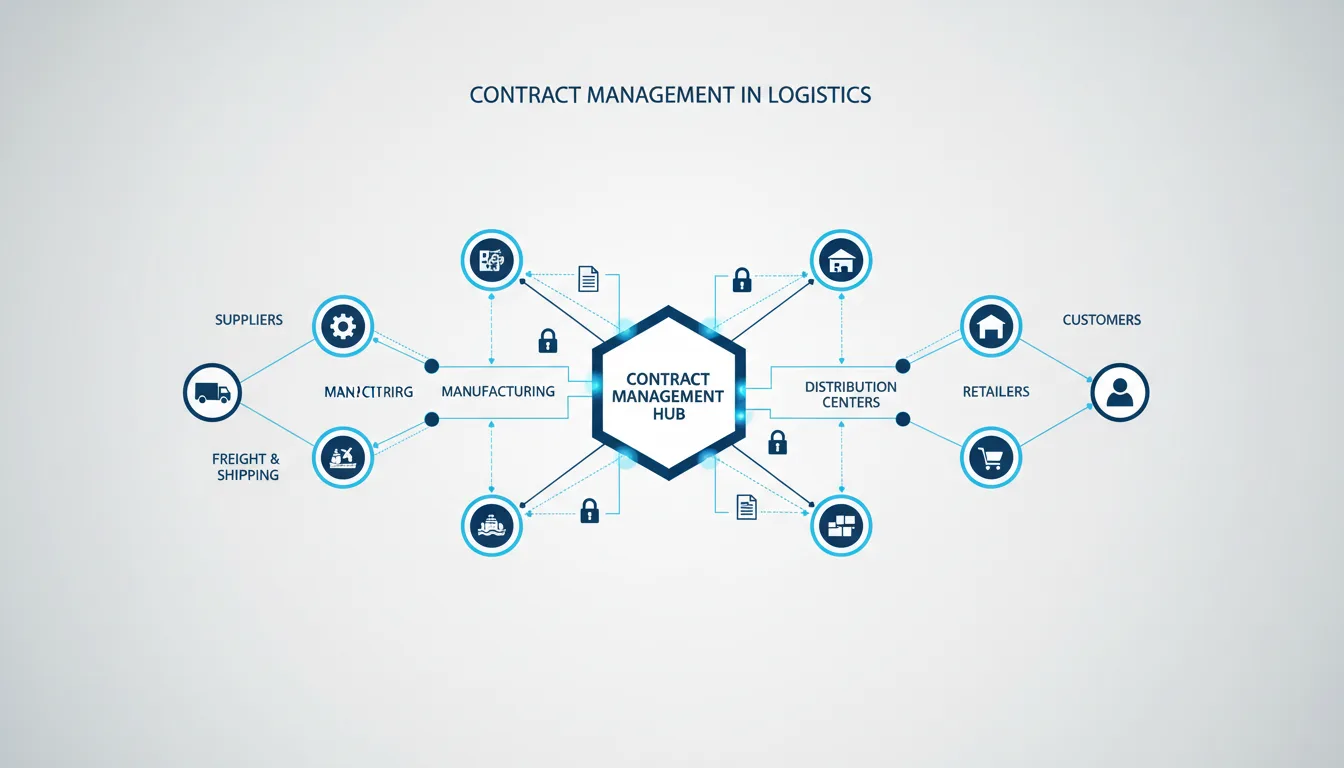
Contract Management in Logistics
Overview
Contract management is an essential discipline within logistics and supply chain management, focusing on creating, executing, and analyzing contracts to maximize operational and financial performance. Effective contract management ensures that all parties involved meet their contractual obligations, minimizing risks and fostering transparency. A well-structured approach can improve supply chain efficiency and reduce costs in procurement, warehousing, and distribution processes.
Etymology and Origins
The term 'contract management' combines two key concepts: contract, from the Latin word contractus, meaning 'to draw together,' and management, derived from the Italian maneggiare, meaning 'to handle' or 'to direct.' The formal use of the term 'contract management' in the context of business operations emerged in the mid-20th century, as organizations increasingly recognized the significance of legally binding agreements in achieving strategic goals. The early documentation of this discipline can be traced back to the development of procurement practices in the 1950s and 1960s, laying the foundation for modern techniques in logistics management (Cohen, A.).
Historical Development
The practice of contract management has evolved significantly over the decades:
- 1920s-1930s: The introduction of formal contracting processes in industries such as construction and manufacturing, primarily focused on local projects.
- 1950s: Recognition of contract management's importance in supply chain logistics with the rise of large corporations, such as IBM and General Motors, utilizing formal procurement policies.
- 1970s: Development of various contract types, including fixed-price and cost-reimbursement contracts, led by pioneers like Peter Drucker advocating for efficiency in corporate management.
- 1990s: Emergence of e-contracting services, leveraging digital platforms to improve efficiency, including early documents like the Uniform Electronic Transactions Act (UETA) facilitating electronic signatures.
- 2000s onwards: Adoption of digital contract management systems, including automated workflows that streamline contract lifecycle management.
Major milestones include the establishment of the Contract Management Standard by organizations like the National Contract Management Association in the late 20th century. Further evolution occurred with the rise of concepts like Just-In-Time (JIT) inventory management at Toyota in the 1980s, pushing companies to tighten contract terms with suppliers to minimize waste and optimize resources.
Core Concepts
Contract management encompasses several core concepts, which include:
- Contract Creation: Drafting agreements that outline duties and expectations among parties, ensuring clarity and compliance with legal standards.
- Execution and Monitoring: Overseeing contract performance, including monitoring timelines, deliverables, and costs using dedicated contract management software.
- Compliance Management: Ensuring adherence to contractual terms and conditions, as well as to relevant laws and regulations.
- Dispute Resolution: Addressing conflicts that arise during contract performance through negotiation, mediation, or arbitration, often informed by frameworks established in foundational texts such as the Principles of Contract Law.
Types and Classifications
Contract management encompasses various types of contracts, such as:
- Fixed-Price Contracts: Specify a set price for contracted work, promoting budget control and predictability.
- Cost-Plus Contracts: Allow reimbursement for incurred costs plus an additional fee, suitable for projects with uncertain costs like research and development.
- Time and Materials Contracts: Charge based on hourly rates and materials used, common in maintenance and repair services, providing flexibility in scope and budget.
Understanding these classifications enables logistics professionals to select the most appropriate contracts based on project needs and risk assessments.
Industry Applications
Contract management finds extensive applications across sectors including:
- Supply Chain and Procurement: Ensuring suppliers deliver quality products on time, as per contractual agreements, thereby reducing supply disruption risk.
- Transportation: Managing agreements with carriers and freight forwarders to optimize delivery schedules and costs, contributing to overall logistics efficiency.
- Warehousing: Administering contracts pertaining to storage, distribution, and inventory management to enhance operational efficiency, with protocols outlined in warehouse management documentation.
- Construction: Regulating agreements with contractors, subcontractors, and suppliers to maintain project timelines and budgets, often utilizing milestone payments to incentivize performance.
Benefits and Advantages
The effective management of contracts offers numerous advantages:
- Enhanced legal compliance and risk management through structured guidelines and monitoring.
- Improved supplier relationships through clear communication expectations facilitated by documented agreements.
- Increased cost savings by analyzing performance metrics against agreed terms, determining areas for renegotiation or reinforcement.
- Optimization of resource allocation, allowing for improved operational efficiency and performance metrics tracking.
Challenges and Limitations
Despite its benefits, contract management faces several challenges:
- Complexity in drafting contracts that cater to diverse operational needs, requiring legal expertise and industry knowledge.
- Difficulty in monitoring compliance and performance, particularly with multiple stakeholders, necessitating robust tracking systems.
- Potential for disputes arising from misinterpretations of contractual clauses, emphasizing the need for clear language and definitions.
- Legal and regulatory changes affecting existing contracts, especially in rapidly evolving industries like technology and pharmaceuticals.
Addressing these challenges requires ongoing training and implementation of best practices in contract management, alongside the adoption of innovative technological solutions.
Best Practices
To enhance contract management efficacy, best practices include:
- Utilizing cloud-based contract management systems for real-time tracking and collaboration, enabling stakeholders to access and modify contracts within secure platforms.
- Establishing clear communication channels among stakeholders, fostering a culture of transparency and accountability in the contract lifecycle.
- Regularly reviewing and updating contracts to reflect changing business needs and conditions, ensuring ongoing relevance and compliance.
- Conducting audits and performance reviews to ensure compliance and identify potential risks early, utilizing workflow automation for efficient assessments.
Future Trends
The landscape of contract management is evolving, with key trends such as:
- Increased adoption of artificial intelligence and automation to streamline contract review processes and enhance risk assessment capabilities, minimizing human error and increasing speed.
- The rise of blockchain technology for secure contract execution and management, providing immutable records and reducing potential fraud instances.
- Greater emphasis on sustainability clauses in contracts to meet corporate social responsibility goals, reflecting the evolving expectations of consumers and regulatory bodies alike.
Related Concepts
Contract management interrelates with several logistics concepts, including procurement management, supplier relationship management, and legal compliance. Leveraging effective contract management practices can reinforce the overall integrity of logistics operations, paving the way for enhanced business performance.