Contract Lifecycle Management in Logistics
An overview of Contract Lifecycle Management (CLM) in logistics, covering its importance, origins, development, and technological tools.
Updated
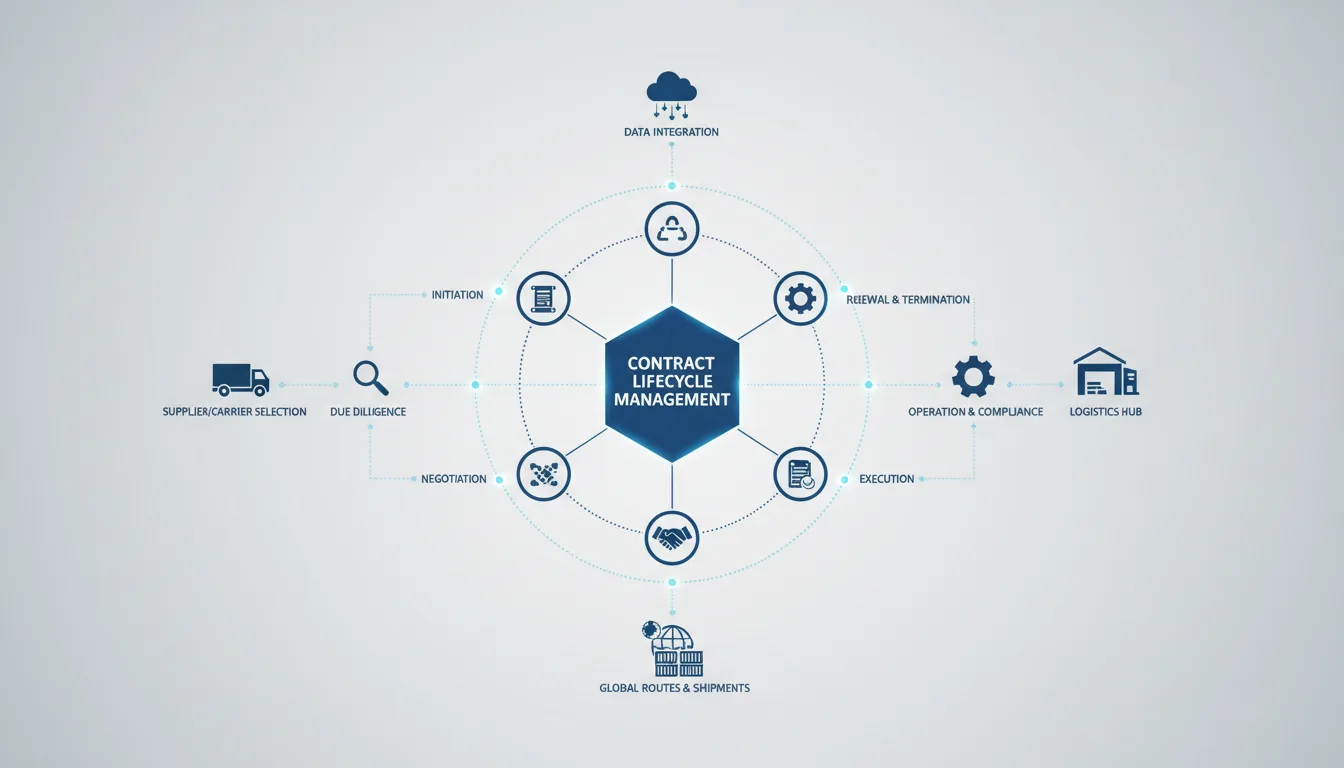
Contract Lifecycle Management in Logistics
Overview
Contract Lifecycle Management (CLM) refers to the systematic management of contracts from creation through execution and eventual termination. In the logistics sector, effective CLM is not just an administrative task but a strategic imperative, ensuring streamlined operations, regulatory compliance, and robust risk management. It is crucial for balancing cost efficiencies, maximizing contract value, and maintaining strong relationships with suppliers, carriers, and customers [5]. By focusing on improving clarity and accountability across the intricate network of logistics agreements, CLM is fundamental for achieving a well-functioning, resilient, and optimized supply chain.
Etymology and Origins
The term "contract" derives from the Latin term contractus, meaning "to draw together or tighten," historically signifying a binding agreement [6]. While the concept of managing agreements is as old as commerce itself, the specific phrase "Contract Lifecycle Management" as an industry term began to gain traction in the late 1990s and early 2000s [7]. This period marked a significant shift from viewing contracts as static legal documents to dynamic assets requiring active management across their entire existence, from initial negotiation to renewal or termination [7]. The evolution reflects the growing complexity of global supply chains and the increasing reliance on technology to manage these intricate relationships.
Historical Development
Early Practices (Pre-1990s)
Before the widespread adoption of digital technologies, contract management was largely a manual, decentralized, and often reactive process. Organizations typically relied on paper-based filing systems housed in legal or procurement departments, alongside spreadsheets for basic tracking. This approach was prone to human error, lacked real-time visibility, and made tasks like tracking obligations, renewal dates, and performance metrics incredibly labor-intensive and inefficient. The focus was primarily on legal enforceability rather than proactive management and value extraction.
1990s: Dawn of Digitalization and ERP Integration
The 1990s saw the rise of enterprise resource planning (ERP) systems, such as those championed by Oracle. These systems began to centralize various business functions, including some aspects of procurement and sales. While not dedicated CLM solutions, ERPs offered the first steps toward digitizing contractual data, allowing for better organization and rudimentary tracking of commercial terms [8]. The increasing globalization of supply chains and the rise of outsourcing led to a surge in contract volumes and complexity, making purely manual methods unsustainable.
Early 2000s: Emergence of Dedicated CLM Software
The early 2000s marked a pivotal period with the introduction of specialized CLM software solutions. This era was driven by several factors: increased regulatory scrutiny (e.g., the Sarbanes-Oxley Act of 2002 in the US, emphasizing corporate accountability), the need for greater transparency, and the growing recognition that poor contract management led to significant financial leakage and operational risks [9]. Dedicated CLM systems allowed companies to move beyond basic tracking to more comprehensive management, including automated clause libraries, workflow approvals, and compliance monitoring, significantly transforming the landscape of contract administration.
2010s and Beyond: Cloud, AI, and Strategic Integration
From the 2010s onward, CLM solutions underwent rapid evolution. The shift to cloud computing made CLM software more accessible, scalable, and collaborative, enabling dispersed teams to manage contracts more effectively. Technological advancements, particularly in Artificial Intelligence and Machine Learning, began to be integrated into CLM platforms, allowing for advanced capabilities such as predictive analytics for contract performance, automated clause extraction, risk assessment, and intelligent contract generation [10].
Crucially, the focus shifted to deep integration with other critical supply chain and enterprise systems. CLM became an integral part of the digital thread, linking with ERP systems, Warehouse Management Systems, Order Management Systems, and Purchase Order Management solutions. This interconnectedness allows businesses to leverage real-time data for better decision-making, optimize spend, mitigate supply chain disruptions, and ensure end-to-end visibility of contractual obligations and performance across the entire logistics network.
Core Concepts
At its core, CLM involves various stages, often streamlined by digital workflows to ensure efficiency and compliance:
- Contract Creation: This stage encompasses drafting, negotiation, and approval. Best practices emphasize using standardized templates and pre-approved clause libraries to ensure compliance, accelerate negotiation cycles, and reduce legal risk. For logistics, this includes defining precise terms for freight rates, delivery windows, and service level agreements (SLAs).
- Contract Execution: Once finalized, contracts must be properly executed, ensuring all parties legally bind themselves to the terms. This stage specifies performance metrics, key performance indicators (KPIs), and clear responsibilities, such as those found in purchase order management or vendor agreements.
- Contract Monitoring & Management: This involves the ongoing analysis of compliance and performance against agreed-upon terms. Crucial elements include tracking deadlines, milestones, and renewal dates, as well as monitoring the financial aspects and service delivery to maximize efficiency and identify potential issues. Robust systems are employed for tracking these stages, which often include features provided by order management systems.
- Contract Renewal/Termination: Based on performance insights gained during the monitoring phase, strategic decisions are made regarding whether to renew, renegotiate, or terminate a contract. This stage critically evaluates the ongoing value, risks, and alignment with current business objectives.
Industry Applications
CLM is indispensable across various sectors, most notably in supply chain and logistics, where a multitude of complex relationships with vendors, suppliers, carriers, and customers must be meticulously managed. Organizations deploy CLM software to:
- Ensure Compliance: Adherence to diverse regulatory requirements, such as international trade laws, customs regulations, and environmental standards, is critical. For example, a global freight forwarder uses CLM to manage contracts with different shipping lines, ensuring all agreements comply with IMO (International Maritime Organization) regulations and local port tariffs [11].
- Optimize Supplier and Carrier Contracts: Managing contracts with logistics service providers (LSPs), raw material suppliers, and freight carriers to identify better procurement strategies, negotiate favorable terms, and enforce service level agreements. This directly impacts purchase order management and overall cost control.
- Streamline Operations: Integration with operational systems like warehouse management systems allows contractual terms (e.g., storage rates, handling fees) to be automatically applied and monitored, ensuring efficiency and reducing billing disputes. For instance, a 3PL provider uses CLM to automatically apply client-specific pricing for warehousing and fulfillment services, ensuring accurate invoicing based on agreed-upon volume tiers and service metrics.
Benefits and Advantages
The advantages of implementing comprehensive CLM are significant for logistics operations:
- Improved Compliance: Ensures adherence to legal, regulatory, and internal policy requirements, significantly reducing legal and financial risks associated with non-compliance.
- Increased Efficiency: Automates routine, manual processes across the contract lifecycle, leading to faster contract cycles, reduced administrative overhead, and more efficient resource allocation.
- Enhanced Visibility and Control: Provides a centralized repository and real-time insights into contract performance, obligations, and risks, which promotes accountability among stakeholders and facilitates proactive decision-making. This visibility is crucial for managing a complex web of logistics agreements.
- Cost Savings and Value Maximization: By actively tracking and analyzing contract terms, organizations can identify opportunities for renegotiation, eliminate unnecessary spend, optimize pricing with vendors, and avoid costly penalties or missed deadlines.
- Risk Mitigation: Proactive identification and management of contractual risks, including potential supply chain disruptions, non-performance, or regulatory changes.
Challenges and Limitations
Despite its benefits, organizations may face challenges in CLM implementation and adoption:
- Integration Issues: Difficulty in integrating CLM tools with a myriad of existing enterprise systems (ERP, WMS, OMS) can hinder data flow and create silos. This often requires robust integration capabilities and careful planning.
- Data Management: Ensuring data accuracy, consistency, and security across all contracts is paramount but can be resource-intensive, especially with legacy data or diverse contract formats.
- Change Resistance: Adopting new technologies and process changes often meets resistance from staff accustomed to traditional, manual methods. Effective change management and comprehensive training are essential.
- Complexity of Logistics Contracts: Logistics contracts are inherently complex, often involving multiple parties, intricate pricing structures, and dynamic service level agreements, making standardization and automation challenging.
Strategies to mitigate these challenges include investing in comprehensive training programs, selecting CLM tools with robust integration capabilities, and implementing a phased rollout approach.
Best Practices
To successfully implement and leverage CLM in logistics, organizations should adopt several best practices:
- Standardize Contracts and Clauses: Utilize pre-approved templates and a centralized clause library to ensure consistent terms, reduce drafting errors, and accelerate negotiation cycles. This is particularly valuable for recurring logistics services or supplier agreements.
- Invest in Integrated Technology: Leverage platforms that offer dedicated CLM functionalities and integrate seamlessly with existing enterprise systems, such as order management systems, warehouse management systems, and vendor portals. Modern CLM solutions often incorporate advanced workflows to automate approvals and task assignments.
- Establish Clear Governance and KPIs: Define clear roles, responsibilities, and key performance indicators (KPIs) for contract management. Regular performance reviews against these KPIs help ensure contracts deliver expected value and compliance.
- Continuous Training and Change Management: Offer regular training sessions to keep personnel updated on CLM software features, compliance requirements, and best practices. Effective change management strategies are crucial for user adoption.
- Proactive Risk Management: Incorporate risk assessment and mitigation strategies throughout the contract lifecycle, using CLM tools to monitor potential compliance breaches, financial exposure, or operational bottlenecks.
Technology and Tools
Modern CLM systems are highly sophisticated, incorporating cutting-edge technology to enhance contract efficiency and intelligence:
- AI and Machine Learning: Utilized for advanced capabilities like automated clause identification, risk scoring, predictive analytics for contract performance, and intelligent search functions. AI can also assist in identifying discrepancies or potential non-compliance patterns [10].
- Cloud Solutions: Provide scalability, accessibility, and collaboration features, allowing stakeholders from different departments or geographical locations to work on contracts securely and in real-time. This is essential for global logistics operations.
- Integration with ERP & Other Enterprise Systems: Seamless connectivity with ERP systems, WMS, OMS, and CRM systems provides a holistic view of business operations, linking contractual agreements directly to operational execution and financial outcomes [12]. SkuSavvy, for example, emphasizes robust integrations to connect various aspects of the supply chain.
Organizations looking to deploy CLM software should thoroughly evaluate their specific needs, considering the complexity of their logistics operations and choosing solutions that offer both comprehensive features and strong integration capabilities aligning with their strategic goals.
Future Trends
The future of CLM in logistics is poised for significant transformation, driven by ongoing technological advancements and evolving supply chain demands:
- Increased Automation: Expect even greater automation of contract creation, negotiation, and execution processes through AI-powered tools, reducing manual effort and accelerating cycle times. This will extend to automated alerts for compliance issues and performance deviations.
- Enhanced Data Analytics and Predictive Insights: The use of advanced data analysis will move beyond historical reporting to provide predictive insights into contract performance, risks, and opportunities. This will enable more strategic decision-making based on real-time and forecasted metrics.
- Greater Emphasis on Compliance and ESG (Environmental, Social, Governance): With rising global regulations and increasing focus on sustainable and ethical supply chains, CLM advancements will include more rigorous oversight functionalities to ensure compliance with complex ESG clauses and international trade agreements.
- Blockchain for Trust and Transparency: Emerging technologies like blockchain could provide immutable records of contract terms and execution, enhancing transparency and trust among logistics partners, particularly for multi-party agreements [13].
Related Concepts
Contract Lifecycle Management is intrinsically linked to several crucial logistics and supply chain concepts. Effective CLM directly impacts and is supported by vendor management, ensuring that supplier agreements are managed optimally. It is also closely tied to purchase order management, as purchase orders are often direct executions of underlying contracts. Furthermore, CLM influences and is influenced by broader supply chain risk management, legal compliance frameworks, and procurement strategies. Understanding these interconnections is vital for building a resilient and efficient supply chain.
By streamlining contract processes, leveraging advanced technology, and integrating with key operational systems, businesses in logistics can significantly drive operational efficiencies, mitigate risks, and enhance their overall supply chain performance and profitability.
Sources
- Order Management System
- Mobile Warehouse Management System
- Vendor Portal
- Purchase Order Management
- What is Contract Lifecycle Management (CLM)?
- Contract (Law)
- A Brief History of Contract Management Software
- The Evolution of Contract Management: From Manual to AI-Driven
- Sarbanes-Oxley Act of 2002
- AI in Contract Management: The Future of Legal Tech
- About IMO
- What is CRM (Customer Relationship Management)?
- Blockchain in Supply Chain Management: Opportunities and Challenges
- Workflows Overview
- Integrations Hub