Concepts of Robotics in Logistics
This article explores the integration of robotics in logistics, covering its definitions, historical evolution, applications, and future trends.
Updated
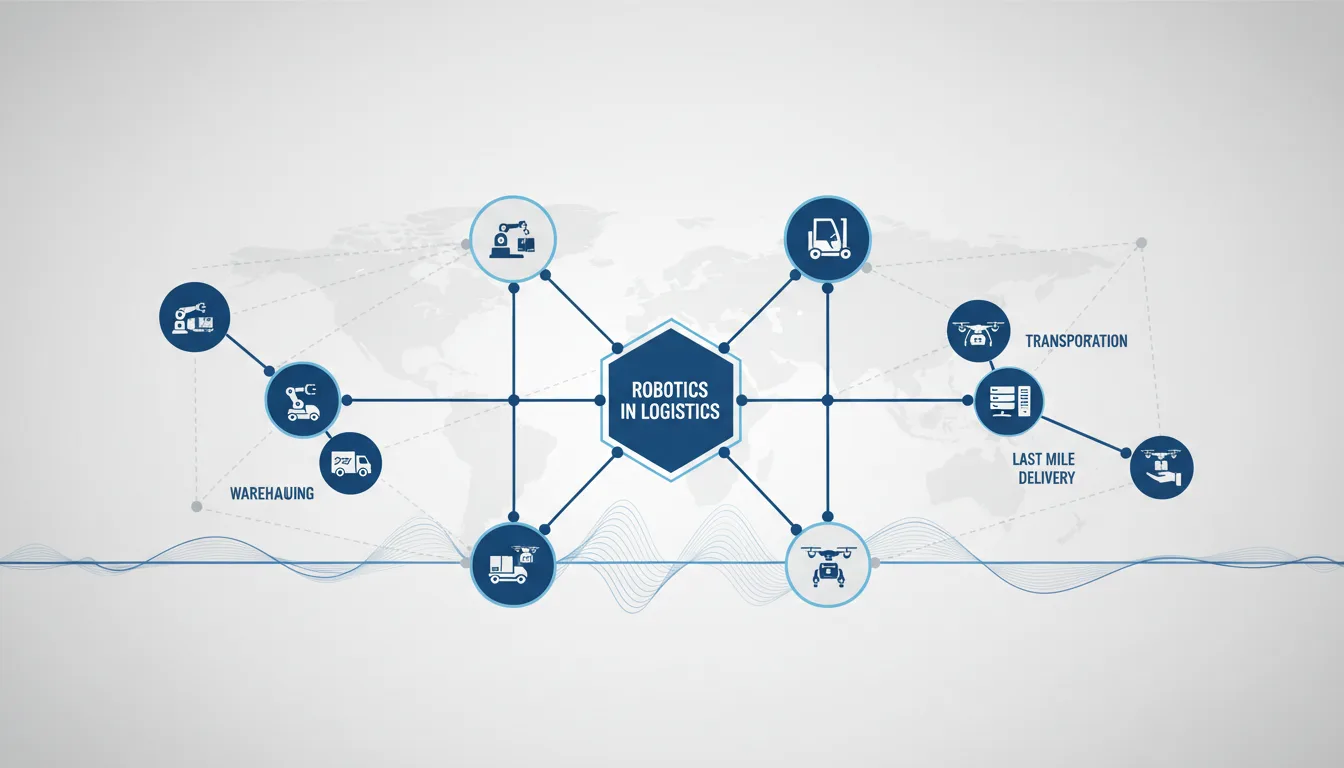
Overview
Robotics in logistics refers to the application of robotic systems to improve and automate logistical operations within supply chains. The integration of robotics not only enhances productivity but also reduces costs and increases accuracy in order fulfillment processes. As businesses strive to meet the increasing demands for faster delivery and efficiency, robotic systems have become pivotal in transforming logistics operations, offering solutions from automating warehouse tasks to streamlining last-mile delivery.
Etymology and Origins
The term "robot" originates from the Czech word "robota," meaning forced labor or work. It was first introduced to the world in the play "R.U.R. (Rossum's Universal Robots)" written by Czech playwright Karel Čapek in 1920 [6]. Čapek's play depicted artificial human-like workers that ultimately rebelled against their creators, a concept that sparked public imagination and debate about artificial life and labor [7].
While Čapek popularized the term, the conceptual roots of automated machines performing human tasks can be traced back to ancient automata and the mechanical marvels of the Enlightenment. Over decades, the concept evolved from a literary construct to a tangible engineering pursuit, blending definitions from mechanical engineering, control theory, and early artificial intelligence as technologies matured to facilitate physical tasks in various sectors, including logistics. The development of cybernetics in the mid-20th century further cemented the scientific understanding of control and communication in both animals and machines, laying theoretical groundwork for modern robotics [8].
Historical Development
The journey of robotics in logistics is intertwined with the broader history of industrial automation and computational advancements:
- Pre-1950s: Theoretical Foundations and Early Automation. While not directly logistics robots, the development of numerical control (NC) machines in the 1940s and early computational theories laid the groundwork for programmable automation. Early material handling systems like conveyors and basic sorting mechanisms were manual or semi-automated but highlighted the need for more flexible solutions.
- 1950s-1960s: Birth of Industrial Robotics. The first true industrial robots emerged. George Devol patented the "Programmed Article Transfer" in 1954, leading to the creation of the Unimate robot in 1961 by Unimation, co-founded by Devol and Joseph Engelberger [9]. Initially, these robots were deployed in hazardous or repetitive manufacturing tasks, primarily in the automotive industry (e.g., spot welding for General Motors), not directly in logistics warehouses.
- 1970s-1980s: Entry into Logistics & Early AGVs. As industrial robots became more sophisticated with improved sensors and microprocessors, their application began to extend beyond manufacturing. The 1980s saw robotics gain traction in logistics with the introduction of Automated Guided Vehicles (AGVs). These early AGVs, following embedded wires or markers, were primarily used for stable, repetitive material transport in large facilities, often integrated with early Warehouse Management Systems (WMS) to optimize material flow within factories and large distribution centers [10]. The rise of Just-in-Time (JIT) manufacturing, pioneered by Toyota in the 1970s, further amplified the need for efficient and automated material handling to reduce inventory and lead times.
- 1990s-2000s: E-commerce Boom and Advanced Automation. The explosion of e-commerce in the late 1990s created an unprecedented demand for faster, more accurate order fulfillment. This era saw significant advancements in Automated Storage and Retrieval Systems (AS/RS) and the introduction of robotic arms for picking and sorting tasks, though often fixed or rail-mounted. Companies like Kiva Systems (founded 2003) began developing mobile robotic solutions specifically for warehouse fulfillment.
- 2010s: Autonomous Mobile Robots (AMRs) and Cobots. This decade marked a paradigm shift. Amazon's acquisition of Kiva Systems in 2012 led to the widespread adoption of Autonomous Mobile Robots (AMRs) for goods-to-person order fulfillment, significantly enhancing efficiency and throughput in large-scale operations. Unlike AGVs, AMRs navigate dynamically using sensors and advanced algorithms, adapting to changing environments. Concurrently, Collaborative Robots (Cobots) emerged, designed to work safely alongside human workers without extensive safety caging, enabling human-robot collaboration in tasks like pick-to-tote and kitting [11].
- Present Day: AI, Machine Learning, and Hyper-Automation. Robotics continues to innovate logistics with smarter systems using AI and machine learning technologies. Modern robots leverage advanced computer vision, predictive analytics, and sophisticated pathfinding algorithms for greater autonomy and adaptability. This includes applications in diverse areas such as drone-based inventory counting, automated truck loading/unloading, and even last-mile delivery bots. The focus is increasingly on flexible, scalable, and intelligent automation that can handle complex, unstructured environments and integrate seamlessly with holistic visual inventory management systems.
Core Concepts
Robotics in logistics operates on various core concepts, evolving from simple automation to complex intelligent systems:
- Automation: The primary goal of robotics is to automate repetitive, strenuous, or hazardous tasks such as picking, packing, sorting, and material transport. This leads to increased throughput, reduced human error, and enhanced overall operational efficiency [12]. Robots excel in predictable environments, and their integration requires careful warehouse layout design and process optimization.
- Integration: Robotics systems are rarely standalone; they must integrate seamlessly with existing enterprise systems. This includes Warehouse Management Systems (WMS), Order Management Systems (OMS), Enterprise Resource Planning (ERP) systems, and Transportation Management Systems (TMS). Effective integration ensures a smooth flow of information, enabling robots to receive tasks, report status, and synchronize with human operations and other automated equipment.
- Data Utilization & AI: Advanced robotics leverage vast amounts of operational data, combined with Artificial Intelligence (AI) and Machine Learning (ML), to optimize routing, inventory management, and task allocation. This is crucial in dynamic environments where accurate inventory levels and demand forecasting are necessary for smooth operations. AI-driven robots can learn from experience, predict maintenance needs, and adapt to changing conditions, leading to continuous improvement in performance.
- Flexibility and Scalability: Modern robotic solutions are designed to be flexible, capable of handling a variety of products, and scalable to meet fluctuating demand. This often involves modular robot fleets that can be easily expanded or reconfigured, supporting rapid growth or seasonal peaks without extensive infrastructure changes.
- Human-Robot Collaboration: With the rise of cobots and intelligent AMRs, the concept of robots working alongside humans in a shared workspace has become central. This collaboration aims to augment human capabilities, allowing workers to focus on more complex, value-added tasks while robots handle the mundane or physically demanding ones, improving both safety and productivity.
Industry Applications
Robotics finds extensive applications across the logistics spectrum, transforming how goods are handled, stored, and moved:
- E-commerce Fulfillment Centers: This sector is a primary driver of robotics adoption. Automated Storage and Retrieval Systems (AS/RS) and AMR fleets streamline order picking, packing, and sortation, enabling rapid processing of large volumes of diverse products. Companies like Ocado utilize sophisticated robotic networks to handle broad inventories effectively, significantly reducing delivery times and improving order accuracy.
- Manufacturing Logistics: Within factories, robots assist in moving materials between production lines (e.g., using AGVs or AMRs), loading/unloading parts, and palletizing finished goods. This ensures an efficient flow of goods, supports Just-in-Time inventory strategies, and improves worker safety by handling heavy or ergonomically challenging tasks.
- Healthcare Supply Chain: Robots are increasingly being used to automate medical supply deliveries within hospitals and clinics, transport hazardous materials, and manage pharmacy inventories. This reduces the risk of contamination, improves delivery speed, and frees up staff for patient care.
- Retail and Grocery: In brick-and-mortar retail, robots perform tasks like inventory auditing, shelf scanning for out-of-stock items, and even floor cleaning. In grocery, automated micro-fulfillment centers powered by robots are emerging to handle online grocery orders efficiently.
- Last-Mile Delivery: Experimental applications include autonomous delivery robots navigating urban environments to deliver packages directly to customers, particularly for short-distance, high-frequency deliveries. Drone delivery is also being piloted for rural areas or specific product types.
Benefits and Advantages
Organizations adopting robotics in logistics experience several profound benefits:
- Increased Efficiency and Throughput: Automation drastically reduces time spent on manual tasks, leading to faster order processing, higher fulfillment rates, and improved overall operational throughput. Robots can operate 24/7 without fatigue, ensuring continuous productivity.
- Cost Reduction: While initial investment can be significant, operational costs decrease due to improved accuracy (fewer errors mean less rework), reduced labor costs over time, and optimized use of warehouse space. The Total Cost of Ownership (TCO) often proves favorable in the long run [13].
- Enhanced Safety: Robots can handle heavy loads, hazardous materials, or work in extreme environments (e.g., cold storage), mitigating risks and reducing workplace injuries for human workers. This also improves worker ergonomics by eliminating repetitive strain tasks.
- Improved Accuracy and Quality: Robotic systems perform tasks with high precision and consistency, significantly reducing errors in picking, packing, and sorting, leading to higher customer satisfaction and fewer returns.
- Scalability and Flexibility: Robotic fleets can be scaled up or down relatively quickly to meet fluctuating demand, providing flexibility for seasonal peaks or unexpected market changes. Modern AMRs can be redeployed easily as warehouse layouts or operational needs evolve.
- Competitive Advantage: Companies leveraging advanced robotics can offer faster delivery times, lower shipping costs, and a more reliable service, establishing a significant competitive edge in a demanding market.
Challenges and Limitations
Despite their advantages, robotics in logistics faces several challenges that organizations must carefully consider:
- High Initial Investment and Integration Costs: The capital expenditure for purchasing robots, implementing new infrastructure, and integrating systems with existing WMS or ERP can be substantial, often deterring smaller companies from adoption. The Return on Investment (ROI) needs careful calculation.
- Technological Complexity and Maintenance: Implementing and maintaining robotic systems requires specialized technical knowledge and skilled personnel. The complexity extends to software integration, programming, and troubleshooting, which can be a barrier to entry or a continuous operational cost.
- Job Displacement Concerns and Workforce Transition: Automation can lead to the displacement of human labor in certain manual task sectors, raising ethical considerations and social challenges. Successful adoption requires robust strategies for workforce retraining, upskilling, and transitioning employees to new roles that involve overseeing, maintaining, or collaborating with robots.
- Interoperability and Standardization: Different robotic vendors often use proprietary systems, leading to challenges in integrating diverse robot fleets or connecting them with various WMS/OMS platforms. A lack of common industry standards can hinder seamless operation and data exchange [14].
- Cybersecurity Risks: As robots become more connected and reliant on data, they introduce new cybersecurity vulnerabilities to the supply chain network. Protecting robotic systems from unauthorized access or malicious attacks is crucial.
- Adaptability to Unstructured Environments: While significant progress has been made, robots still struggle with highly unstructured or unpredictable environments, complex decision-making, and handling delicate or irregularly shaped items with the dexterity of a human.
Best Practices
To implement robotics effectively in logistics and maximize their benefits, organizations should consider a strategic and phased approach:
- Strategic Assessment and Pilot Programs: Conduct thorough assessments to identify specific pain points, bottlenecks, and areas where robotics can add the most value and achieve a quantifiable ROI. Start with small-scale pilot programs to test viability, refine processes, and gather data before a full-scale rollout.
- Holistic System Integration: Plan for comprehensive integration with existing and future enterprise systems like WMS, OMS, and ERP. Ensure data flows smoothly to enable intelligent decision-making and real-time operational visibility.
- Workforce Training and Change Management: Invest heavily in training staff to work alongside robotic systems, understand their functionalities, and transition into new roles focused on supervision, maintenance, and higher-level problem-solving. Implement robust change management strategies to address concerns about job displacement and foster acceptance of automation [15].
- Vendor Selection and Partnership: Engage with technology partners who offer flexible, scalable, and customizable robotic solutions tailored to specific logistical needs. Prioritize vendors with strong support, proven track records, and a clear roadmap for future development.
- Focus on Modularity and Scalability: Choose robotic solutions that allow for modular expansion and reconfiguration, enabling businesses to adapt to changing demands and future growth without major overhauls.
- Data-Driven Optimization: Implement robust data collection and analytics capabilities to continuously monitor robot performance, identify areas for improvement, and optimize operational workflows. Utilize tools that provide a visual overview of inventory and robot paths.
- Safety First: Prioritize safety in all robotic deployments, adhering to industry standards and best practices for human-robot interaction, especially with collaborative robots.
Future Trends
Emerging trends in robotics promise even more transformative impacts on logistics:
- Increased AI and Machine Learning Integration: The future of robotics in logistics will involve even more sophisticated AI to enhance decision-making, enable predictive analytics for maintenance, optimize complex routing, and facilitate more natural human-robot interaction. Generalized AI will allow robots to learn and adapt to entirely new tasks.
- Robots as a Service (RaaS): A shift towards renting robotic services instead of purchasing them is gaining traction, providing greater flexibility, lower upfront costs, and easier scalability for businesses of all sizes.
- Sustainability Initiatives: Robotics can contribute significantly to greener logistics as automated systems often optimize routes, reduce energy consumption, and minimize waste. Electric AMRs and optimized workflows lead to lower carbon footprints.
- Dexterous Manipulation and Soft Robotics: Advances in robotic grippers and soft robotics will enable robots to handle a wider variety of fragile, irregularly shaped, or delicate items, expanding automation into previously challenging areas like apparel or fresh produce fulfillment.
- Swarm Robotics and Collaborative Networks: Future systems will likely involve larger fleets of diverse robots working collaboratively and autonomously, optimizing tasks in complex, dynamic environments through collective intelligence.
- Digital Twins and Simulation: The use of digital twins—virtual replicas of physical systems—will become more prevalent for simulating and optimizing robot deployments, predicting performance, and training AI models before physical implementation.
Related Concepts
Robotics in logistics is closely related to concepts such as automation, artificial intelligence, machine learning, and supply chain management, all of which synergistically contribute to the evolution of logistics operations. Understanding these interconnected fields is crucial for harnessing the full potential of robotics in modern supply chains.
By strategically embracing robotics, businesses can significantly enhance logistics capabilities, adapt to the demands of a rapidly changing market, and create resilient, efficient, and sustainable supply chains for the future.
Sources
- Order Fulfillment Guide
- Pick, Pack, Ship Software
- Mobile Warehouse Management System Overview
- Cycle Counting Guide
- Cross-Docking Guide
- R.U.R. (Rossum's Universal Robots)
- Robot: The Story of a Word
- Cybernetics: Or Control and Communication in the Animal and the Machine
- George C. Devol - Unimate
- Automated Guided Vehicle (AGV)
- Collaborative Robots
- Manufacturing Automation and Robotics Market Insights
- Automated Material Handling Systems: Total Cost of Ownership
- Interoperability in Robotics
- Workforce Automation and the Future of Work
- Visual Inventory Management System
- Warehouse Layout Preview
- Order Management System
- Logistics Gets a Robot Upgrade
- The Future of Last-Mile Delivery: Automation and AI
- Automated Storage and Retrieval Systems (AS/RS)
- Just-in-Time (JIT) Inventory
- Automated Material Handling Systems: Total Cost of Ownership