Concepts Advancements in Logistics
An in-depth exploration of advancements in logistics concepts, highlighting their impact on modern supply chain management.
Updated
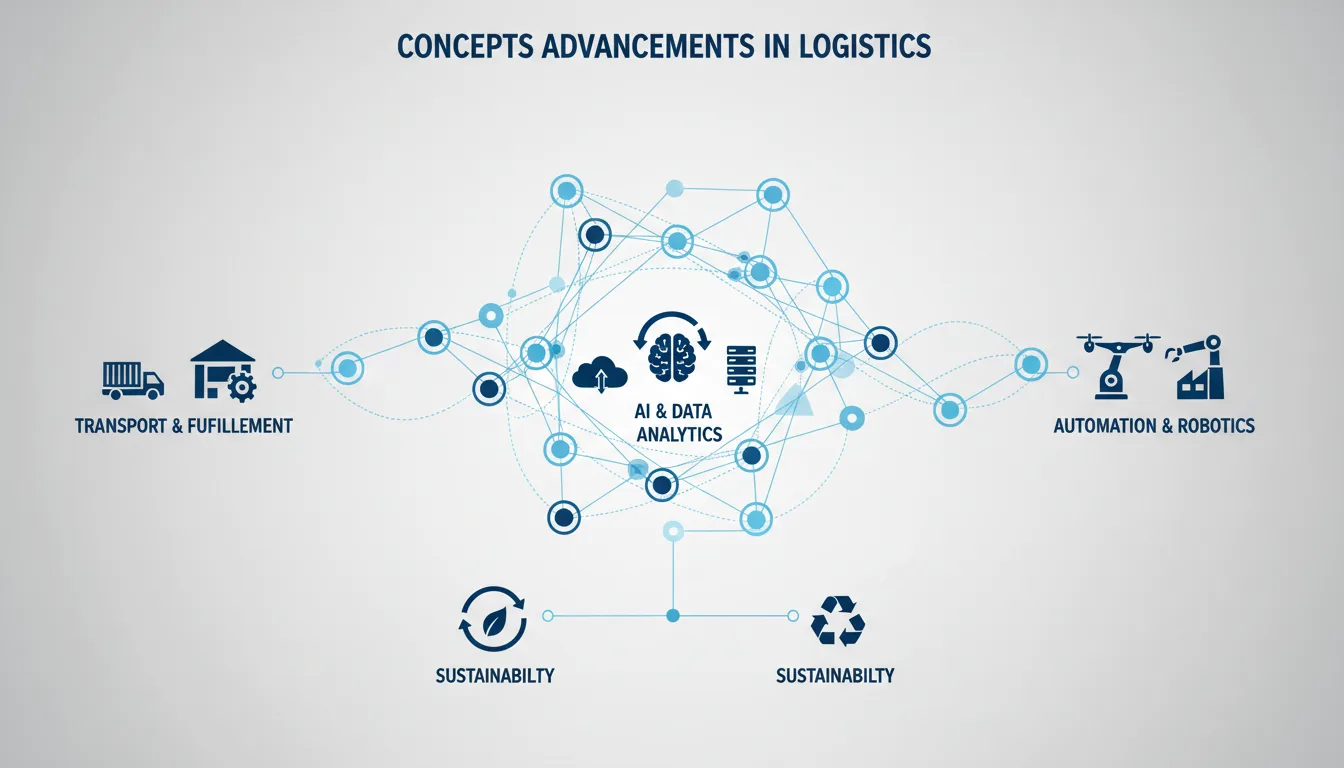
Overview
The concept of advancements in logistics refers to the continuous evolution of strategies, technologies, and practices that enhance the efficiency and effectiveness of supply chains. These advancements play a crucial role in improving operational management, cost reduction, and customer satisfaction. The logistics sector has witnessed significant transformations, propelled by global trends like globalization, technological innovations, and the rise of e-commerce.
Etymology and Origins
The term "logistics" has a rich history, deriving from the Ancient Greek word "logistikos" (λογιστικός), meaning skilled in calculating or reasoning. Its earliest practical application and formalization are often traced back to military operations. In the late 17th and early 18th centuries, the term appeared in French as "logistique," referring to the art of moving, quartering, and supplying troops. A key figure in this formalization was the Swiss military strategist Antoine-Henri Jomini, who, in his 1838 book Précis de l'Art de la Guerre (The Art of War), defined logistics as "the practical art of moving armies." This emphasized the complex coordination required for supply management, transportation, and troop deployment.
The modern application of logistics within business began to take shape in the mid-20th century, particularly after World War II. The complex supply chains developed during wartime provided a blueprint for industrial applications. The shift towards managing commercial supply chains as a distinct strategic function gained significant vigor in the second half of the 20th century with the advent of globalization, increasing complexity of distribution networks, and rapid technological advancements.
Historical Development
Early Developments
The origins of logistics are deeply embedded in military history. Ancient societies, from the Roman legions to the vast armies of Genghis Khan, relied on sophisticated logistical planning to sustain military campaigns across vast distances. Effective supply lines for food, water, weapons, and reinforcements were crucial for survival and conquest. During the Napoleonic Wars in the early 19th century, the importance of logistics was underscored by commanders who recognized that a well-supplied army could often outperform a larger, but poorly provisioned, force.
The term began to shift toward commercial applications more prominently in the post-World War II industrial boom, particularly during the 1950s and 1960s, when companies began adopting more formal logistics strategies to manage increasingly complex distribution networks and raw material sourcing.
Pioneers and Key Figures
Several individuals contributed significantly to the evolution of logistics into a distinct academic and business discipline:
- Peter Drucker: Although primarily a management theorist, Drucker's emphasis on management by objectives and the importance of efficiency and effectiveness across business functions profoundly influenced the strategic integration of logistics with overall business strategy.
- H. Lee & M. Billington: Their 1992 publication, "Managing Supply Chain Inventory: Pitfalls and Opportunities" in Sloan Management Review, outlined basic tenets of supply chain management, highlighting the interplay between inventory, information, and collaboration.
- Joseph Orlicky: Considered the "father of MRP," Orlicky developed Material Requirements Planning (MRP) at IBM in the 1960s, revolutionizing how manufacturing companies planned and managed their production schedules and inventory.
- W. Edwards Deming: His work on Total Quality Management (TQM) and statistical process control significantly influenced the development of lean practices and JIT, emphasizing continuous improvement and waste reduction across all processes, including logistics.
- Malcolm McLean: An American trucking entrepreneur, McLean pioneered the development of intermodal shipping containers in the mid-1950s, dramatically reducing cargo handling costs and transit times, and laying the groundwork for modern global supply chains.
Major Milestones and Publications
The introduction of the Just-in-Time (JIT) system by Toyota in the 1970s, heavily influenced by Deming's principles, revolutionized manufacturing and logistics by focusing on producing goods only when needed. This drastically reduced inventory costs, waste, and lead times while ensuring product availability. JIT's principles paved the way for broader lean supply chain practices.
Simultaneously, the widespread adoption of Material Requirements Planning (MRP) in the 1970s and its evolution into Manufacturing Resource Planning (MRP II) in the 1980s provided integrated systems for managing all manufacturing resources, including logistics and finance. This marked a significant step towards enterprise-wide planning.
Subsequent seminal publications, such as “The Goal” by Eliyahu M. Goldratt (1984), highlighted the importance of identifying and managing bottlenecks in production and distribution, reinforcing the strategic role of efficient logistics in manufacturing. The establishment of professional bodies like the Council of Supply Chain Management Professionals (CSCMP) in 1963 (originally the National Council of Physical Distribution Management) further solidified logistics as a recognized business function.
Technological Evolution
The transition from largely manual logistics operations to computerized systems began in the late 1960s and 1970s with the nascent development of MRP systems. The 1980s saw the widespread adoption of Enterprise Resource Planning (ERP) systems, which integrated various business functions, including logistics, finance, and human resources, into a single software platform. This allowed for better data sharing and process coordination.
Key technological advancements further streamlined operations:
- Barcoding: Introduced in the 1970s and widely adopted in the 1990s, barcodes revolutionized inventory tracking and data collection, significantly improving speed and accuracy in warehousing and retail. SkuSavvy offers comprehensive guidance on implementing barcodes for efficient inventory management [6, sourceType: skusavvy].
- Electronic Data Interchange (EDI): Standardized electronic communication between businesses facilitated faster and more accurate exchange of purchase orders, invoices, and shipping notices.
- Warehouse Management Systems (WMS): These specialized software solutions emerged to optimize warehouse operations, from receiving to shipping, and became critical in the 1990s. Modern WMS, like SkuSavvy's Mobile WMS [5], automate these processes and provide real-time visibility.
- Transportation Management Systems (TMS): Developed to optimize freight planning, execution, and settlement.
- Radio-Frequency Identification (RFID): Advancements in RFID technology in the 2000s offered more granular, hands-free tracking of inventory, complementing barcodes.
- Integration of Artificial Intelligence (AI) and Machine Learning (ML): Since the 2000s, AI has been increasingly used for predictive analytics, demand forecasting, route optimization, and autonomous systems.
- Internet of Things (IoT): Real-time data collection from sensors on vehicles, pallets, and warehouse equipment provides unprecedented visibility and actionable insights.
- Mobile Technologies: The widespread adoption of smartphones and ruggedized mobile devices has enabled real-time data entry [5], inventory lookup, and task management directly on the warehouse floor, improving efficiency and accuracy.
Core Concepts
Definition and Functionality
Advancements in logistics encompass a broad range of practices and technologies designed to enhance the flow and storage of goods, services, and related information from point of origin to point of consumption. Key functional areas benefiting from these advancements include:
- Inventory Management: Optimizing inventory levels across the supply chain to meet demand while minimizing holding costs. This involves sophisticated forecasting, classification, and visual tracking systems [7, sourceType: skusavvy].
- Order Fulfillment: The end-to-end process from receiving an order to its delivery, striving for speed, accuracy, and cost-effectiveness. Modern order fulfillment systems [8, sourceType: skusavvy] integrate picking, packing, and shipping functionalities.
- Efficient Distribution Systems: Designing and managing networks of warehouses, distribution centers, and transportation modes to ensure timely and cost-effective delivery.
Concepts such as lean supply chain practices, heavily influenced by JIT, focus on minimizing waste (e.g., overproduction, waiting, unnecessary transport, excess inventory, defects) while maximizing productivity and value delivery. Technologies like Warehouse Management Systems (WMS) are central to this, orchestrating inventory flow, optimizing warehouse layout, and enhancing order accuracy and speed. SkuSavvy provides tools for comprehensive workflow management [9, sourceType: skusavvy] to streamline these processes.
Examples of Modern Advancements
- Automation in warehouses utilizing robotics for picking (e.g., Automated Guided Vehicles (AGVs) and Autonomous Mobile Robots (AMRs)) and packing processes has gained traction, significantly enhancing throughput and reducing labor costs. E-commerce giants like Amazon extensively use robotics in their fulfillment centers.
- Implementation of advanced analytics allows organizations to predict demand more accurately, enabling responsive supply chain strategies. This includes predictive maintenance for equipment and dynamic routing for transportation.
- Digital Twins: Virtual replicas of physical logistics systems (warehouses, transportation networks) allow for real-time monitoring, simulation, and optimization before implementing changes in the real world.
Importance of Data
The utilization of big data analytics in logistics has fundamentally transformed decision-making processes. By collecting and analyzing vast amounts of data from various sources (sensors, WMS, TMS, ERP, customer feedback), companies gain insights for better resource allocation, more accurate demand forecasting, inventory optimization, and operational efficiency. This leads to enhanced service levels, reduced costs, and improved customer satisfaction. For example, predictive analytics can identify potential disruptions before they occur, allowing for proactive mitigation strategies. Leveraging data also supports productivity tracking for employees [10, sourceType: skusavvy] and process improvements.
Industry Applications
E-Commerce
E-commerce companies, such as Amazon, exemplify advancements in logistics through sophisticated order fulfillment systems that integrate multiple technologies and automated work processes. Their ability to rapidly fulfill orders, often guaranteeing next-day or even same-day delivery, is a model for efficiency in logistics operations. This involves highly optimized pick, pack, and ship software [11, sourceType: skusavvy], strategically located distribution centers, and advanced last-mile delivery solutions. For more insights into order fulfillment strategies, check our Order Fulfillment Guide [1].
Manufacturing
In manufacturing, advances in logistics enable streamlined production flows and improved inventory management. Techniques like cross-docking, which minimizes storage time by directly transferring goods from inbound to outbound logistics, and cycle counting, which involves regularly counting small sections of inventory to maintain accuracy, are essential in maintaining system efficiency and flexibility. These practices reduce carrying costs and improve material availability for production. Learn more about these practices through our resources on Cross-Docking [2] and Cycle Counting [3]. Furthermore, effective stock replenishment strategies [12, sourceType: skusavvy] are critical for maintaining continuous production without excessive inventory buffers.
Challenges and Limitations
Despite significant advancements, logistics faces persistent challenges:
- Supply Chain Disruptions: Geopolitical instability, natural disasters, pandemics, and trade wars can severely impact global supply chains, leading to delays and increased costs. The COVID-19 pandemic highlighted the vulnerability of extended supply networks.
- Regulatory Compliance: Navigating complex and evolving international trade regulations, customs procedures, and environmental standards adds layers of complexity and cost.
- Technological Adoption and Integration: The rapid pace of technological change requires continuous investment and successful integration of disparate systems (e.g., WMS, TMS, ERP) across the supply chain, which can be costly and challenging.
- Labor Shortages and Skill Gaps: A growing shortage of skilled labor, particularly truck drivers and warehouse personnel, combined with the need for new skills to operate advanced technologies, poses a significant hurdle.
- Sustainability Pressures: Increasing pressure from consumers, regulators, and investors to adopt environmentally friendly practices (e.g., reducing carbon emissions, waste management) requires significant operational overhauls and investment in green logistics solutions.
- Cybersecurity Risks: As logistics systems become more interconnected and digital, they become more vulnerable to cyber attacks, which can disrupt operations and compromise sensitive data.
Companies must invest in talent development and technology to fully leverage advancements while addressing these multifaceted challenges.
Best Practices
Organizations aiming to enhance their logistics frameworks should focus on:
- Implementing Robust WMS and OMS Solutions: Utilizing advanced software like SkuSavvy's Mobile WMS [5] and Order Management Systems [8] for real-time inventory accuracy, optimized warehouse layout (e.g., leveraging a Visual Warehouse Layout [4]), and efficient order processing, including methods like batch picking [13, sourceType: skusavvy].
- Utilizing Data Analytics and AI: Leveraging big data for informed decision-making, predictive demand forecasting, route optimization, and identifying potential supply chain risks. This enables a shift from reactive to proactive management.
- Continuous Personnel Training and Development: Regular training for personnel on current technologies, best practices, and lean methodologies is crucial for maximizing efficiency and adaptability.
- Maintaining Agile and Resilient Supply Chains: Developing flexible strategies and contingency plans to adapt quickly to market fluctuations, disruptions, and unexpected events. This involves diversifying suppliers, building redundancy, and fostering strong supplier relationships.
- Embracing Sustainability: Integrating environmentally friendly practices, such as optimizing transportation routes to reduce fuel consumption, using electric vehicles, and implementing circular economy principles, to meet regulatory demands and corporate social responsibility goals.
- Fostering Collaboration: Enhancing communication and collaboration with suppliers, carriers, and customers through integrated platforms to improve visibility and coordination across the entire supply chain.
For insights on effective warehouse management techniques, explore our Warehouse Layout Preview [4] and Mobile WMS Overview [5].
Future Trends
Emerging trends in logistics point toward further hyperautomation, combining AI, ML, and robotics to create highly efficient, self-optimizing operations. The integration of AI for predictive analytics will become even more sophisticated, enabling prescriptive actions. Blockchain technology is gaining traction for enhancing supply chain transparency, traceability, and security, especially in complex global networks. The use of sustainable practices will evolve beyond compliance to become a core competitive differentiator, driving demand for green logistics, circular economy models, and alternative fuels.
The evolution of autonomous delivery systems, including drones for last-mile delivery and self-driving trucks, presents a thrilling, albeit challenging, direction for logistics advancements. Hyper-personalization in e-commerce fulfillment will push the boundaries of delivery speed and customization. For businesses, adapting to these trends will be crucial for maintaining a competitive edge and building resilient, future-proof logistics capabilities in the evolving landscape of global logistics.
Related Concepts
The continuous advancements in logistics are intricately interlinked with concepts such as supply chain management, inventory control, and operational efficiency. Understanding these relationships is essential for optimizing logistics practices and enhancing overall supply chain performance. Other related areas include procurement, manufacturing, customer service, and information technology, all of which contribute to the holistic success of a modern logistics operation.
Sources
- Order Fulfillment Guide
- Cross-Docking Guide
- Cycle Counting Guide
- Warehouse Layout Preview
- Mobile WMS Overview
- Barcodes Guide
- Visual Inventory Management System
- Order Management System
- Workflows Overview
- Productivity Tracking
- Pick, Pack, Ship Software
- Stock Replenishment Guide
- Batch Picking Guide
- Global Logistics and Supply Chain Management
- Logistics (business management)
- Logistics: The military roots of supply chain management
- What is Logistics?
- Military Logistics (PDF)
- The Evolution of Supply Chain Management from the 1900s to 2000s
- Management by Objectives (MBO)
- Managing Supply Chain Inventory: Pitfalls and Opportunities
- A Retrospective on the Origins of MRP, MRP II, and ERP
- The Deming Philosophy
- Malcom McLean
- Just-in-Time (JIT)
- The Goal: A Process of Ongoing Improvement
- CSCMP History
- Automating the warehouse is within reach for more companies than ever before
- Supply chain analytics: Delivering the right data at the right time