Computerized Planning in Logistics
Computerized planning in logistics enhances efficiency through data-driven decisions and supports optimal supply chain management.
Updated
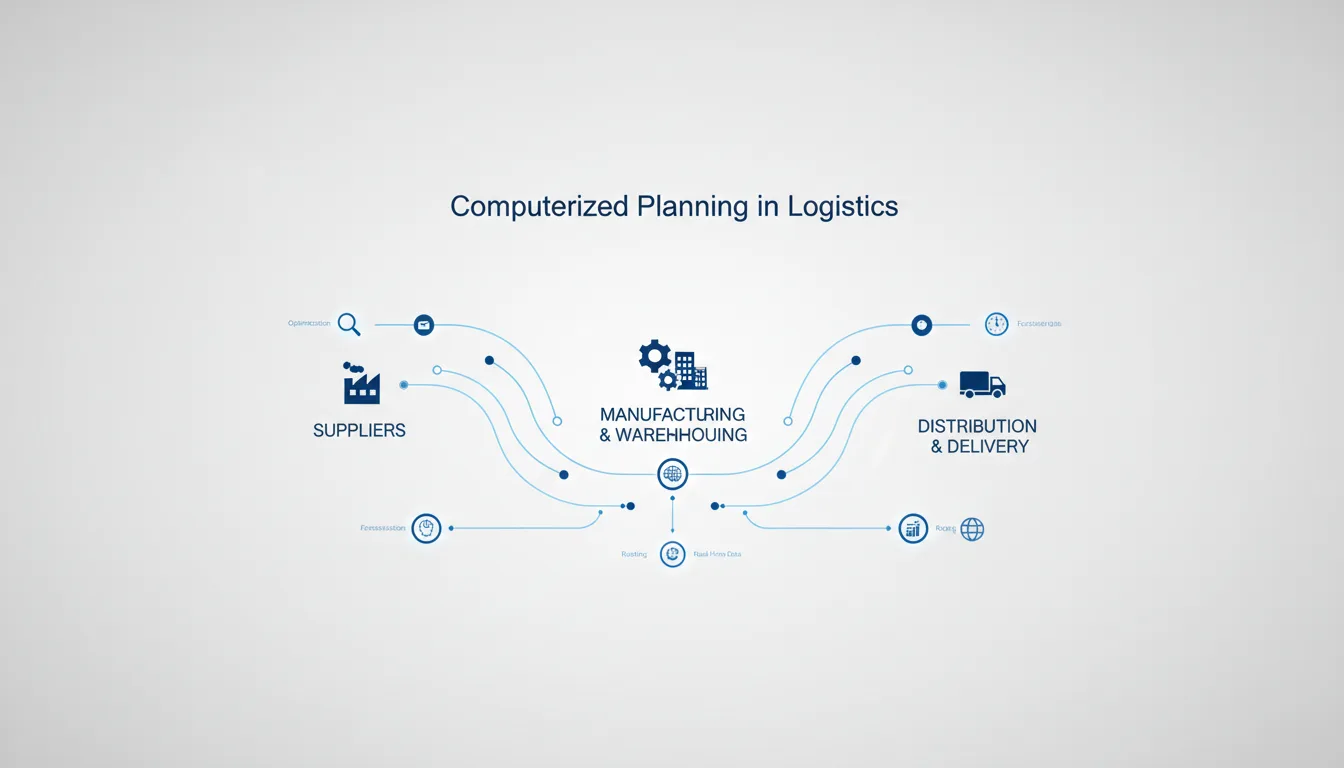
Overview
Computerized planning refers to the use of technology and software systems to facilitate the planning, execution, and management of logistics and supply chain activities. By leveraging advanced algorithms, real-time data, and predictive analytics, organizations can make more informed and strategic decisions regarding inventory management, transportation, production scheduling, and demand forecasting. The importance of computerized planning lies in its ability to optimize complex processes, significantly increase operational efficiency, enhance supply chain visibility, and reduce overall costs across the entire supply chain. This data-driven approach is critical for contemporary businesses aiming to maintain a competitive edge and adapt swiftly in a rapidly evolving global market [6].
Etymology and Origins
The concept of applying systematic, analytical methods to business processes predates computers, rooted in the scientific management principles of the early 20th century. However, the term "computerized planning" truly emerged alongside the advent of electronic digital computers in the mid-20th century. Its linguistic roots combine "computer" (from Latin computare, meaning "to compute" or "to reckon") and "planning" (from Latin planum, meaning "flat surface," evolving into "design" or "scheme").
The intellectual groundwork for computerized planning was laid by Operations Research (OR) methodologies, which gained prominence during World War II for optimizing military logistics. Early OR techniques, such as linear programming developed by George Dantzig in 1947, provided the mathematical frameworks for solving complex resource allocation problems [7]. Initially, these intricate calculations were performed manually or with rudimentary mechanical aids. The real shift began in the 1950s and 1960s as mainframe computers became available, allowing for the computational power necessary to run these complex models on a larger scale. This period saw the first applications of computers to solve problems in production scheduling, inventory control, and transportation routing [8]. The term evolved from simply "computer-assisted planning" to "computerized planning" as systems became more integrated and capable of executing entire planning functions autonomously. The integration of computers into logistics practices gained significant momentum with the introduction of enterprise resource planning (ERP) systems in the late 20th century, enabling more comprehensive and algorithm-based planning processes.
Historical Development
The roots of computerized planning can be traced back to the post-World War II era, with a significant acceleration in the latter half of the 20th century.
Key Eras and Milestones
- 1940s-1950s: The Dawn of Operations Research and Early Computation
- 1947: George Dantzig introduced the Simplex Method, a pivotal algorithm for linear programming, providing a mathematical basis for optimization [7]. Early computers like ENIAC were used for complex calculations, though direct application to logistics planning was nascent.
- Initial focus was on military and large-scale industrial problems, where computational resources were immense and dedicated.
- 1960s: Material Requirements Planning (MRP)
- This decade marked the first widespread application of computers to manufacturing planning. Pioneered by Joseph Orlicky and Oliver Wight at IBM, MRP systems were designed to plan and schedule materials and components required to produce a finished product [9]. This was a direct response to the increasing complexity of manufacturing operations.
- These early systems were often batch-processed on mainframe computers, requiring significant data input and processing time.
- 1970s: MRP II (Manufacturing Resource Planning) and Early Forecasting
- MRP evolved into MRP II, integrating more aspects of manufacturing beyond just materials, including finance, human resources, and marketing. This laid the conceptual groundwork for holistic business planning systems.
- Organizations began adopting specialized forecasting systems and basic computer-aided design (CAD) systems, enhancing their planning capabilities by predicting future demand and visualizing production layouts.
- 1980s: The Personal Computer Revolution and Specialized Logistics Software
- The rise of personal computers and networking capabilities made computerized planning accessible to a broader range of businesses. Standalone logistics software, including early Warehouse Management Systems (WMS), and Transportation Management Systems (TMS), began to emerge.
- Companies like J.D. Edwards and American Software developed dedicated modules for inventory, warehousing, and transportation [10].
- 1990s: ERP Dominance and the Emergence of Supply Chain Management (SCM)
- The decade saw the rapid adoption of comprehensive ERP suites from companies like SAP (R/3) and Oracle. These systems integrated all major business functions, including logistics, under a single database, fundamentally changing how companies approached planning and operations.
- The concept of Supply Chain Management (SCM) was formalized, emphasizing end-to-end planning and coordination across multiple entities [11]. The internet began to facilitate inter-organizational communication, paving the way for collaborative planning.
- 2000s: Internet, Cloud Computing, and Advanced Analytics
- The proliferation of the internet and web-based applications led to the development of Software-as-a-Service (SaaS) models, making sophisticated planning tools accessible to small and medium-sized businesses without large upfront investments. This period also saw advancements in real-time data analytics, RFID technology for enhanced tracking, and the emergence of advanced planning and scheduling (APS) systems.
- 2010s-Present: Digital Transformation, AI, and IoT
- Continued advancements in technology, including big data, artificial intelligence (AI), machine learning (ML), and the Internet of Things (IoT), have transformed computerized planning methodologies. Modern solutions are capable of predictive analytics, dynamic scheduling, prescriptive recommendations, and fostering highly resilient supply chains.
- Concepts like digital twins and blockchain are further enhancing visibility, traceability, and optimization in global logistics networks.
Core Concepts
Computerized planning encompasses several key components that work in concert to optimize logistics operations:
- Demand Forecasting: Utilizing statistical methods (e.g., time series analysis, regression) and machine learning algorithms (e.g., neural networks) to predict future customer demand. This enables businesses to anticipate needs, reduce stockouts, and minimize excess inventory. Advanced systems integrate external factors like weather, economic indicators, and social media trends for more accurate predictions.
- Inventory Management: Systems that automate processes like reorder point calculations, safety stock optimization, and stock level monitoring. Modern WMS solutions facilitate efficient bin-to-bin inventory transfer, cycle counting, and lots and expiration date tracking to ensure optimal stock levels, reduce carrying costs, and prevent waste.
- Transport Planning and Optimization: Algorithms that optimize delivery routes, vehicle loading (e.g., bin packing), and schedules, reducing fuel consumption, labor costs, and improving delivery times. These systems often incorporate real-time traffic data and weather conditions for dynamic re-routing.
- Production and Capacity Planning: For manufacturing, computerized planning ensures efficient scheduling of production lines, allocation of resources (machines, labor), and management of work-in-progress to meet demand while optimizing throughput and minimizing bottlenecks.
- Warehouse Operations Planning: Beyond inventory, computerized systems plan warehouse layouts, optimize picking paths (e.g., batch picking, pick-to-tote), manage putaway strategies (bin putaway criteria), and orchestrate complex workflows.
- Collaboration Tools: Integrated software platforms that promote seamless data sharing and communication across all supply chain partners—suppliers, manufacturers, distributors, and retailers. This enhances real-time visibility, improves decision-making, and fosters greater supply chain resilience.
Industry Applications
Computerized planning has become indispensable across a diverse range of industries, driving efficiency and strategic advantage:
- Retail & E-commerce: Major retailers and online stores employ sophisticated computerized systems to manage vast inventories, forecast seasonal demand, optimize product placement in distribution centers, and streamline order fulfillment processes. Platforms like SkuSavvy integrate with Shopify to provide global inventory visibility and ensure optimal stock levels across multiple sales channels and locations. Case Study: Amazon's use of advanced algorithms for inventory placement, dynamic pricing, and last-mile delivery optimization is a prime example of computerized planning at scale [12].
- Manufacturing: Automated planning facilitates efficient production scheduling, raw material procurement, and order management across multiple global locations. It helps manufacturers balance production capacity with demand, reducing lead times and optimizing resource utilization. For instance, an automotive manufacturer uses computerized systems to schedule the delivery of thousands of components daily, ensuring just-in-time production and minimizing costly inventory holdings.
- Healthcare: Hospitals and pharmaceutical companies utilize computerized planning to manage critical medical supplies, pharmaceuticals (including those with strict lot and expiration date requirements), and equipment. This ensures that necessary items are always available for patient care without overstocking, which can lead to waste due to expiry or obsolescence. It also aids in disaster preparedness and emergency response logistics.
- Third-Party Logistics (3PLs): 3PL providers leverage computerized planning for advanced warehouse optimization, multi-client inventory management, complex order fulfillment strategies, and highly efficient transport route planning across diverse client portfolios. This enables them to offer cost-effective and agile logistics services.
Benefits and Advantages
The implementation of computerized planning yields numerous strategic and operational benefits:
- Increased Efficiency and Productivity: Automating routine, data-intensive tasks (e.g., reordering, route calculation) frees up personnel for higher-level strategic activities and problem-solving. This leads to faster processing times and improved throughput.
- Significant Cost Reduction: Effective planning minimizes errors, reduces waste (e.g., spoilage, obsolescence), optimizes resource utilization (e.g., warehouse space, vehicle fuel), and enhances negotiation power with suppliers, translating to substantial savings across the supply chain.
- Enhanced Visibility and Control: Real-time data analytics and integrated dashboards offer unparalleled insights into supply chain performance, allowing organizations to monitor key metrics, identify bottlenecks, and react swiftly to market changes or disruptions.
- Improved Accuracy and Decision-Making: By processing vast amounts of data and applying sophisticated algorithms, computerized systems reduce human error and provide data-driven recommendations, leading to more accurate forecasts and better strategic and tactical decisions.
- Greater Agility and Resilience: The ability to rapidly adjust plans based on real-time data allows businesses to respond quickly to unexpected events (e.g., demand spikes, supply disruptions, port closures), thereby building a more agile and resilient supply chain.
- Enhanced Customer Satisfaction: Optimized planning leads to faster, more reliable deliveries, fewer stockouts, and improved order accuracy, directly contributing to higher customer satisfaction and loyalty.
Challenges and Limitations
Despite its profound advantages, transitioning to and maintaining computerized planning systems comes with inherent challenges:
- High Implementation Costs: Initial investments for software licenses, hardware infrastructure, system customization, and comprehensive employee training can be substantial, especially for smaller companies or those with legacy systems.
- Data Quality and Integrity: The success of computerized planning relies heavily on the accuracy, completeness, and consistency of the data fed into the systems. "Garbage in, garbage out" remains a critical concern; poor data quality can lead to flawed plans and suboptimal outcomes.
- System Integration Complexity: Integrating new planning systems with existing ERP, WMS, TMS, and other legacy software can be technically challenging and resource-intensive, often requiring custom development and careful API management.
- Training and User Adoption: Employees must be thoroughly educated and trained to effectively utilize complex new systems. Resistance to change and a lack of understanding can hinder successful adoption and undermine the system's benefits.
- Cybersecurity Risks: As planning systems become more interconnected and cloud-based, they become potential targets for cyberattacks, necessitating robust security measures to protect sensitive business data and operational continuity.
- Over-reliance on Automation: While automation is beneficial, an over-reliance without human oversight or critical thinking can lead to errors going unnoticed or a lack of adaptability in truly novel situations that algorithms haven't been trained for.
Best Practices
To maximize the effectiveness and ROI of computerized planning, organizations should consider the following best practices:
- Phased Implementation and Scalability: Instead of a 'big bang' approach, implement new systems in phases, allowing for smoother integration, user feedback, and iterative improvements. Ensure the chosen solution can scale with business growth and evolving needs.
- Robust Data Governance: Establish clear policies and procedures for data collection, storage, validation, and maintenance. Invest in data cleansing tools and regular audits to ensure the integrity and accuracy of all planning data.
- Continuous Improvement and Regular Review: Computerized planning systems are not 'set and forget'. Continuous evaluation and adjustment of planning parameters, algorithms, and system configurations are essential to adapt to changing market conditions, business strategies, and technological advancements.
- Strategic System Integration: Prioritize seamless integration between the computerized planning tools and other critical business systems (e.g., ERP, WMS, CRM, Purchasing systems). Utilize APIs and integration platforms to create a unified data flow and eliminate information silos.
- Comprehensive User Training and Change Management: Invest significantly in training programs that cater to different user groups. Foster a culture of continuous learning and proactively manage organizational change to ensure high user adoption and proficiency.
- Vendor Selection and Partnership: Choose technology vendors not just for their software capabilities but also for their industry expertise, support, and willingness to partner. A strong vendor relationship can be crucial for long-term success.
- Define Clear KPIs and Measure ROI: Establish specific, measurable key performance indicators (KPIs) before implementation to track progress and quantify the return on investment (ROI) of computerized planning initiatives.
Technology and Tools
The landscape of logistics technology offers a rich array of tools for computerized planning, often integrated into broader enterprise solutions:
- Warehouse Management Systems (WMS): These advanced systems, such as SkuSavvy’s mobile warehouse management system or its visual inventory management system, support real-time inventory tracking, optimized putaway and picking strategies, order fulfillment, and labor management. They are crucial for executing the plans generated by higher-level systems.
- Transport Management Systems (TMS): These platforms optimize shipping routes, manage freight costs, track shipments in real-time, and automate carrier selection. They are essential for efficient last-mile delivery and complex global logistics.
- Advanced Planning and Scheduling (APS): Software that combines forecasting, capacity planning, production scheduling, and detailed sequencing in one comprehensive system. APS solutions aim to synchronize the entire supply chain from demand to delivery.
- Enterprise Resource Planning (ERP) Systems: While not solely planning tools, ERPs (like SAP, Oracle, Microsoft Dynamics) provide the foundational data and integrated modules for manufacturing, finance, human resources, and supply chain, acting as the backbone for computerized planning.
- Demand Planning and Forecasting Software: Specialized tools that leverage statistical models, machine learning, and external data sources to generate highly accurate demand forecasts, often integrated with inventory and production planning modules.
- Supplier Relationship Management (SRM) Systems: Platforms that manage interactions with suppliers, facilitate purchase order management, and support collaborative planning initiatives (e.g., a vendor portal for real-time order status and communication).
- Business Intelligence (BI) and Analytics Platforms: Tools that visualize data, create dashboards, and perform deep dives into performance metrics, enabling continuous monitoring and improvement of planning processes.
Future Trends
Looking ahead, the future of computerized planning is marked by increasing sophistication and integration, driven by emerging technologies:
- Hyper-Personalization and Dynamic Planning: Advanced AI will enable planning systems to create highly personalized logistics strategies, adjusting to individual customer preferences, micro-market changes, and real-time events with unprecedented speed and precision.
- AI and Machine Learning Integration: Increasingly sophisticated AI algorithms will move beyond predictive analytics to prescriptive recommendations, dynamically optimizing complex decisions across the entire supply chain—from procurement to last-mile delivery. AI will enhance forecasting accuracy, automate decision-making for automated purchase quantity, and identify patterns for risk mitigation.
- Real-Time Data and IoT: Leveraging data from IoT devices (sensors on vehicles, in warehouses, on products) will enable true real-time monitoring and data generation, feeding into planning systems for instantaneous adjustments and predictive maintenance. This allows for proactive problem-solving before disruptions occur.
- Digital Twins: Creating virtual replicas of physical supply chains, warehouses, or transportation networks will allow for scenario planning, testing new strategies, and simulating the impact of decisions without disrupting live operations. This enhances risk assessment and optimization capabilities.
- Blockchain for Transparency and Traceability: Distributed ledger technology will provide immutable records of transactions and movements, enhancing transparency, traceability, and trust across complex supply chains, which in turn improves planning accuracy and compliance.
- Autonomous Logistics: The rise of autonomous vehicles, drones, and robotic process automation (RPA) in warehouses will necessitate equally advanced computerized planning systems to orchestrate these automated assets efficiently and safely, moving towards self-optimizing supply chains.
- Sustainability-Driven Optimization: Future planning systems will increasingly incorporate environmental factors, optimizing for reduced carbon footprint, waste minimization, and sustainable sourcing, aligning with global ecological mandates and consumer demand.
In conclusion, computerized planning is an integral, evolving, and strategic imperative for modern logistics. While it presents challenges related to implementation, data quality, and integration, its manifold advantages—ranging from increased efficiency and cost reduction to enhanced agility and customer satisfaction—make it indispensable. Embracing best practices and staying abreast of future technological trends will allow organizations to navigate these complexities and fully harness the transformative power of intelligent logistics planning.
Sources
- WMS vs ERP Analysis
- Order Management System
- Mobile WMS Overview
- Stock Replenishment Guide
- Pick, Pack, Ship Software
- Supply Chain Management Review: The Data-Driven Supply Chain
- George Dantzig and the Simplex Algorithm
- Operations Research in World War II
- MRP, MRP II, ERP: Exploring the History of Production Planning Systems
- Supply Chain Software Solutions: A Historical Perspective
- The Evolution of Supply Chain Management
- Amazon's Supply Chain: The Competitive Advantage
- The Future of Supply Chain Planning: Reinvention for the New Normal
- SAP History: The Company's Milestones
- The Future of Supply Chain Management: Digital Twins and the Metaverse
- Integrations Hub
- Visual Inventory Management System
- Bin-to-Bin Inventory Transfer
- Cycle Counting Guide
- Lots & Expiration Dates
- Bin Packing Visualizer
- Warehouse Layout Preview
- Batch Picking Guide
- Pick-to-Tote Guide
- Bin Put-Away Criteria
- Shopify WMS Overview
- Shopify Global Inventory
- Shipping & Fulfillment Software
- Purchase Order Management
- Order Fulfillment Guide
- Vendor Portal
- Automated Purchase Quantity