Computerized Maintenance Management
An overview of Computerized Maintenance Management Systems, their benefits, applications, and technological advancements in logistics.
Updated
Overview
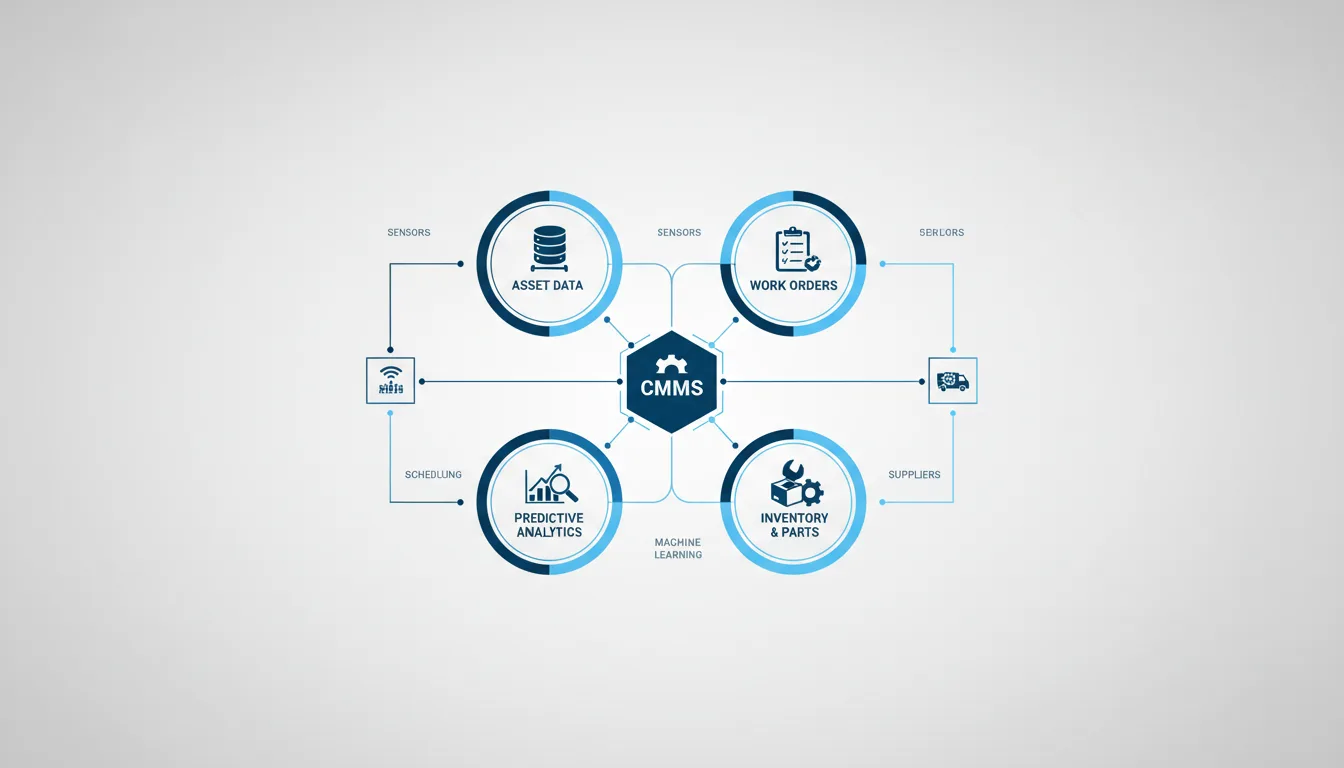
Computerized Maintenance Management Systems (CMMS) are sophisticated software solutions designed to assist organizations in optimizing the maintenance of their physical assets and equipment. By organizing and managing maintenance schedules, work orders, and comprehensive asset information, CMMS aims to enhance operational efficiency. This is achieved through facilitating preventive and predictive maintenance strategies, thereby significantly reducing unplanned downtime, extending asset lifespan, and lowering overall maintenance costs [2]. As industries across various sectors, including logistics and supply chain management, become increasingly reliant on complex machinery and technology, the strategic implementation of CMMS has gained immense importance for ensuring continuous operation and competitive advantage.
Etymology and Origins
The term "Computerized Maintenance Management System" (CMMS) began to emerge in industry literature and commercial product descriptions in the late 1970s to early 1980s [3]. This period marked a pivotal shift from predominantly manual, paper-based maintenance record-keeping—often relying on physical logbooks, card indexing systems, and tools like Gantt charts for scheduling [4]—towards software-driven automation. The linguistic roots lie in straightforward descriptive language: "computerized" reflecting the use of digital technology, "maintenance management" indicating the core function, and "system" denoting an integrated approach. The development was spurred by the increasing availability of minicomputers and personal computers, which made dedicated software solutions economically viable for a wider range of businesses. This evolution was fundamentally driven by the desire to move beyond reactive repair and to apply more structured, data-informed approaches to asset upkeep, aligning with principles from operations research and industrial engineering.
Historical Development
The evolution of CMMS is closely intertwined with the broader history of industrial automation and information technology:
-
Pre-1960s: Manual and Reactive Era Maintenance was largely a reactive discipline. Equipment was run until it broke down, leading to unplanned outages and costly emergency repairs. Management relied heavily on manual records, technicians' experience, and basic tools like logbooks and visual inspections. There was little to no systematic tracking of asset performance or maintenance history [5].
-
1960s – 1970s: Early Computerization & MRP Influence The first wave of computerization in industry saw companies adopting mainframe computers primarily for financial management and inventory control. Early efforts to computerize maintenance often focused on managing spare parts inventory, drawing inspiration from Material Requirements Planning (MRP) systems, which were pioneered by individuals like Joseph Orlicky at IBM in the 1960s [6]. These nascent systems, while not full-fledged CMMS, laid foundational principles for managing parts, production resources, and basic maintenance scheduling.
-
1980s: Emergence of Dedicated CMMS The proliferation of more affordable minicomputers and personal computers enabled the development of dedicated CMMS software. These early systems focused on core functionalities: generating work orders, tracking assets, and scheduling basic preventive maintenance. This decade marked a significant shift from purely reactive maintenance to a more planned, preventive approach, aiming to reduce unexpected breakdowns.
-
1990s: Client-Server Architecture & ERP Integration The rise of client-server architectures and graphical user interfaces (GUIs) made CMMS platforms more user-friendly and accessible. Major Enterprise Resource Planning (ERP) vendors, such as SAP, began integrating comprehensive maintenance modules into their broader enterprise suites. Companies like Maximo (later acquired by IBM) also emerged as leaders in specialized maintenance software, emphasizing the integration of maintenance with finance, procurement, and inventory for a holistic operational view [7].
-
2000s: Web-Based, Mobile & Enterprise Asset Management (EAM) The advent of the internet and web-based interfaces allowed CMMS to be accessed remotely, fostering better collaboration across maintenance teams. The introduction of mobile applications allowed technicians to access and update work orders, asset information, and maintenance checklists in real-time from the field. This era also saw the expansion of CMMS into Enterprise Asset Management (EAM), which encompasses the entire lifecycle management of assets, from acquisition and operation to maintenance and eventual disposal [8].
-
2010s and Beyond: Cloud, IoT, AI & Predictive Maintenance The shift to cloud-based (SaaS) solutions offered enhanced scalability, reduced IT infrastructure overhead, and improved data security and accessibility. The integration of Internet of Things (IoT) sensors provided real-time data on equipment condition, temperature, vibration, and performance. This data deluge fueled the development of AI and machine learning algorithms, enabling sophisticated predictive maintenance capabilities that forecast potential failures and optimize maintenance schedules before issues arise [9]. Advanced analytics, Digital Twins, and immersive technologies like AR/VR are continually pushing the boundaries of maintenance optimization.
Core Concepts
CMMS fundamentally operates on several core principles that enable efficient maintenance operations:
- Asset Management: CMMS provides a centralized database to track all physical assets, including machinery, vehicles, and facilities. It records critical information such as purchase dates, warranty details, specifications, maintenance history, and operational status, offering a comprehensive visual inventory of assets [10].
- Work Order Management: This feature streamlines the entire work order lifecycle, from creation and assignment to execution and completion. It allows for detailed task descriptions, prioritization, resource allocation, and tracking of labor and materials, significantly enhancing organizational efficiency.
- Preventive Maintenance: CMMS facilitates the scheduling of routine maintenance tasks based on time intervals, meter readings, or usage triggers. This proactive approach ensures that assets are serviced regularly to prevent unexpected failures, thereby increasing reliability and extending asset life.
- Inventory & Spares Management: Effectively managing spare parts and consumables is crucial for timely repairs and minimizing downtime. CMMS helps track inventory levels, set reorder points, manage supplier information, and facilitate purchase order management for maintenance supplies, ensuring that necessary parts are available when needed [11].
- Reporting and Analytics: CMMS generates comprehensive reports on maintenance activities, costs, equipment performance, and compliance. These analytical capabilities allow organizations to identify trends, pinpoint inefficiencies, and make data-driven decisions to optimize maintenance strategies and allocate resources more effectively.
Benefits and Advantages
The implementation of CMMS offers numerous strategic and operational benefits:
- Reduced Downtime: By enabling robust preventive and predictive maintenance, CMMS significantly minimizes the incidence of unexpected equipment breakdowns, leading to higher asset availability and continuous operational flow.
- Cost Savings: Optimizing maintenance schedules, reducing emergency repairs, and extending the lifespan of assets directly translates into substantial cost reductions in labor, parts, and capital expenditure.
- Improved Productivity: Organized workflows, automated scheduling, and easy access to information via CMMS empower maintenance teams to work more efficiently, reducing administrative burden and increasing time spent on actual maintenance tasks.
- Enhanced Compliance: CMMS aids in tracking and documenting maintenance tasks, ensuring adherence to regulatory requirements, industry standards (e.g., ISO 55000 for Asset Management), and safety protocols, thereby mitigating risks and avoiding penalties.
- Extended Asset Lifespan: Proactive and well-documented maintenance practices ensure that equipment operates within optimal parameters, delaying wear and tear and ultimately prolonging its useful life.
Technology and Tools
Modern CMMS platforms leverage a range of advanced technologies and offer extensive integration capabilities:
- Mobile Access: Advanced CMMS solutions provide mobile applications that allow maintenance staff to access work orders, asset histories, manuals, and complete tasks directly from smartphones or tablets in the field. This improves real-time data capture and reduces paperwork.
- Integration Capabilities: Contemporary CMMS solutions are designed to integrate seamlessly with other enterprise systems, such as ERP (Enterprise Resource Planning), Supply Chain Management (SCM), SCADA (Supervisory Control and Data Acquisition) systems for operational data, and Product Lifecycle Management (PLM) software. This creates a unified data ecosystem, enhancing visibility and enabling holistic decision-making across the organization [12].
- Cloud-Based Solutions: The shift to cloud computing offers significant advantages, including scalability, reduced IT infrastructure overhead, automatic updates, and ubiquitous access to the CMMS from any location with an internet connection. This promotes greater collaboration and information sharing among diverse teams.
- Advanced Analytics & Reporting: Beyond basic reports, modern CMMS incorporates powerful business intelligence tools for trend analysis, root cause analysis, predictive modeling, and prescriptive maintenance recommendations. These tools transform raw data into actionable insights.
- Digital Twins & Immersive Technologies: Emerging CMMS platforms are integrating Digital Twin technology, creating virtual replicas of physical assets to allow for real-time monitoring, simulation, and predictive analysis. Augmented Reality (AR) and Virtual Reality (VR) are also being increasingly deployed for immersive technician training, remote diagnostics, and step-by-step guidance during repairs [13].
Best Practices
To maximize the benefits of a CMMS implementation, organizations should adhere to several key best practices:
- Thorough Planning and Customization: Before implementation, clearly define maintenance goals, identify critical assets, and map existing workflows. Customize the CMMS to align with specific organizational needs and processes, rather than adopting a generic solution.
- Comprehensive Employee Training: Ensure that all users, from technicians to management, are thoroughly trained on the system's functionalities. Adequate training fosters user adoption, maximizes utilization, and ensures data accuracy.
- Regular Data Updates and Accuracy: The effectiveness of a CMMS heavily relies on the quality of its data. Regularly update asset information, maintenance records, and spare parts inventory to maintain accuracy and reliability within the system.
- Define and Track Key Performance Indicators (KPIs): Establish clear metrics such as Mean Time Between Failures (MTBF), Mean Time To Repair (MTTR), maintenance cost per asset, and schedule compliance. Regularly analyze these KPIs to measure CMMS effectiveness and drive continuous improvement [14].
- Utilize Analytics for Informed Decisions: Embrace the reporting and analytical features of CMMS to identify recurring issues, optimize preventive maintenance schedules, and make data-driven decisions on asset investment and resource allocation.
- Integrate with Enterprise Systems: Where appropriate, integrate the CMMS with other critical enterprise systems like ERP, SCM, and financial software to achieve a holistic view of operations and streamline data flow.
Future Trends
Looking ahead, several transformative trends are shaping the future of CMMS:
- Artificial Intelligence (AI) & Machine Learning (ML): AI-driven prediction algorithms will become even more sophisticated, moving beyond simple forecasting to prescriptive maintenance, which recommends specific actions, automatically optimizes maintenance schedules, and even suggests resource allocation based on complex, real-time data patterns.
- Internet of Things (IoT): The proliferation of IoT devices will provide richer, more granular data from equipment sensors, enabling hyper-accurate condition monitoring. CMMS will evolve to ingest and interpret this massive stream of data, triggering maintenance alerts and work orders autonomously.
- Digital Twins & Immersive Technologies: The widespread adoption of Digital Twins will allow for virtual asset management, simulation of failure scenarios, and predictive analysis in a risk-free environment. Augmented Reality (AR) and Virtual Reality (VR) will enhance technician training, remote diagnostics, and provide interactive, step-by-step guidance during complex on-site repairs.
- Enhanced User-Centric Designs: Future CMMS solutions will prioritize intuitive interfaces, customizable dashboards, and streamlined workflows to enhance usability, reduce training time, and improve overall user satisfaction.
Related Concepts
CMMS often interrelates with various critical logistical and operational concepts:
- Inventory Management: Efficient maintenance relies heavily on effective inventory management of spare parts and consumables. CMMS directly supports this by tracking stock levels, managing requisitions, and integrating with procurement systems.
- Supply Chain Efficiency: Properly maintained equipment ensures that logistics operations run smoothly, from manufacturing lines to warehousing and transportation fleets. This direct contribution to asset reliability significantly enhances overall supply chain efficiency and resilience.
- Enterprise Resource Planning (ERP): CMMS often functions as a module within or integrates deeply with ERP systems, sharing data on inventory, finance, human resources, and project management to provide a unified operational view and support cross-functional decision-making.
- Warehouse Management Systems (WMS): In facilities like warehouses, CMMS ensures the uptime of material handling equipment (e.g., forklifts, conveyors), which is crucial for efficient warehouse operations and accurate order fulfillment. A mobile WMS can integrate to provide real-time updates on equipment status and maintenance needs.
By understanding and strategically implementing a Computerized Maintenance Management System, organizations can optimize their maintenance processes, significantly impact operational efficiency, and improve their bottom line.
Sources
- Mobile Warehouse Management System
- The Rise of Predictive Maintenance in Supply Chains
- The History of CMMS Software
- Gantt Chart History and Usage
- A Brief History of Maintenance Management
- The Evolution of MRP to ERP and the Internet
- What is ERP?
- Enterprise Asset Management Overview
- What is IoT (Internet of Things)?
- Visual Inventory Management System
- Purchase Order Management
- What is SCADA System?
- The Future of Industrial Maintenance with AR, VR, and Digital Twins
- Key Performance Indicators for Maintenance
- Prescriptive Maintenance
- What is a digital twin?
- Warehouse Layout Preview