Comprehensive Planning in Logistics
Comprehensive planning is a strategic approach in logistics that coordinates all activities in the supply chain to ensure efficiency and customer satisfaction.
Updated
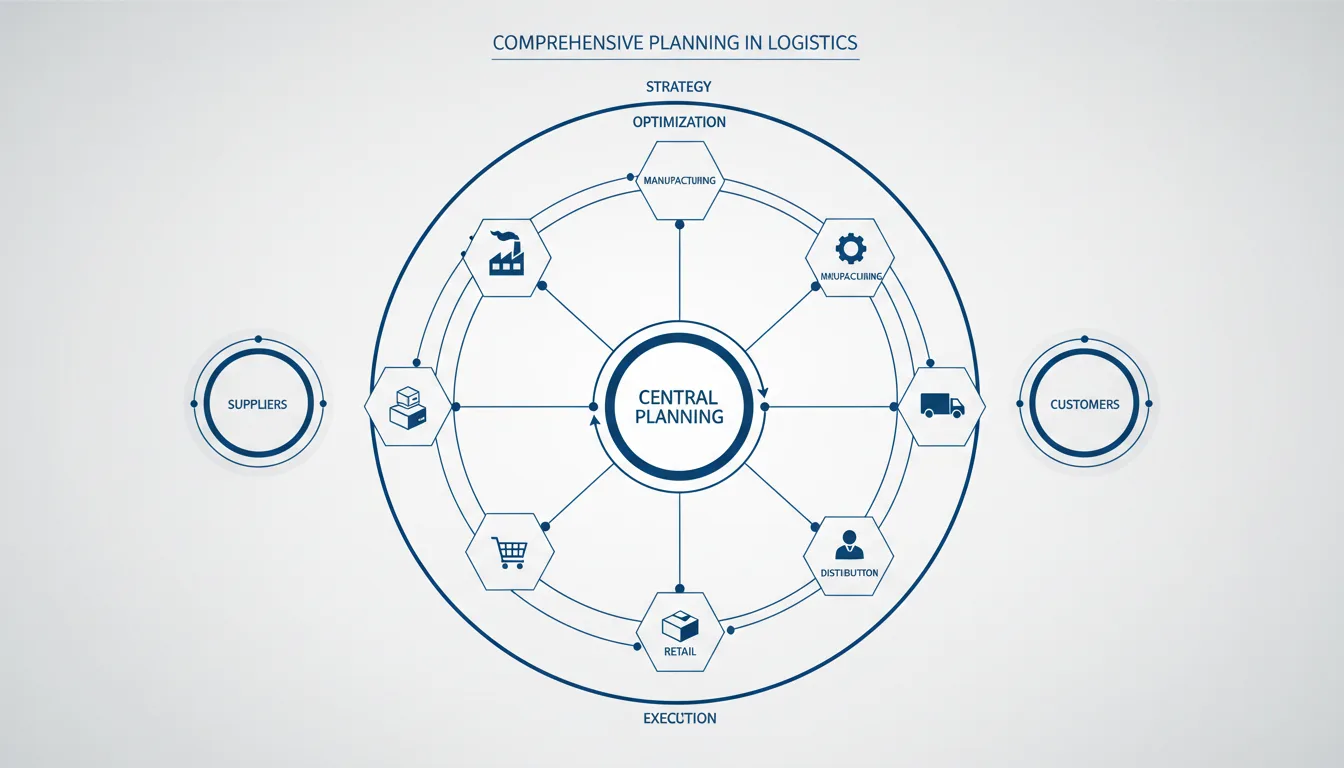
Comprehensive Planning in Logistics
Overview
Comprehensive planning in logistics refers to the systematic coordination and alignment of all logistical activities to enhance efficiency, forecast demand, and improve customer satisfaction. Rooted in strategic supply chain management, this holistic approach integrates various functions, such as inventory management, order fulfillment, and transportation logistics, ensuring a cohesive operation that responds swiftly to market changes. The primary objective of comprehensive planning is to optimize resource utilization while minimizing costs and maximizing service levels, ultimately contributing to a competitive advantage.
Etymology and Origins
The term 'comprehensive planning' has linguistic roots in the Latin word "comprehendere," meaning to grasp or seize together, implying a thorough and inclusive understanding. Its modern usage first emerged prominently in the fields of urban and regional planning during the mid-20th century. It was initially associated with creating holistic plans for land use, infrastructure, and resource management within geographical areas.
Over time, as business operations grew in complexity and scope, the concept migrated into various management disciplines. The application of "comprehensive planning" to logistics began to solidify in the late 1960s and early 1970s. This shift was driven by the increasing recognition that logistical functions, from procurement to delivery, were interdependent and required coordinated management rather than siloed approaches. The integration of logistics with strategic forecasting and resource management aligns with definitions found in key publications such as Logistics Management and academic journals like the Journal of Business Logistics which began publication in the late 1970s.
Historical Development
Comprehensive planning in logistics has seen significant evolution, mirroring technological advancements and increasing supply chain complexity:
- Pre-1950s: Early Logistical Thinking - While not termed 'comprehensive planning,' the foundational ideas of integrated logistics originated in military strategy, focusing on the efficient movement and resupply of forces. Early business logistics focused primarily on physical distribution.
- 1950s-1960s: Physical Distribution & Operations Research - The concept of "physical distribution management" emerged, treating transportation, warehousing, and inventory as an integrated system rather than separate functions. Operations Research techniques were increasingly applied to optimize these processes, laying the groundwork for more sophisticated planning. The nascent adoption of computers began to automate basic inventory control. Around this time, Toyota pioneered Just-in-Time (JIT) manufacturing, emphasizing comprehensive planning to minimize waste and inventory.
- 1970s: Material Requirements Planning (MRP) - The advent of larger computing capabilities led to the development and widespread adoption of Material Requirements Planning (MRP) systems, primarily in manufacturing. Pioneers like IBM introduced software that integrated forecasting and inventory management for production schedules, marking a crucial step towards comprehensive operational planning.
- 1980s: Manufacturing Resource Planning (MRP II) & Globalization - MRP evolved into Manufacturing Resource Planning (MRP II), expanding to include more business functions like finance, marketing, and human resources alongside manufacturing. This decade also saw the beginning of significant globalization, adding complexity to supply chains and increasing the need for integrated planning across international borders.
- 1990s: Enterprise Resource Planning (ERP) & Supply Chain Management (SCM) - The widespread adoption of Enterprise Resource Planning (ERP) systems further facilitated comprehensive planning by integrating nearly all business functions onto a single platform. This era also saw the formal emergence of the term "Supply Chain Management" itself, emphasizing the end-to-end coordination of processes, from supplier to customer, as articulated by organizations like the Council of Supply Chain Management Professionals (CSCMP).
- 2000s-Present: Digitalization, AI & Advanced Analytics - The rise of e-commerce, global sourcing, and increasing customer demands pushed for greater supply chain visibility and agility. This period saw the adoption of advanced technologies like RFID for real-time tracking, sophisticated Warehouse Management Systems (WMS), and the increasing use of Artificial Intelligence (AI) and Machine Learning (ML) for predictive analytics, demand forecasting, and optimization. Major industry bodies, such as APICS (now ASCM), through their Supply Chain Management Body of Knowledge, have played critical roles in defining best practices and standards for comprehensive planning throughout these evolutionary stages.
Core Concepts
Comprehensive planning revolves around several core principles designed to create a resilient and efficient logistics network:
- Integrated Information Systems: Central to comprehensive planning is the creation of a "single source of truth" for all operational data. Utilizing advanced tools such as Warehouse Management Systems (WMS), Order Management Systems (OMS), and Purchase Order Management (POM) ensures that data from different logistic functions is coherent, accessible, and shared in real-time across the enterprise. This integration facilitates better decision-making and reduces operational discrepancies.
- Demand Forecasting: Accurate predictions of customer demand are paramount. This involves employing statistical methods, market intelligence, and collaborative forecasting techniques to align production, inventory, and distribution strategies effectively. The goal is to minimize stockouts and overstock situations.
- Synchronized Operations: Creating seamless linkages among procurement, manufacturing, warehousing, and transportation to reduce waste, shorten lead times, and enhance service levels. This principle often leverages lean methodologies and Just-in-Time principles to ensure materials and products move efficiently through the supply chain.
- Scenario Planning & Risk Management: Developing alternative strategies to quickly adapt to changes in market conditions, geopolitical events, or supply uncertainties. This proactive approach includes identifying potential disruptions, assessing their impact, and formulating contingency plans to maintain operational continuity.
- Cross-functional Collaboration: Breaking down organizational silos and fostering strong communication and cooperation between different departments (e.g., sales, marketing, production, logistics, finance) and external partners (suppliers, carriers). This ensures that planning efforts are aligned with overall business objectives and customer needs.
Industry Applications
Comprehensive planning is crucial across various industries, enabling businesses to manage complex operations effectively:
- E-commerce: Companies like Amazon and other major online retailers rely heavily on comprehensive planning to streamline logistics from order placement to final delivery. This includes optimizing warehouse layouts (e.g., using SkuSavvy's visual warehouse layout tools), managing vast inventories (especially for platforms like Shopify Plus merchants), and coordinating rapid fulfillment networks.
- Manufacturing: Manufacturers apply comprehensive planning to coordinate the supply of raw materials with production schedules, manage work-in-progress, and optimize finished goods distribution. This minimizes wait times, reduces holding costs, and ensures efficient output, often leveraging MRP II and ERP systems.
- Retail: Retailers use these strategies to maintain optimal stock levels across multiple stores and distribution centers, respond dynamically to consumer trends, manage seasonal demand, and ensure product availability on shelves and online.
- Healthcare & Pharmaceuticals: Critical for managing temperature-sensitive goods, complex supply chains for medical devices, and ensuring timely delivery of life-saving medications, often with strict regulatory compliance.
Benefits and Advantages
The advantages of comprehensive planning are manifold, leading to significant improvements across the logistics and supply chain functions:
- Cost Reduction: By optimizing inventory levels, consolidating shipments, improving routing, and reducing waste, businesses can significantly lower transportation, warehousing, and holding costs.
- Increased Efficiency: Better coordination, streamlined processes, and reduced lead times lead to smoother operations, faster order fulfillment, and improved overall productivity.
- Enhanced Flexibility and Resilience: Organizations can respond swiftly to changes in demand, market shifts, or supply chain disruptions, allowing for agile adjustments that keep operations smooth and reliable, minimizing financial impact.
- Improved Customer Satisfaction: Faster, more reliable, and more accurate deliveries contribute directly to higher customer satisfaction and loyalty, strengthening brand reputation.
- Better Decision-Making: Access to integrated, real-time data and advanced analytics provides clearer insights, enabling more informed and strategic decisions across the supply chain.
Challenges and Limitations
Despite its significant benefits, implementing comprehensive planning faces several inherent challenges:
- Data Integration and Quality: Achieving seamless data flow from various disparate sources (e.g., ERP, WMS, TMS, e-commerce platforms) can be highly complex. Ensuring the accuracy, consistency, and timeliness of this data – avoiding "garbage in, garbage out" – is crucial, particularly for organizations with legacy systems or limited technological resources.
- Complexity of Operations: Modern global supply chains are inherently complex, involving numerous stakeholders, geographical locations, and regulatory requirements. Managing these multiple logistics functions requires sophisticated tools and highly skilled personnel, which can pose a barrier to effective planning and execution.
- Dynamic Market Conditions: Rapid changes in consumer behavior, geopolitical events, economic fluctuations, and technological advancements can quickly disrupt even well-laid plans, necessitating continuous adaptation and agile responses.
- Organizational Silos and Change Management: Resistance to change and a lack of cross-functional collaboration due to departmental silos can hinder the implementation of integrated planning. Overcoming these human and organizational barriers requires strong leadership and a clear change management strategy.
- High Investment in Technology: Implementing comprehensive planning often requires significant upfront investment in advanced software (like ERP, WMS, OMS), hardware, and IT infrastructure, which can be a hurdle for smaller or less capitalized businesses.
Best Practices
To successfully implement and maintain effective comprehensive planning, organizations should focus on several key best practices:
- Invest in Integrated Technology: Adopt advanced logistics software, such as Order Management Systems, Warehouse Management Systems, and Purchase Order Management solutions, to automate process flows and ensure data synchronization. Leverage platforms with robust workflow automation capabilities to streamline operations.
- Foster Cross-functional Collaboration: Break down internal silos by establishing clear communication channels and collaborative processes between departments (e.g., sales, procurement, production, logistics). This ensures alignment of goals and strategies across the entire organization.
- Prioritize Data Governance and Visibility: Implement strong data governance policies to ensure data accuracy, consistency, and security. Aim for end-to-end supply chain visibility to track products, materials, and information in real-time, enabling proactive decision-making.
- Continuous Workforce Training and Development: Ensure that staff are continuously trained to adapt to new planning technologies, processes, and analytical tools. Focus on developing skills in data analysis, supply chain resilience, and employee productivity management.
- Regular Reviews and Adjustments: Periodically reassess logistics strategies, performance metrics, and planning models to align with changing market conditions, technological advancements, and internal capabilities. Embrace a culture of continuous improvement.
Future Trends
Looking ahead, comprehensive planning in logistics is expected to evolve significantly with the advent of cutting-edge technologies and shifting global priorities:
- Artificial Intelligence and Machine Learning: Increasingly used for predictive analytics, enhancing demand forecasting accuracy, optimizing inventory levels, automating decision-making (e.g., dynamic routing), and improving overall supply chain optimization. AI can process vast amounts of data to identify patterns and anomalies far beyond human capability.
- Blockchain for Supply Chain Transparency: Distributed ledger technology offers the potential for unprecedented transparency and traceability across complex supply chains. Blockchain can track goods from origin to destination, verify authenticity, and secure transactions, improving trust and reducing fraud, especially in highly regulated or sensitive industries.
- Digital Twins: Creating virtual replicas of physical supply chain components (warehouses, transportation networks, products) allows for real-time monitoring, simulation of scenarios, and predictive maintenance. This enables planners to test strategies and foresee potential issues without impacting live operations.
- Sustainability Practices: A growing emphasis on environmental, social, and governance (ESG) factors will require comprehensive planning to minimize environmental impact (e.g., optimizing route planning to reduce emissions, sustainable sourcing) and ensure ethical labor practices throughout the supply chain.
- Robotics and Automation: Further automation in warehouses and distribution centers, including autonomous mobile robots (AMRs) for picking and packing, automated guided vehicles (AGVs), and robotic process automation (RPA) for administrative tasks, will enhance efficiency and accuracy in physical logistics operations.
Related Concepts
Comprehensive planning is intimately related to several other critical logistics concepts, forming the backbone of modern supply chain management:
- Inventory Management
- Supply Chain Management
- Logistics Optimization
- Procurement
- Transportation Management Systems (TMS)
In conclusion, comprehensive planning is a critical component of successful logistics and supply chain management, enabling organizations to achieve operational excellence, build resilience, and consistently meet evolving customer demands efficiently and profitably.
Sources
- Mobile Warehouse Management System
- Order Management System
- What Is MRP And MRP II?
- What is Just-In-Time (JIT) Inventory Management?
- The power of blockchain for supply chain transparency
- Applying AI and advanced analytics to logistics
- Purchase Order Management
- Shopify Plus Features
- Workflows Overview
- Productivity Tracking
- Council of Supply Chain Management Professionals (CSCMP)
- Journal of Business Logistics
- Warehouse Layout Preview
- Planning.org - About APA History
- Transportation management system (TMS)