Claims Management in Logistics
This article delves into Claims Management, its definition, historical context, core concepts, and best practices valuable for logistics professionals and supply chain managers.
Updated
Overview
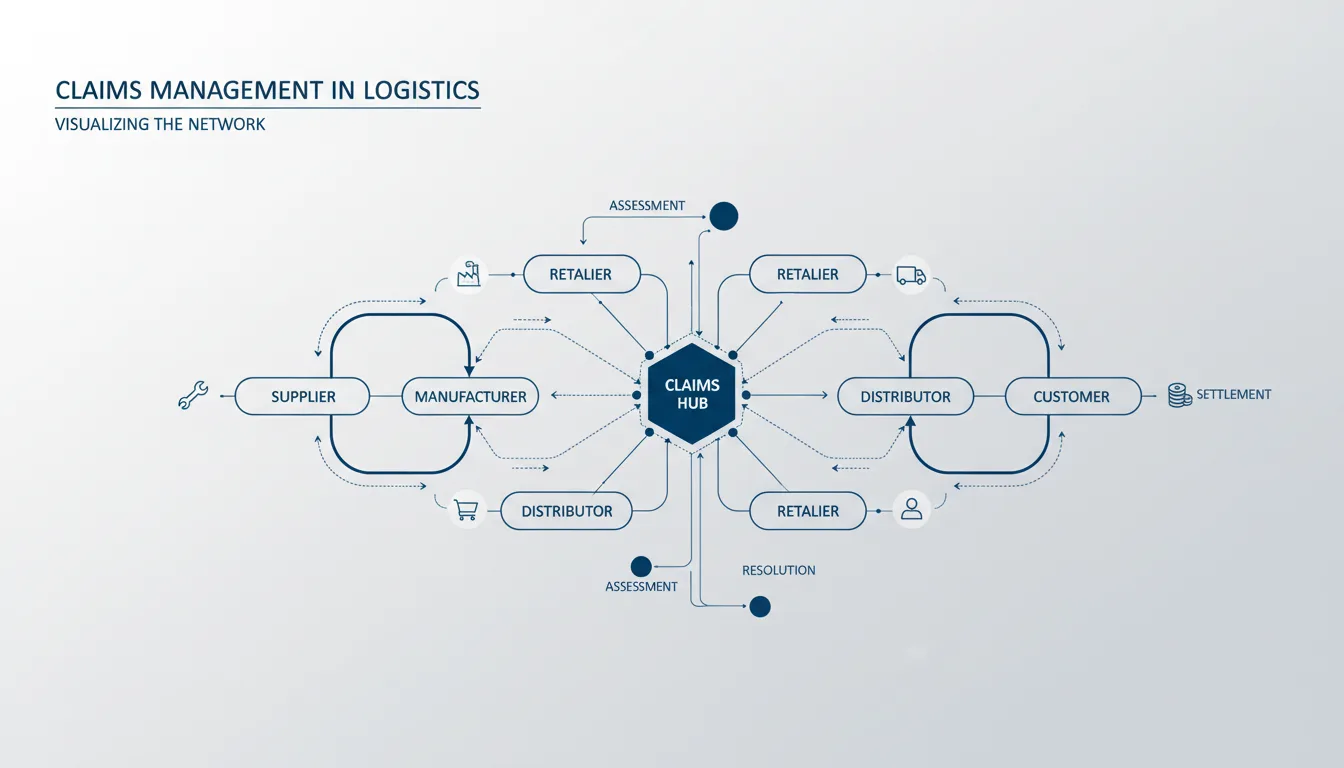
Claims management in logistics refers to the systematic process of handling claims from stakeholders involved in the supply chain, including customers, suppliers, and carriers. The importance of effective claims management lies in its ability to maximize recovery for losses, streamline processes, and enhance customer relations. Beyond financial recovery, it's crucial for maintaining regulatory compliance and mitigating risks across the supply chain, thereby protecting a company's reputation and financial stability. Efficiently managing claims can lead to improved operational efficiencies and reduced financial exposure for logistics companies, ultimately strengthening customer loyalty and supply chain resilience.
Etymology and Origins
The term "claims management" has its roots in the legal and insurance fields, where it traditionally referred to the process of handling claims for damages, losses, or guarantees. The concept of "claims" as a formal demand for compensation dates back centuries in legal systems. Its documented usage in a business context, particularly for insurance, became prominent in the 19th and early 20th centuries.
As logistics and supply chain operations grew in complexity and global reach following World War II, the need for structured approaches to managing discrepancies and losses intensified. While a precise "first documented usage" of "claims management in logistics" as a discrete term is difficult to pinpoint, the practices it describes began coalescing in the late 20th century. The terminology evolved to incorporate elements from quality management and customer service, reflecting a shift from purely reactive financial recovery to a proactive strategy emphasizing customer satisfaction and continuous operational improvement. This evolution mirrors the broader development of logistics from a tactical function to a strategic supply chain discipline.
Historical Development
The historical development of claims management closely parallels the maturation of modern logistics practices and the increasing complexity of global supply chains.
Early 20th Century & Post-WWII: Freight claims, particularly in rail and ocean shipping, were primarily legalistic and focused on identifying liability and compensation for loss or damage during transit. The concept was often siloed within legal or accounting departments.
1970s: Rise of Modern Logistics and JIT: With the oil crisis and increasing global competition, companies began to focus on efficiency. The adoption of just-in-time (JIT) inventory systems (pioneered by Toyota) highlighted the critical importance of accurate inventory and timely deliveries. Any deviation – damaged goods, shortages, or delays – had immediate, magnified consequences, making effective claims processing a more urgent operational concern, rather than just a legal one. The Council of Logistics Management (CLM, now CSCMP) began formalizing logistics as a discipline, with an emphasis on cost control and customer service.
1980s: Computerization and Dedicated Systems: This decade saw the widespread introduction of computerized systems. Mainframe-based Material Requirements Planning (MRP) systems and early Transportation Management Systems (TMS) provided better tracking of shipments and inventory. This technological leap helped streamline the claims process by offering more accessible data. Companies like FedEx and UPS, expanding rapidly with sophisticated tracking networks, established early benchmarks for structured claims handling within the parcel delivery industry.
1990s: Quality Management & E-commerce: The 1990s emphasized total quality management (TQM) and international standards like ISO 9001, which stressed continuous improvement across all business processes, including claims handling. The nascent e-commerce boom, particularly by the late 90s, introduced direct-to-consumer shipping at unprecedented scales, leading to a surge in claims related to last-mile delivery issues and customer expectations, necessitating more robust and responsive systems.
2000s-Present: Digital Transformation and Proactive Management: Advancements in enterprise resource planning (ERP) systems, advanced analytics, and later, cloud computing, transformed claims management. Technologies like automated claims processing, real-time data analytics, and the widespread adoption of Warehouse Management Systems (WMS) enabled a shift from reactive problem-solving to proactive risk mitigation and strategic optimization. The focus moved towards leveraging data to identify root causes of claims, predict potential issues, and prevent them before they occur.
Core Concepts
At its core, claims management encompasses several key processes:
- Claims Submission: Stakeholders submit claims detailing their losses or damages. This initial step requires clear, accessible channels and standardized forms to ensure all necessary information is captured upfront.
- Investigation: A detailed review is conducted to assess the validity of each claim, often involving collecting evidence (e.g., photos, shipping documents, sensor data), reviewing inventory records, and interviewing relevant parties. Root cause analysis is a critical component here, moving beyond symptom treatment to identify underlying systemic issues.
- Resolution: Finalizing decisions on claims, including approval, denial, or negotiation of settlements. This phase demands clear communication, adherence to policies, and fair dealing to maintain stakeholder trust.
- Documentation: Maintaining accurate, comprehensive records throughout the claims process is crucial for compliance, auditing, and future reference. Effective documentation, supported by modern order fulfillment systems, provides the necessary data for analysis and continuous improvement. Preventing claims through proactive measures like robust quality control and accurate inventory tracking is a paramount, overarching objective.
Industry Applications
Claims management is prevalent across various industries, particularly in sectors such as e-commerce, retail, manufacturing, and transportation.
For example, e-commerce companies utilize claims management to handle customer disputes regarding missing, damaged, or incorrect packages, which can significantly impact customer satisfaction and brand loyalty. In the pharmaceutical sector, claims can arise from temperature excursions, expired products, or regulatory non-compliance, requiring rigorous documentation and swift resolution to ensure product integrity and patient safety.
The adoption of mobile warehouse management systems has made it easier for logistics professionals to handle claims in real-time. By providing instant access to inventory status, shipment history, and proof of delivery, these systems improve communication and tracking, leading to faster and more accurate claims processing. Furthermore, integrating claims data with purchase order management systems allows companies to efficiently manage claims against suppliers for defective or non-conforming goods.
Benefits and Advantages
Effective claims management brings numerous advantages, transforming a reactive cost center into a strategic function:
- Financial Recovery & Cost Control: Streamlined processes help recover costs associated with losses or damages from carriers, suppliers, or insurance, directly impacting the bottom line.
- Customer Retention & Loyalty: Prompt, fair, and transparent resolution of claims builds customer trust and loyalty, turning potentially negative experiences into opportunities for positive engagement.
- Operational Efficiency: Automating claims processes and leveraging digital tools reduces manual effort, administrative burden, and processing time, freeing up resources and improving overall operational efficiency.
- Risk Mitigation: Proactive claims management identifies recurring issues, allowing companies to implement preventative measures and reduce future incidents, thereby mitigating financial and reputational risks.
- Data-Driven Improvement: The data collected from claims provides valuable insights into supply chain vulnerabilities, carrier performance, product quality issues, and packaging deficiencies, enabling continuous improvement initiatives.
Challenges and Limitations
Despite the benefits, logistics professionals may face several challenges in claims management:
- Complex Regulations & Jurisdictions: Different regions and countries have varied legal frameworks, shipping regulations, and international trade laws, which can significantly complicate cross-border claims processing.
- Insufficient Documentation & Evidence: A primary cause of denied claims is inadequate or missing documentation. The absence of comprehensive records (e.g., bills of lading, proof of delivery, inspection reports) makes it difficult to prove liability.
- Data Fragmentation & Silos: Information related to a single claim can reside in disparate systems (WMS, TMS, ERP, CRM), leading to data fragmentation and difficulty in creating a holistic view of the incident. This highlights the need for integrated platforms and streamlined workflows.
- Fraudulent Claims: Businesses must contend with the possibility of fraudulent claims, requiring robust verification processes to protect against unjustified payouts.
- Technology Reliance with Human Oversight: While technology is crucial, over-reliance without skilled human oversight can lead to overlooked details, misinterpretations of automated flags, or errors in complex scenarios.
Best Practices
To optimize claims management, professionals are encouraged to adopt the following best practices:
- Standard Operating Procedures (SOPs): Establish clear, standardized SOPs for every step of the claims process, from submission to resolution, ensuring consistency and compliance.
- Proactive Risk Management: Implement strategies to prevent claims, such as robust quality control inspections, proper packaging, accurate inventory tracking, and carrier performance monitoring. Regular cycle counting helps maintain inventory accuracy, reducing claims related to stock discrepancies.
- Dedicated Claims Team & System: Allocate resources for a specialized claims team or integrate claims handling within a centralized order management system to ensure expertise and efficiency. Leverage shipping and fulfillment software to automate data capture and communication.
- Thorough Documentation & Digital Records: Maintain comprehensive, easily accessible digital records of all transactions, communications, proof of delivery, and inspection reports. Utilize integrated systems that link documentation directly to specific orders or shipments.
- Regular Training: Conduct ongoing training for staff on claims procedures, regulatory changes, and the effective use of claims management technology.
- Leverage Technology: Implement advanced software solutions for managing claims. This includes WMS, TMS, and specialized claims management platforms that can automate data capture, facilitate communication, perform analytics, and integrate with financial systems.
Future Trends
Looking ahead, the future of claims management will likely see further integration of advanced technologies, promising enhanced efficiency, accuracy, and strategic insight:
- Artificial Intelligence (AI) and Machine Learning (ML): These technologies will revolutionize claims by enabling predictive analytics to forecast common claims scenarios, identify fraud patterns, and automate routine claim validations and resolutions. AI-powered chatbots could also streamline initial claims submission and inquiry handling.
- Blockchain Technology: Blockchain offers the potential for creating immutable, transparent, and shared records of goods as they move through the supply chain. This distributed ledger technology could provide irrefutable proof of origin, condition, and custody, dramatically simplifying liability assignment and reducing disputes.
- Internet of Things (IoT) Integration: IoT sensors embedded in shipments can monitor conditions like temperature, humidity, and shock in real-time. This data provides objective evidence in case of damage or spoilage, enabling proactive interventions and clear evidence for claims resolution.
- Advanced Analytics & Business Intelligence: Deeper analysis of claims data will provide more sophisticated insights into root causes, allowing for more targeted process improvements and risk mitigation strategies.
By understanding the critical aspects of claims management, logistics professionals can ensure smoother operations, mitigate risks, and deliver better service in today's complex and evolving supply chain environment.
Sources
- Mobile Warehouse Management System
- Order Fulfillment Guide
- Order Management System
- Shipping & Fulfillment Software
- The Importance of Supply Chain Risk Management
- Claims Management
- Quality Management System (QMS)
- Just-in-time (JIT) production: a historical perspective
- MRP Has Made Great Strides—But Is It Right for Your Company?
- FedEx: File a Claim
- ISO 9001 Quality management
- Root Cause Analysis (RCA)
- Visual Inventory Management System
- Lots & Expiration Dates
- Purchase Order Management
- The Real Meaning of Operational Efficiency
- Workflows
- Cycle Counting Guide
- How Blockchain Can Boost Supply Chain Management