Change Management in Logistics
Change management is critical in logistics, facilitating smooth transitions in processes, systems, and organizational structures.
Updated
Overview
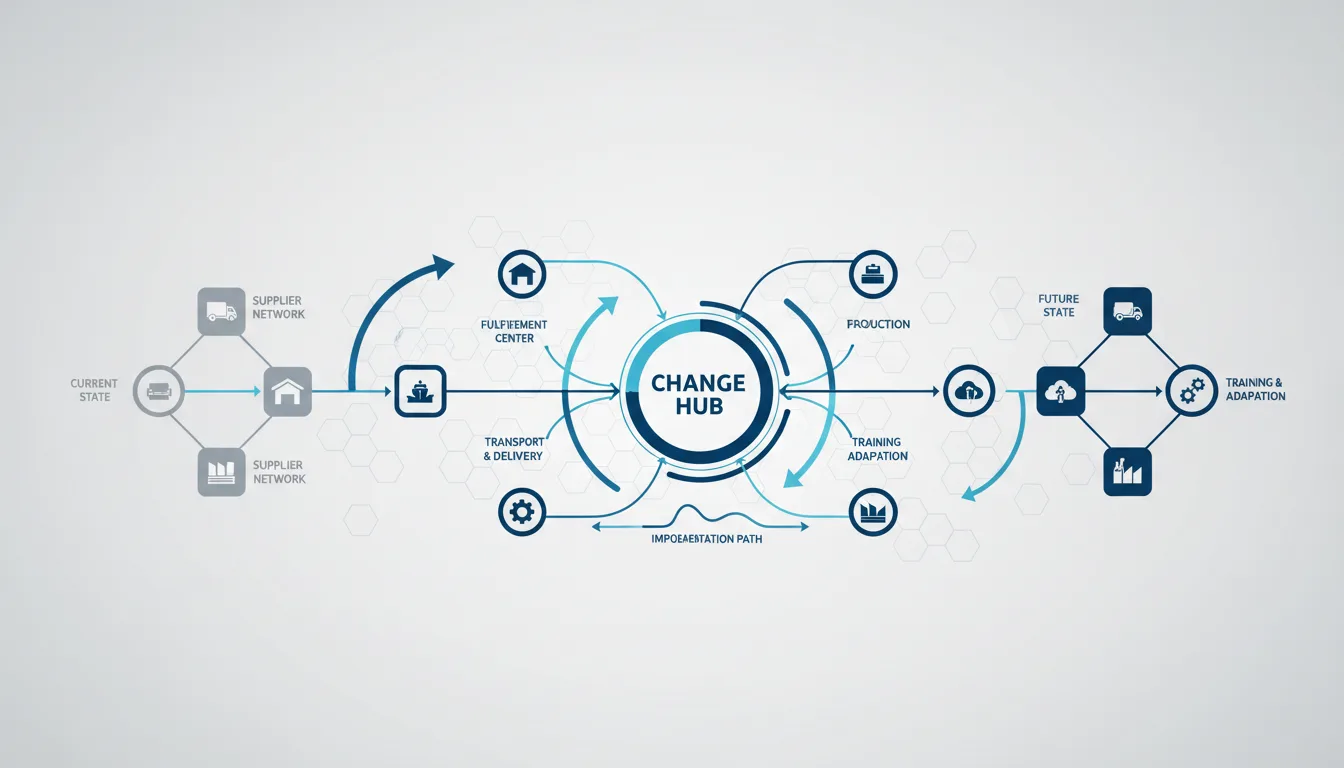
Change management refers to the structured approach to transitioning individuals, teams, and organizations from a current state to a desired future state. In logistics, it encompasses strategies for managing the transformation of operational processes, technologies, and organizational culture. Its importance lies in ensuring that change initiatives are effectively implemented to minimize disruption, enhance productivity, and maintain continuity in complex supply chains. The dynamic nature of modern logistics, characterized by rapid technological advancements, evolving market demands, and global disruptions, makes effective change management a critical capability for any organization seeking to remain competitive and agile. Successful change management techniques can facilitate the adoption of new technologies, improve operational efficiency, boost employee morale, and ultimately drive sustainable growth in a constantly evolving environment.
Etymology and Origins
The concept of managing change systematically has roots in various disciplines, but the specific term "change management" emerged more prominently in the latter half of the 20th century. Early intellectual foundations can be traced to the field of organizational development (OD) in the 1940s and 1950s, which focused on behavioral science interventions to improve organizational effectiveness. Pioneering work by social psychologists like Kurt Lewin in the 1940s laid the groundwork for understanding organizational change through models like "unfreeze, change, refreeze" [6].
The term "change management" itself began to gain widespread usage in the 1980s, driven by an increasing recognition that technological advancements, globalization, and intense competition required more than just technical solutions; they demanded a systematic approach to managing the human and organizational aspects of transformation. Businesses faced unprecedented pressures to adapt, leading to the development of structured methodologies to navigate these complex transitions. Prior to this, discussions around change often fell under broader categories such as "organizational redesign," "business process reengineering," or simply "managing innovation." The explicit term "change management" crystallized the need for a dedicated discipline focused on the process of change itself.
Historical Development
1950s-1980s: The Foundations of Planned Change
Management theorists such as Kurt Lewin introduced foundational models, most notably Lewin's Change Model, which emphasized the importance of unfreezing existing behaviors, facilitating the change itself, and then refreezing the new behaviors to ensure sustainability. This period also saw the rise of human relations and organizational psychology, underscoring the behavioral aspects of change. In the 1970s and 1980s, the proliferation of quality management initiatives (e.g., Total Quality Management, Six Sigma) and methodologies like lean manufacturing principles – famously influenced by companies like Toyota – necessitated structured change management processes. Implementing these systemic improvements, especially within logistics and manufacturing, required significant shifts in operational processes, employee roles, and organizational culture. Early adoption of Material Requirements Planning (MRP) systems in manufacturing also highlighted the need for careful implementation and user training to avoid costly disruptions [7].
1990s-2000s: The Rise of Technological and Global Change
As technology began to rapidly reshape industries, the need for effective change management became paramount. The widespread introduction of Enterprise Resource Planning (ERP) systems in the 1990s and early 2000s, often large-scale and complex, forced organizations to formalize change management strategies. These systems integrated diverse business functions, from finance to supply chain, demanding significant process reengineering and user adoption. Key figures, including John Kotter, published seminal works—such as "Leading Change" (1996)—that outlined step-by-step processes for effectively leading organizational transformations. This era also saw the acceleration of globalization, which further complicated supply chains and necessitated continuous adaptation to international regulations, diverse labor practices, and new market demands.
2010s-Present: Agile, Digital Transformation, and Continuous Adaptation
In recent years, change management has shifted towards agility, flexibility, and a more employee-centric approach. The agile framework has been increasingly adapted for change management processes, empowering teams to respond quickly and iteratively to shifts in the industry landscape. The rapid pace of digital transformation – including automation, artificial intelligence, big data analytics, and IoT – has made change a constant state, particularly in logistics. Organizations are now implementing frameworks focusing on continuous change communication, coaching, and reinforcement to facilitate smoother transitions. The focus is not just on managing individual changes, but building an organizational capacity for continuous adaptation and resilience in the face of constant disruption, such as global pandemics or geopolitical shifts. This often involves leveraging advanced analytics to predict needs and optimize warehouse operations.
Core Concepts
Effective change management revolves around several key concepts, often integrated into structured methodologies like ADKAR (Awareness, Desire, Knowledge, Ability, Reinforcement) or Kotter's 8-Step Process:
- Clear Vision and Strategy: Defining what the change is, why it's necessary, and what the desired future state looks like. This vision must be compelling and clearly articulated by leadership.
- Communication Plan: A well-structured communication plan is crucial. It ensures that stakeholders at all levels are informed, engaged, and understand the rationale, progress, and impact of the change. This involves consistent, transparent, and multi-directional communication.
- Stakeholder Engagement and Sponsorship: Identifying and actively engaging key stakeholders, including executive sponsors, managers, and frontline employees. Strong and visible sponsorship from leadership is a primary driver of successful change, as it signals commitment and provides resources. Early engagement helps in identifying potential resistance and building buy-in.
- Impact Assessment and Resistance Management: Proactively assessing the potential impact of the change on various groups, processes, and systems. This allows for the anticipation of resistance and the development of strategies to mitigate it, often through open dialogue, empathy, and addressing concerns directly.
- Training and Support: Providing adequate training, resources, and ongoing support enables employees to navigate new systems, processes, and roles effectively. For instance, comprehensive systems can guide warehouse operations through mobile warehouse management with intuitive interfaces, reducing training overhead.
- Measurement and Reinforcement: Establishing metrics to track the adoption and effectiveness of the change. This includes monitoring key performance indicators (KPIs), gathering feedback, celebrating successes, and providing continuous reinforcement to sustain the new behaviors and processes over time.
Industry Applications
In logistics, change management is essential during various transformations that impact the entire supply chain:
- Technology Integration: Implementing new technologies, such as a visual inventory management system, robotics, autonomous vehicles, or advanced analytics platforms, requires careful planning for user adoption, process modification, and data migration. This includes deploying tools like mobile WMS or specialized pick, pack, ship software.
- Process Reengineering: Adjusting workflows, like order fulfillment, cross-docking, or inventory management strategies (e.g., implementing cycle counting or stock replenishment procedures), can lead to significant efficiency improvements. Change management is vital to ensure these new processes are understood and adopted by the workforce.
- Supply Chain Network Optimization: Redesigning logistics networks, including opening new distribution centers, closing existing ones, or optimizing transportation routes, requires managing major disruptions to operations, personnel, and partnerships.
- Mergers, Acquisitions, and Divestitures: Integrating or separating logistics operations involves harmonizing disparate systems, processes, and organizational cultures, which is a significant change management undertaking.
- Sustainability Initiatives: Implementing green logistics practices, such as optimizing routes for fuel efficiency or adopting eco-friendly packaging, necessitates changes in procurement, operations, and even customer communication.
- Compliance and Regulatory Changes: Adapting to new international trade regulations, customs procedures, or safety standards requires swift and coordinated changes across the supply chain.
Benefits and Advantages
Effective change management strategies lead to several advantages crucial for resilient and efficient logistics operations:
- Higher Project Success Rates: Studies show that projects with effective change management are significantly more likely to meet objectives, stay on budget, and finish on time [8].
- Enhanced Operational Efficiency: By ensuring smooth transitions and minimizing disruption, change management helps new processes and technologies become productive faster, leading to quicker realization of benefits (e.g., faster order fulfillment or reduced inventory costs).
- Reduced Resistance and Faster Adoption: Proactive engagement and communication reduce employee resistance, leading to quicker user adoption of new tools like a mobile warehouse management system or a visual inventory system.
- Increased Employee Satisfaction and Retention: When employees feel supported, informed, and involved throughout the change process, their morale and commitment improve, leading to higher job satisfaction and lower turnover.
- Minimization of Risks: Identifying potential pitfalls and resistance early allows for proactive mitigation strategies, reducing the financial and operational risks associated with large-scale transformations.
- Sustainable Change: Reinforcement mechanisms ensure that new behaviors and processes become embedded in the organizational culture, preventing a regression to old ways.
Challenges and Limitations
Despite its benefits, change management is not without significant challenges, particularly in the complex logistics environment:
- Resistance to Change: This is perhaps the most common challenge, stemming from fear of the unknown, loss of control, lack of trust, or disagreement with the change itself. In logistics, resistance can manifest as reluctance to adopt new warehouse technologies or processes.
- Insufficient Communication: Poor, inconsistent, or infrequent communication leads to confusion, rumors, and misalignment among employees and stakeholders. This can undermine trust and foster skepticism.
- Lack of Leadership Commitment and Sponsorship: Without visible and active support from senior leadership, change initiatives often falter. Leaders must champion the change, allocate necessary resources, and hold teams accountable.
- Inadequate Resources: Large-scale change initiatives require significant investment in time, budget, and personnel (e.g., dedicated change teams, training staff). Under-resourcing can cripple even well-planned efforts.
- Cultural Barriers: Deep-seated organizational culture, norms, and values can be powerful barriers to change, especially in long-established logistics companies with entrenched practices.
- Scope Creep and Change Fatigue: Projects can suffer from expanding scope, while employees may experience "change fatigue" if too many initiatives are launched concurrently without sufficient support or successful completion.
- Difficulty in Measuring ROI: Quantifying the direct return on investment for change management activities can be challenging, making it harder to secure funding and justify efforts.
Best Practices
To implement an effective change management strategy in logistics, organizations should adopt a systematic and people-centric approach:
- Start with a Clear Vision and Business Case: Define the "why" and "what" of the change in compelling terms. Articulate the benefits for the organization, specific departments, and individual employees. For instance, clearly explain how a new visual inventory management system will improve accuracy and reduce workload in the long run.
- Secure Strong Leadership Sponsorship: Ensure active and visible commitment from senior management. Leaders should communicate the vision, model desired behaviors, and remove roadblocks.
- Engage Employees Early and Continuously: Involve key stakeholders and frontline employees in the planning and implementation phases. Gather feedback, address concerns, and foster a sense of ownership. Consider pilot programs for new technologies or processes in a limited scope first.
- Develop a Robust Communication Plan: Craft targeted messages for different audiences. Use multiple channels (meetings, newsletters, intranet, one-on-one discussions) to ensure clarity, transparency, and consistency throughout the change lifecycle.
- Provide Comprehensive Training and Support: Offer practical, hands-on training, such as using new mobile WMS features or pick, pack, ship software. Provide ongoing support mechanisms (e.g., help desks, mentors, job aids) to reinforce new skills and behaviors.
- Manage Resistance Proactively: Identify potential resistors and their reasons. Address concerns empathetically, provide opportunities for input, and communicate the benefits tailored to their roles. Sometimes, demonstrating employee productivity improvements can help overcome skepticism.
- Monitor Progress and Reinforce Success: Establish KPIs to track adoption rates and the realization of intended benefits. Celebrate milestones and publicly recognize individuals and teams who embrace the change. Provide positive reinforcement to embed new practices.
- Integrate Change Management with Project Management: Treat change management as a parallel and integral part of any project plan, rather than an afterthought. This ensures that the "people side" of change is addressed alongside technical and logistical aspects.
Future Trends
As the logistics sector continues its rapid evolution, future trends in change management will be shaped by increasing complexity, digitalization, and the demand for agility:
- AI and Data-Driven Change: Increased reliance on artificial intelligence and advanced data analytics to predict change impacts, identify resistance patterns, and personalize communication and training. AI can help optimize workflow settings and even suggest best practices based on performance data.
- Hyper-Automation of Change Processes: Leveraging automation tools for routine change-related tasks, such as communication distribution, training delivery, and feedback collection, freeing up change managers for more strategic roles.
- Continuous and Adaptive Change: Moving away from discrete change projects to embedding continuous adaptation as a core organizational capability. This involves fostering a culture of learning and resilience, where employees are empowered to initiate and respond to micro-changes constantly.
- Employee Well-being and Empathy: Greater emphasis on the psychological impact of change on employees, with strategies focused on mental health support, empathy, and fostering a sense of psychological safety during transitions.
- Augmented Reality (AR) / Virtual Reality (VR) for Training: Increased use of immersive technologies for realistic training simulations, particularly for new warehouse automation systems or complex logistics equipment, enhancing knowledge transfer and practical skills development.
- Ecosystem-Wide Change Management: Extending change management efforts beyond the organizational boundaries to partners, suppliers, and customers, especially in complex global supply chains. This requires integrated platforms for communication and collaboration, potentially leveraging vendor portals.
Related Concepts
Change management often intersects with various other logistics and business concepts:
- Project Management: While project management focuses on the technical aspects of delivering a solution (scope, schedule, budget), change management focuses on ensuring people adopt that solution. They are complementary disciplines, with effective change management being critical for project success.
- Lean Management: Emphasizes minimizing waste and maximizing value. In change management, this translates to streamlining the change process itself, focusing on impactful interventions, and continuously improving how changes are implemented across logistics operations.
- Organizational Development (OD): A broader field that focuses on improving organizational effectiveness and health through planned interventions. Change management can be seen as a specific methodology within the broader scope of OD efforts.
- Risk Management: Identifying, assessing, and mitigating potential risks associated with change initiatives. This includes both operational risks and risks related to human adoption and resistance.
- Human Resources Management: Plays a crucial role in managing the people-side of change, including training, communication, employee relations, and workforce planning during transitions.
Overall, understanding and implementing effective change management strategies is crucial for logistics professionals eager to adapt to a rapidly changing industry landscape, ensuring that new technologies, processes, and strategies deliver their intended value and foster a resilient, engaged workforce.
Sources
- Mobile Warehouse Management System Overview
- Visual Inventory Management System
- Order Management System
- Pick, Pack, Ship Software
- Kurt Lewin's Change Management Model
- The History of Change Management
- Material Requirements Planning (MRP): The Beginnings of ERP
- Best Practices in Change Management – 2024 Edition
- Visual Warehouse Layout
- Cross-Docking Guide
- Cycle Counting Guide
- Stock Replenishment Guide
- Employee Productivity Tracking
- Vendor Portal
- Automated Rate Selection