Capacity Requirements Planning
An overview of Capacity Requirements Planning, including its definition, historical evolution, core concepts, applications, and best practices.
Updated
Capacity Requirements Planning
Overview
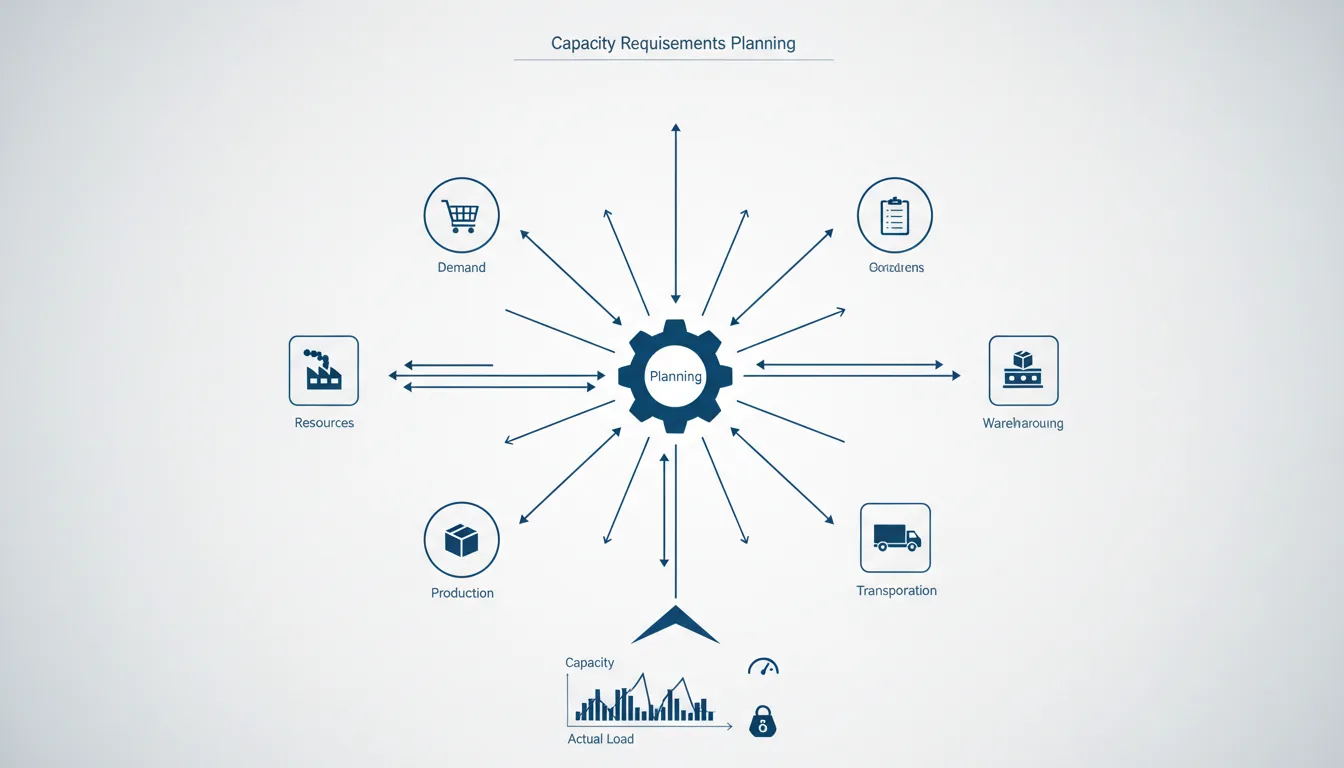
Capacity Requirements Planning (CRP) is a critical component of production planning and scheduling that ensures an organization can meet future demand. The purpose of CRP is to evaluate the capacity needed to produce goods within a specific timeframe, aligning with the overall production plan. It is vital for optimizing resources, enhancing efficiency, and minimizing costs in modern supply chain and logistics operations. According to a study by the Institute for Supply Management, effective CRP can lead to a 30% increase in production efficiency.
Etymology and Origins
The concept of Capacity Requirements Planning emerged in the 1980s as organizations began to recognize the limitations of traditional manufacturing strategies, particularly in response to fluctuating demands. The term combines the words "capacity," reflecting the potential output of a production system, and "requirements," indicating the necessary inputs to meet output goals. This combination emphasizes the need for aligning production capabilities with market demands. Early uses of the term are documented in seminal publications around 1982, with connections to Just-In-Time (JIT) methodology popularized by Toyota during this period.
Historical Development
Throughout the late 20th century, CRP evolved significantly alongside advancements in technology and manufacturing strategies. Notable milestones include:
- 1980s: The proliferation of MRP (Material Requirements Planning) systems, which laid the groundwork for CRP by providing essential data for capacity analysis.
- 1990s: The integration of Computerized Manufacturing Resources Planning (CMRP), which expanded MRP capabilities by incorporating additional data and technology. Notable figures in this evolution include authors like Thomas W. Simpson, who published key texts on capacity models during this time.
- 2000s: The introduction and refinement of ERP (Enterprise Resource Planning) systems enabled real-time CRP and facilitated a move towards automated planning systems. Companies like SAP pioneered these solutions with platforms that integrated all aspects of business operations.
- 2010s: The emergence of Artificial Intelligence (AI) and machine learning further transformed CRP, allowing for predictive analysis and real-time adjustments based on market fluctuations. This period saw the adoption of tools capable of dynamic scheduling and simulation, leading to enhanced flexibility in capacity management.
Major industry events, such as the adoption of ISO 9000 standards in the early 1990s and the focus on lean manufacturing principles, helped shape the way organizations approached CRP and its implementation in operational strategies. For example, General Motors adopted advanced CRP techniques in the 2000s, resulting in a significant reduction in production lead times and costs, demonstrating the effectiveness of these methodologies.
As firms continue to leverage advancements in technology, CRP remains a vital process that ensures organizations can efficiently meet the challenges of complex supply chains.
Best Practices for Capacity Requirements Planning
- Data-Driven Decision Making: Utilize advanced analytics and forecasting tools to gather data on demand trends, capacity availability, and production capabilities.
- Scenario Planning: Develop multiple scenarios to understand potential capacity constraints and plan accordingly to ensure responsive adjustments.
- Continuous Improvement: Regularly review and refine CRP processes to incorporate lessons learned and innovate based on emerging technologies. Tools such as Mobile Warehouse Management Systems can provide real-time insights into capacity constraints.
- Collaboration Across Departments: Foster communication between production, sales, and supply chain departments to align planning processes and capability assessments effectively.
Practical Examples and Case Studies
One standout success story involves Dell Technologies, which effectively implemented CRP to align its manufacturing processes closely with consumer demand. By utilizing CRP software to analyze real-time data, Dell reduced lead times by up to 70%, resulting in significant cost savings and increased customer satisfaction.
Another example can be seen in the automotive industry, where Ford utilized CRP to optimize its production schedules. By integrating capacity planning within its overall production strategy, Ford was able to minimize downtime and efficiently allocate resources, contributing to robust performance in a competitive market.
Understanding the evolution, application, and best practices of Capacity Requirements Planning is crucial for organizations seeking to enhance their operational efficiency and responsiveness.