Capacity Management in Logistics
Capacity management is vital for optimizing resources and ensuring efficient supply chain operations by balancing supply with demand.
Updated
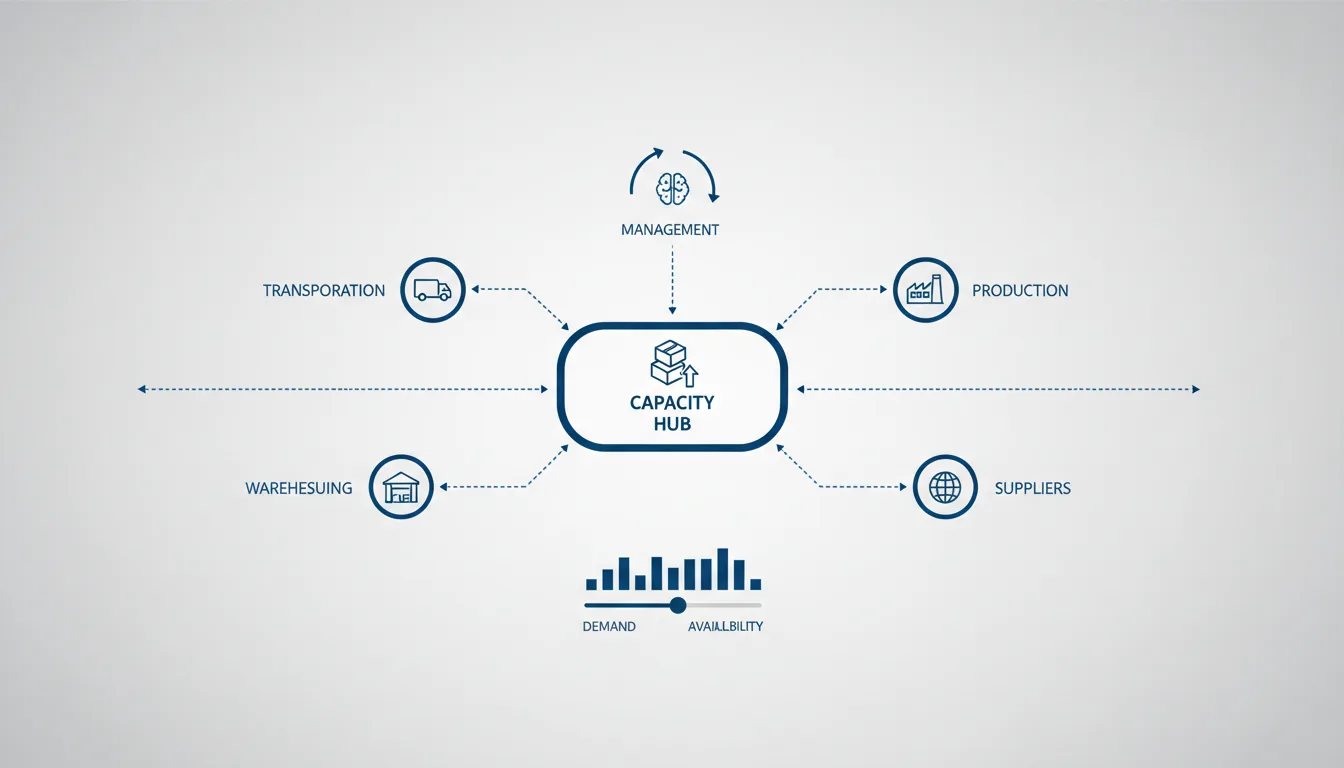
Overview
Capacity management is the process of monitoring, analyzing, and optimizing the capacity of a supply chain to meet evolving demands. This concept is essential in logistics as it helps organizations manage resources effectively, ensuring that they can respond promptly to customer needs while minimizing waste and costs. Proper capacity management enhances operational efficiency, reduces lead times, and facilitates better inventory control. It can be thought of as a balancing act between supply and demand, where companies strive to keep production flowing smoothly while adapting to market dynamics.
Etymology and Origins
The term capacity management emerged from the need to balance operational capabilities with demand within industries, particularly in manufacturing and logistics. It stems from the broader concept of capacity planning, which has roots in production management. The phrase “capacity management” has been documented since the 1950s, coinciding with advancements in industrial engineering and operations research that emphasized the importance of quantifying output capabilities in organizations. The linguistic roots of "capacity" derive from the Latin word "capacitas," meaning capability, while "management" comes from the Italian "maneggiare," meaning to handle or control.
Historical Development
Capacity management has evolved significantly over the decades:
- 1940s-1950s: Originating from post-war manufacturing practices, companies began formalizing concepts related to capacity planning and utilization. In the 1950s, Peter Drucker emphasized the importance of effective management practices, laying groundwork for capacity considerations in business operations.
- 1960s-1970s: The introduction of operations research methods and linear programming led to more sophisticated analyses of capacity, particularly with the advent of computerized simulations and decision support systems. Notable works included “Scientific Management”, which demonstrated structured approaches to capacity management.
- 1980s: The emergence of just-in-time (JIT) inventory systems, pioneered by Toyota, necessitated tighter capacity controls as companies sought to reduce lead times and inventory costs.
- 1990s-2000s: With the rise of global supply chains, capacity management started integrating demand forecasting and supply chain optimization. Seminal publications such as The Importance of Capacity Management highlighted the necessity of capacity management in modern logistics and its role in enhancing cost efficiency across operations.