Business Continuity Planning in Logistics
Business Continuity Planning (BCP) is essential for ensuring operational resilience in logistics and supply chain management, especially in the face of disruptions.
Updated
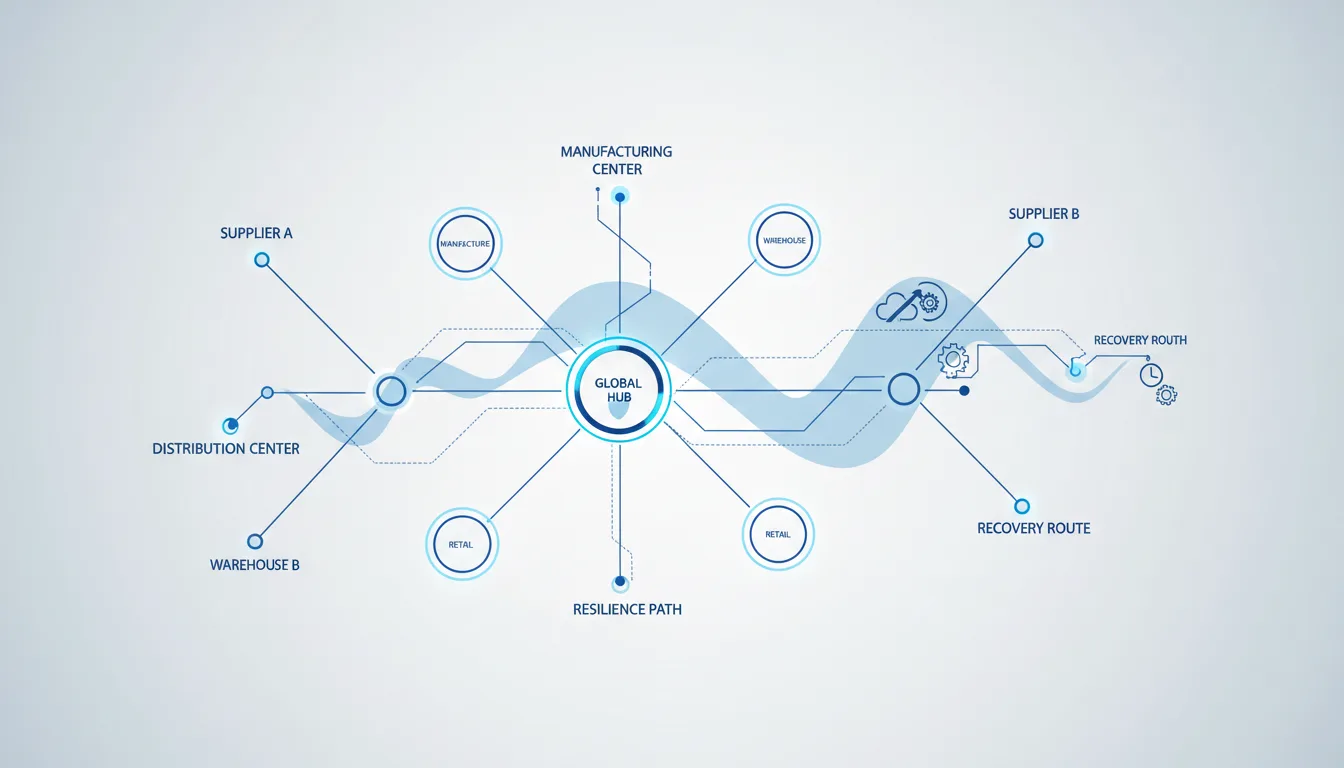
Business Continuity Planning in Logistics
Overview
Business Continuity Planning (BCP) refers to the processes and procedures that organizations put in place to ensure the continuation of operations during and after a disruptive event. In the context of logistics, this could include natural disasters, geopolitical crises, cyberattacks, supply chain interruptions, or technological failures. BCP is vital for minimizing disruptions and maintaining service levels, thus preserving customer trust, protecting revenue streams, and ensuring regulatory compliance. A robust BCP strategy enhances organizational resilience, enabling businesses to not only survive but also recover and potentially thrive in adverse conditions.
Etymology and Origins
The term Business Continuity Planning was first formally documented in the early 1980s, evolving from earlier concepts focused primarily on disaster recovery. Its linguistic roots combine 'business', referring to commercial operations, and 'continuity', derived from the Latin 'continuare', meaning to make continuous or uninterrupted. The concept itself began to take shape much earlier, rooted in the need to protect critical data and computing infrastructure.
Early forms of continuity planning, often termed Disaster Recovery Planning (DRP), emerged in the 1960s and 1970s with the increasing reliance on mainframe computers for critical business functions. Organizations recognized that a disruption to their IT systems could halt operations entirely. The initial focus was on restoring IT capabilities, such as data backup and recovery, and establishing alternative data processing sites. Over time, as businesses became more interconnected and interdependent, it became evident that simply recovering IT was insufficient; the entire business operation needed to continue. This realization marked the conceptual shift from IT-centric DRP to a broader, business-wide BCP, emphasizing the continuation of essential business functions, not just technology. This evolution was further accelerated by major corporate failures and increasing awareness of diverse threat landscapes, leading to a more holistic approach that encompasses all aspects of an enterprise, including its intricate logistics and supply chain operations.
Historical Development
The historical development of Business Continuity Planning in logistics is a testament to the increasing complexity and interconnectedness of global supply chains and technological advancements:
-
Pre-1980s: The Dawn of Disaster Recovery (DRP) The foundational concepts of continuity originated in the 1960s and 1970s, driven by the rise of mainframe computing. Companies like IBM were instrumental in developing early methodologies for data backup and recovery and creating redundant systems to protect vital information. This era saw the emergence of dedicated data centers and the first structured approaches to IT disaster recovery, often published in internal corporate guidelines or specialized industry journals. The focus was predominantly on IT infrastructure and data integrity, laying the groundwork for future business-centric planning.
-
1980s: Formalization and Business-Centric Shift The 1980s marked the formal emergence of BCP as a distinct discipline. High-profile events, such as the 1982 Tylenol crisis, demonstrated that business disruptions could extend far beyond IT failures, impacting brand reputation, public safety, and financial stability. This period also saw the increasing dependence on automated processes across various business functions, including early forms of warehouse management and inventory control. Professional organizations, such as the Disaster Recovery Institute International (DRII), were founded to professionalize disaster recovery and business continuity practices, offering certifications and standardized methodologies. The shift began from merely restoring IT to ensuring the continuity of critical business processes.
-
1990s: Standardization and Supply Chain Awareness The 1990s saw the publication of seminal texts, such as Business Continuity Management: A Practical Guide by Dr. Michael Wallace, which emphasized systematic methodologies, including the Plan-Do-Check-Act (PDCA) cycle for continuous improvement. This decade also brought about the British Standard BS 7799 (precursor to ISO 27001 for information security management), which included aspects of BCP, influencing global standards. Globalization and the rise of just-in-time (JIT) manufacturing, exemplified by companies like Toyota, highlighted the critical importance of supply chain resilience. Disruptions at any point in a lean supply chain could halt production, prompting logistics professionals to integrate continuity planning into their strategies. Early Enterprise Resource Planning (ERP) systems began to integrate supply chain modules, increasing the need for comprehensive BCP across interconnected operations.
-
2000s: Catalyzed by Global Events and Regulations The events of September 11, 2001, served as a profound catalyst, demonstrating the devastating impact of large-scale disruptions and prompting significantly increased investment and focus on BCP globally. This period also saw major natural disasters, like Hurricane Katrina in 2005, further underscoring the need for robust recovery strategies. Regulatory compliance, such as the Sarbanes-Oxley Act (SOX) in the U.S., pushed companies to establish and document internal controls, including those related to business continuity. The concept expanded to include not just crisis management but also engaging in business impact analysis, ongoing risk assessments, and the development of comprehensive recovery strategies across all business units, including logistics. Technology played a more prominent role, with computerized systems vastly enhancing planning and response efforts, and the first widely adopted Warehouse Management Systems (WMS) providing better inventory visibility.
-
2010s and Beyond: Digital Transformation and Predictive Resilience The rise of big data analytics, artificial intelligence (AI), and the Internet of Things (IoT) transformed BCP, allowing organizations to respond more dynamically to disruptions. Modern BCP now involves creating detailed logistics plans that are underpinned by data-driven insights and predictive analytics. Noteworthy examples include the integration of cloud solutions that support data backup and recovery as well as scenario-planning tools that utilize AI for behavior forecasting and risk modeling. The global COVID-19 pandemic further accelerated this trend, exposing vulnerabilities in global supply chains and mandating a deeper integration of resilience into business strategy. Companies learned that end-to-end supply chain visibility, often facilitated by visual inventory management systems and robust order management systems, was paramount. Blockchain technology began to offer new avenues for supply chain transparency and resilience by providing immutable records and enhancing traceability.
Successful businesses have adopted comprehensive plans to ensure rapid recovery and sustainable practices that align with stakeholder expectations and regulatory requirements. For instance, organizations like Toyota have been recognized for their robust supply chain risk management practices, which include integrating business continuity into their overall strategy, training employees on emergency protocols, and regularly testing their plans through simulations. Their approach emphasizes redundancy, multi-sourcing, and flexible production planning, crucial for navigating disruptions.
An important publication in this context is the ISO 22301 standard, which provides a robust framework for BCP that emphasizes a proactive approach to preventing, preparing for, responding to, and recovering from disruptive incidents. It guides organizations in establishing, implementing, operating, monitoring, reviewing, maintaining, and improving a business continuity management system.
BCP is no longer just a contingency plan but a corporate strategy critical for sustaining operations in an unpredictable world. For example, after the unexpected disruptions during the COVID-19 pandemic, companies that had solid BCP strategies were able to pivot more swiftly, ensuring operational continuity while others faced significant challenges. Modern logistics operations, heavily reliant on systems like mobile warehouse management systems, benefit immensely from integrated BCP, ensuring that critical processes like pick, pack, and ship or purchase order management can continue even during major outages.
By investing in effective BCP, organizations not only safeguard their logistics and supply chains but also bolster their reputation and trustworthiness in the market, which can lead to improved customer retention and satisfaction. This strategic investment ensures long-term viability and competitive advantage.
Best Practices in Business Continuity Planning for Logistics
Implementing a robust BCP strategy effectively can safeguard an organization’s logistics operations against unexpected disruptions, enabling not only survival but also the potential for growth in adverse conditions. Key best practices include:
-
Comprehensive Risk Assessment and Business Impact Analysis (BIA): Regularly evaluate potential risks (e.g., natural disasters, cyberattacks, supplier failures, transportation disruptions, labor shortages) and their impacts on specific logistics operations. This includes conducting a BIA to identify critical functions, their recovery time objectives (RTO), and recovery point objectives (RPO). Supply chain mapping is essential to identify vulnerabilities and interdependencies across the entire network, from raw material sourcing to last-mile delivery.
-
Develop Detailed Continuity Strategies: Based on the BIA, develop specific strategies for each critical logistics function. This may include supplier diversification, alternative transportation routes, redundant warehousing facilities, and agreements with third-party logistics (3PL) providers. Strategies should cover operational aspects like stock replenishment, order fulfillment, and inbound/outbound shipping.
-
Robust Technology and Data Redundancy: Leverage modern logistics software that supports continuity. Systems like mobile warehouse management systems and visual inventory management systems should have built-in redundancy, cloud-based architecture, and robust backup protocols. Critical data, such as inventory records, order data, and shipping manifests, must be securely backed up and easily recoverable. SkuSavvy's platform allows for integrations that enhance data resilience and system availability.
-
Training and Awareness: Conduct regular, scenario-based training sessions for all employees, from warehouse staff to management, about BCP procedures and emergency protocols. This ensures that everyone understands their role during a disruption and can execute recovery plans effectively. Employee productivity tracking can also be used to identify key personnel whose absence would critically impact operations and plan for cross-training or backups.
-
Testing and Drills: Frequently test BCP plans through simulations and drills to identify gaps, weaknesses, and improve response times. This should include table-top exercises, walk-throughs, and full-scale operational simulations for various disruption scenarios (e.g., warehouse shutdown, transport strike, IT system failure). Post-test reviews are crucial for refining plans.
-
Stakeholder Communication Plan: Establish clear, redundant communication channels with all stakeholders, including suppliers, customers, employees, transportation partners, and regulatory bodies. A pre-defined communication plan ensures timely and accurate information dissemination during a crisis, minimizing panic and maintaining trust. This includes internal communication within the logistics team and external communication to manage customer expectations regarding order fulfillment and delivery timelines.
-
Continuous Improvement and Review: BCP is not a one-time activity but an ongoing process. Regularly review and update BCP strategies to reflect any changes in the operational environment, supply chain structure, technology landscape, or organizational objectives. Post-incident reviews (even for minor disruptions) provide valuable lessons learned to enhance future preparedness, aligning with the principles of ISO 22301.
-
Supplier and Partner Collaboration: Work closely with key suppliers and logistics partners to understand their BCPs and ensure alignment. Collaborative planning can create a more resilient extended supply chain. This might involve setting up mutual assistance agreements or requiring partners to meet certain continuity standards, particularly critical for functions managed by vendor portals or integrated purchase order management systems.
Sources
- ISO 22301 Business Continuity Management
- The Evolution of Business Continuity Planning
- Best Practices in Business Continuity Planning
- ISO 22301 Business Continuity Management
- The Evolution of Business Continuity Planning
- Best Practices in Business Continuity Planning
- Disaster Recovery Planning: An Historical Perspective
- Disaster Recovery Institute International (DRII) History
- ISO 27001 - Information security management
- Supply Chain Management Lessons from Toyota
- Building supply-chain resilience in a post-pandemic world
- Mobile Warehouse Management System
- Visual Inventory Management System
- Order Management System
- Purchase Order Management
- Pick, Pack, Ship Software
- Stock Replenishment Guide
- Order Fulfillment Guide
- Integrations Hub
- Employee Productivity Tracking
- Vendor Portal
- Supply Chain Diversification: Strategies for Risk Management