Blue Yonder Warehouse Management System
An overview of Blue Yonder WMS, highlighting its features, historical significance, and applications in supply chain management.
Updated
Blue Yonder Warehouse Management System
Overview
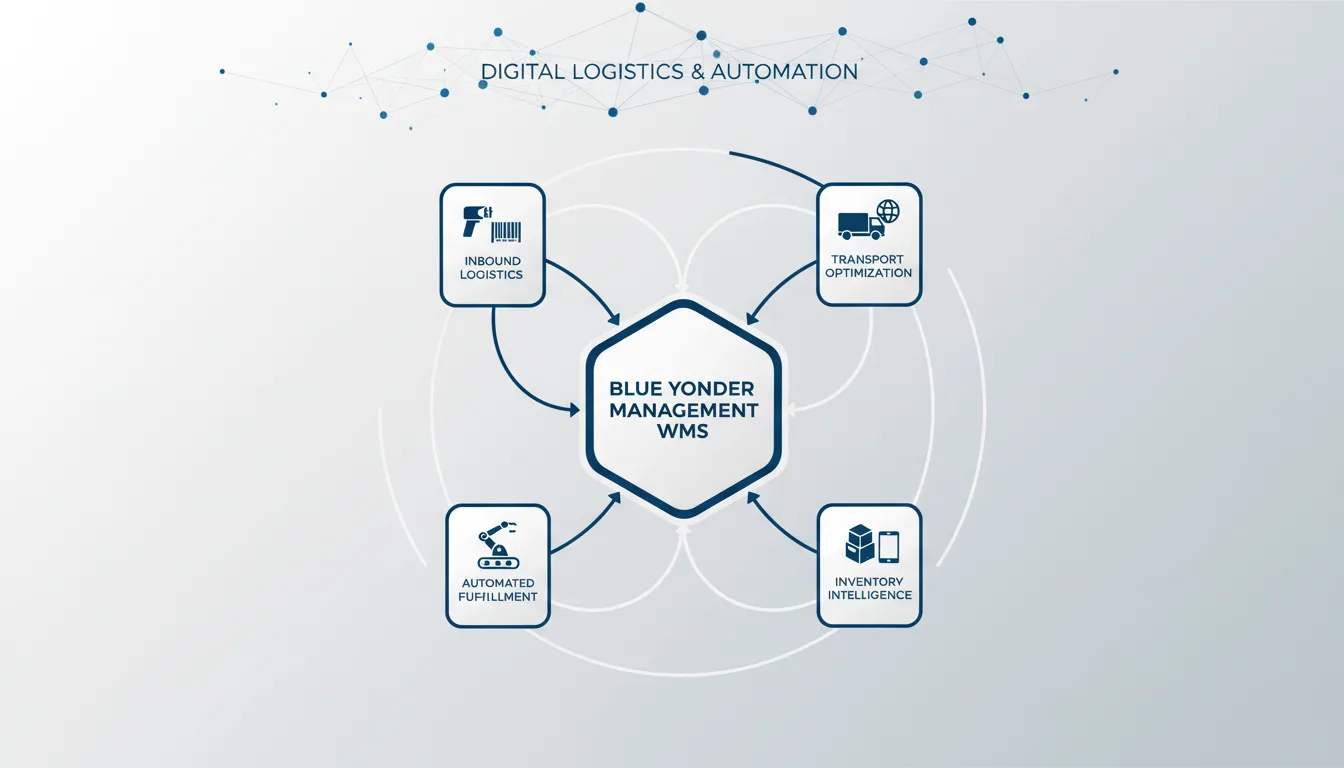
Blue Yonder Warehouse Management System (WMS) is a comprehensive logistics software solution designed to optimize warehouse operations, streamline inventory management, and enhance order fulfillment processes. The system utilizes advanced technologies such as artificial intelligence and machine learning to ensure efficient management of warehouse functions, from receiving and storage to picking and shipping. As a critical component of supply chain management, Blue Yonder WMS contributes significantly to reducing operational costs, increasing accuracy, and improving overall service levels in the logistics environment.
Etymology and Origins
The term “warehouse management system” first emerged in the 1970s as businesses began to digitize and automate their logistics processes. The earliest documented usage of the term was found in the logistical discussions at the Council of Supply Chain Management Professionals (CSCMP). The phrase derives from the roots “warehouse” (a place for storing goods) and “management system,” which refers to the systems and processes that govern operations.
Over time, the terminology has evolved to reflect advancements in technology and operational approaches, transitioning from basic inventory recording systems to sophisticated software that enhances efficiency and accuracy, driven by the need for optimization in logistics management.
Historical Development
The history of Blue Yonder WMS can be traced back to the 1980s when JDA Software was founded to offer solutions for supply chain planning. Over the decades, Blue Yonder has seen significant developments:
- 1985: JDA Software was founded to focus on supply chain solutions centered around demand planning and inventory optimization.
- 1990s: Introduction of first-generation WMS solutions, leveraging early digital storage and retrieval techniques.
- 2000s: The evolution of software architecture towards web-based applications enriched functionality and accessibility, allowing for better user engagement and integration capabilities.
- 2018: JDA Software rebranded as Blue Yonder to emphasize its commitment to delivering end-to-end supply chain visibility and leveraging artificial intelligence.
- 2021: Blue Yonder was acquired by Panasonic, integrating its WMS capabilities with broader technology innovations, such as IoT and big data analytics.
Key publications and advancements, such as the development of barcode scanning and RFID tracking systems, laid the groundwork for modern WMS capabilities, enabling efficient stock management and real-time inventory visibility. The adoption of key standards like ISO 9000 also played a pivotal role in shaping the industry toward quality assurance and continuous improvement.
Core Concepts
Blue Yonder WMS employs several core concepts that drive its functionality:
- Real-Time Inventory Management: The system allows for tracking inventory in real-time, ensuring accurate stock levels and improved decision-making, aligning with the principles of visual inventory management.
- Task Optimization: The WMS uses algorithms to optimize workflows and tasks, such as order picking and replenishment, which can significantly reduce labor costs and improve productivity.
- Integration Capabilities: Blue Yonder WMS integrates seamlessly with various enterprise systems to ensure a cohesive operation across supply chain functions, enabling businesses to leverage their data effectively.
Industry Applications
Blue Yonder WMS is used across various industries, including:
- Retail: Major retailers utilize Blue Yonder to manage large-scale inventories, ensuring timely fulfillment and efficient storage management.
- E-Commerce: Online retailers benefit from the WMS’s capabilities to handle increased volumes and speed in order processing, particularly during peak seasons.
- Manufacturing: Manufacturers leverage Blue Yonder for just-in-time inventory practices, enhancing production efficiency by ensuring materials are available when needed, which is crucial for lean manufacturing methodologies.
Benefits and Advantages
The advantages of implementing Blue Yonder WMS include:
- Enhanced Efficiency: Automating processes like order picking and inventory management can significantly reduce operational time and costs, as noted by various case studies in warehouse management.
- Increased Accuracy: Real-time inventory tracking minimizes errors and enhances fulfillment accuracy, which is crucial for customer satisfaction. Implementing such systems has been shown to reduce errors by up to 30%.
- Scalability: The system is designed to grow with businesses, accommodating increased volume and complexity over time, which is essential as market demands change.
Challenges and Limitations
Despite its advantages, organizations may face challenges when implementing Blue Yonder WMS, such as:
- High Initial Investment: The costs associated with licensing and implementation can be significant for small to medium enterprises, a consideration discussed in various logistics forums.
- Complexity of Integration: Integrating Blue Yonder with existing systems requires thorough planning and may present temporary disruptions in operations, which can be mitigated through diligent project management and change management practices.
Best Practices
To maximize the benefits of Blue Yonder WMS, companies should consider the following best practices:
- Thorough Training: Ensure team members are adequately trained on the WMS functionalities to fully leverage its capabilities, enhancing user adoption and satisfaction.
- Regular System Audits: Implement routine assessments to ensure data accuracy and system performance optimizations, as they can lead to significant cost savings.
Future Trends
As technology advances, Blue Yonder is expected to incorporate more advanced predictive analytics, machine learning algorithms, and IoT connectivity to further enhance its WMS offerings. This evolution will likely lead to even greater efficiencies and automated processes in warehouse operations, as noted in industry reports on the future of logistics technology.
Related Concepts
Understanding Blue Yonder WMS can be further enhanced by exploring related logistics concepts such as order management systems and inventory technologies. These integrations highlight the importance of cohesive supply chain management.
Sources
- Visual Inventory Management System
- Order Management System
- Adding Inventory Guide
- The History and Evolution of Warehouse Management
- How Scan Data Improves Warehouse Management
- Why Inventory Accuracy is the Key to Supply Chain Success
- Lessons from the Best Practices in Supply Chain Management
- ISO 9000 Quality Management Systems